Problem-Solving Skills Adding up to 1000 Misc Worksheets for Ages 3-9
14 filtered results
-
From - To
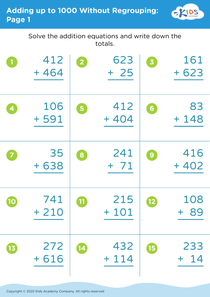
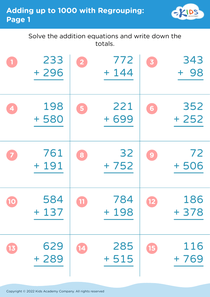
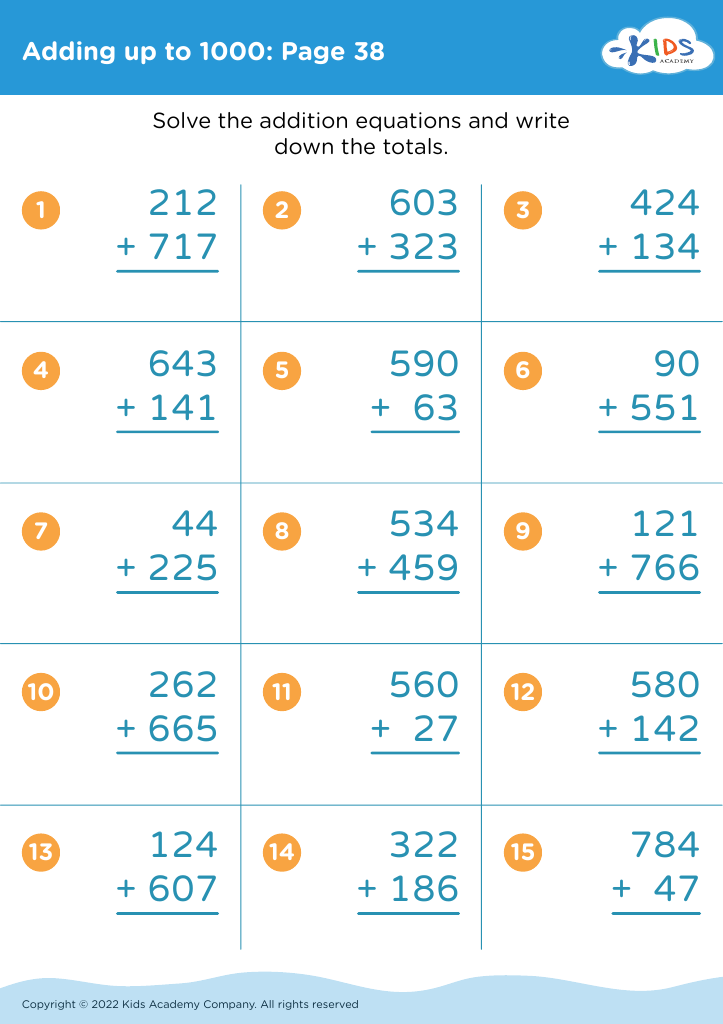
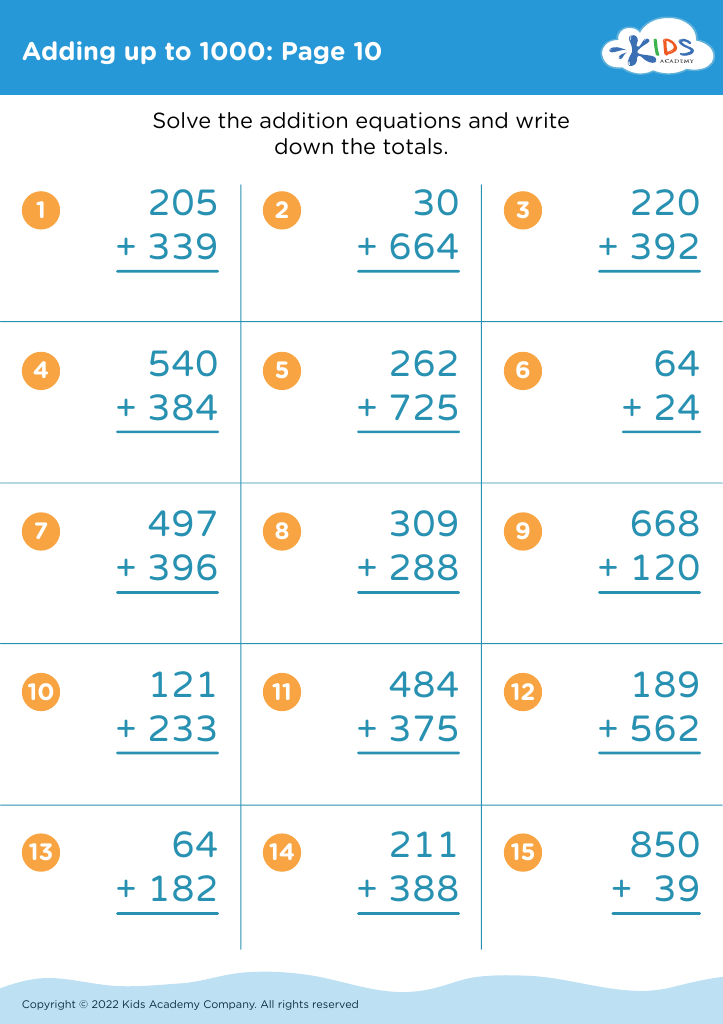
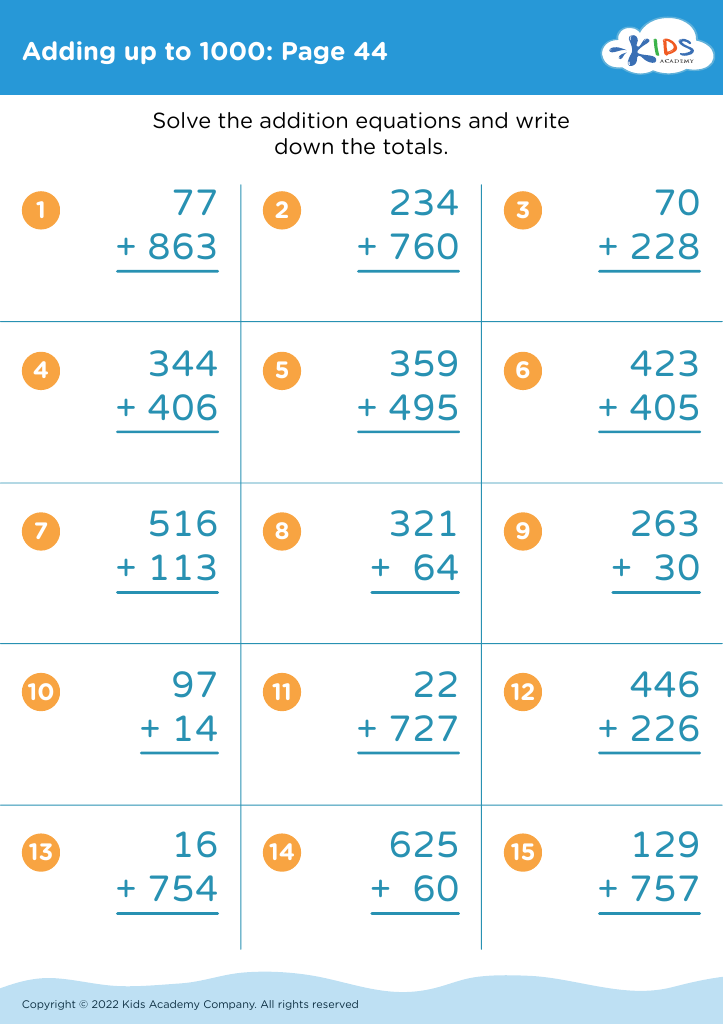
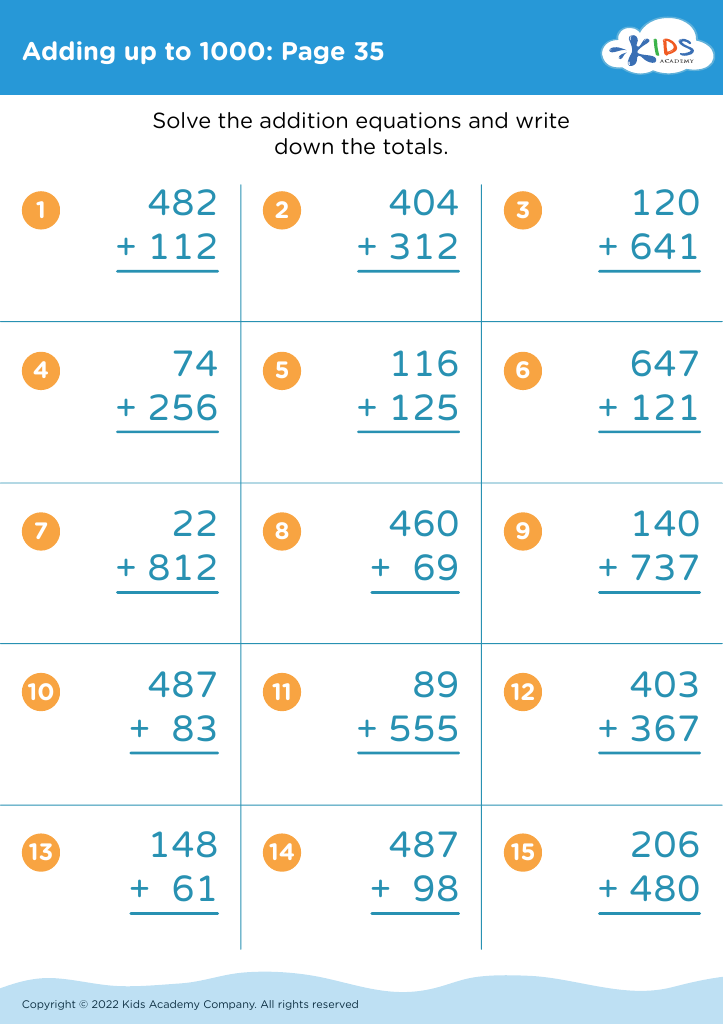
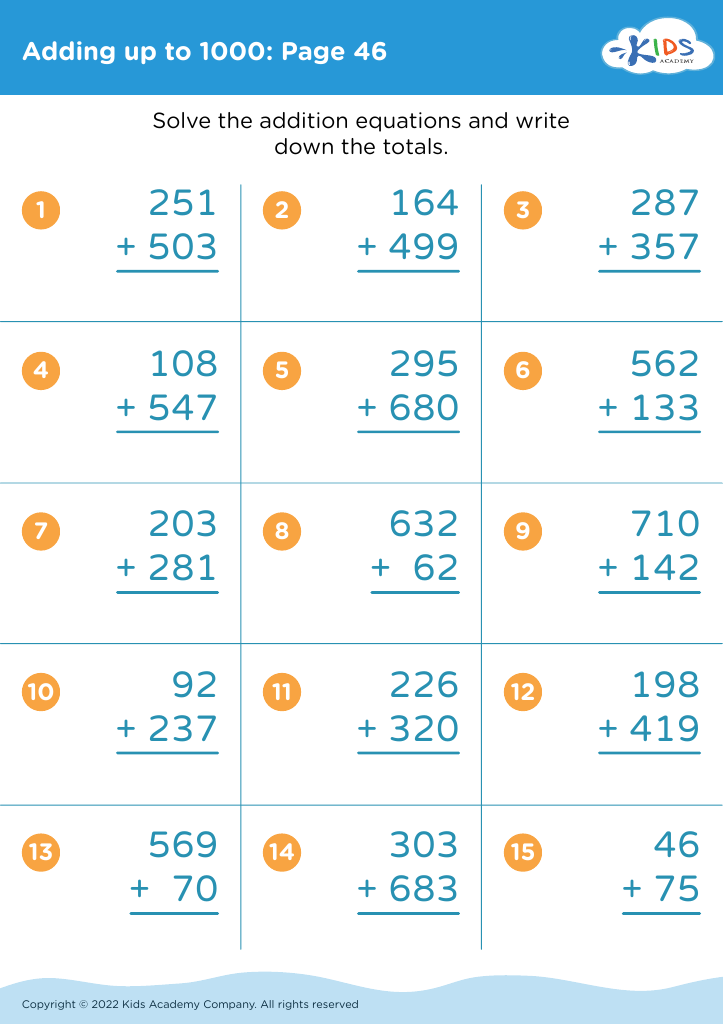
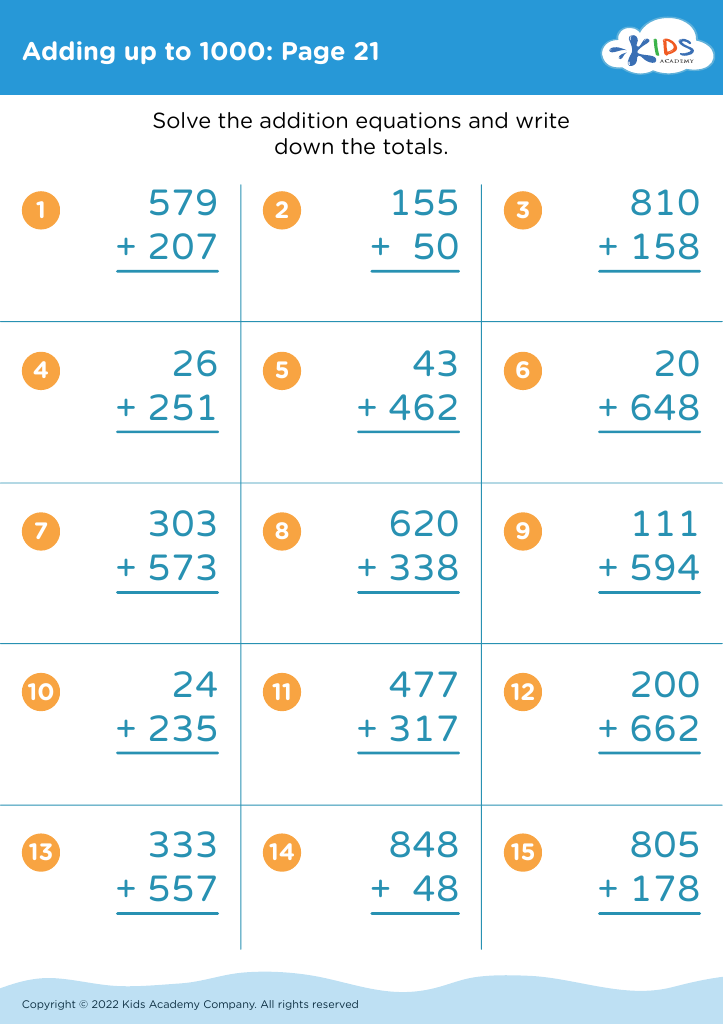
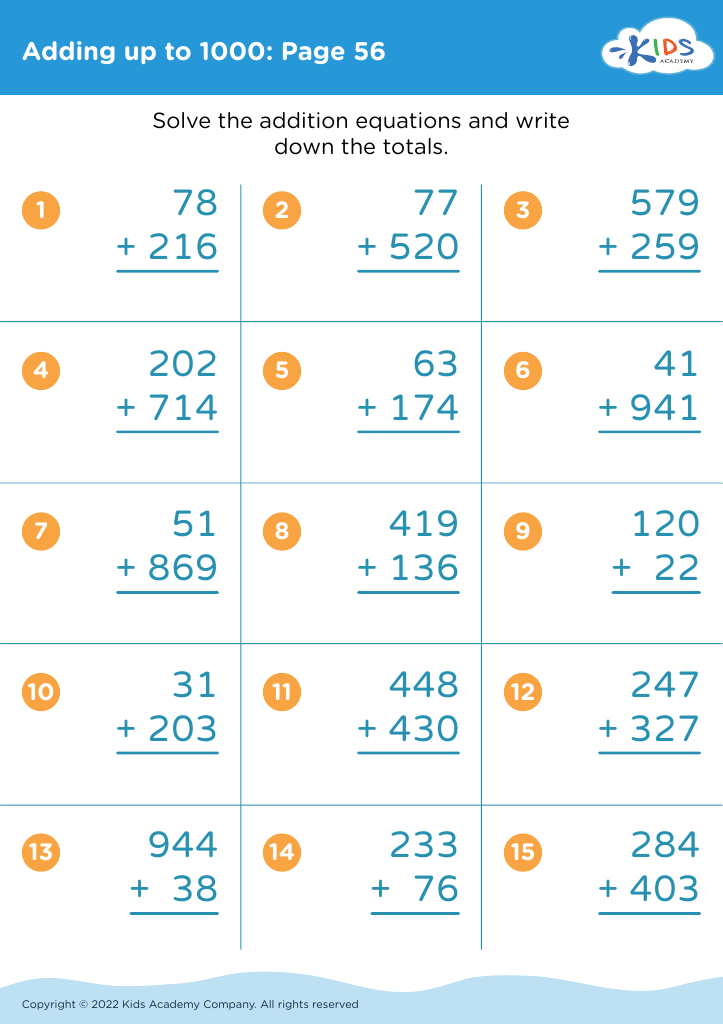
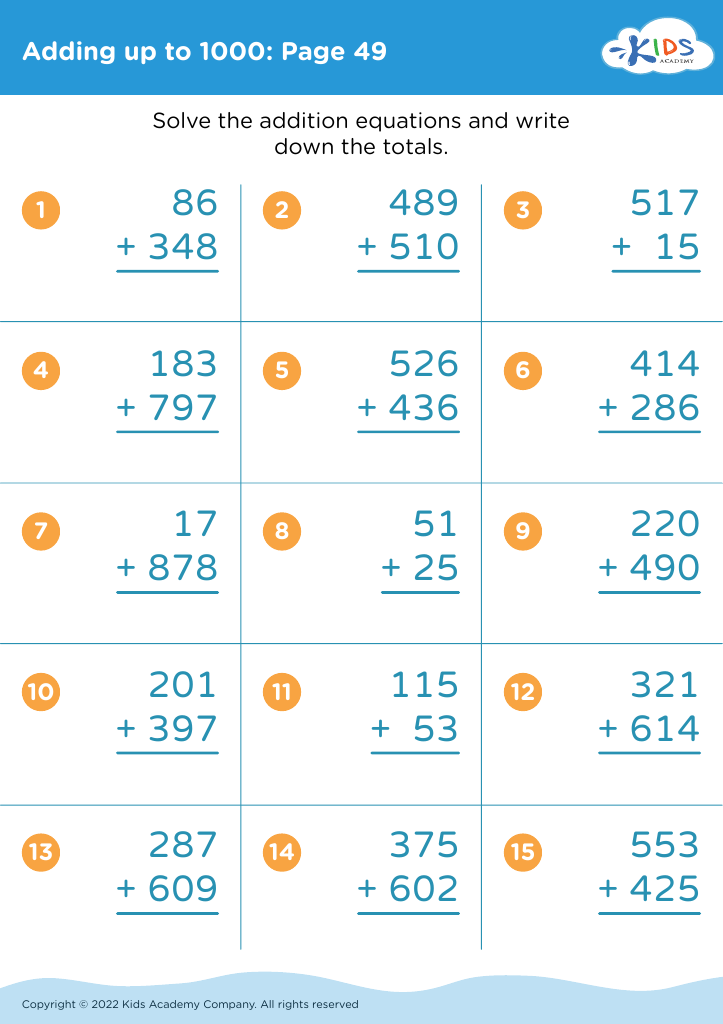
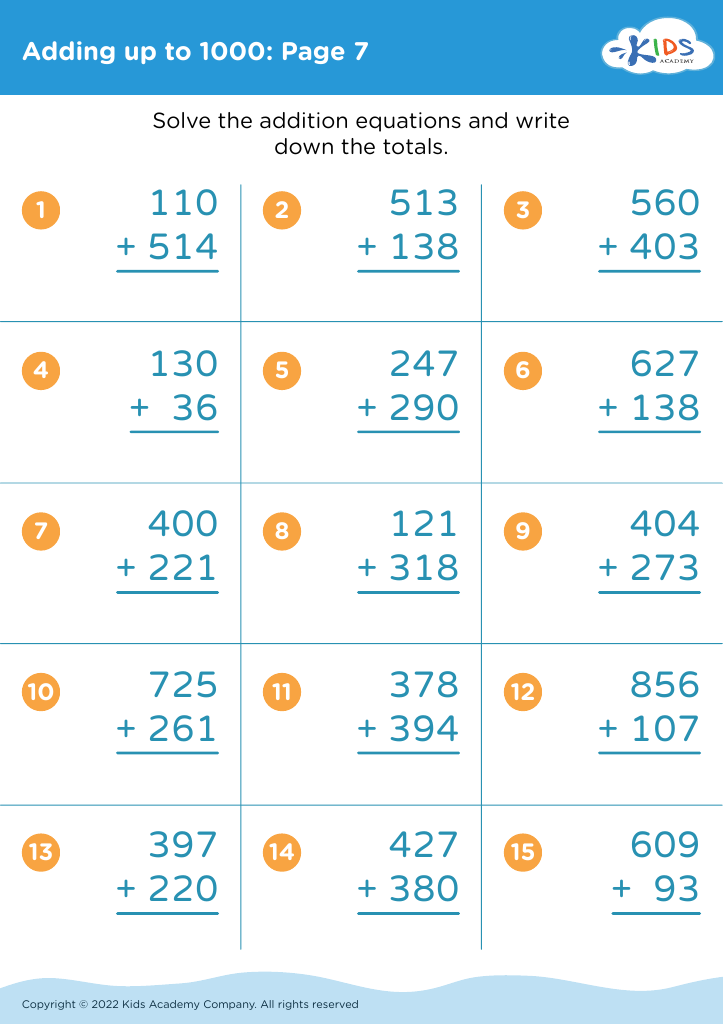
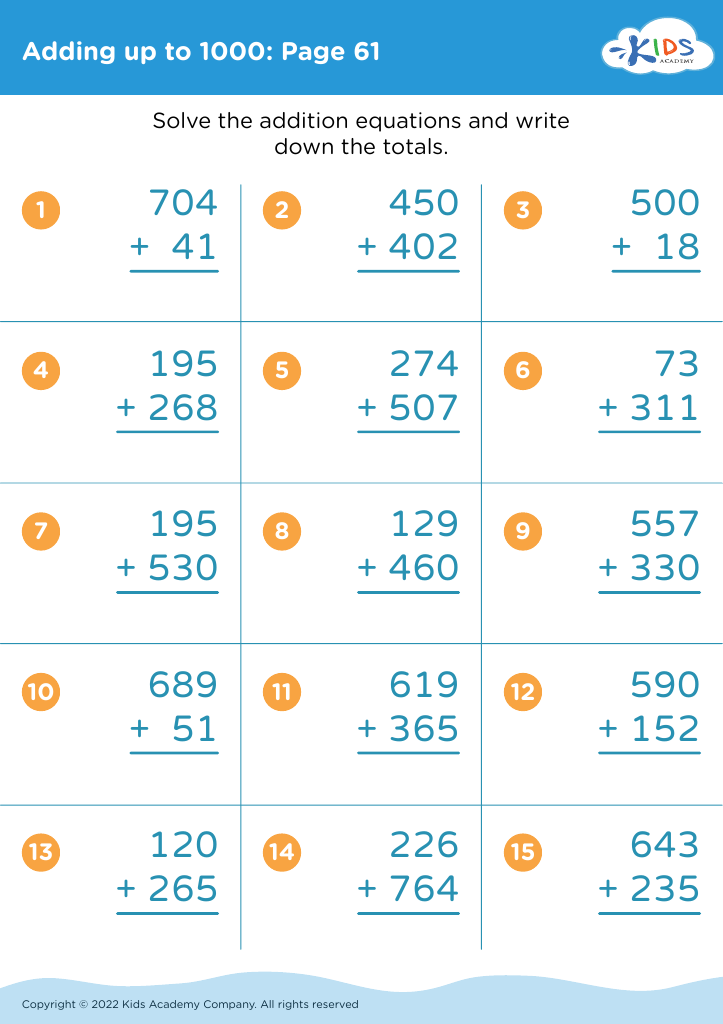
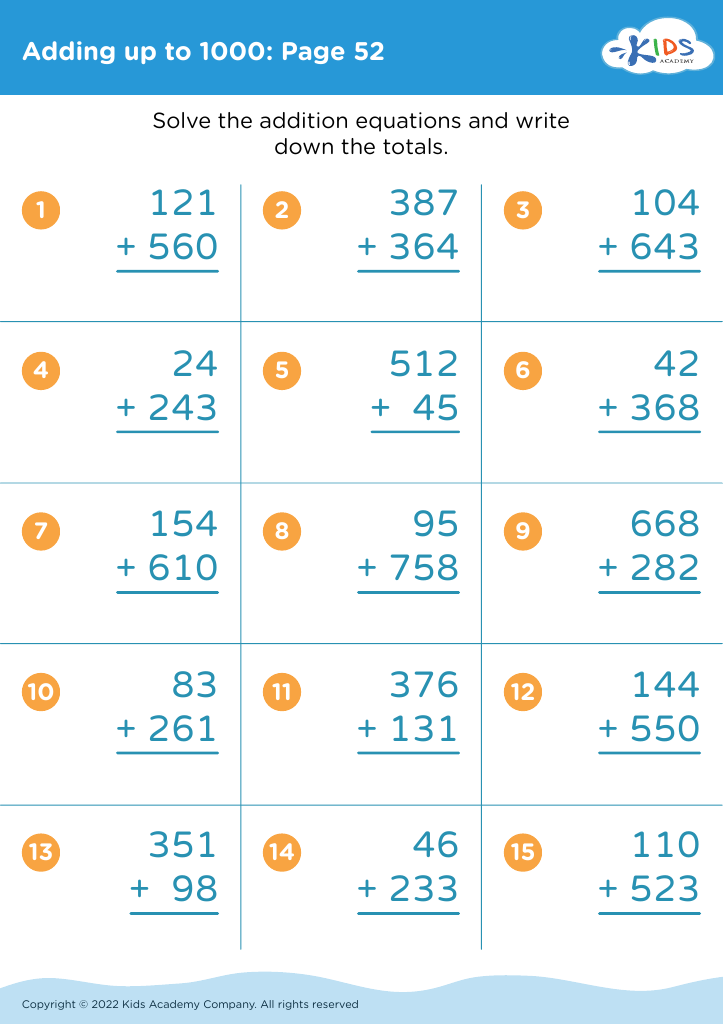
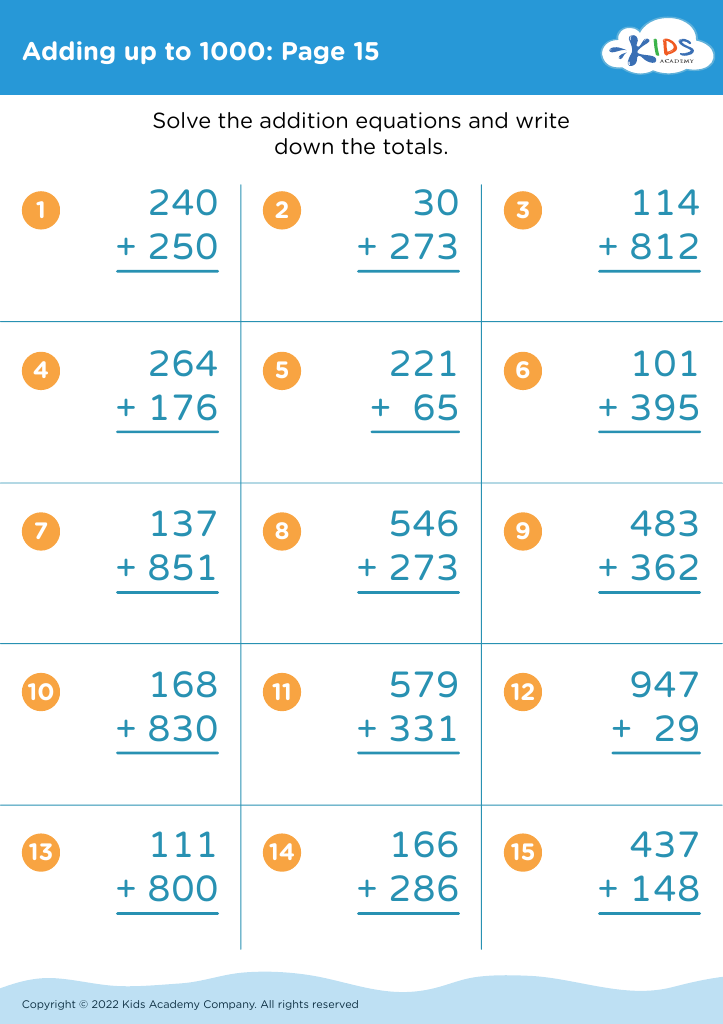
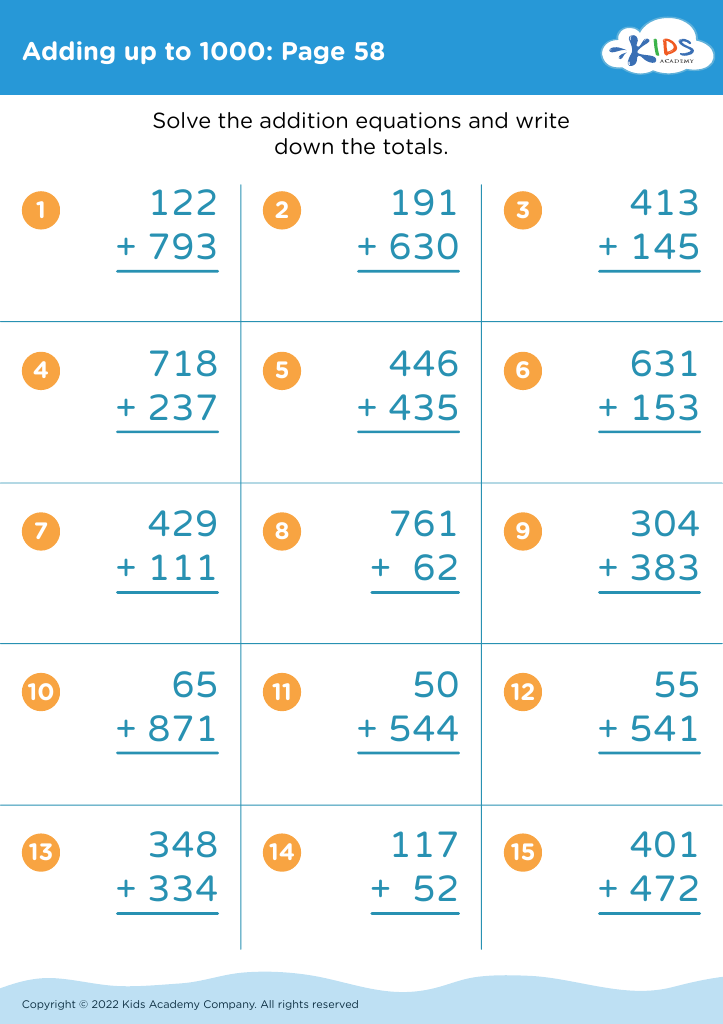
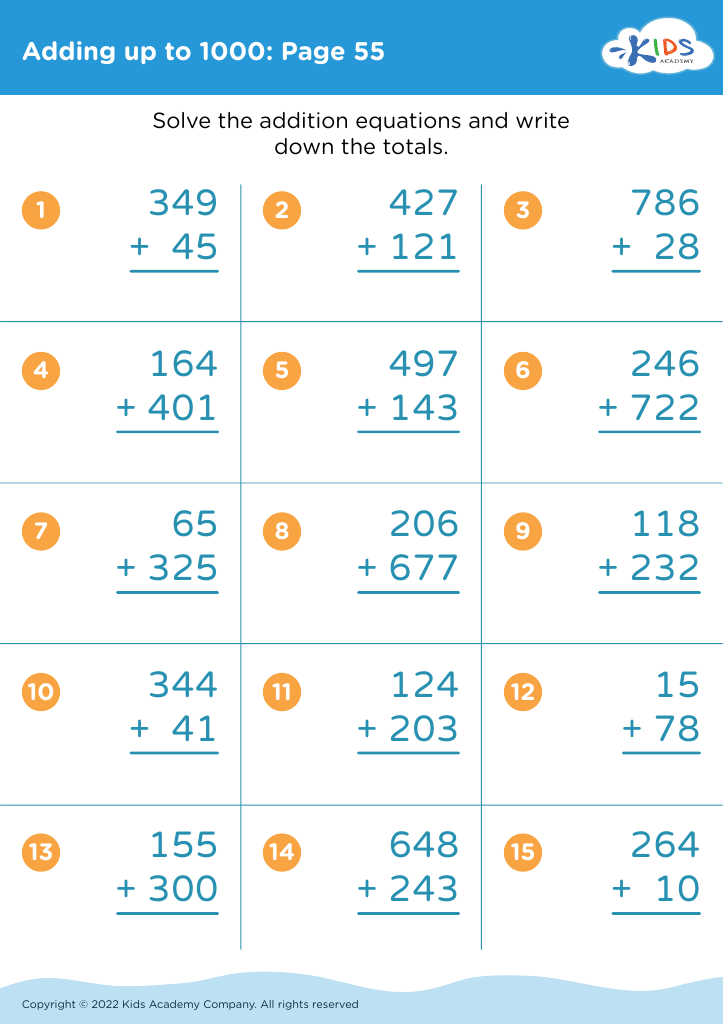
Unlock the key to effective problem-solving with our "Problem-Solving Skills Adding Up to 1000 Misc Worksheets" designed specifically for ages 3-9. This engaging collection offers 1000 diverse worksheets that make learning math fun and interactive. Perfect for young learners, these resources help children develop critical thinking and analytical skills through various exercises that challenge their understanding of addition and subtraction. Each worksheet is tailored to promote exploration and strives to inspire kids’ confidence in tackling mathematical problems. Empower your child to become a confident problem-solver and watch them excel in their early math journey with our thoughtfully curated materials!


Problem-solving skills are crucial for children's overall development, especially in ages 3-9 when foundational cognitive abilities are being formed. Parents and teachers should care about fostering these skills because they equip children with the ability to tackle challenges, think critically, and make reasoned decisions. Engaging with problems enhances their analytical thinking and nurtures creativity, allowing them to explore multiple solutions rather than settling for the first answer.
Activities involving problem-solving—such as puzzles or collaborative games—foster both social and emotional development. Children learn to communicate, negotiate, and collaborate with peers, fostering teamwork and empathy. Moreover, developing these skills at an early age sets the groundwork for resilience; children will be better prepared to face setbacks and view obstacles as opportunities for learning.
As they progress through school, these skills become essential for academic success across subjects, laying the foundation for more complex reasoning and cognitive tasks in later grades. Implementing problem-solving activities can make learning engaging and enjoyable, giving children a sense of accomplishment. Ultimately, when parents and teachers prioritize problem-solving skills, they help shape well-rounded individuals who are capable, confident, and adapted to navigate the challenges of both academic and real-world situations.