Reading comprehension Adding up to 1000 Misc Worksheets for Ages 3-9
4 filtered results
-
From - To
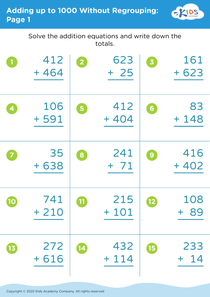
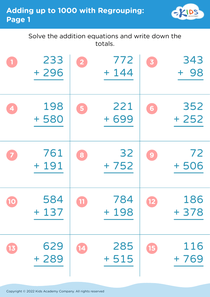
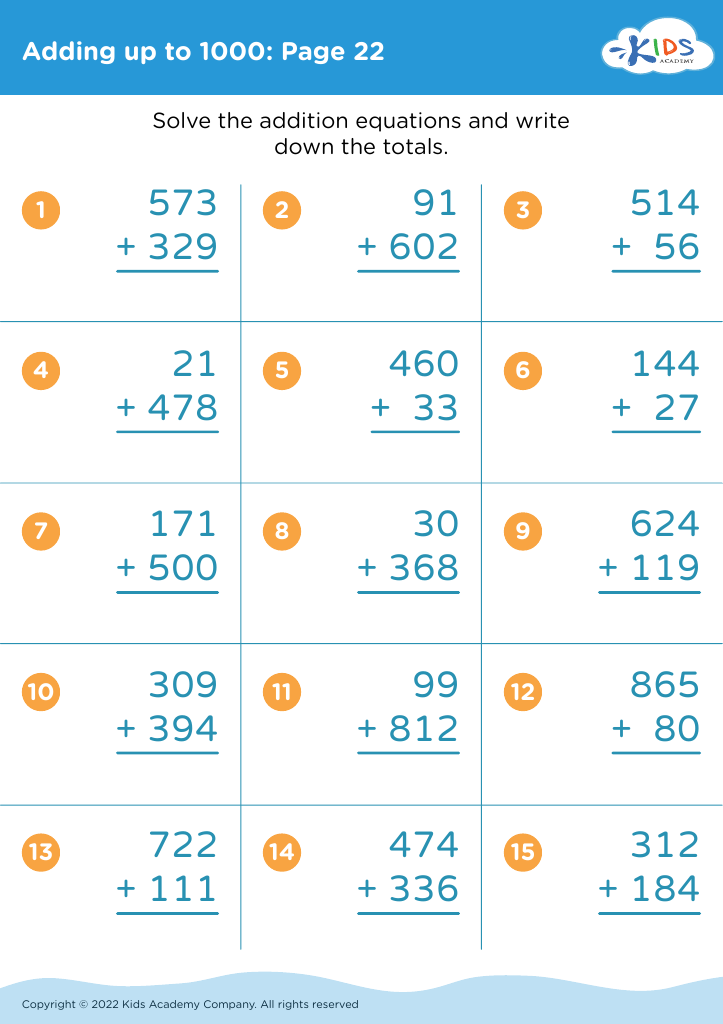
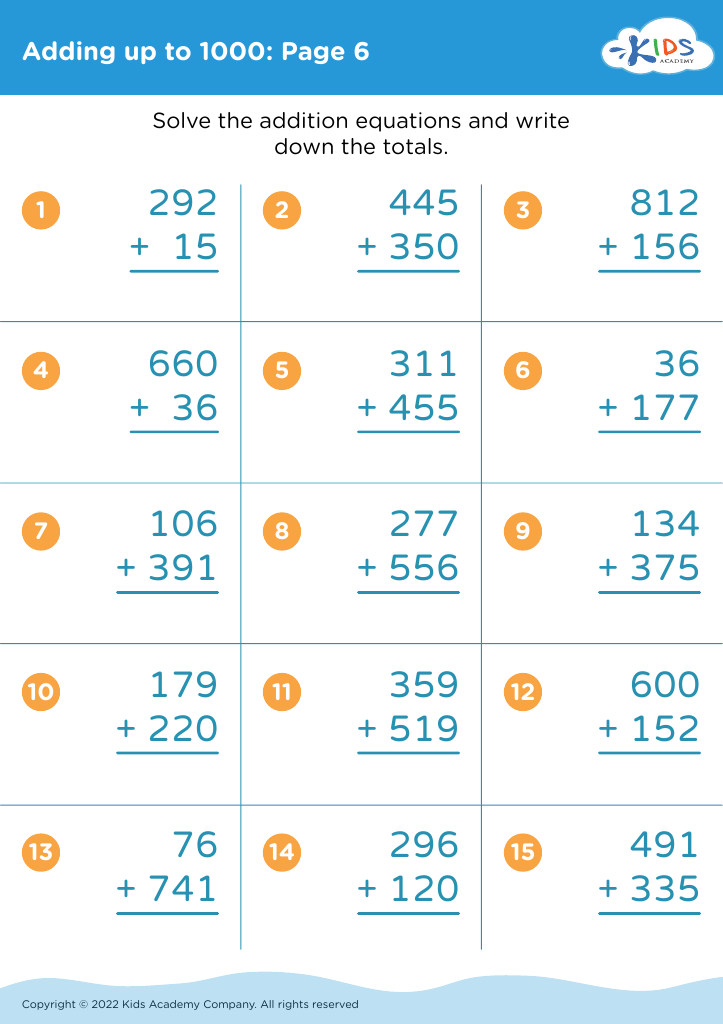
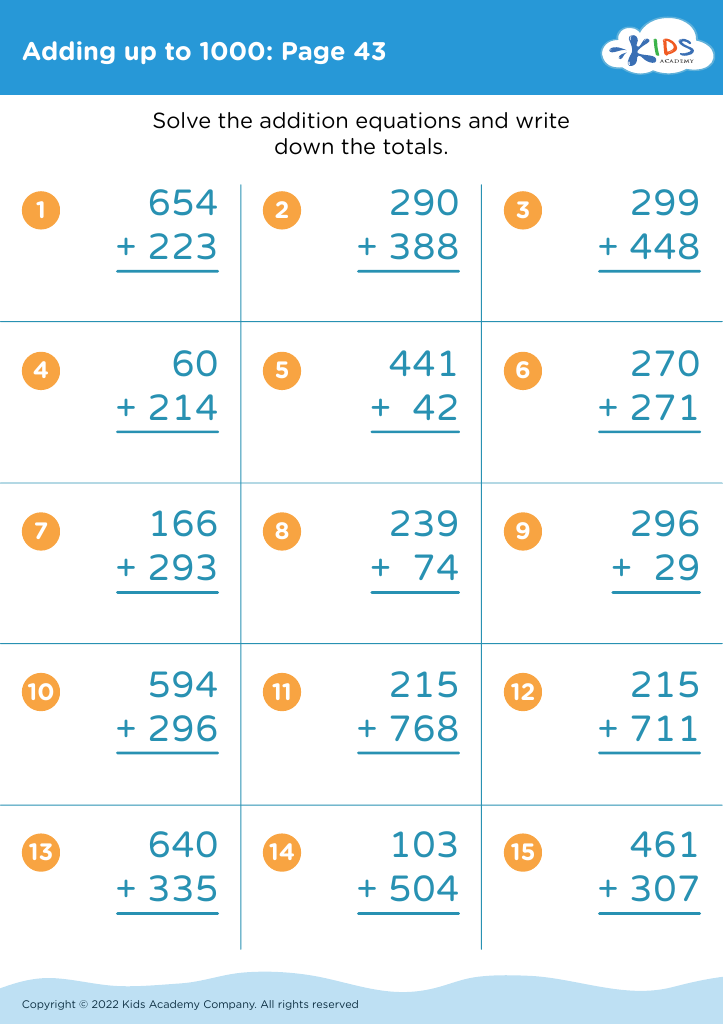
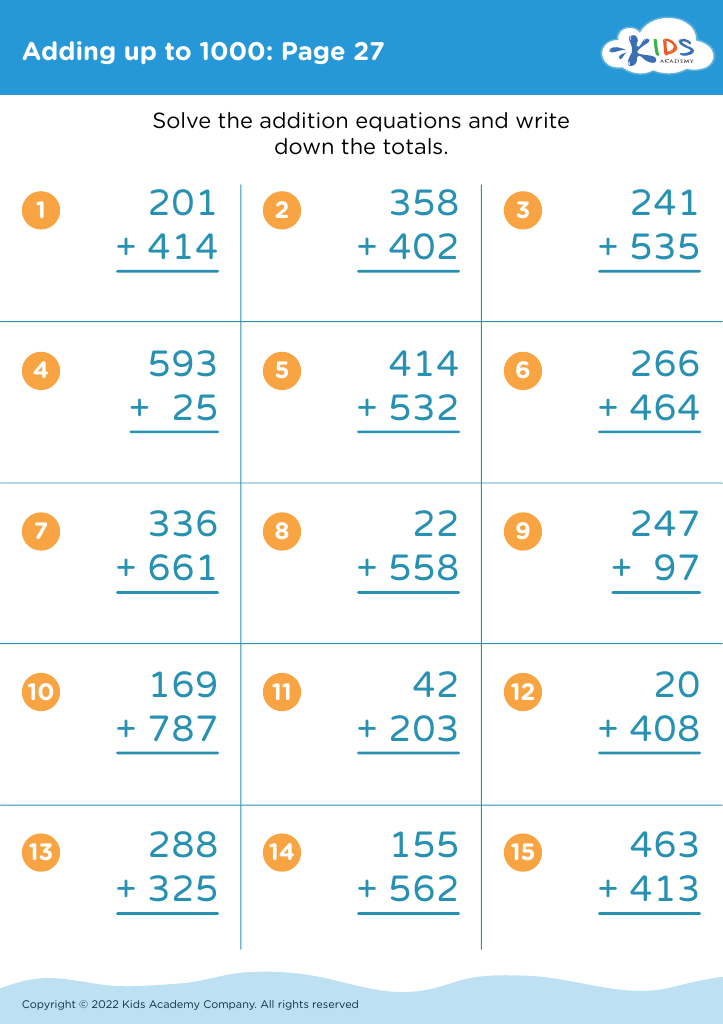
Discover a treasure trove of engaging reading comprehension worksheets designed for children ages 3-9, all themed around the exciting topic of adding up to 1000! Our collection features 1000 diverse and interactive resources that will help young learners expand their comprehension skills while reinforcing essential math concepts. Each worksheet is crafted to spark curiosity and promote critical thinking, teaching kids to analyze texts and understand mathematical equations in fun scenarios. Perfect for both classroom settings and at-home learning, these worksheets provide a unique blend of reading and math, ensuring a holistic educational experience. Start your adventure in learning today!


Reading comprehension is a fundamental skill that lays the groundwork for a child's educational journey, making it a crucial area of focus for parents and teachers alike. For children aged 3-9, developing strong reading comprehension abilities not only enhances their understanding of texts but also boosts their critical thinking and analytical skills.
When young children grasp what they read, they are more likely to engage with stories, strengthen their vocabulary, and enjoy a lifetime of reading. This enjoyment fosters an intrinsic motivation to learn and discover new ideas, boosting their overall academic performance.
Battling the challenges of curriculum pressures, busy family schedules, and technological distractions, it is essential for adults in a child’s life to prioritize reading comprehension. Offering children varied reading materials and opportunities to discuss stories fosters curiosity and comprehension skills. By working together, parents and teachers can create a supportive reading environment that encourages exploration and creativity.
In terms of developmental milestones, solid reading comprehension helps children make connections across subjects—essentially acting as the glue that binds their knowledge together as they progress through school. Ultimately, prioritizing reading comprehension in early childhood education lays the foundation for lifelong learning and foster responsible, curious, and thoughtful individuals.