Understand multiplication Adding up to 1000 Misc Worksheets for Ages 3-9
3 filtered results
-
From - To
Unlock the world of multiplication for young learners aged 3-9 with our engaging "Understand Multiplication" worksheets! Designed to complement our "Adding Up to 1000" series, these printable resources make mastering multiplication fun and accessible. Children will grasp foundational concepts through a variety of activities that cater to different learning styles. Whether they're working with visual aids, engaging in interactive exercises, or solving age-appropriate multiplication problems, these worksheets will solidify their understanding of multiplication as repeated addition. Encourage a positive learning experience while building essential math skills. Explore our creative and educational resources today and support your child's journey towards mathematical confidence!
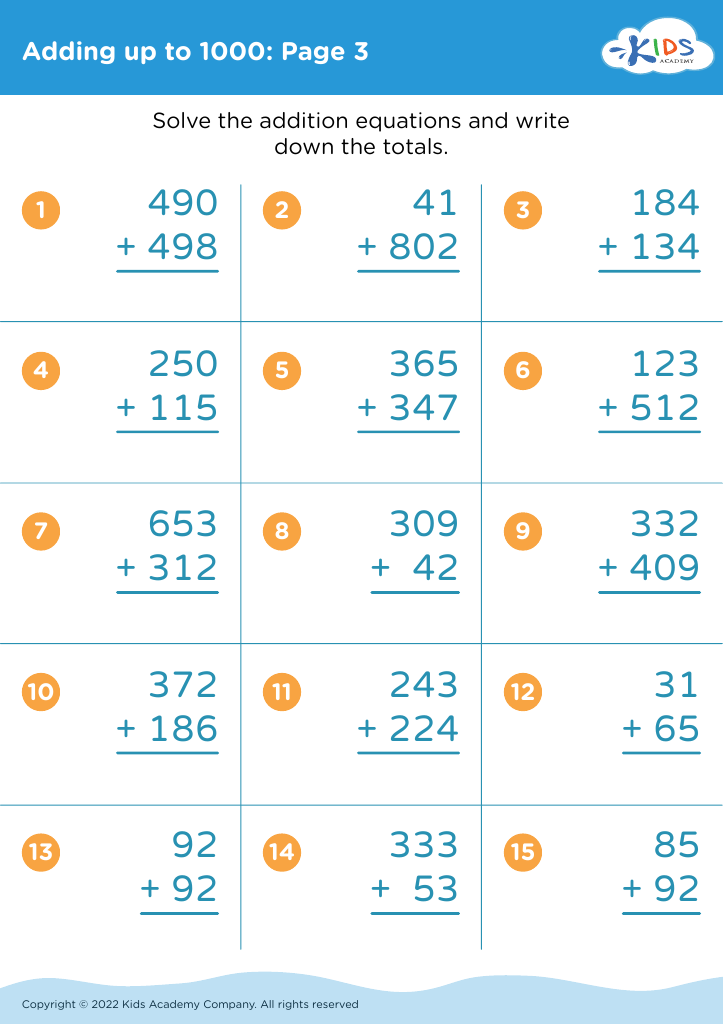
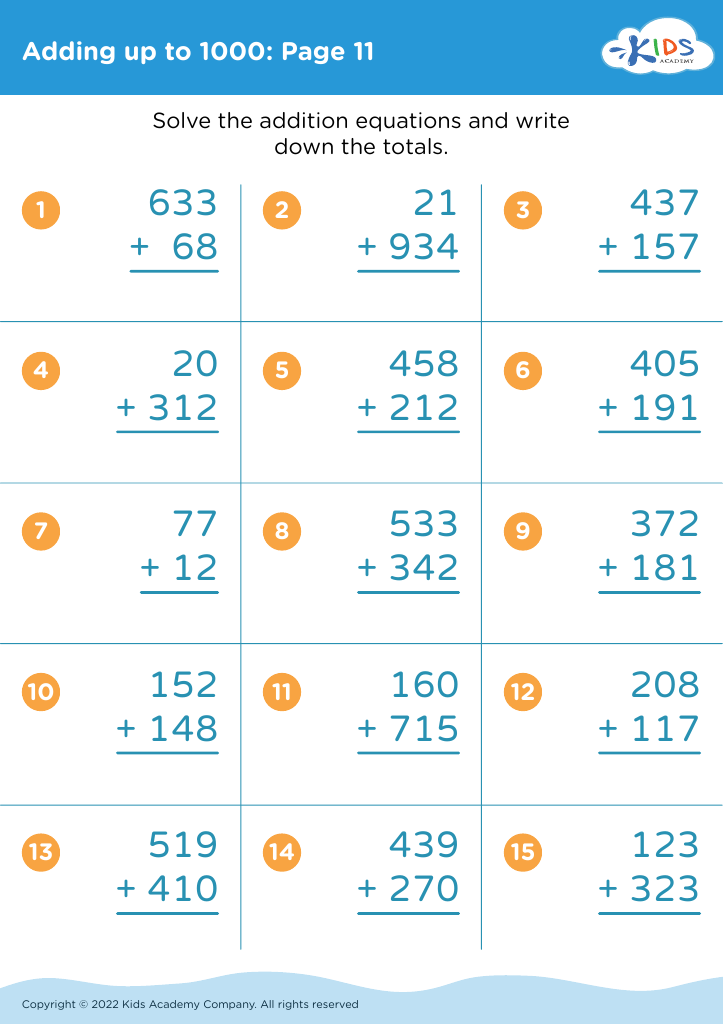
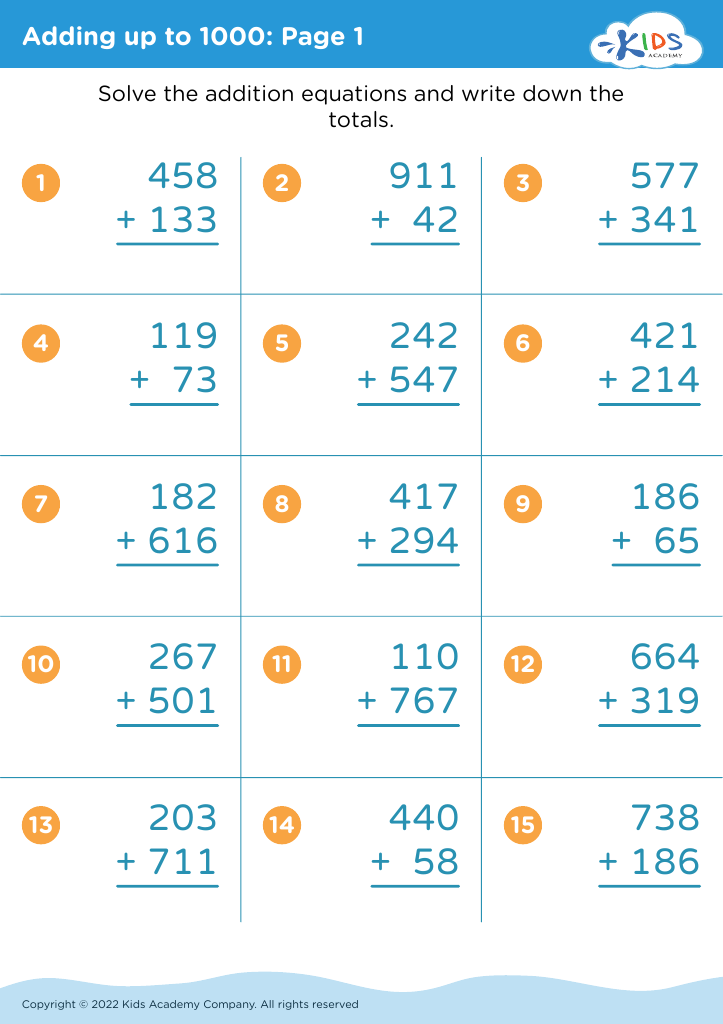


Understanding multiplication and basic arithmetic, such as adding up to 1000, is crucial for children aged 3-9 as it lays the foundation for their future mathematical abilities. Early exposure to mathematical concepts fosters cognitive development, enhances problem-solving skills, and builds confidence in handling numbers. These skills not only play a vital role in academic success but also in everyday life situations, such as budgeting or measuring ingredients for cooking.
For parents and teachers, it's essential to create a supportive learning environment that encourages exploration and comprehension of these concepts. Engaging children with interactive activities and games can make learning fun and relatable, promoting a positive attitude towards math. Moreover, teaching multiplication early can help children recognize patterns, understand relationships between numbers, and grasp more complex math concepts as they progress.
Additionally, a strong foundation in multiplication and addition helps children with more advanced topics in the later grades, such as fractions and algebra. It’s crucial for educational success and can impact long-term academic trajectories. Thus, parents and teachers should prioritize these skills to ensure that children are equipped with the necessary tools to succeed both in and out of the classroom.