Mathematical reasoning Adding up to 1000 with Regrouping Worksheets for Ages 3-9
3 filtered results
-
From - To
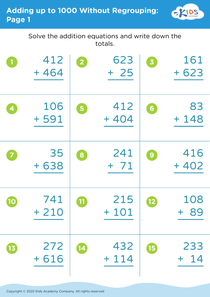
Unlock your child's mathematical potential with our "Adding up to 1000 with Regrouping Worksheets" designed for ages 3-9. These engaging worksheets foster mathematical reasoning by introducing essential regrouping concepts in a fun and accessible way. Perfect for classroom activities or at-home learning, these resources aim to build a strong foundation in addition skills while encouraging critical thinking and problem-solving. Each worksheet is crafted to be age-appropriate, making complex concepts understandable for young learners. Enhance your child’s confidence in math and help them master addition up to 1000 with our interactive, colorful, and user-friendly worksheets. Start the journey to numerical fluency today!
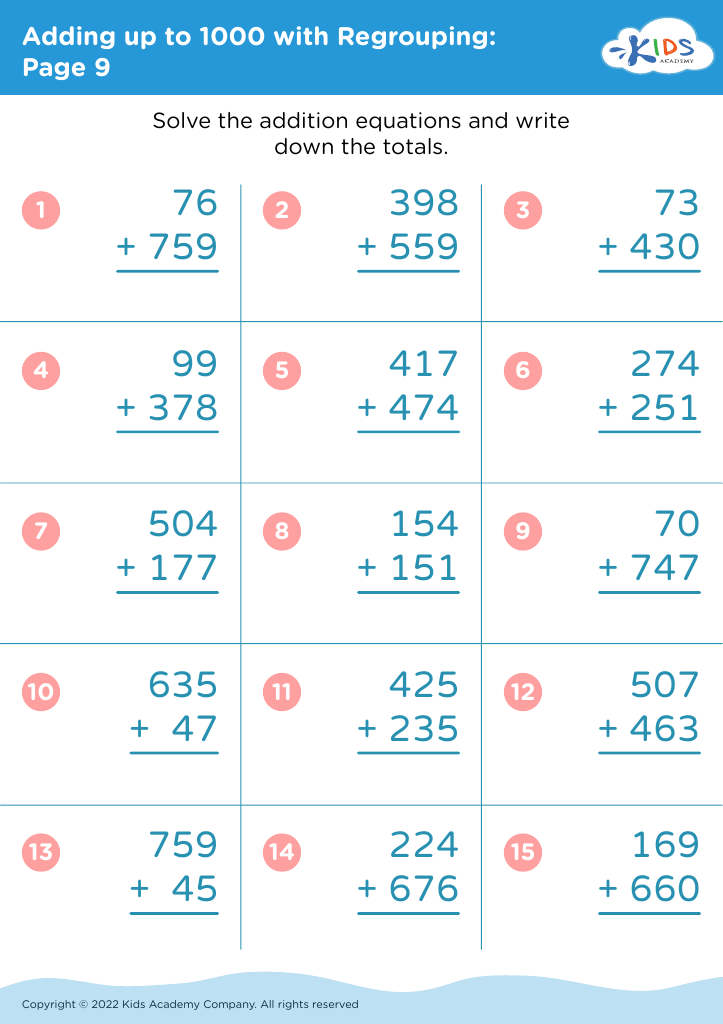
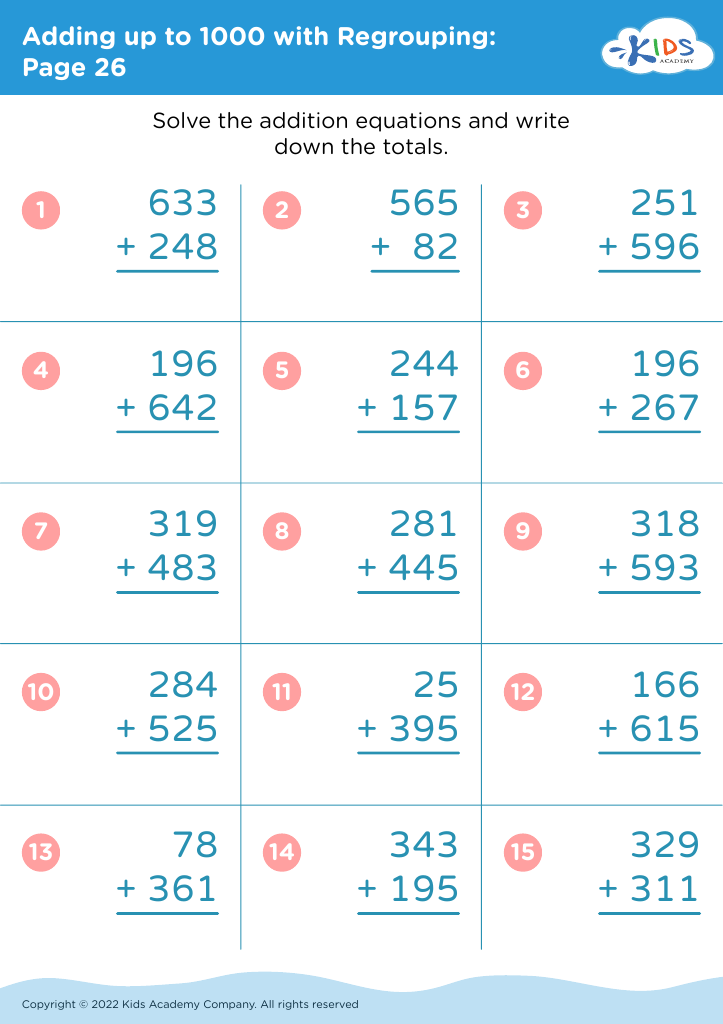
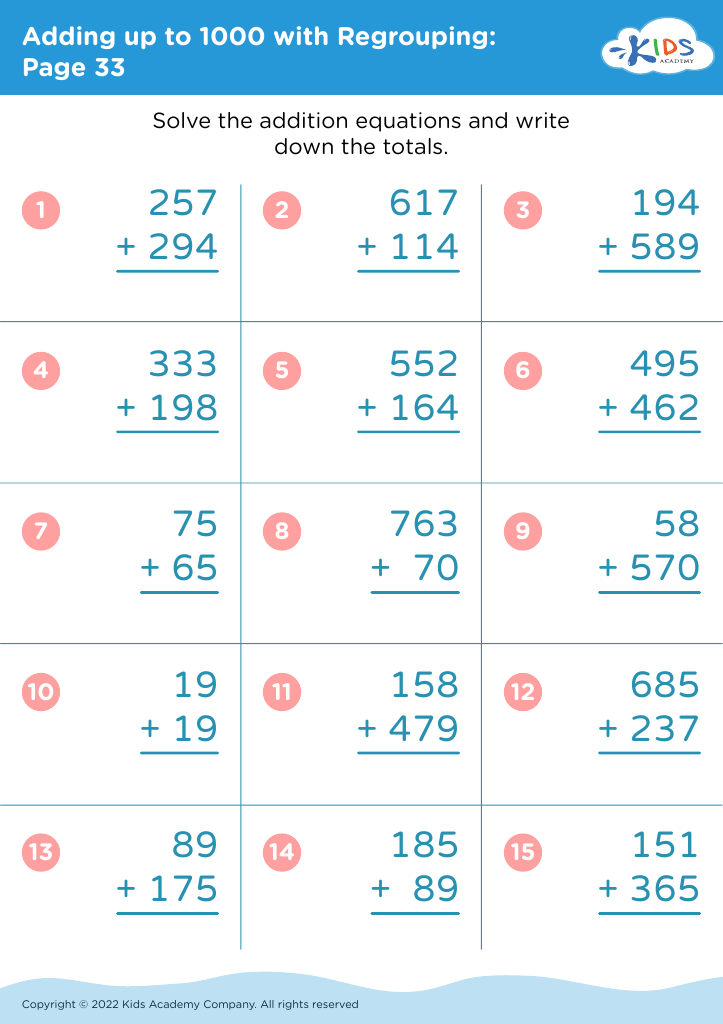


Mathematical reasoning, particularly skills like adding up to 1000 with regrouping, is crucial for children's cognitive development and problem-solving abilities. For parents and teachers of children aged 3-9, understanding these concepts lays a solid foundation for future learning.
Firstly, mastering basic addition and regrouping helps develop a child's number sense, allowing them to recognize relationships between numbers. This foundational skill supports higher-level math concepts encountered later in school, enabling them to tackle more complex problems with confidence.
Moreover, mathematical reasoning fosters critical thinking skills. When children learn to regroup, they practice breaking down problems into manageable parts, enhancing their analytical abilities. This not only aids in math but also benefits them in other subjects, as it encourages logical reasoning and a systematic approach to challenges.
Additionally, nurturing these skills can bolster a child's self-esteem. As they successfully grasp difficult concepts, they gain confidence, which motivates them to embrace new learning opportunities.
Finally, involving parents in this learning process encourages a collaborative approach to education, helping parents understand how to support their children and reinforcing the importance of mathematics in everyday life. This partnership plays a key role in cultivating a lifelong appreciation for math.