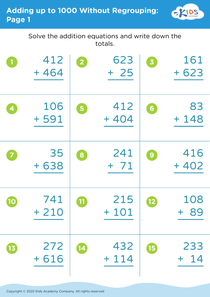
Problem-Solving Skills Adding up to 1000 with Regrouping Worksheets for Ages 3-9
5 filtered results
-
From - To
Unlock your child's potential with our "Problem-Solving Skills Adding up to 1000 with Regrouping Worksheets" tailored for ages 3-9. These engaging worksheets foster critical thinking and reinforce essential math skills, promoting a deep understanding of addition and regrouping. Designed to make learning fun, they address various problem-solving scenarios that help your child grasp concepts in a hands-on manner. By practicing with our worksheets, children develop confidence in their math abilities while enhancing logical reasoning. Perfect for at-home learning or classroom enrichment, these resources will guide young learners on their journey to mastering addition up to 1000!
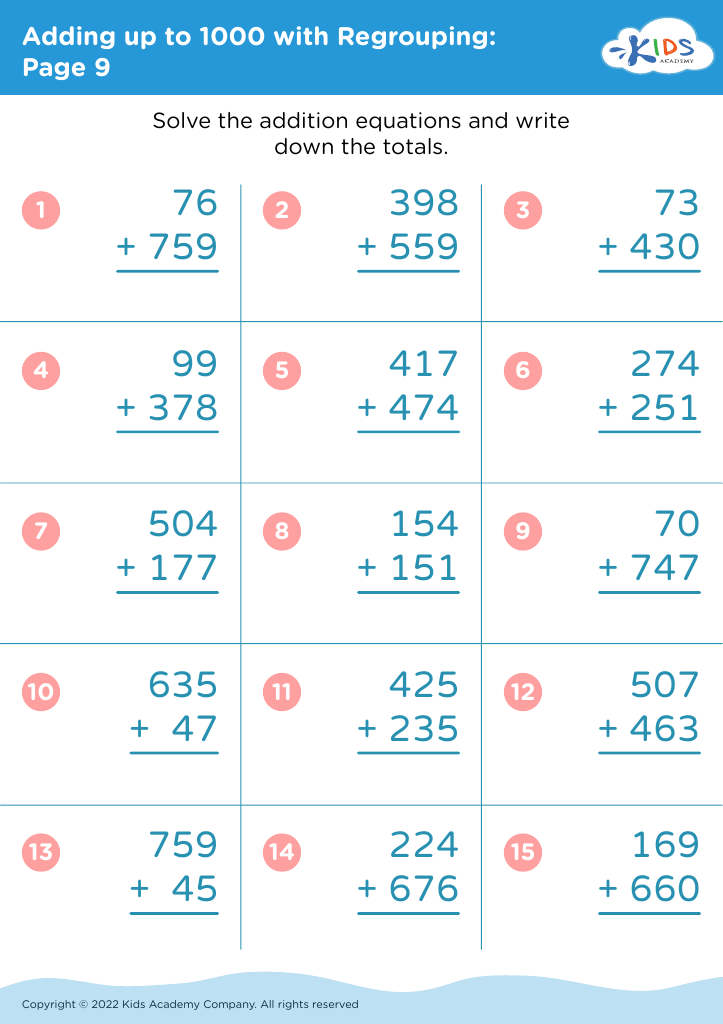
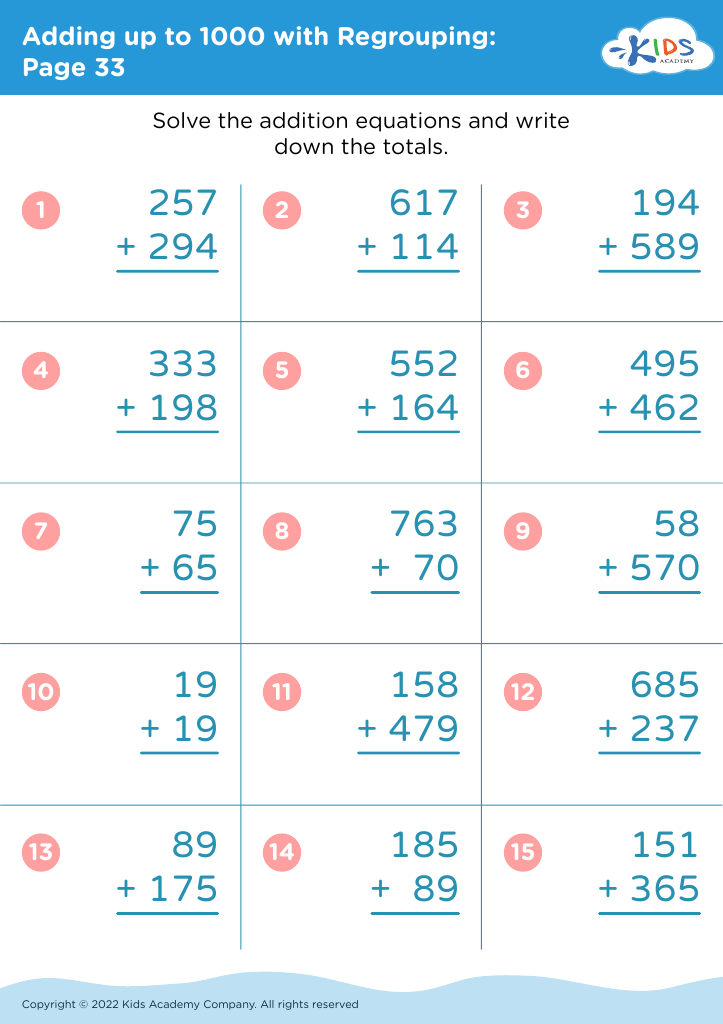
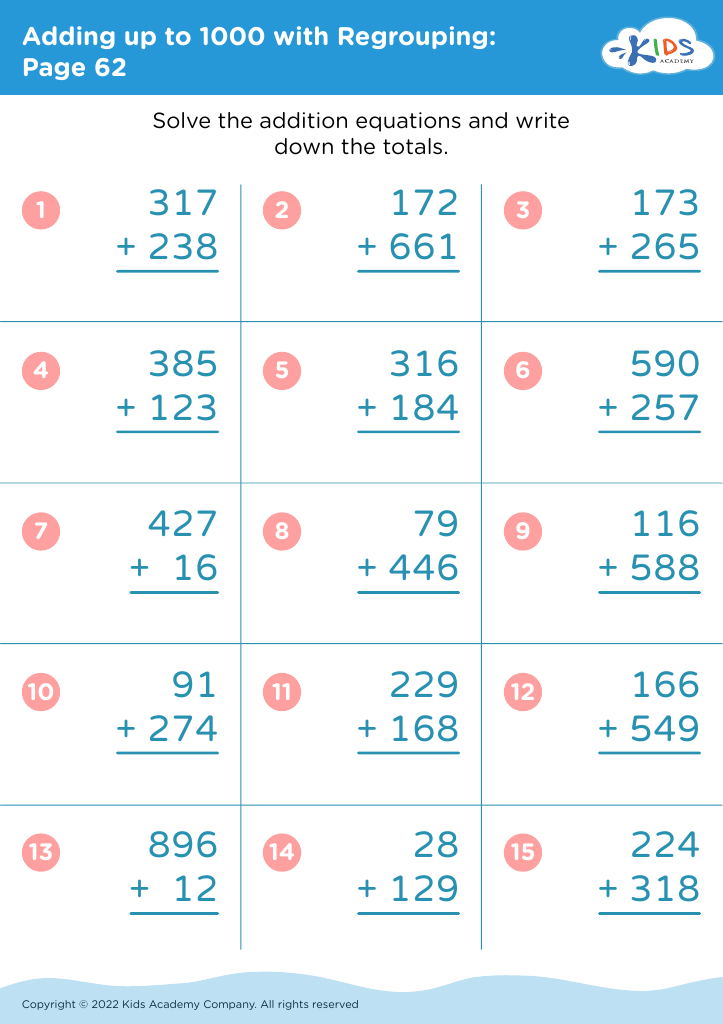
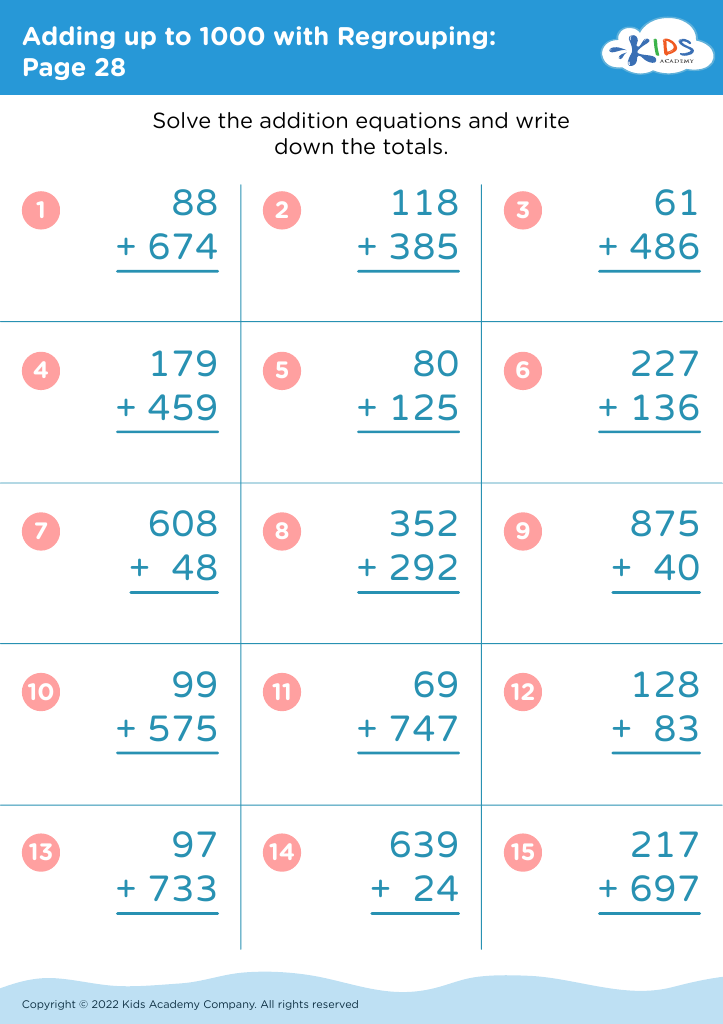
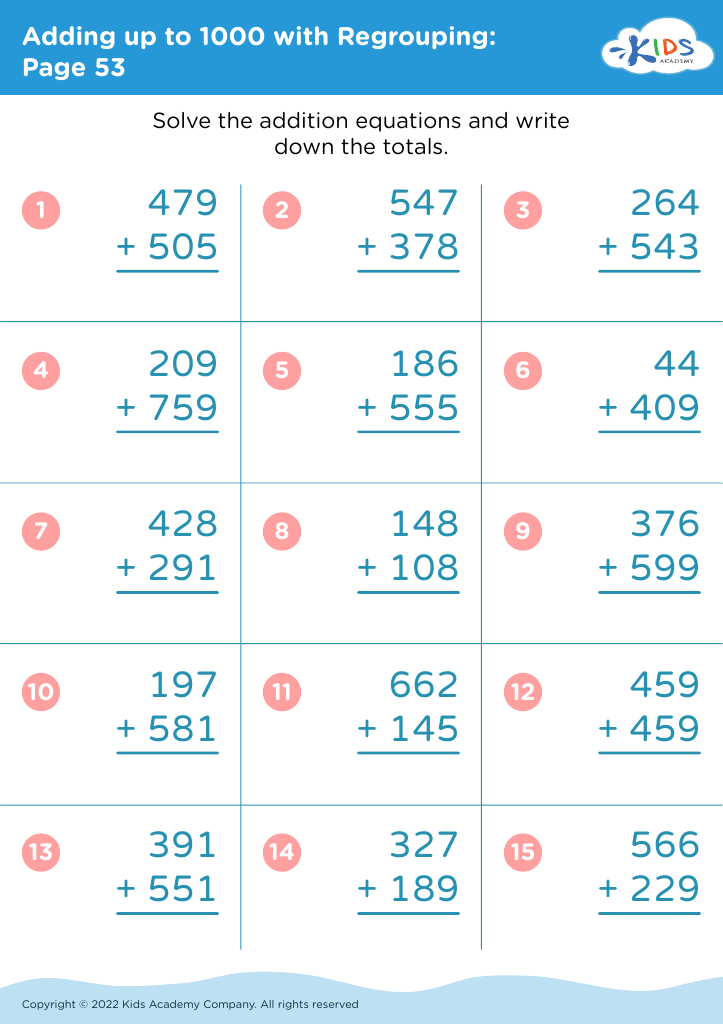


Parents and teachers should prioritize problem-solving skills, particularly with concepts like regrouping in addition up to 1000, because these foundational skills are vital for children's overall cognitive development and future academic success. For children aged 3-9, developing problem-solving abilities nurtures critical thinking, perseverance, and creativity, all essential traits for learning.
Understanding regrouping helps young learners grasp the concept of place value, prepare for more complex math, and build confidence in their abilities to tackle challenging problems. As they engage in exercises to add numbers up to 1000 with regrouping, they learn not only to calculate but also to approach problems systematically, breaking them into manageable parts—skills that are transferable to other areas, such as reading comprehension and scientific inquiry.
Moreover, early exposure to these mathematical strategies fosters a positive attitude toward learning. Kids who recognize that challenges can be solved through thoughtful techniques are more likely to embrace difficulties rather than shy away from them. Parents and teachers play a crucial role in creating a supportive environment for this learning, ensuring that children are equipped with the tools needed for lifelong success in and beyond the classroom.