Understanding fractions Adding up to 1000 with Regrouping Worksheets for Ages 3-9

Filters

18 filtered results

Clear all filters
Favorites
With answer key
Interactive

18 filtered results

Difficulty Level

Grade


Introducing our "Understanding Fractions Adding Up to 1000 with Regrouping Worksheets," designed for young learners aged 3-9! These engaging worksheets provide a fun and interactive way to help children grasp the concept of fractions and their relationship to whole numbers. With colorful visuals and clear instructions, kids will master adding fractions to make 1000 while learning fundamental math skills. Our thoughtfully designed activities emphasize regrouping techniques, making calculations easier and more understandable. Perfect for home or classroom use, these worksheets support early education, enhance critical thinking, and build confidence in young mathematicians. Let your child's math journey begin today!
Check out this FREE Trial Lesson on Adding up to 1000 with Regrouping for age 3-9!

Z

Favorites
With answer key
Interactive
  • 3-9
  • Understanding fractions
  • Adding up to 1000 with Regrouping
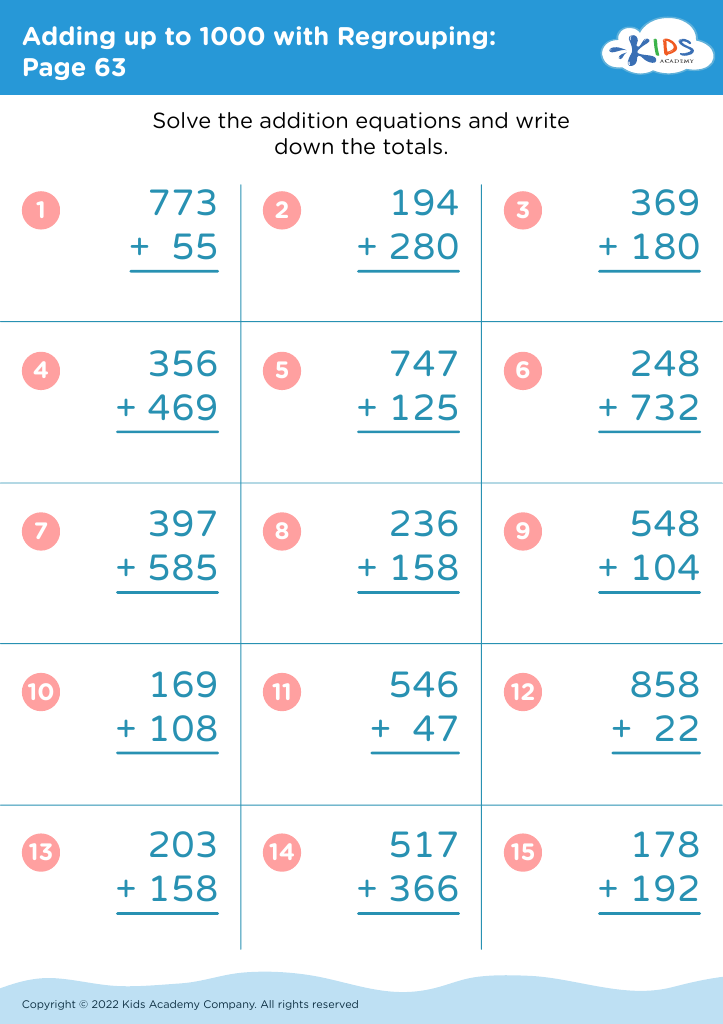
Adding up to 1000 with Regrouping: Page 63
Worksheet
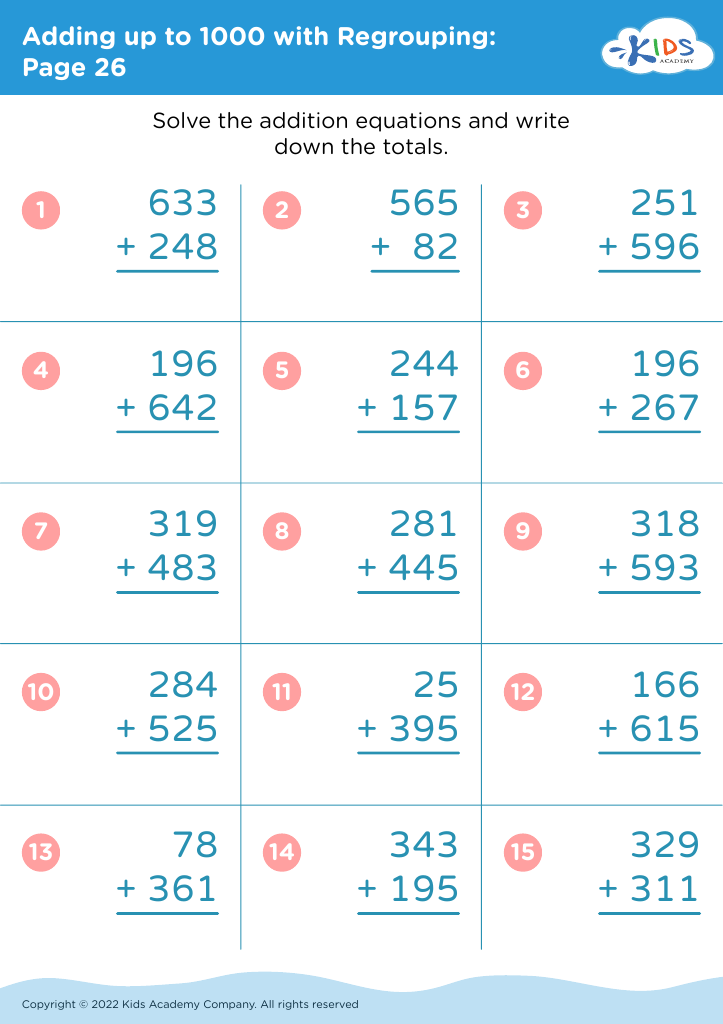
Adding up to 1000 with Regrouping: Page 26
Worksheet
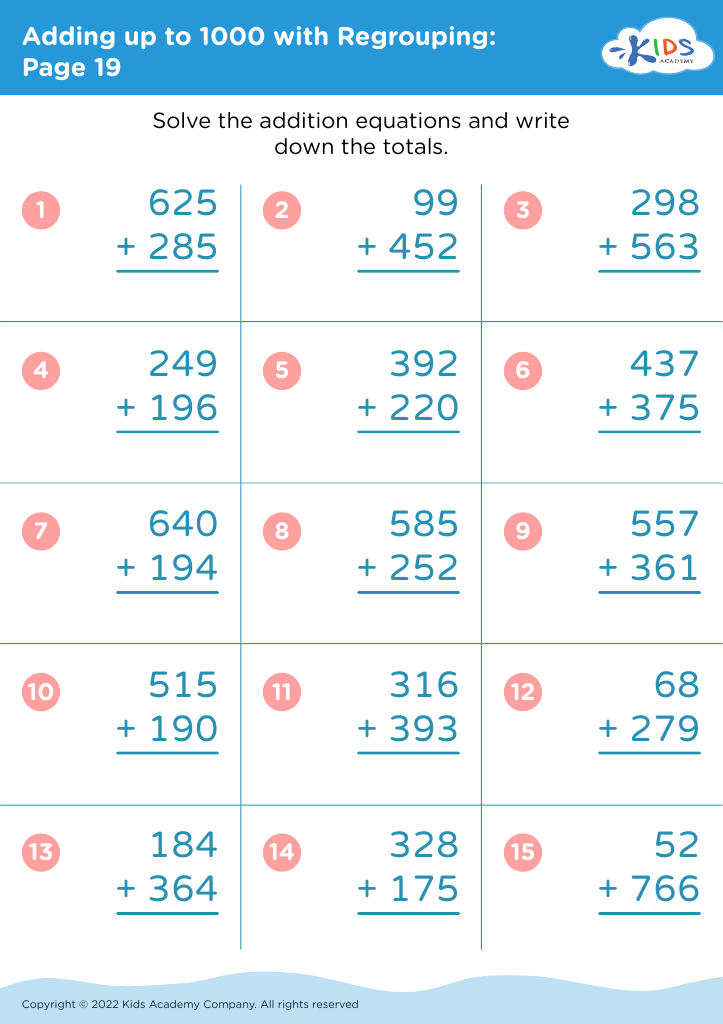
Adding up to 1000 with Regrouping: Page 19
Worksheet
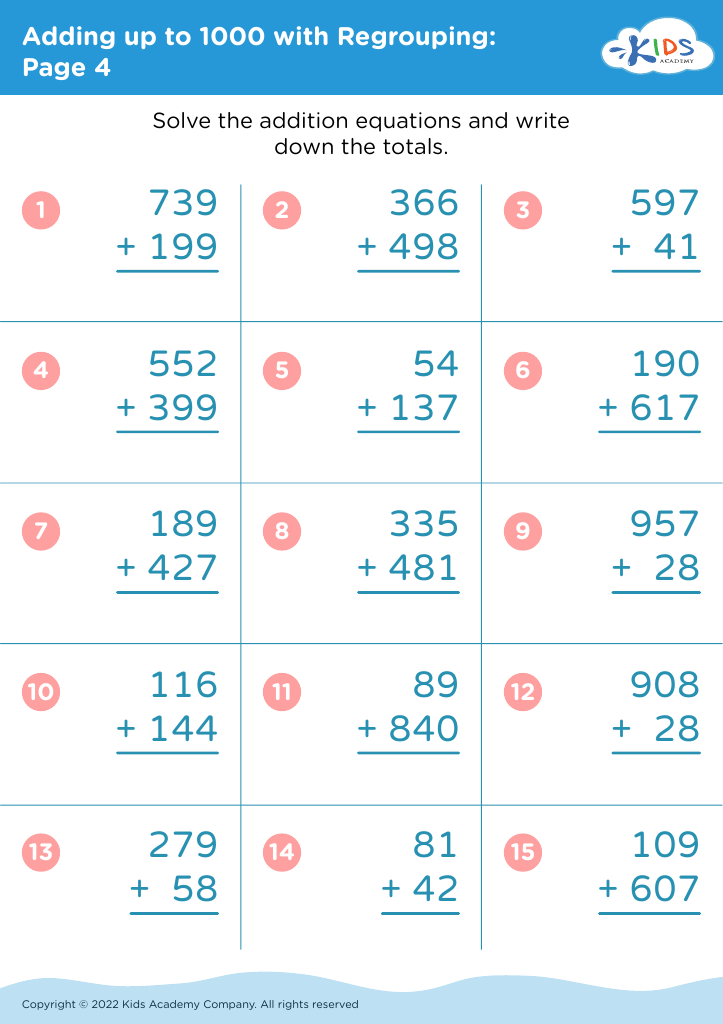
Adding up to 1000 with Regrouping: Page 4
Worksheet
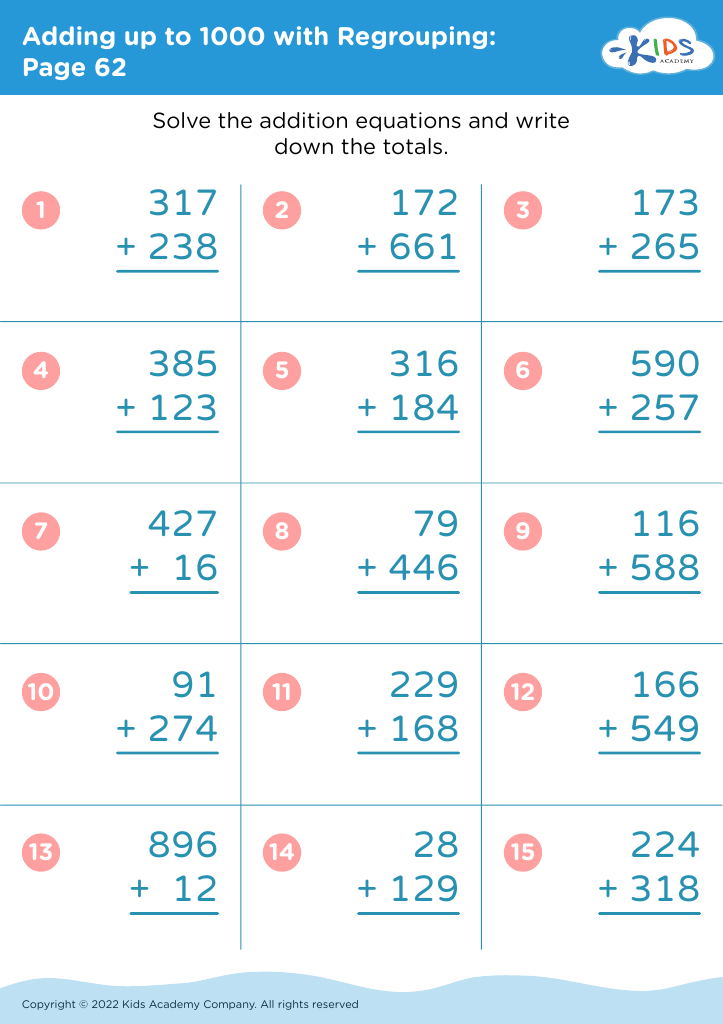
Adding up to 1000 with Regrouping: Page 62
Worksheet
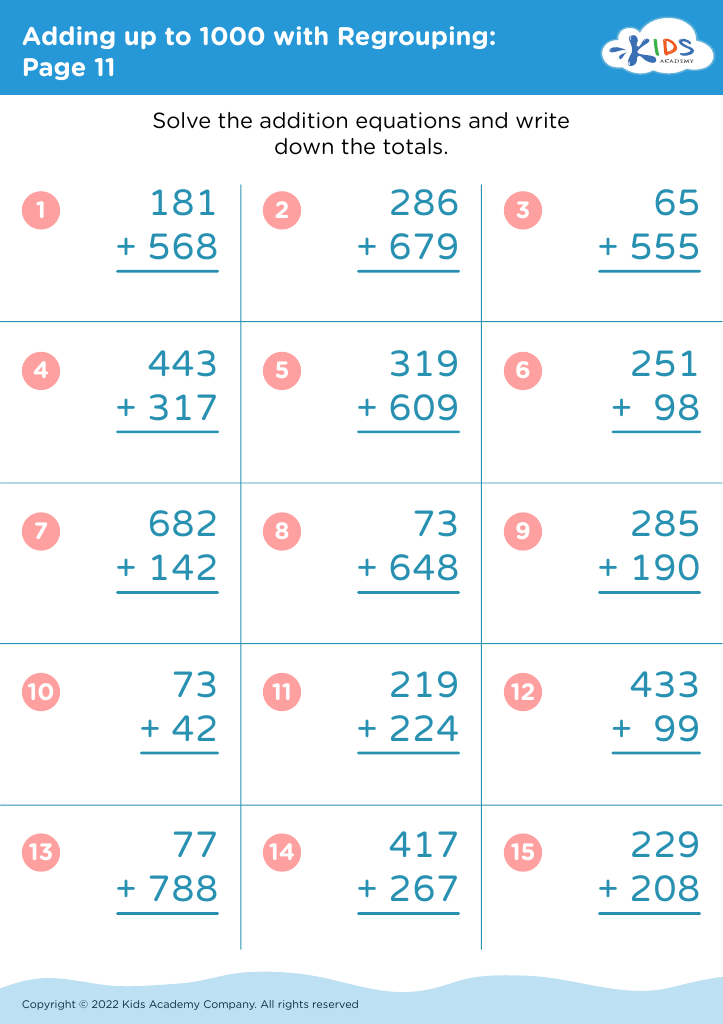
Adding up to 1000 with Regrouping: Page 11
Worksheet
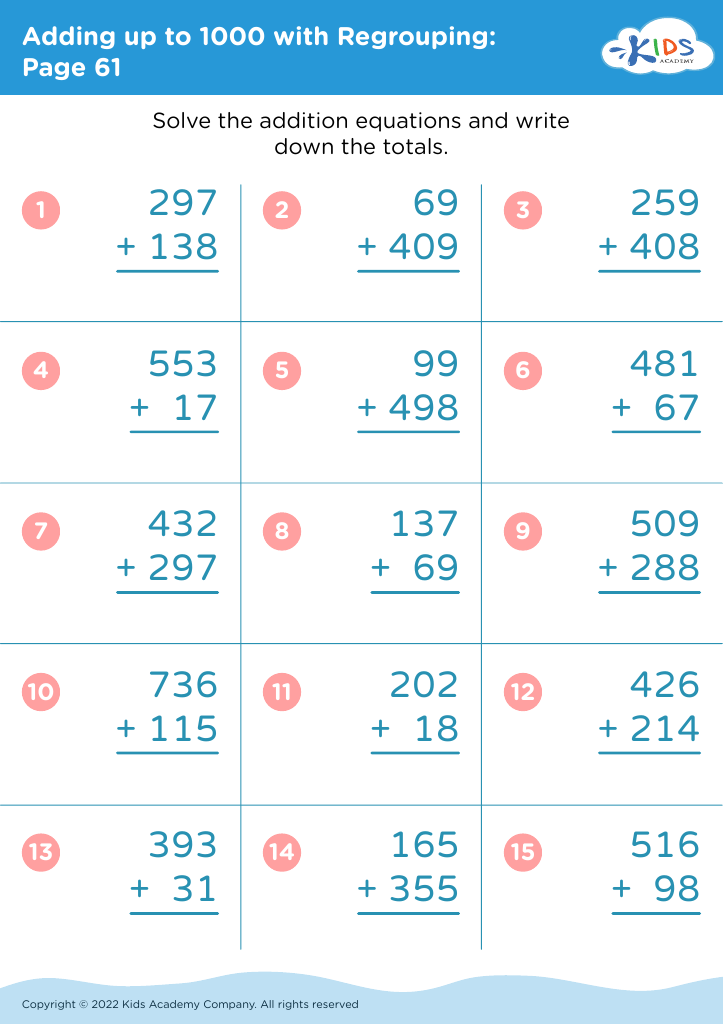
Adding up to 1000 with Regrouping: Page 61
Worksheet
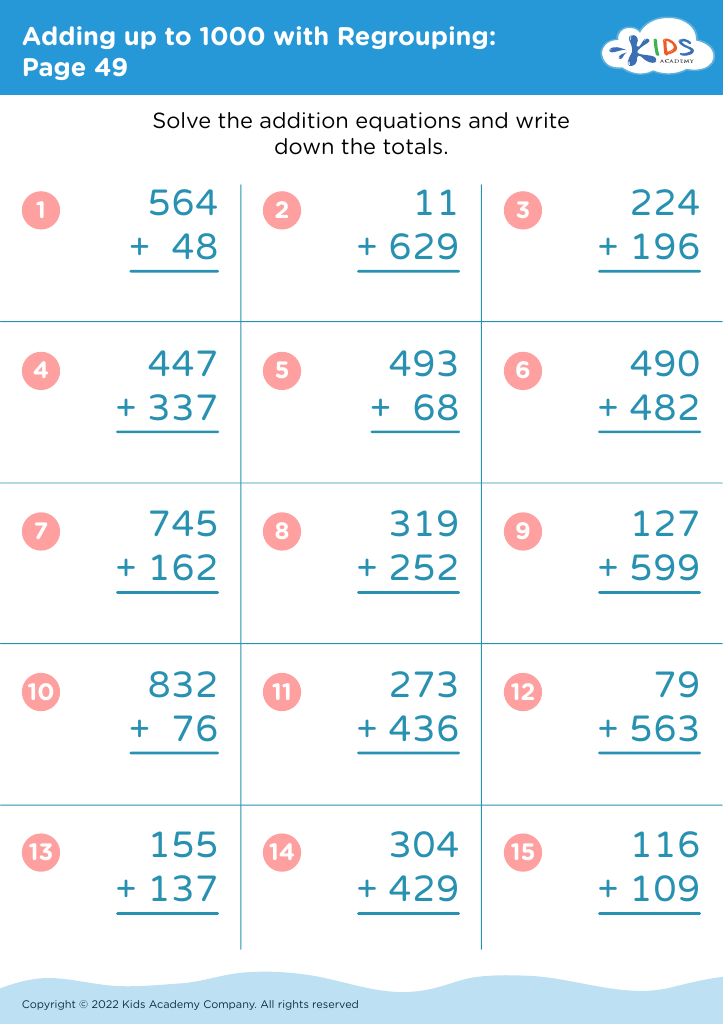
Adding up to 1000 with Regrouping: Page 49
Worksheet
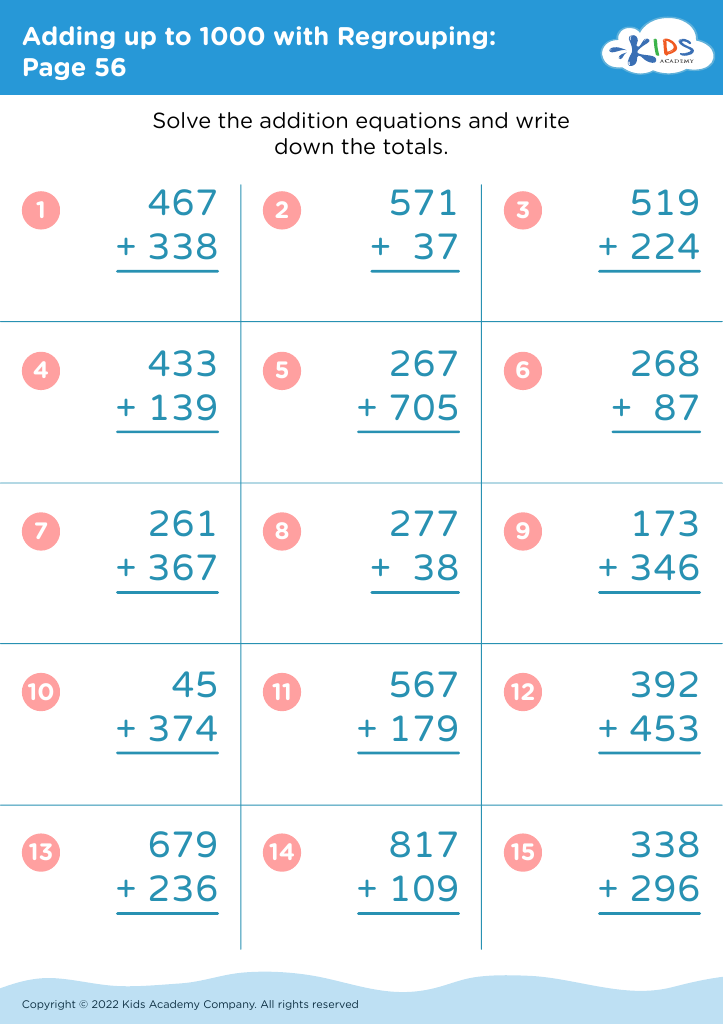
Adding up to 1000 with Regrouping: Page 56
Worksheet
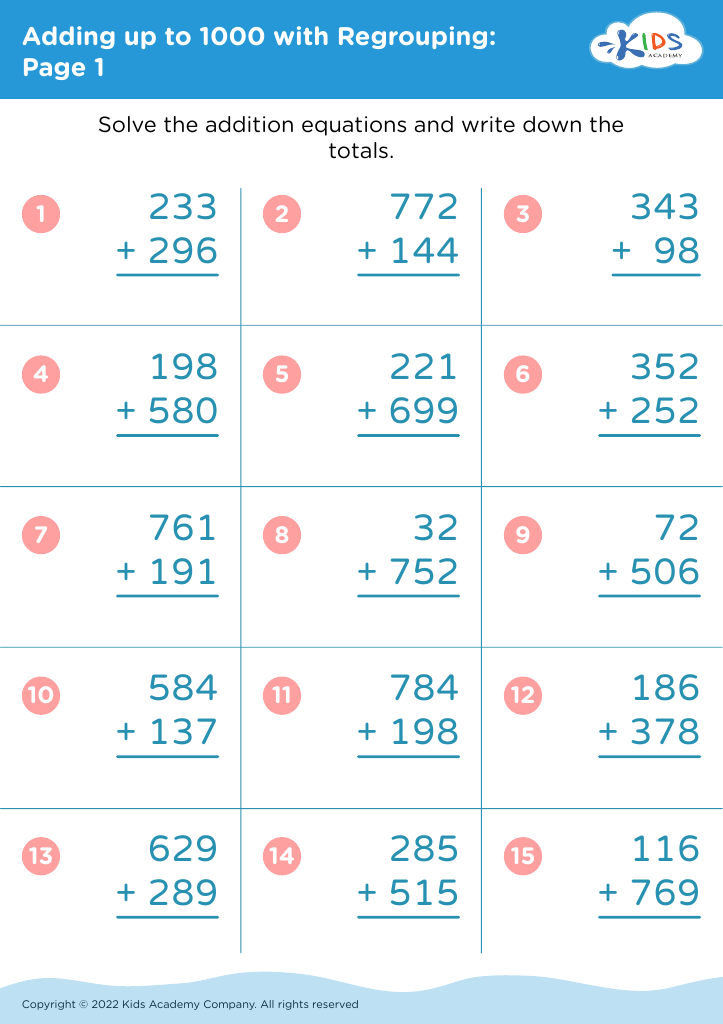
Adding up to 1000 with Regrouping: Page 1
Worksheet
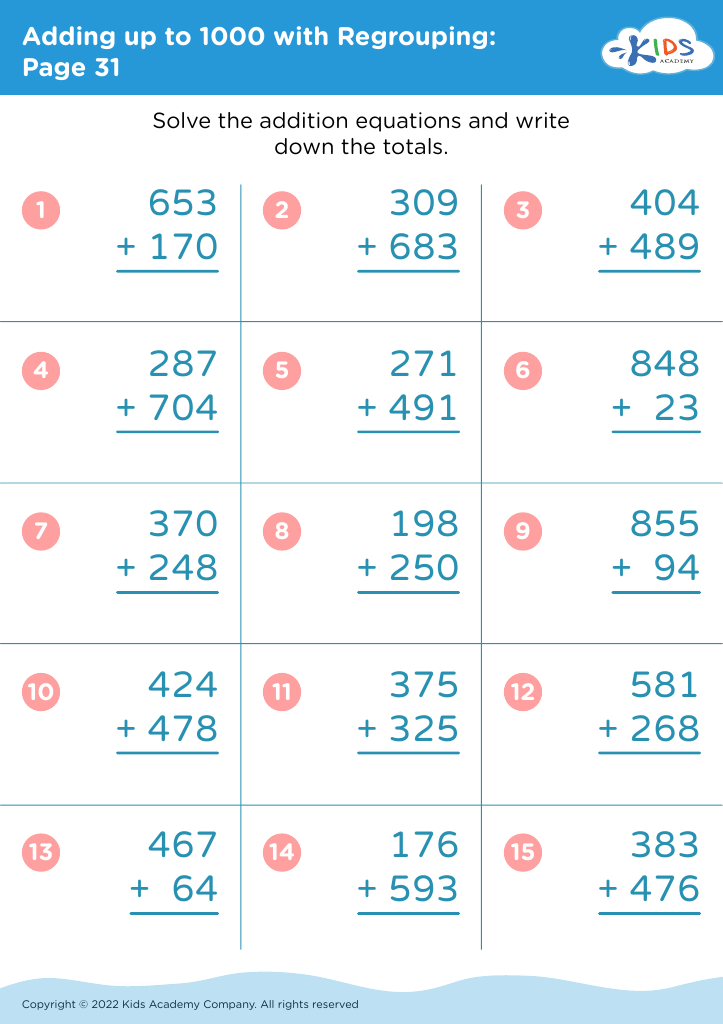
Adding up to 1000 with Regrouping: Page 31
Worksheet
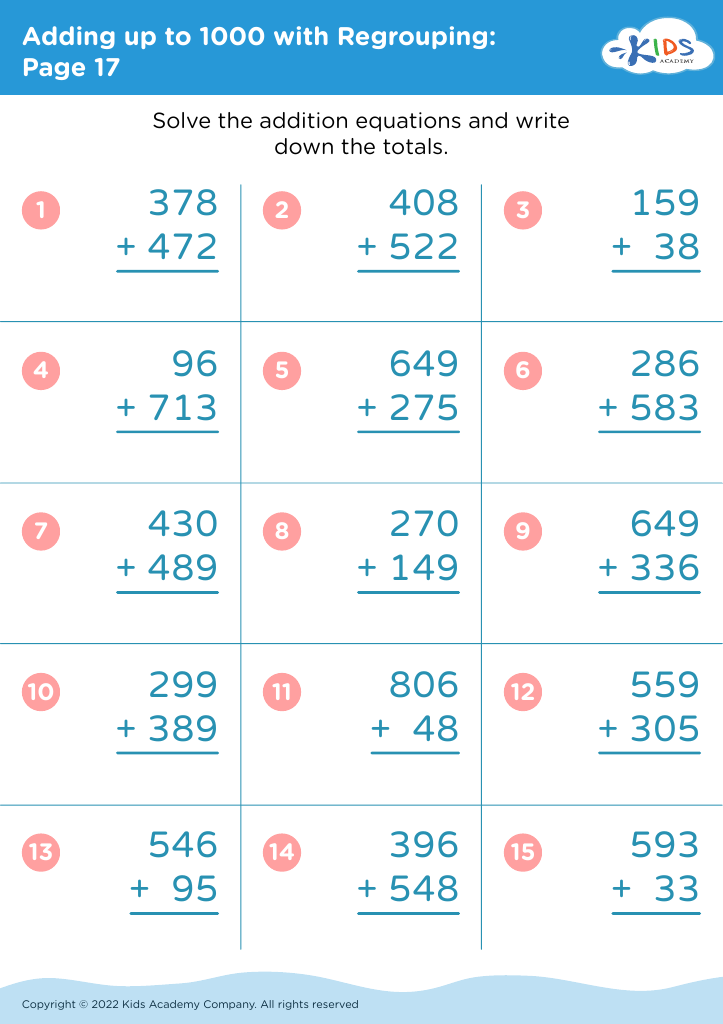
Adding up to 1000 with Regrouping: Page 17
Worksheet
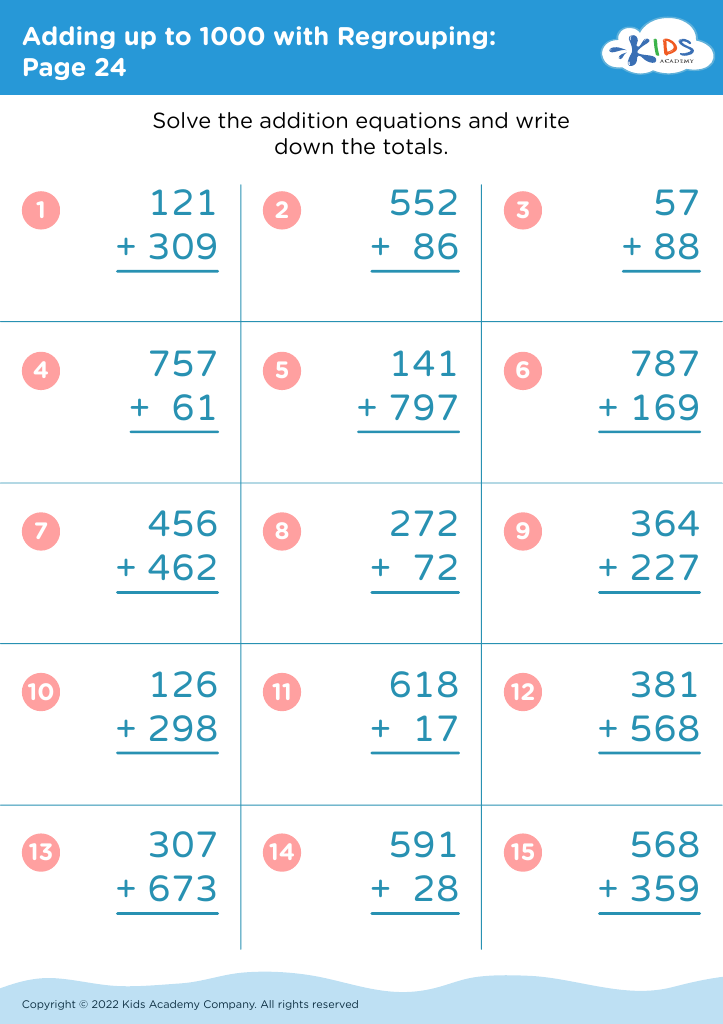
Adding up to 1000 with Regrouping: Page 24
Worksheet
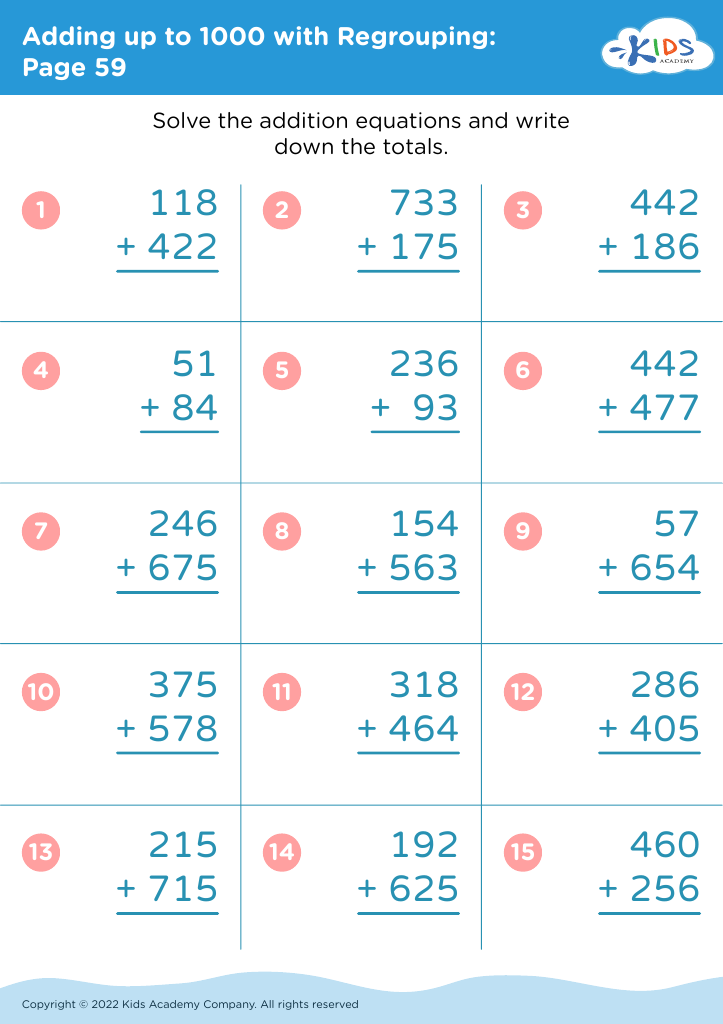
Adding up to 1000 with Regrouping: Page 59
Worksheet
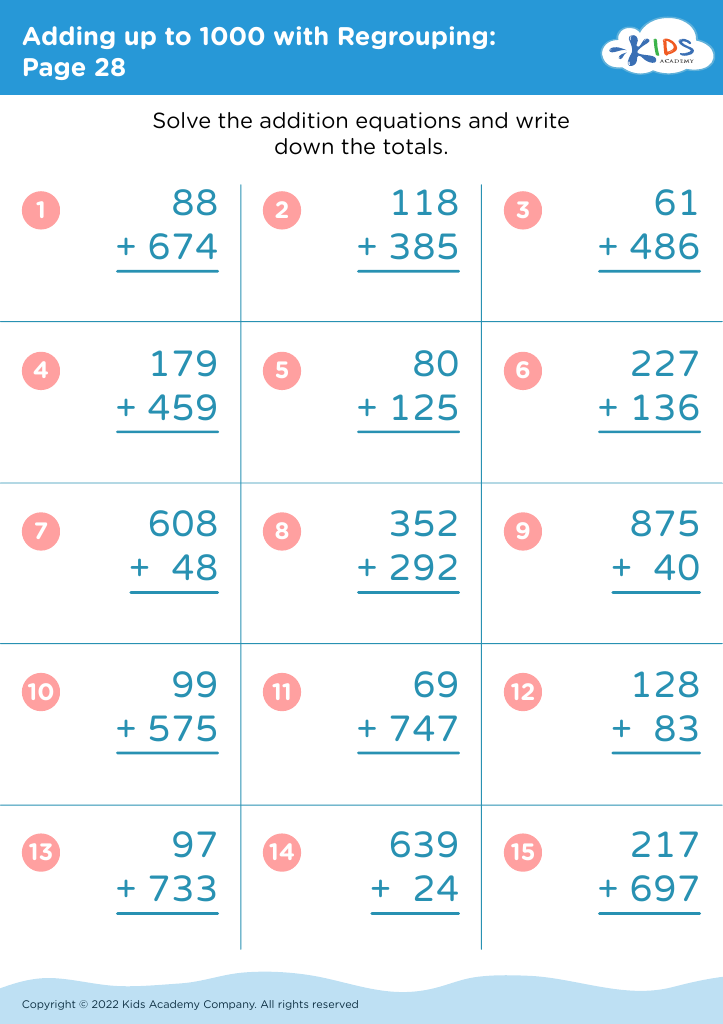
Adding up to 1000 with Regrouping: Page 28
Worksheet
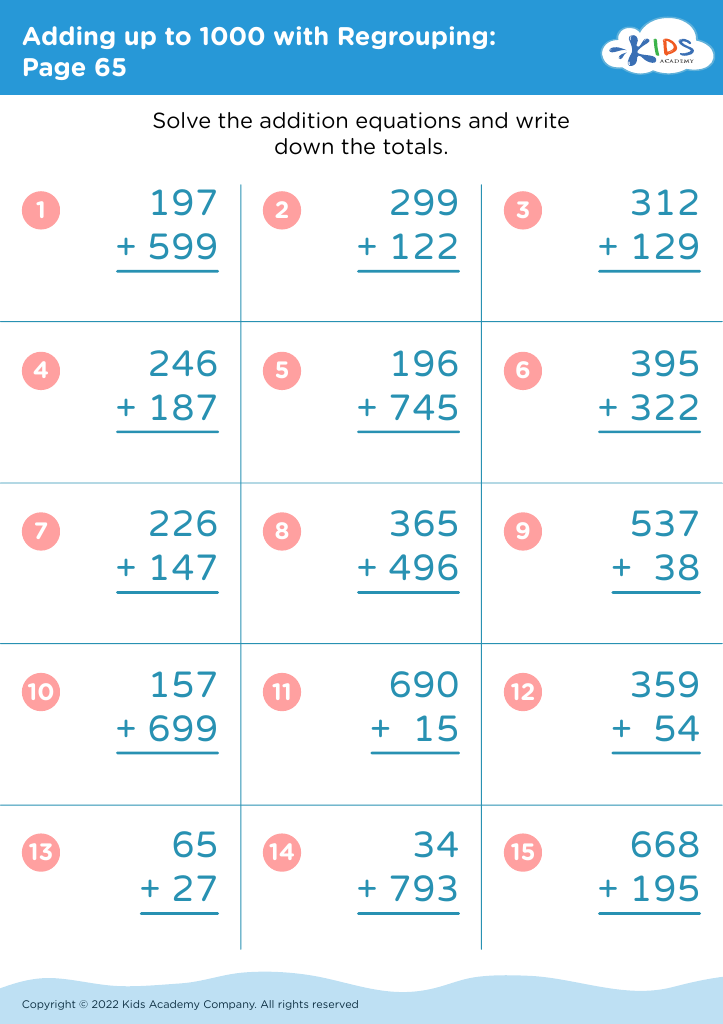
Adding up to 1000 with Regrouping: Page 65
Worksheet
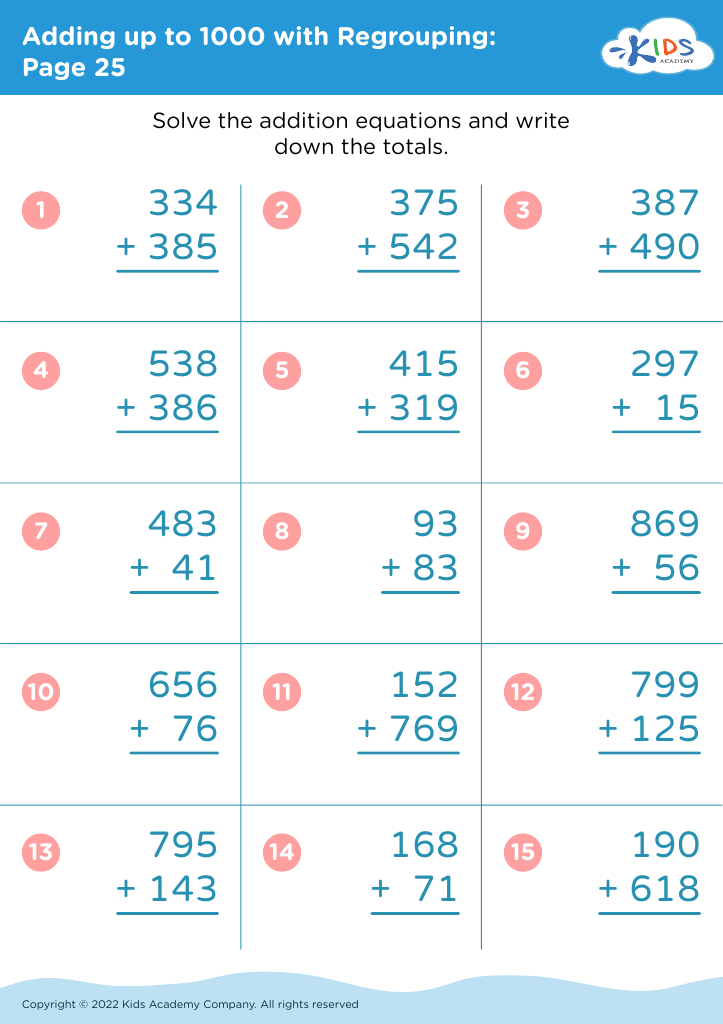
Adding up to 1000 with Regrouping: Page 25
Worksheet
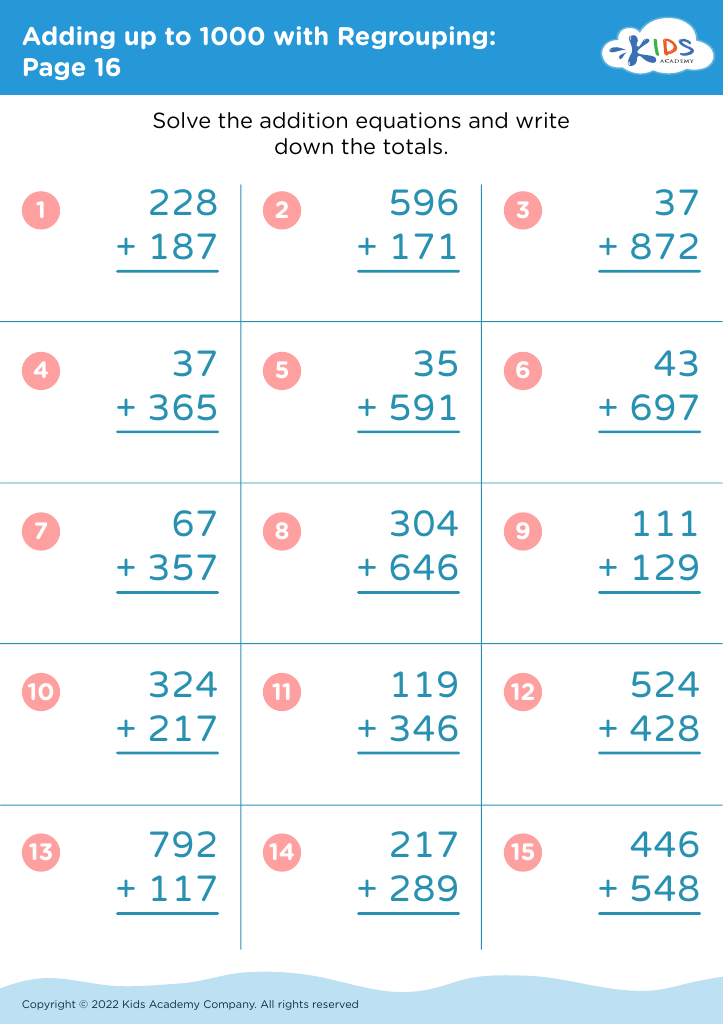
Adding up to 1000 with Regrouping: Page 16
Worksheet


Understanding fractions and the concept of regrouping is essential for young learners, especially ages 3-9, as it lays a solid foundation for their future math skills. Fractions teach children about parts of a whole, promoting critical thinking and problem-solving abilities. Recognizing fractions, and how they relate to each other, nurtures an early appreciation for patterns and relationships in mathematics, essential for advancing to more complex topics.

Adding up to 1000 with regrouping introduces children to the concept of place values and how numbers can be manipulated. This skill is crucial for developing mental math strategies and enhancing numerical fluency. Through these early experiences, children learn to manage the rules of addition and subtraction effectively, easing their progression into more advanced arithmetic.

Parents and teachers should prioritize these concepts because early mastery fosters confidence in young learners, making them more willing to tackle challenging problems in later grades. Moreover, a strong grasp of fractions and regrouping expands children’s ability to understand real-world scenarios, whether in cooking, sharing, or budgeting. Ultimately, this foundational approach to math equips children with the skills and mindset they need for lifelong learning and success.