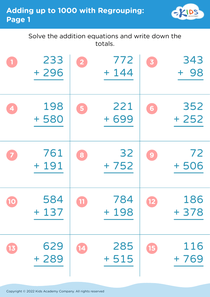
Fine Motor Skills Adding up to 1000 Without Regrouping Worksheets for Ages 3-9
3 filtered results
-
From - To
Enhance your child's fine motor skills while mastering addition with our engaging "Adding Up to 1000 Without Regrouping" worksheets, designed specifically for ages 3-9. These printable activities combine essential math learning with fun, hands-on experiences, making education enjoyable. As children work on these worksheets, they will improve their pencil grip, control, and dexterity—key components for successful writing and drawing. Our carefully crafted exercises encourage problem-solving and confidence in math, all while fostering motor skill development. Perfect for classroom or home learning, these worksheets offer a comprehensive approach to foundational math skills in an interactive way. Download today to get started!
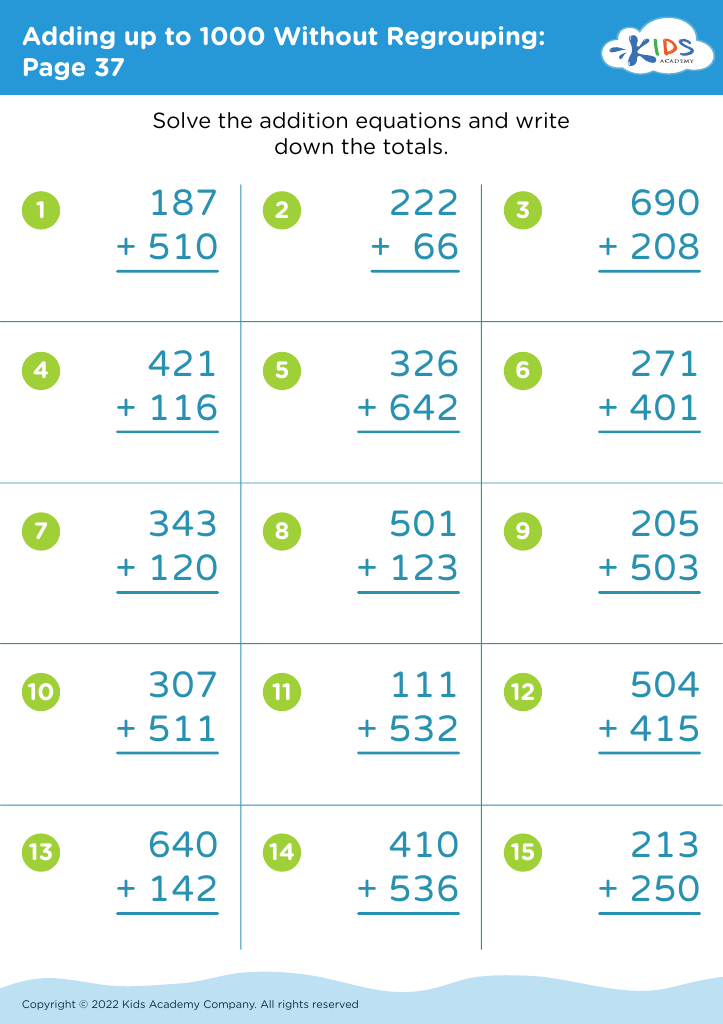
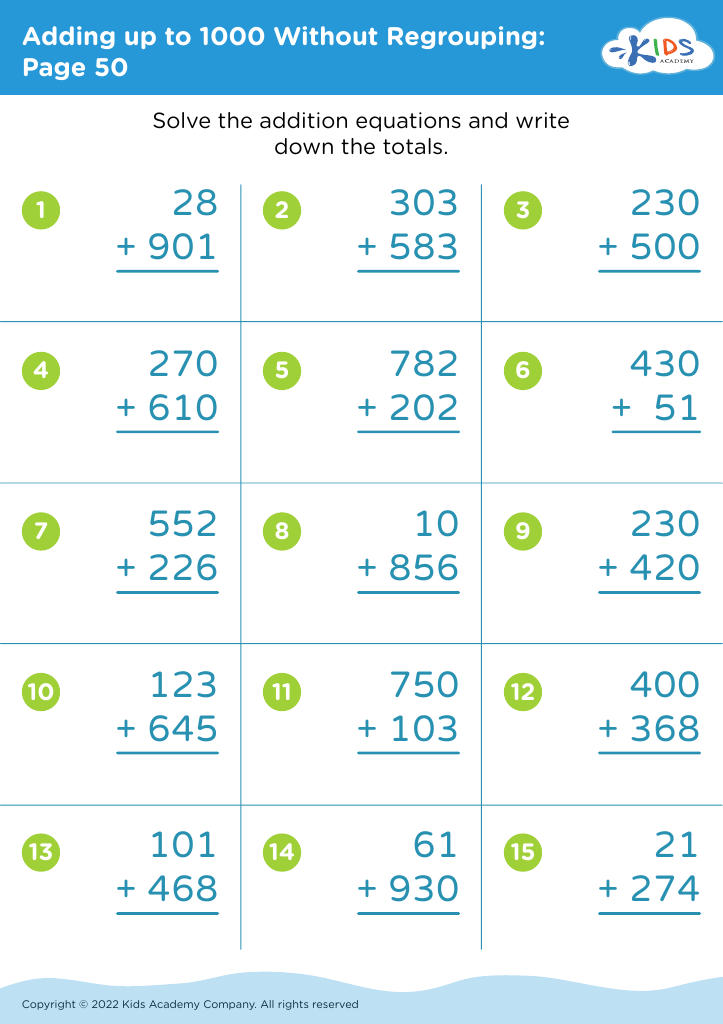
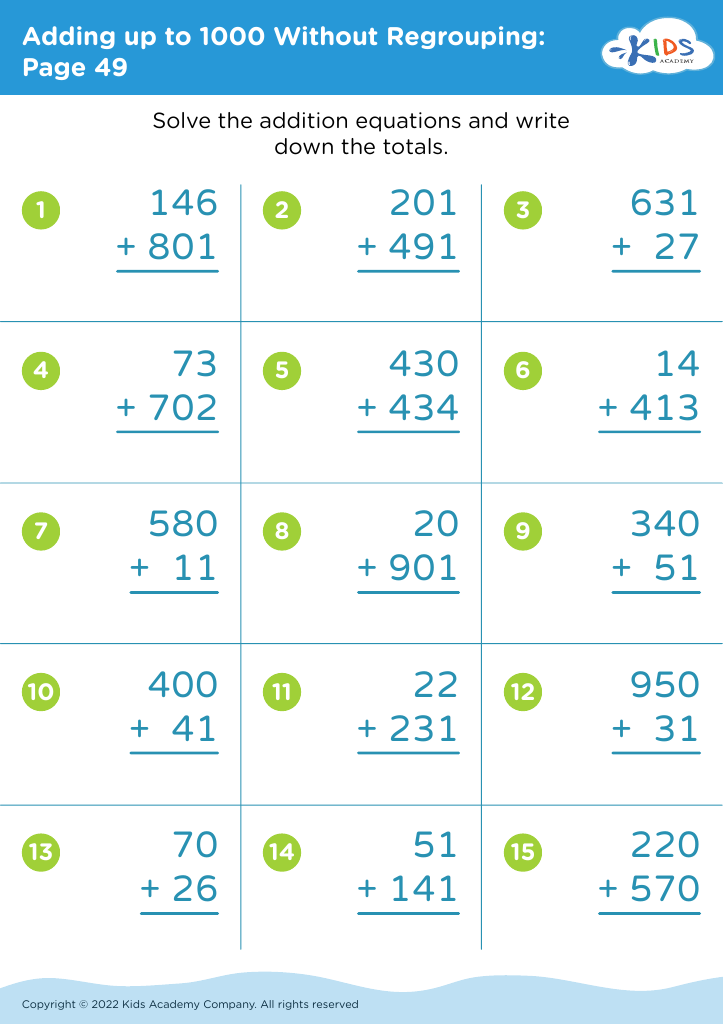


Fine motor skills are crucial for young children's overall development, particularly for those aged 3 to 9. These skills involve the coordination of small muscles in the hands and fingers, facilitating tasks like writing, drawing, and using scissors. Parents and teachers should prioritize developing fine motor skills as they lay the foundation for mathematical understanding, including concepts like addition.
When children practice adding numbers up to 1000 without regrouping, they're not just applying numerical skills; they are also engaging their fine motor skills through activities such as writing numbers, manipulating counters, or using beads for hands-on learning. This multi-sensory interaction reinforces their learning and improves concentration and precision—key components of both fine motor development and mathematical competence.
Furthermore, strong fine motor skills aid in children's ability to express themselves creatively and handle everyday tasks like buttoning clothes or tying shoelaces. If these skills are nurtured in the early years, it sets a solid stage for future academic success and personal independence.
Ultimately, supporting fine motor development through engaging activities related to addition not only enhances a child's mathematical abilities but also equips them with essential life skills. Parents and teachers should collaboratively emphasize this vital area of growth to foster well-rounded, capable children.