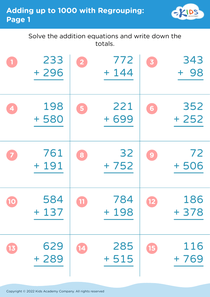
Fraction comparison Adding up to 1000 Without Regrouping Worksheets for Ages 3-9
4 filtered results
-
From - To
Explore our engaging "Fraction Comparison Adding Up to 1000 Without Regrouping Worksheets" designed for children aged 3-9. Perfect for early learners, these worksheets provide a fun and interactive way to master fraction comparison while enhancing their understanding of addition without needing to regroup. Each worksheet is carefully crafted to offer a balance of challenge and enjoyment, making math approachable and exciting for young minds. Ideal for classrooms or home learning, these resources help build foundational math skills that will stay with children as they progress. Dive into a world of mathematical exploration and watch your child thrive in their learning journey!
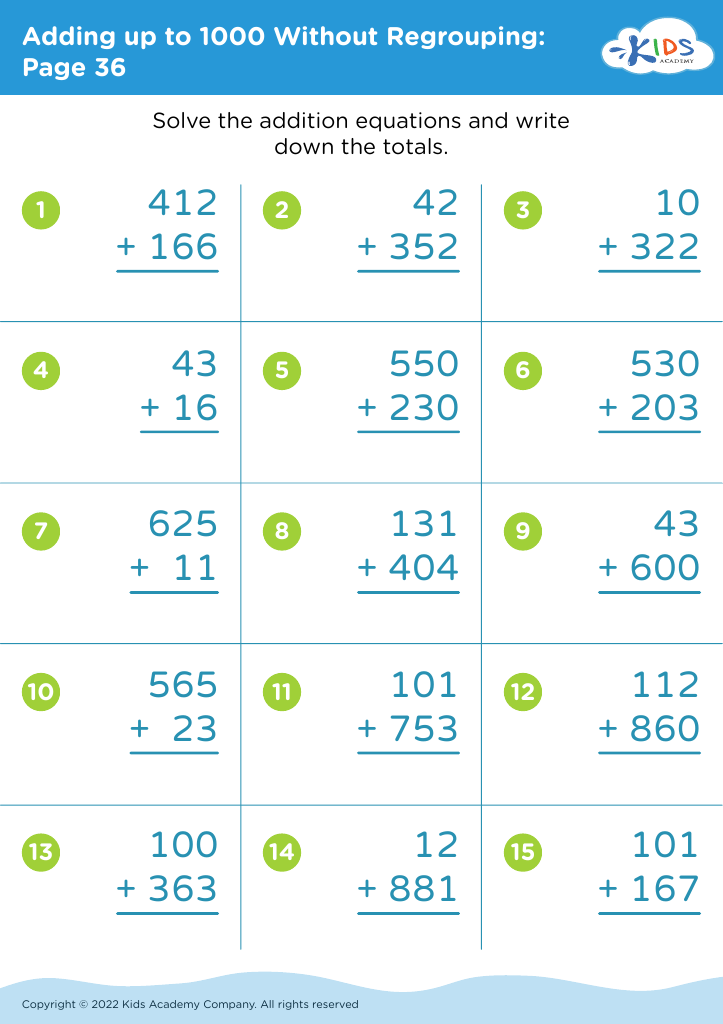
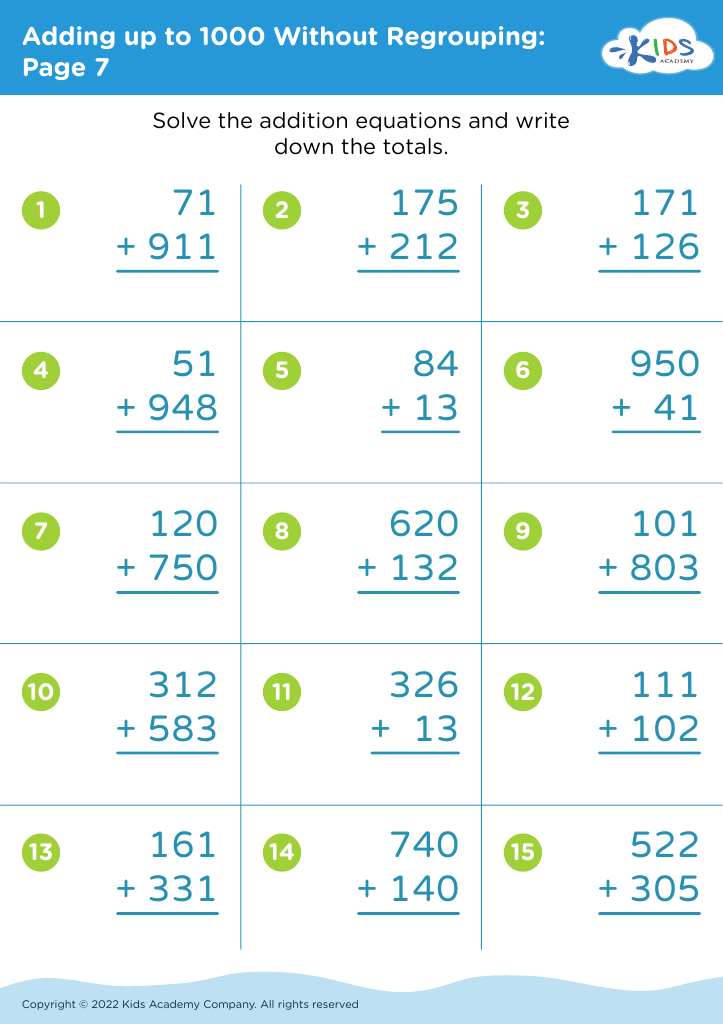
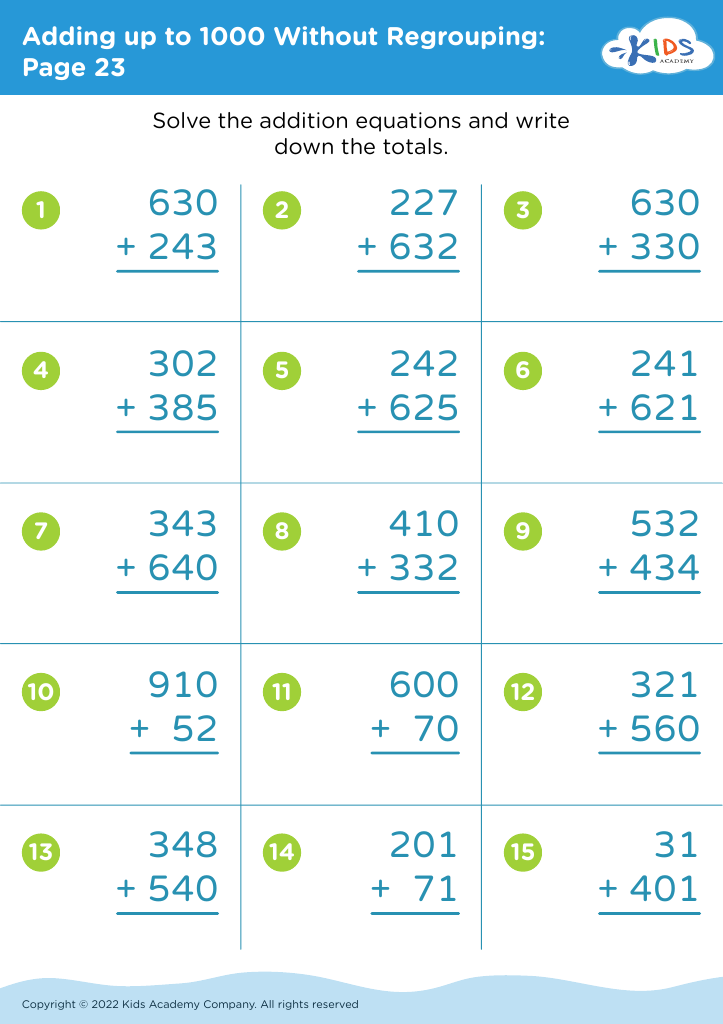
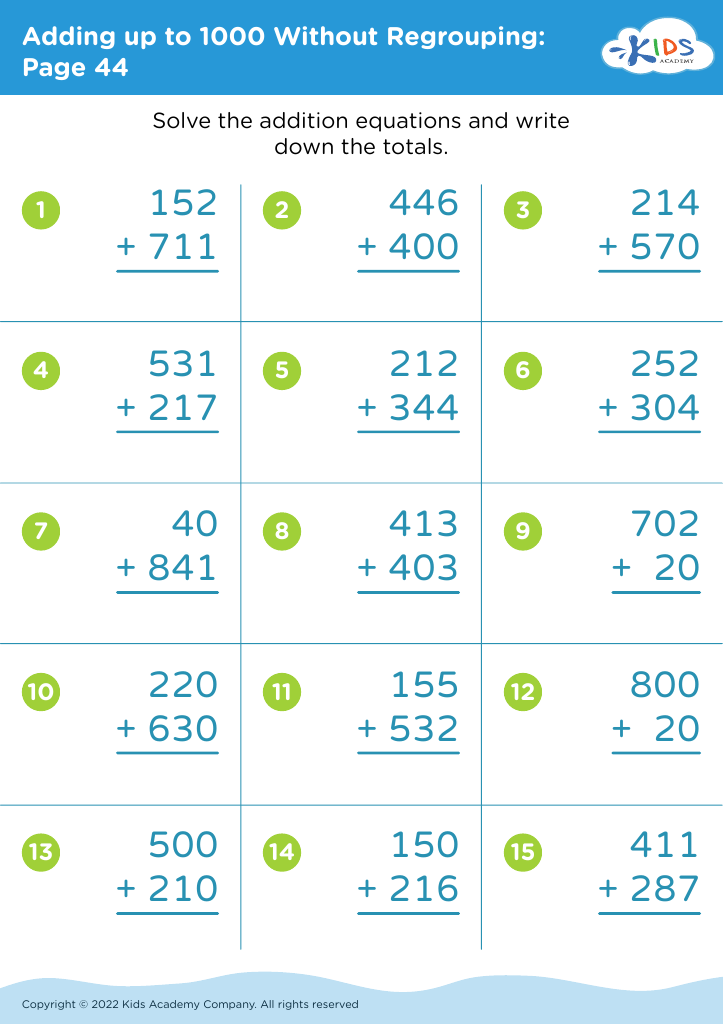


Understanding fraction comparison and addition without regrouping is crucial for children aged 3-9 as it lays the foundation for their future mathematical skills. At this young age, children are developing their number sense and problem-solving abilities. Fractions are an essential part of mathematics that introduce concepts of part-to-whole relationships, which they encounter in everyday situations, such as cooking or measuring.
When parents and teachers focus on these skills, they empower children to think critically and make connections between numbers. Learning to compare fractions fosters an understanding of how quantities relate to one another, which is vital for more advanced math topics like ratios, percentages, and algebra.
Additionally, mastering addition without regrouping reinforces place value understanding and mental math strategies, promoting confidence and independence in problem-solving. Strong foundational skills will serve children well as they tackle more complex mathematical concepts later in their education.
Moreover, engaging with these concepts through playful activities encourages a positive attitude toward math, vital for lifelong learning. By prioritizing fraction understanding and careful addition, parents and educators cultivate essential skills that will help children succeed academically and develop a passion for learning.