Improving math skills Adding up to 1000 Without Regrouping Worksheets for Ages 3-9
3 filtered results
-
From - To
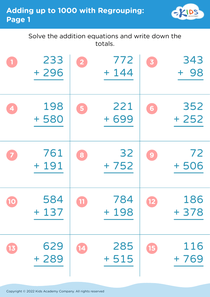
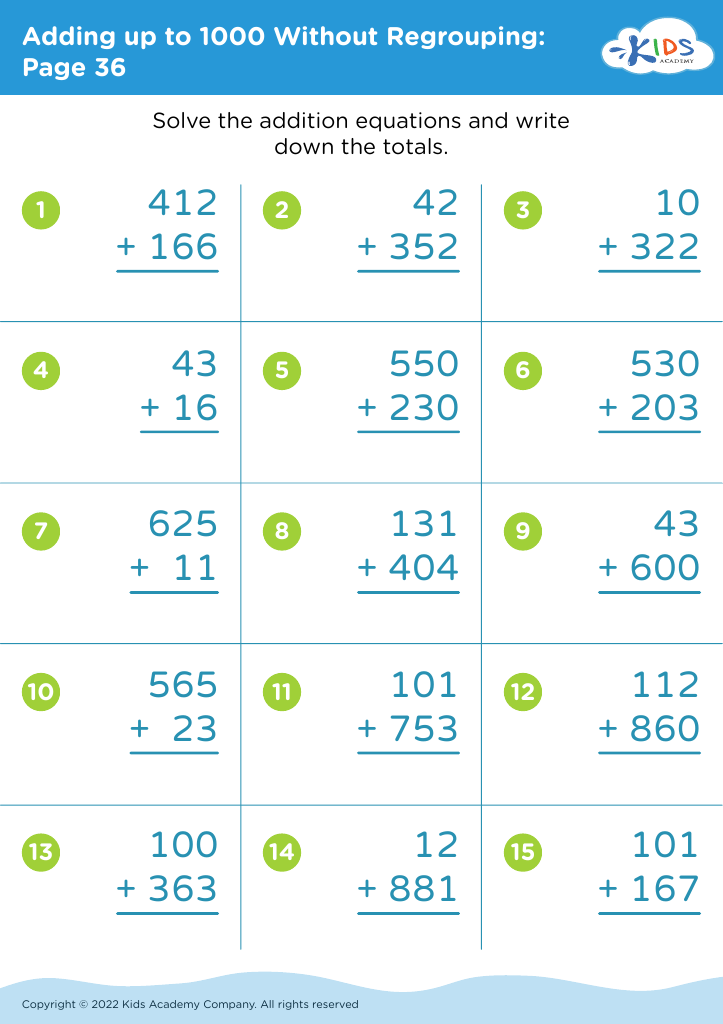
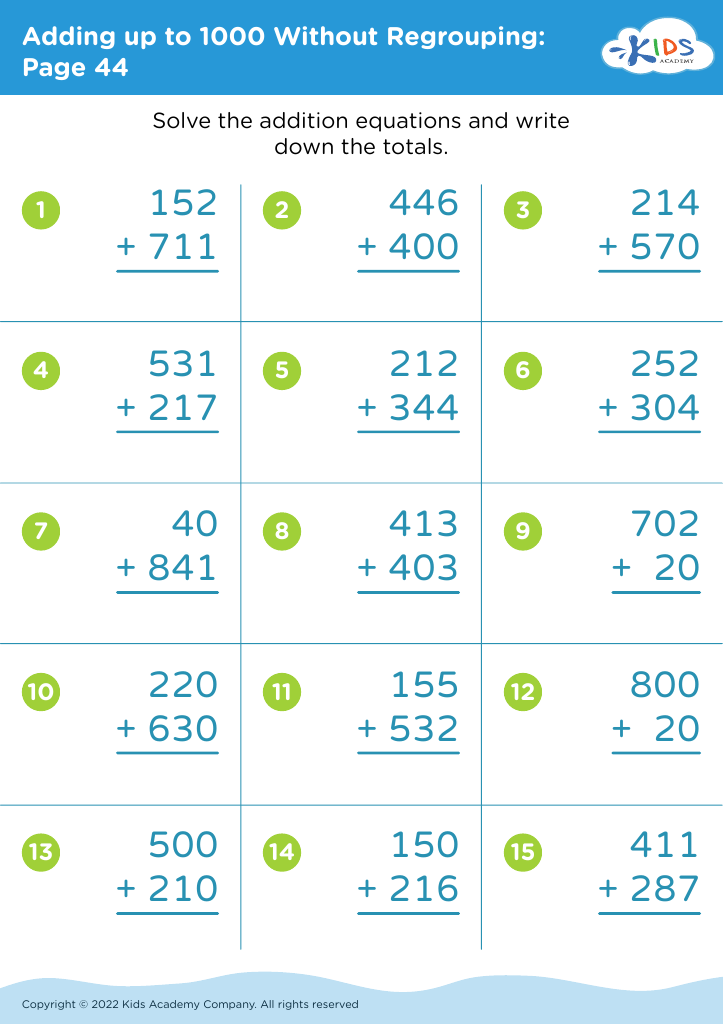
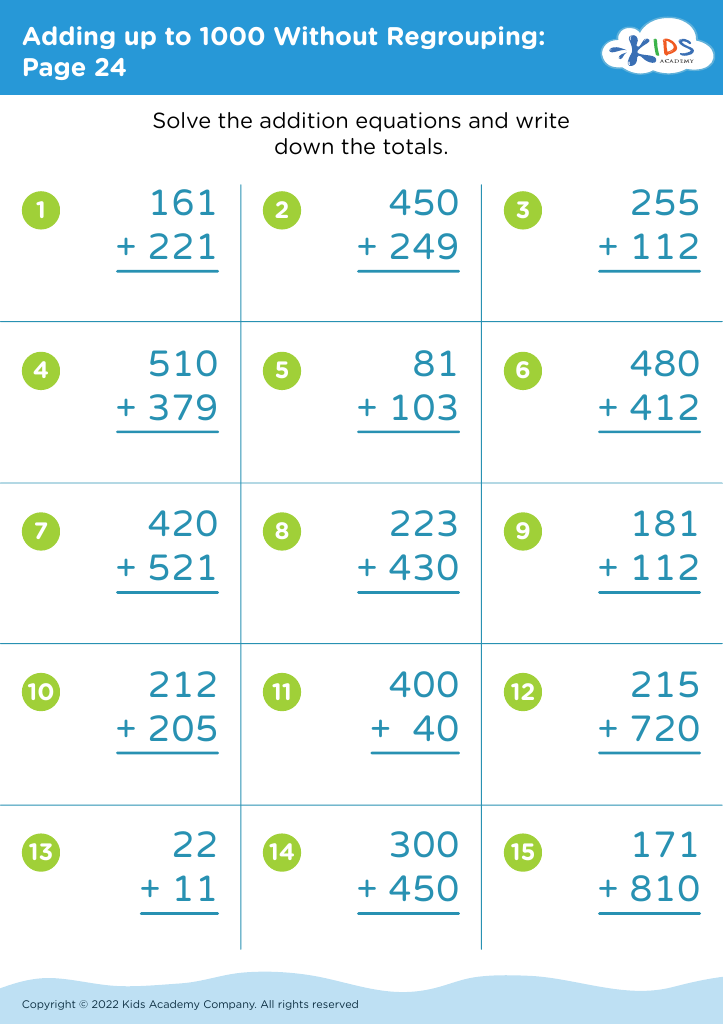
Discover our "Improving Math Skills: Adding Up to 1000 Without Regrouping" worksheets, designed for children ages 3-9. These engaging and interactive resources support early learners in mastering addition without regrouping, reinforcing essential math concepts through fun activities. Our carefully crafted worksheets cater to various skill levels, enabling children to build confidence and fluency in mathematics. Kids will enjoy practicing addition in a playful manner while improving their logical thinking and problem-solving skills. Ideal for at-home learning or classroom use, these worksheets provide a strong foundation for future math success. Unlock your child's potential with our beautifully designed, educational materials!


Improving math skills, particularly the ability to add up to 1000 without regrouping, is crucial for children aged 3-9 for several reasons. First, mastering basic addition lays the foundation for more complex mathematical concepts, enhancing problem-solving skills and critical thinking. As foundational numeracy develops, children gain confidence, making them more eager to engage in academic pursuits.
Moreover, encouraging proficiency in addition from a young age fosters a positive attitude toward mathematics, reducing math anxiety that can hinder future learning. Skills gained during these formative years not only benefit children academically but also have everyday applications, from handling money to understanding time and measurements.
Parents and teachers play an integral role in establishing these skills through interactive activities and practical exercises, making math relevant and fun. By prioritizing addition up to 1000 without regrouping, adults help children recognize patterns and develop strategies, which are essential for success in later math-related subjects like geometry and algebra.
Investing in children’s math skills early on thus ensures they are well prepared for future challenges, promotes a lifelong love of learning, and equips them with essential life skills. Ultimately, fostering a strong mathematical foundation yields benefits beyond the classroom.