Filters

16 filtered results

Clear all filters
Favorites
With answer key
Interactive

16 filtered results

Difficulty Level

Grade


Enhance your child's math skills with our "Comparing Fractions Adding up to 1000 Worksheets" designed for kids aged 3-9. These engaging and interactive worksheets introduce fractions in a fun and accessible way, allowing young learners to develop a strong foundational understanding. Through practical exercises, children will learn how to compare fractions effectively, building their confidence in math. Perfect for both classroom activities and home practice, our worksheets feature colorful illustrations and age-appropriate challenges to captivate young minds. Foster critical thinking and problem-solving skills as kids embark on their math journey. Start exploring the world of fractions today!
Check out this FREE Trial Lesson on Adding up to 1000 for age 3-9!

My Family

Favorites
With answer key
Interactive
  • 3-9
  • Comparing Fractions
  • Adding up to 1000
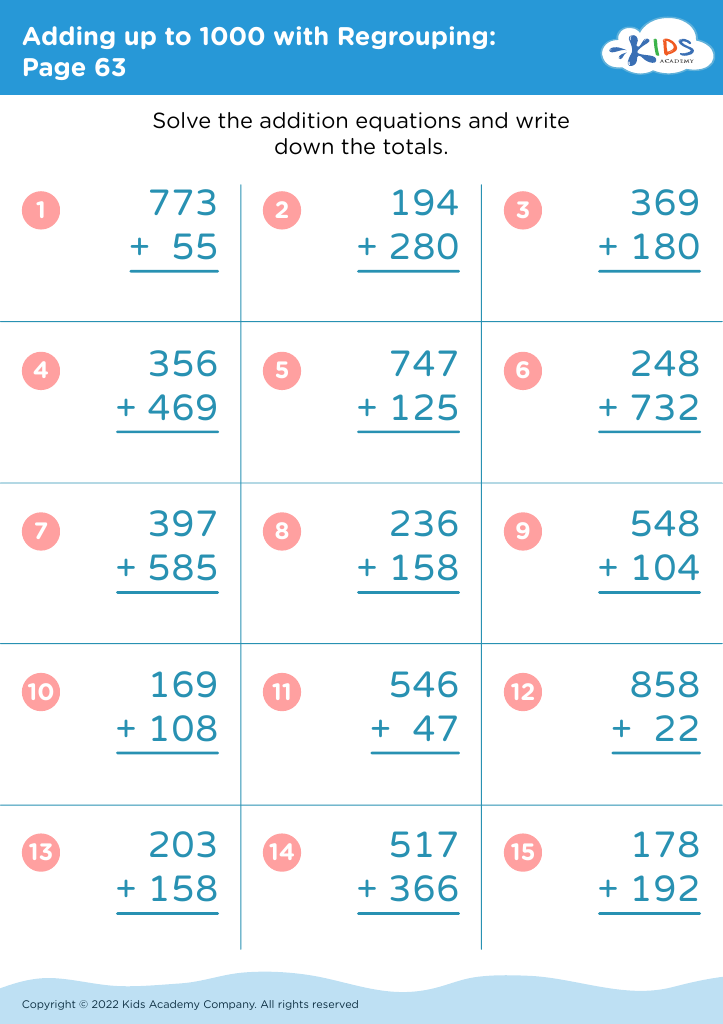
Adding up to 1000 with Regrouping: Page 63
Worksheet
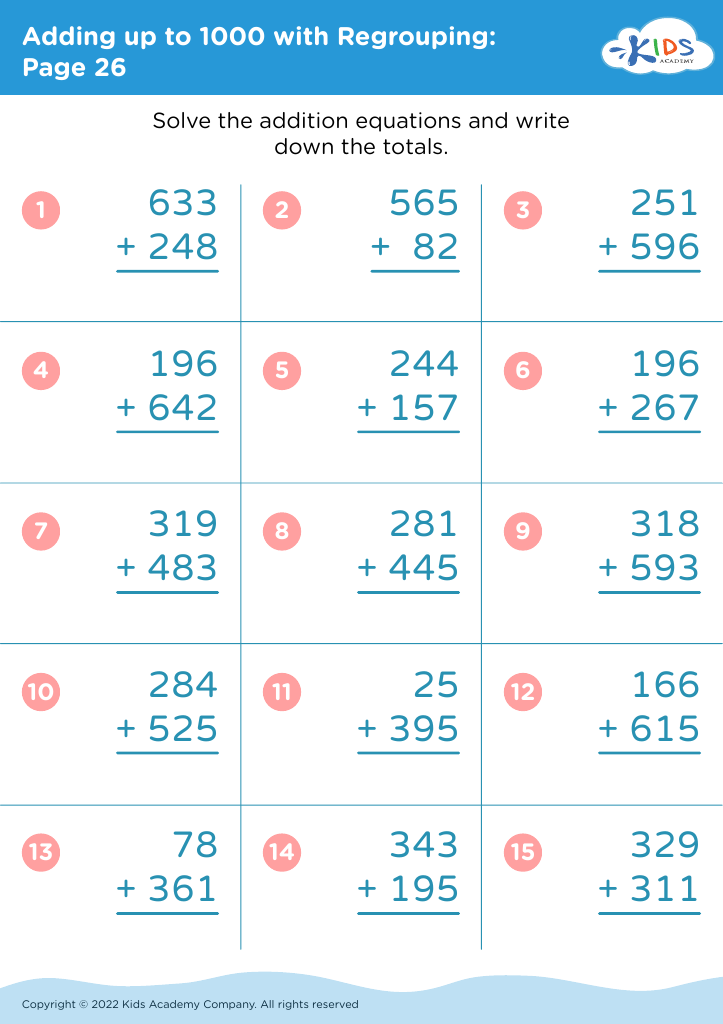
Adding up to 1000 with Regrouping: Page 26
Worksheet
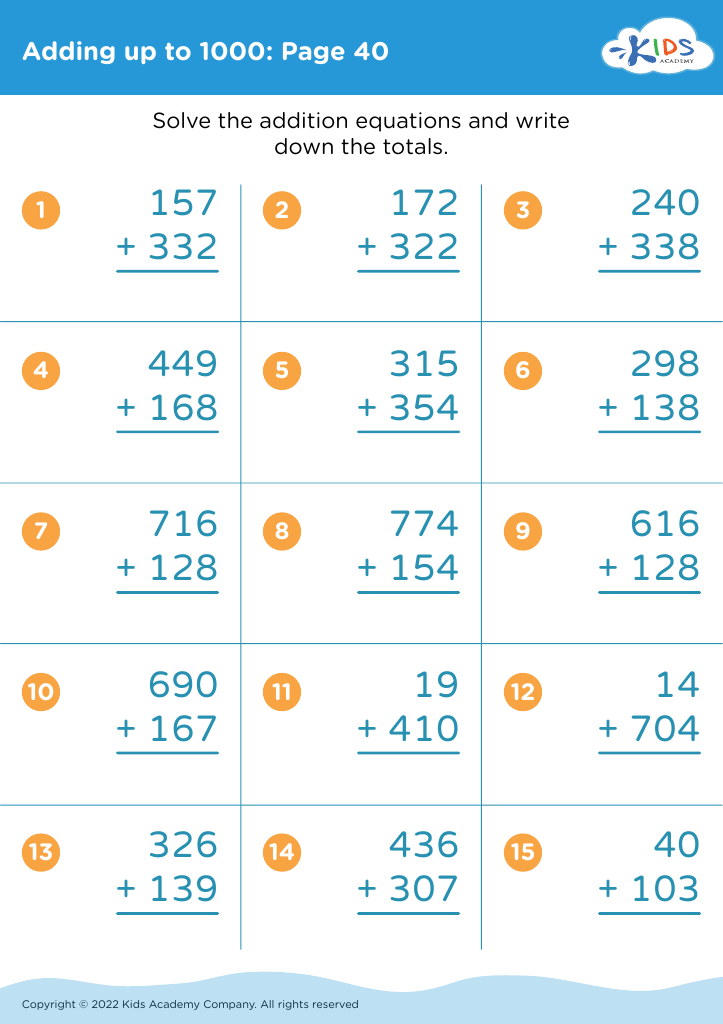
Adding up to 1000: Page 40

Adding up to 1000: Page 40

Adding up to 1000: Page 40
Worksheet
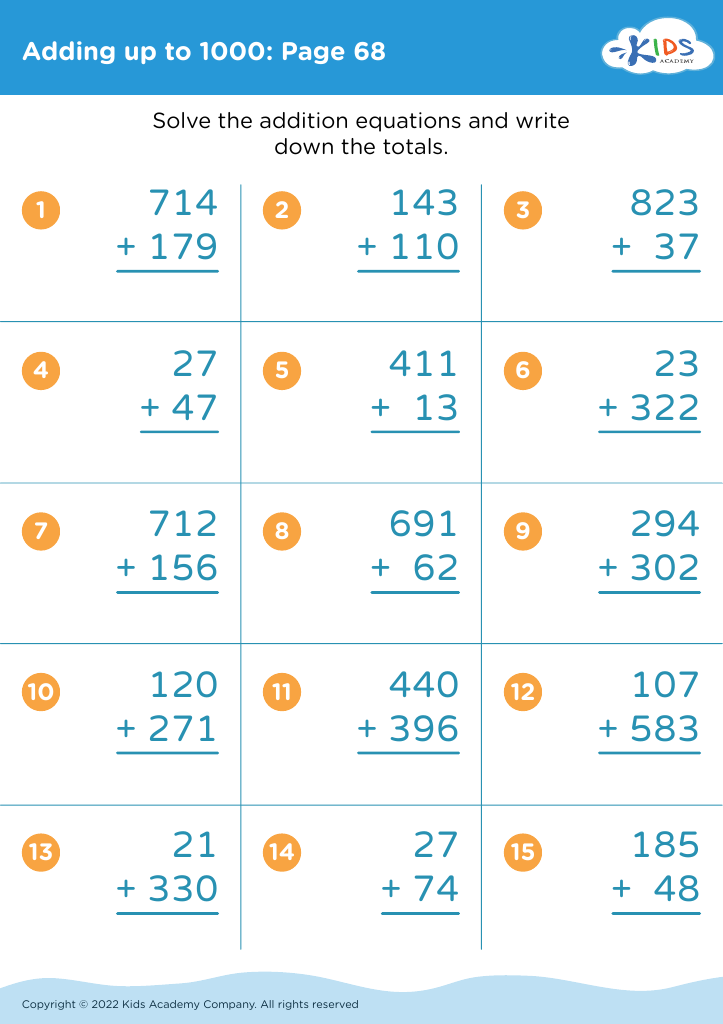
Adding up to 1000: Page 68

Adding up to 1000: Page 68

Adding up to 1000: Page 68
Worksheet
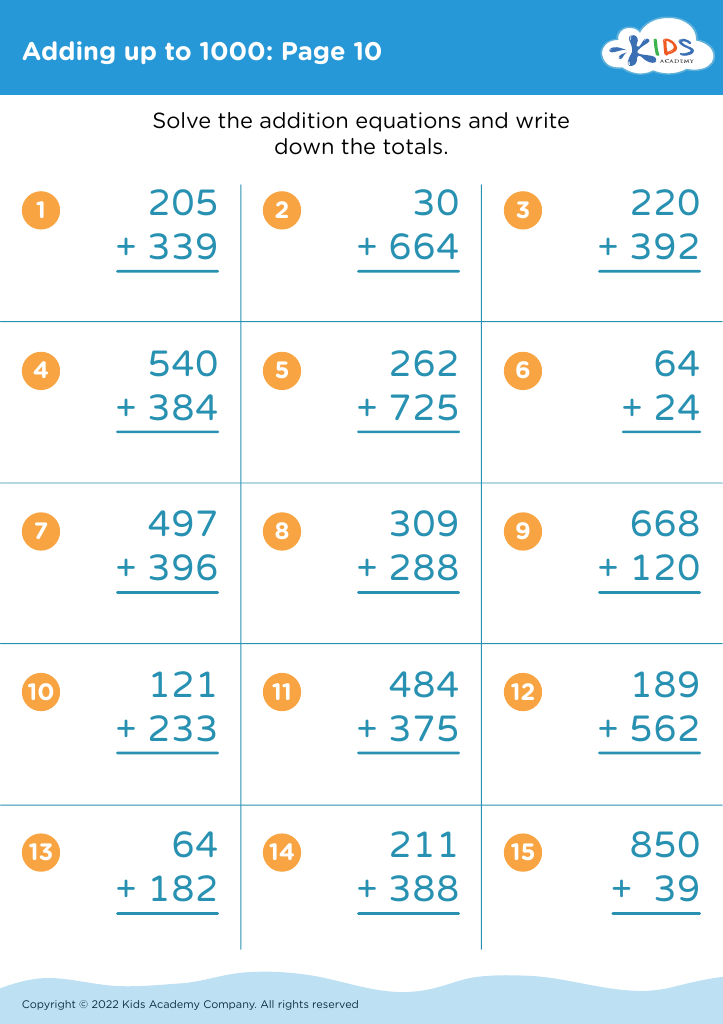
Adding up to 1000: Page 10

Adding up to 1000: Page 10

Adding up to 1000: Page 10
Worksheet
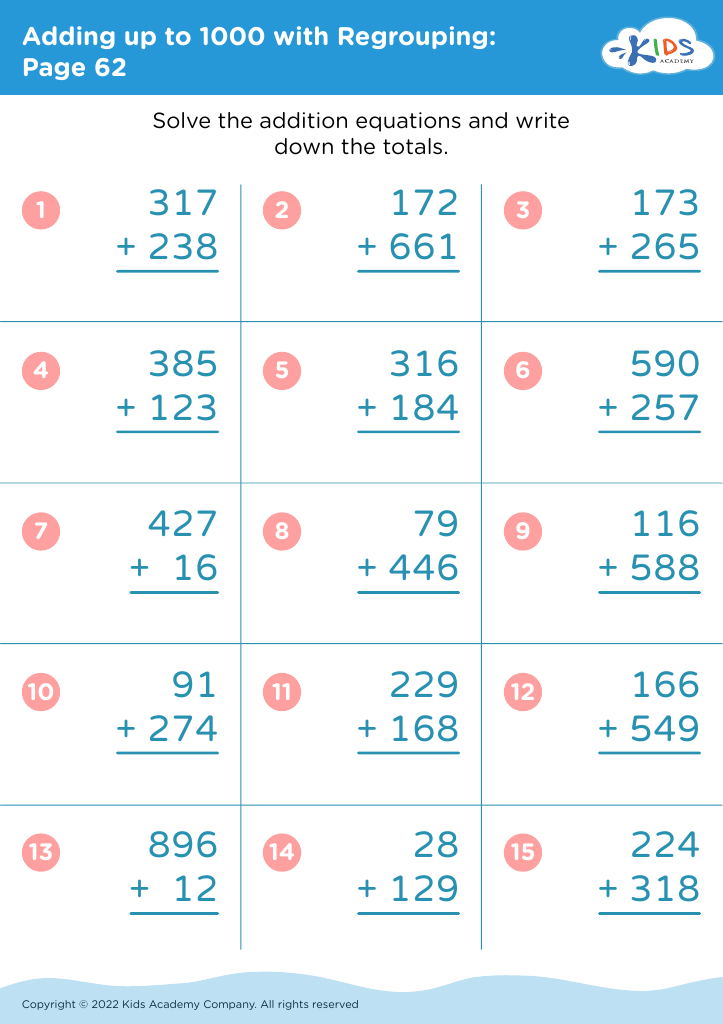
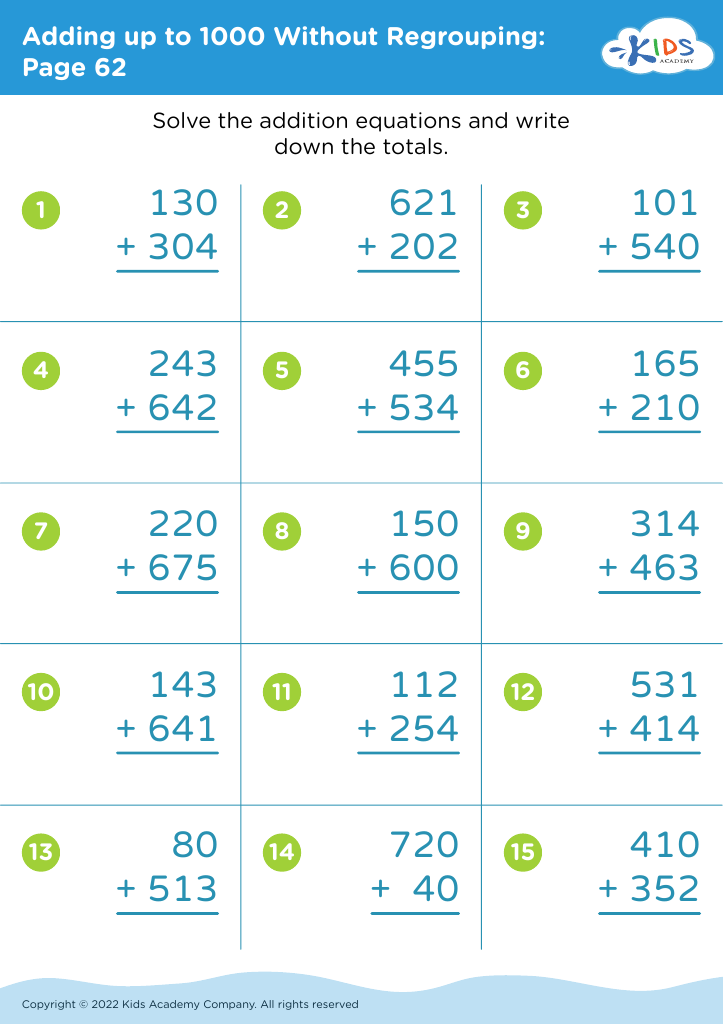
Adding up to 1000 with Regrouping: Page 62
Worksheet
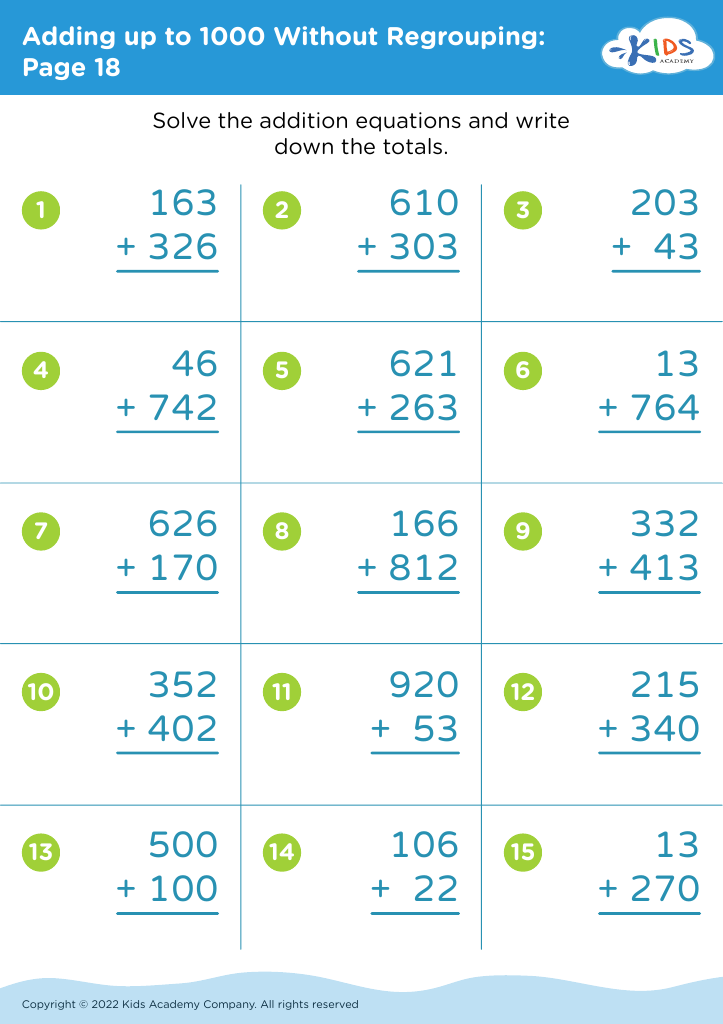
Adding up to 1000 Without Regrouping: Page 18
Worksheet
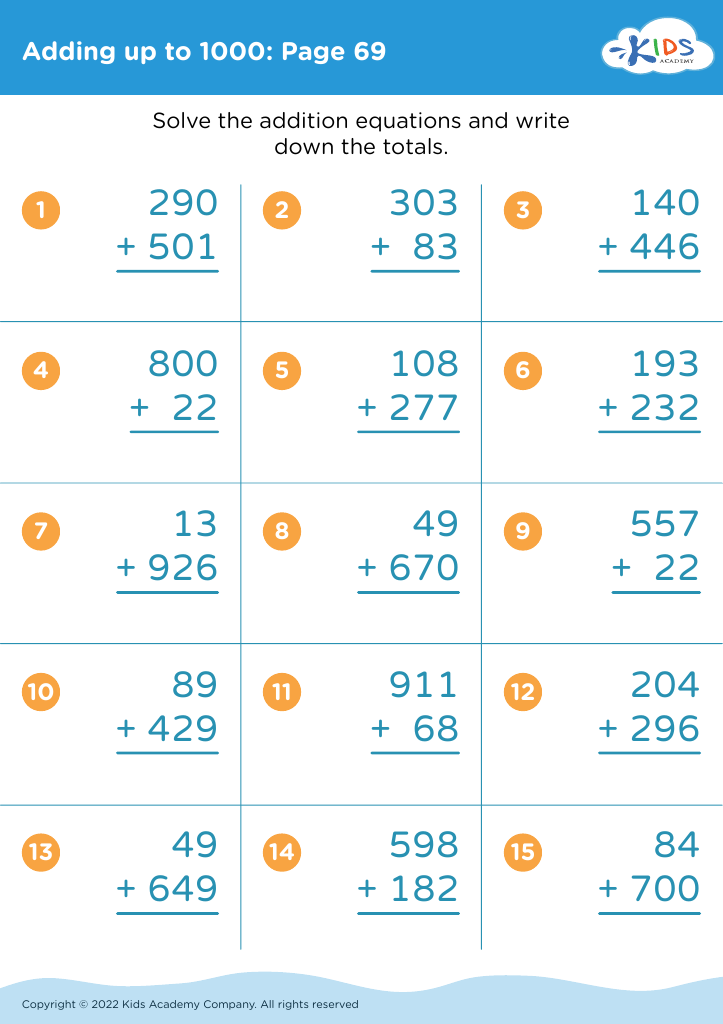
Adding up to 1000: Page 69

Adding up to 1000: Page 69

Adding up to 1000: Page 69
Worksheet
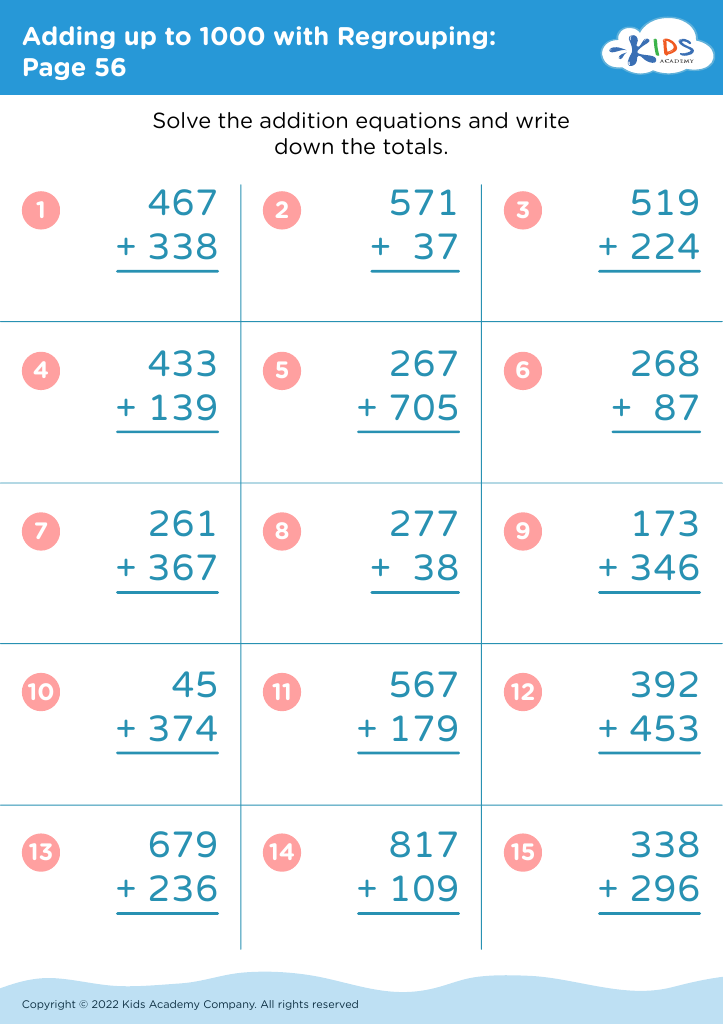
Adding up to 1000 with Regrouping: Page 56
Worksheet
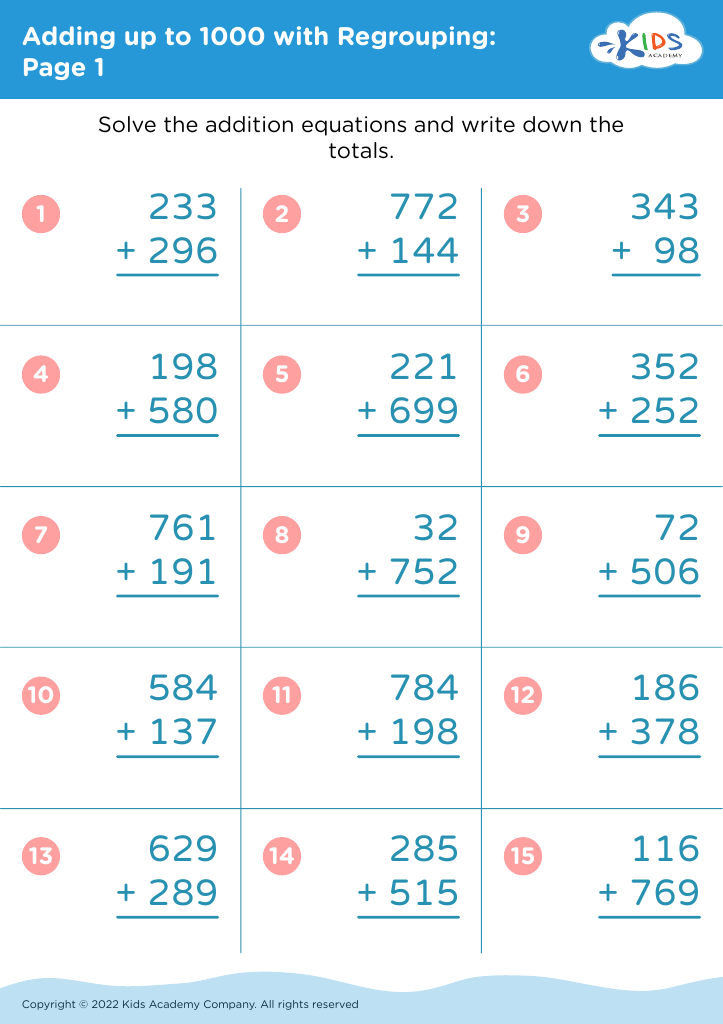
Adding up to 1000 with Regrouping: Page 1
Worksheet
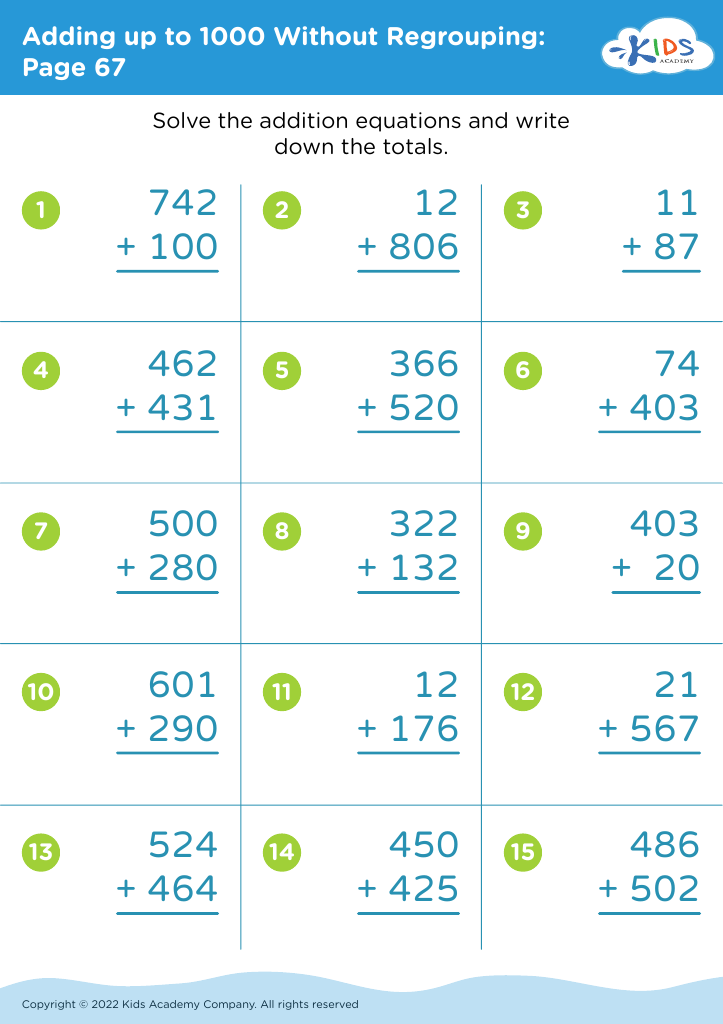
Adding up to 1000 Without Regrouping: Page 67
Worksheet
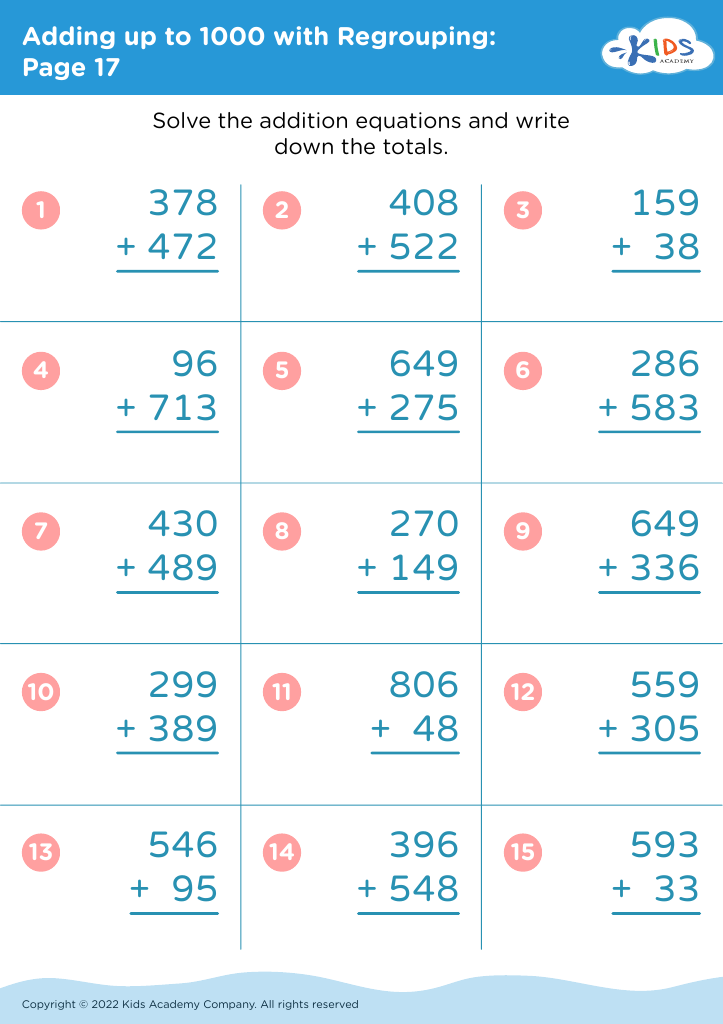
Adding up to 1000 with Regrouping: Page 17
Worksheet
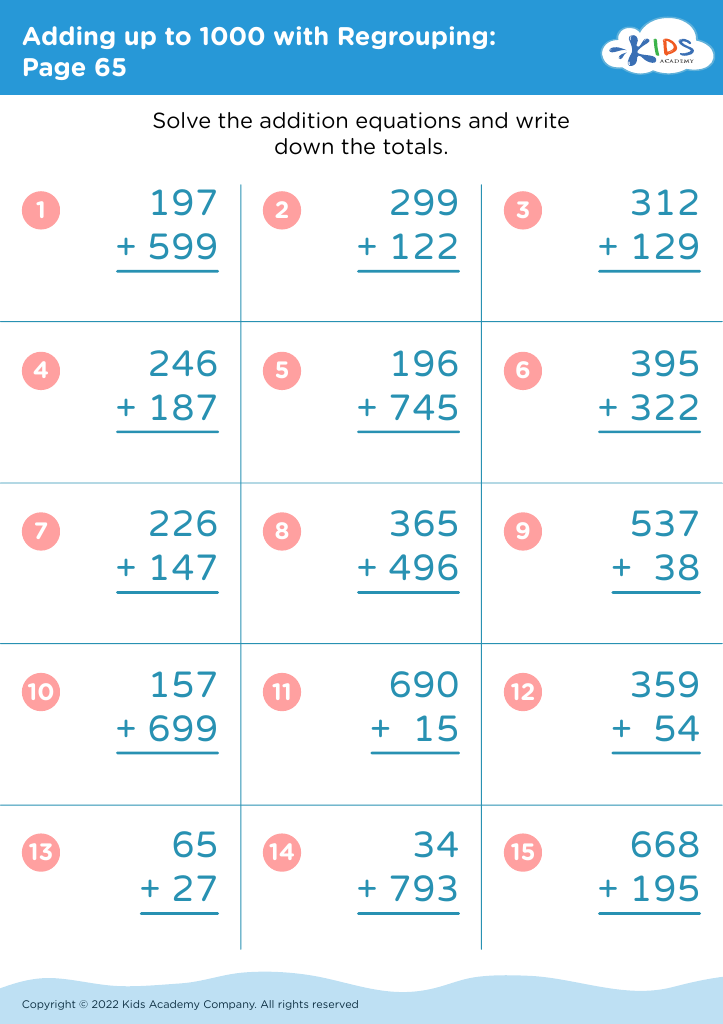
Adding up to 1000 with Regrouping: Page 65
Worksheet
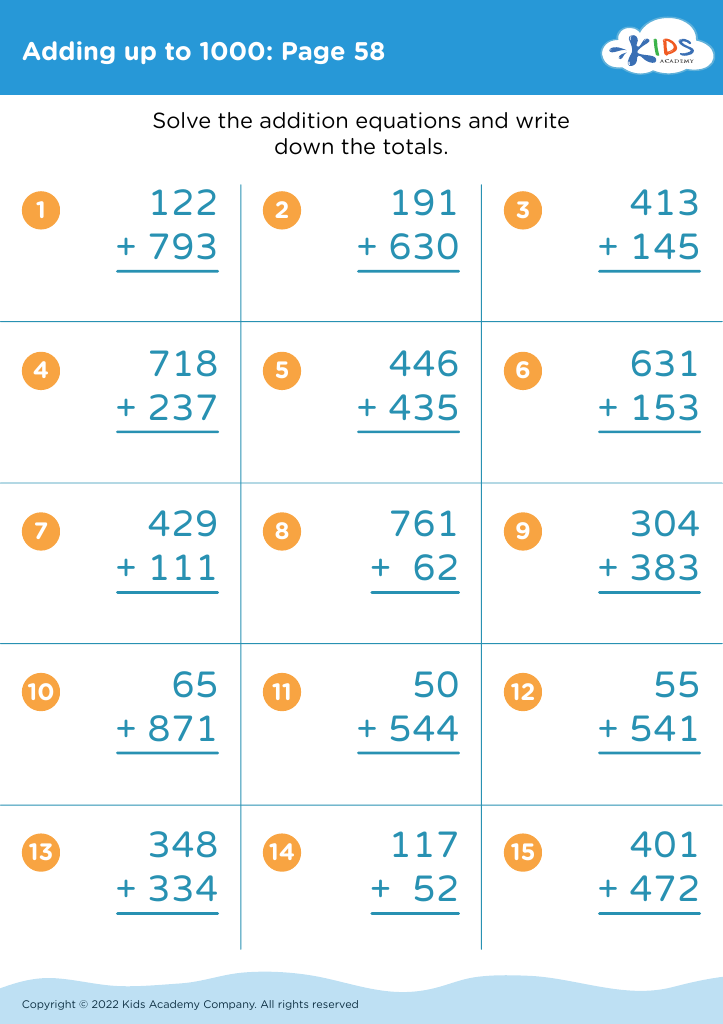
Adding up to 1000: Page 58

Adding up to 1000: Page 58

Adding up to 1000: Page 58
Worksheet
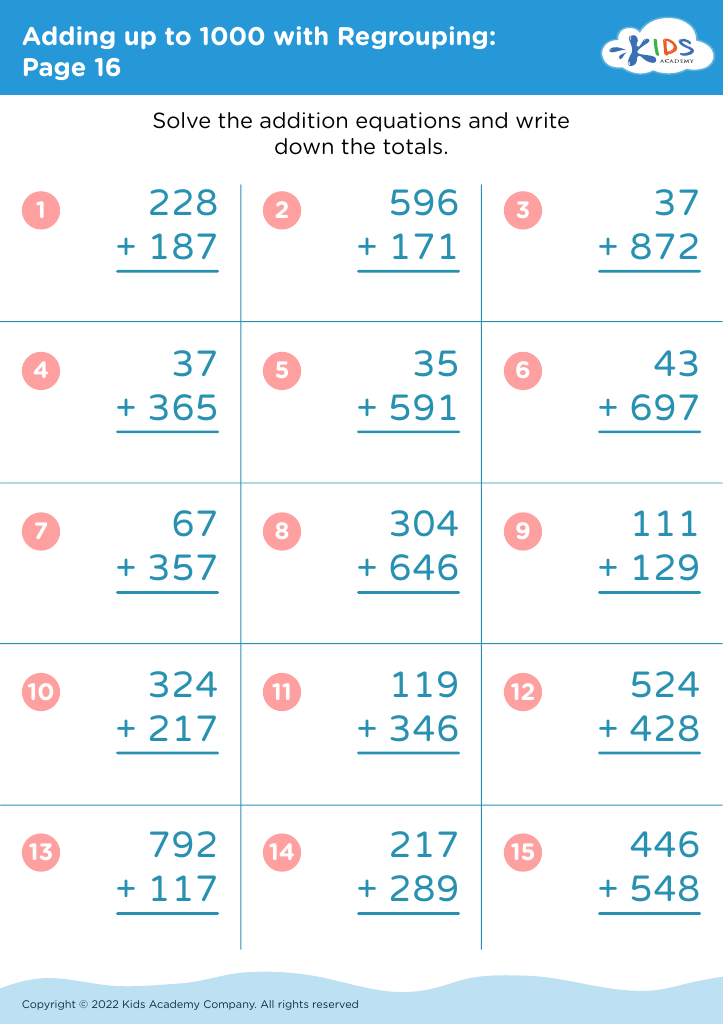
Adding up to 1000 with Regrouping: Page 16
Worksheet
Adding up to 1000 Without Regrouping: Page 62
Worksheet


Parents and teachers should pay close attention to the concept of comparing fractions, especially as it pertains to numbers that add up to 1000, for children aged 3-9 for several reasons. Firstly, introducing fractions at an early age builds a strong mathematical foundation. Understanding how to visualize, compare, and manipulate fractions helps children develop critical thinking and problem-solving skills that are essential in later math topics.

Furthermore, understanding fractions is not only about shopkeeping or cooking but also relates to real-life scenarios such as sharing resources, measuring, and even evaluating media consumption. Teaching children to compare fractions fosters their ability to make judgments and decisions, a life skill valuable beyond the classroom.

Engaging children in comparing fractions in fun and relatable contexts encourages interest in mathematics, helping dispel the notion that math is hard or uninteresting. This foundational skill contributes significantly to children’s overall numeracy, supporting better transition into more complex levels of math, ensuring long-term academic success. By focusing on comparing fractions, parents and teachers can cultivate confident, competent learners who appreciate the importance of mathematics in everyday life.