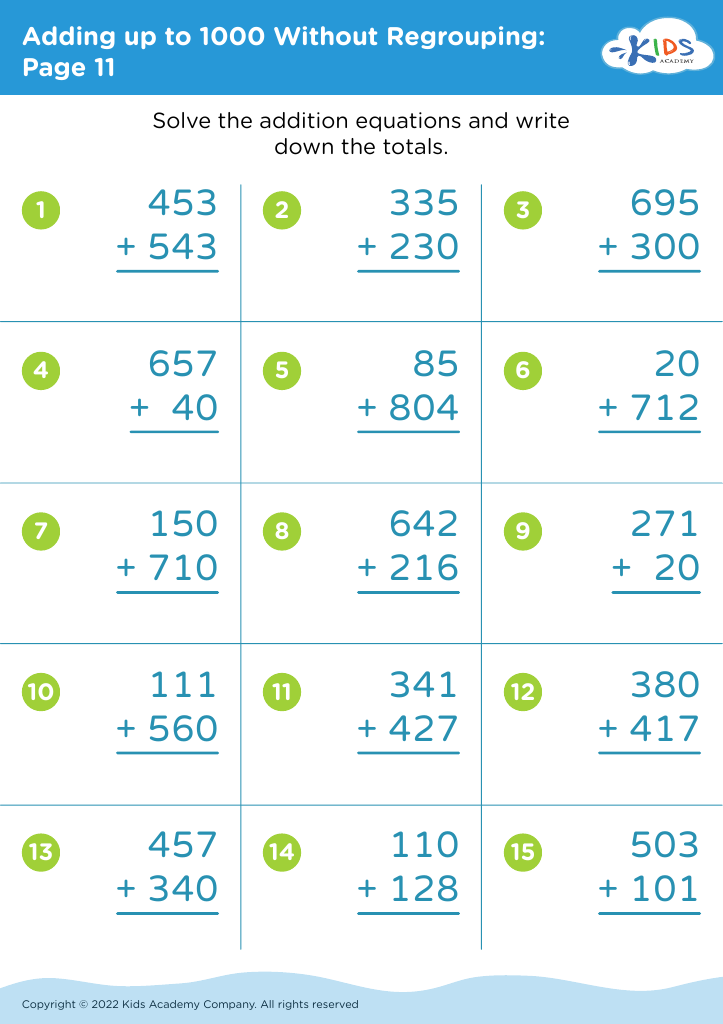
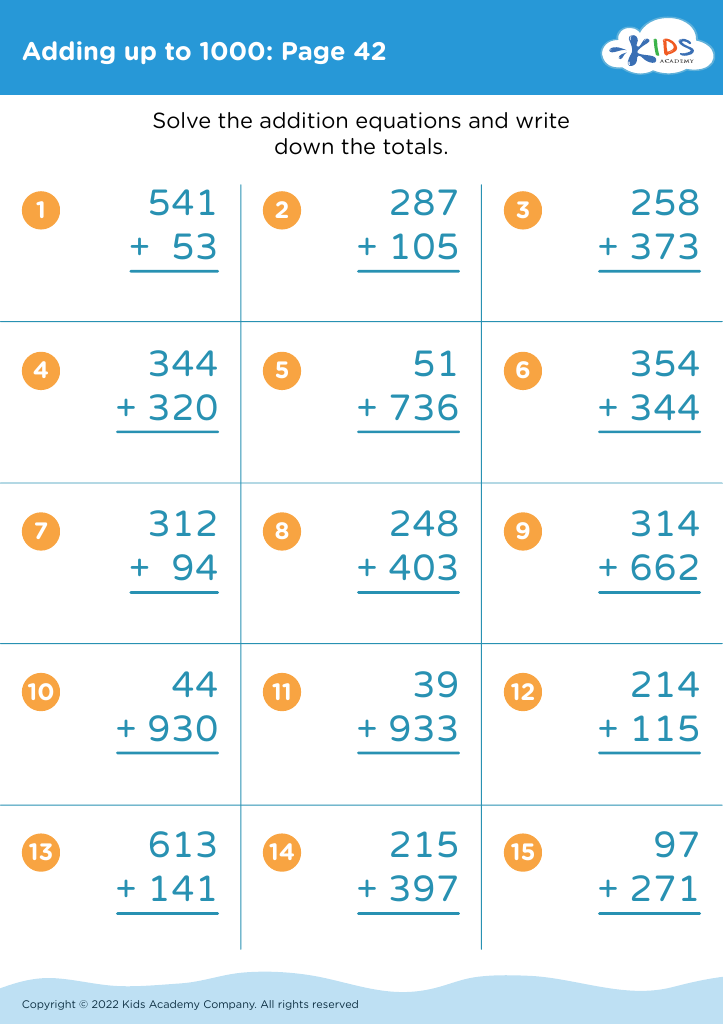




Counting skills and basic addition up to 1,000 are fundamental for children aged 3-9 as they lay the groundwork for math literacy and critical thinking. During these early years, children's brains are highly receptive to learning. Building a strong foundation in counting helps them understand number sequences, basic arithmetic, and place value, which are essential for more complex math concepts later on.
For parents and teachers, focusing on these skills aids in the development of problem-solving abilities and logical thinking. Mastery of counting and simple addition promotes confidence, which encourages a positive attitude towards mathematics. Engaging kids with counting tasks and addition up to 1,000 also aligns with educational standards and prepares them for school assessments.
Furthermore, early math skills have been shown to correlate with future academic success, not just in mathematics, but across subjects. Being proficient in counting and basic addition enhances their ability to make sense of the world around them, from understanding time to handling money.
Therefore, parents and teachers should care about nurturing these skills to instill a love for learning, support cognitive development, and provide the tools necessary for future academic achievements. Activities that integrate counting and addition, such as games, puzzles, and everyday tasks, can make learning enjoyable and effective for young children.








