Fine Motor Skills Adding up to 1000 Worksheets for Ages 3-9
12 filtered results
-
From - To
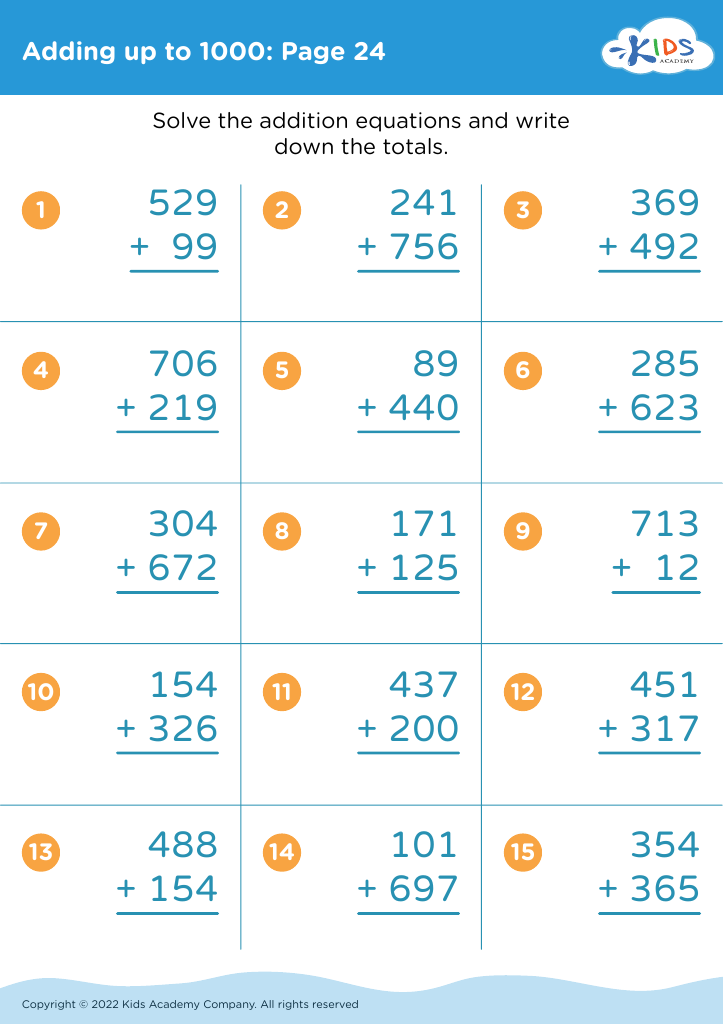
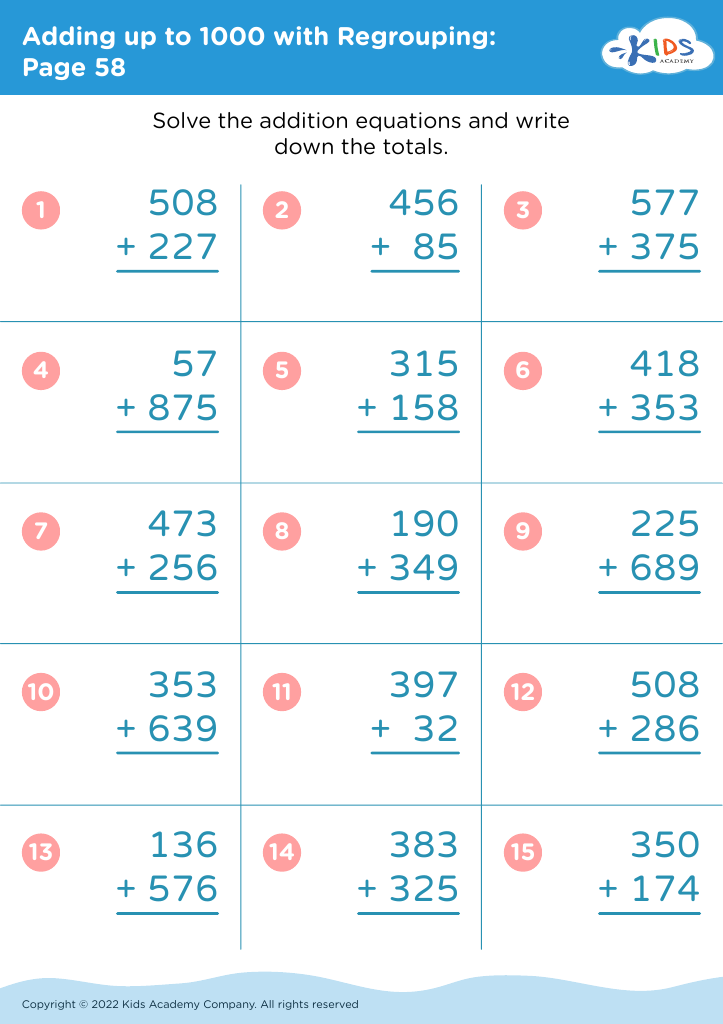
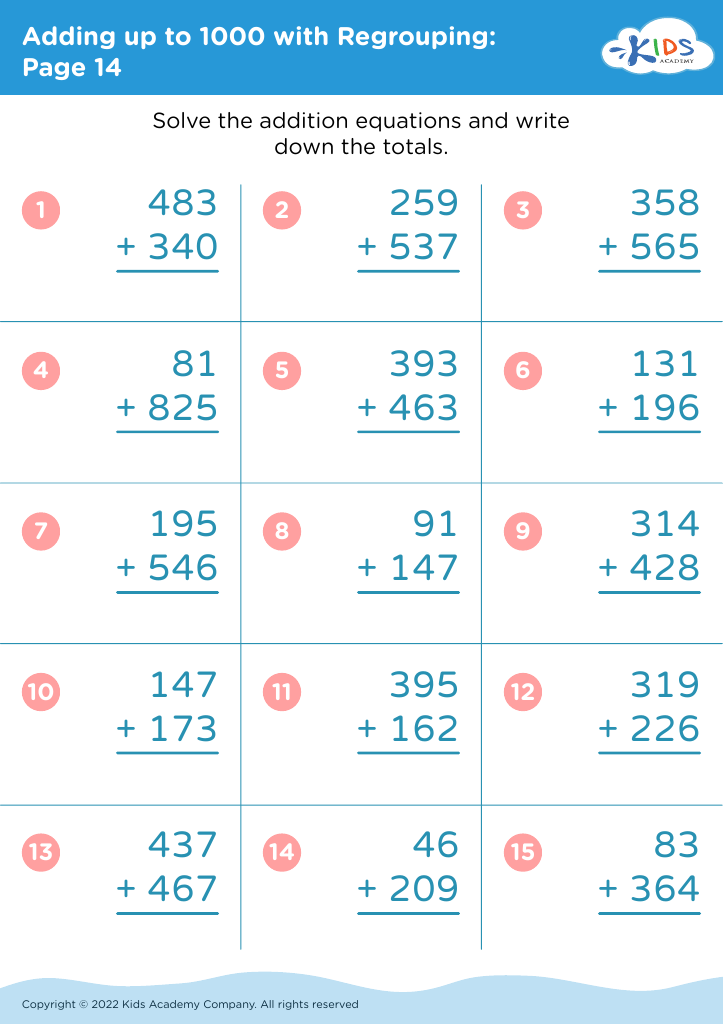
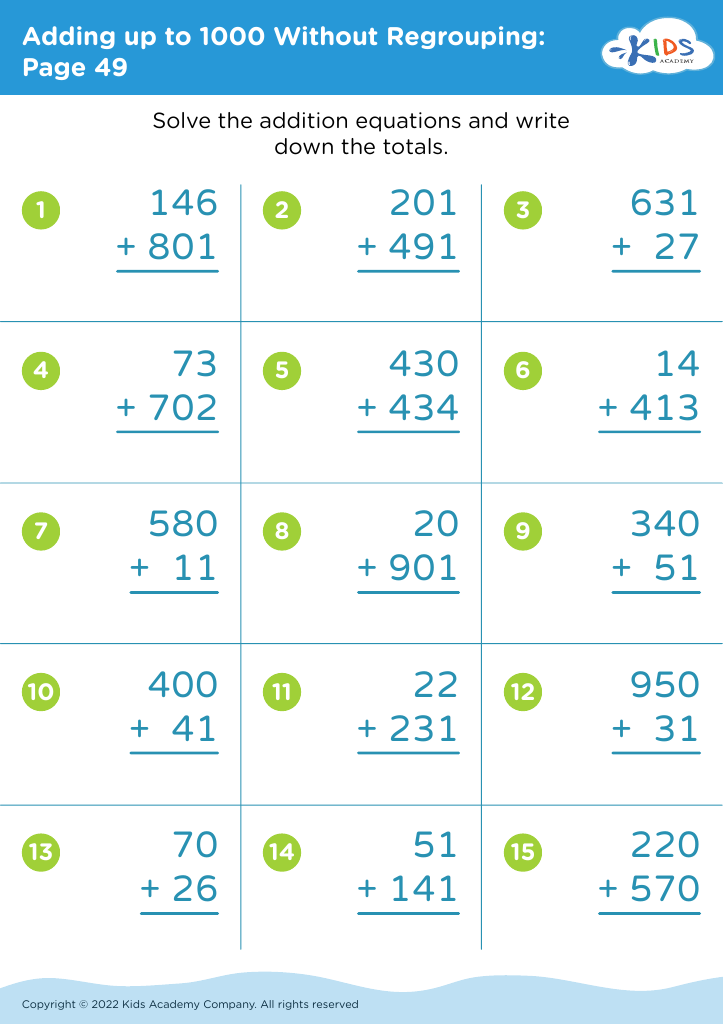
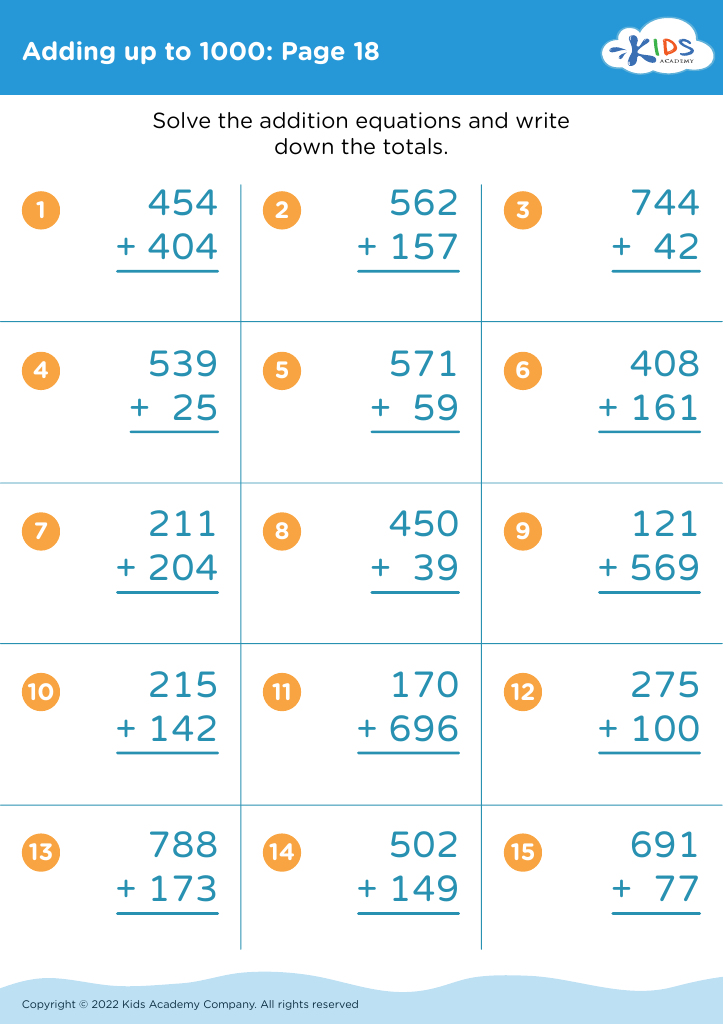
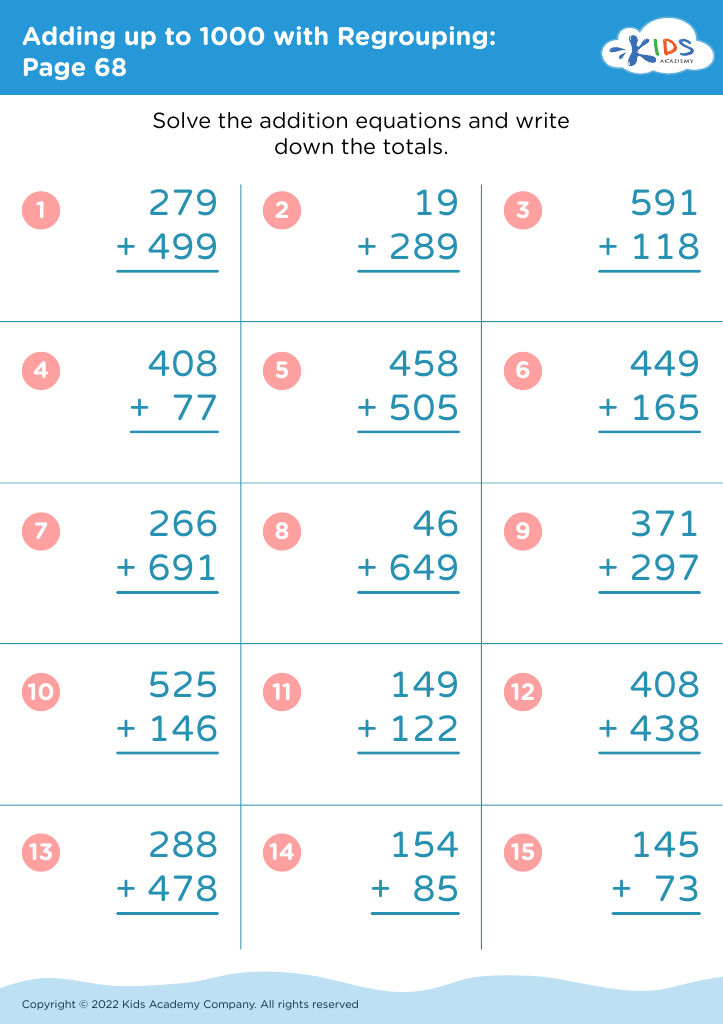
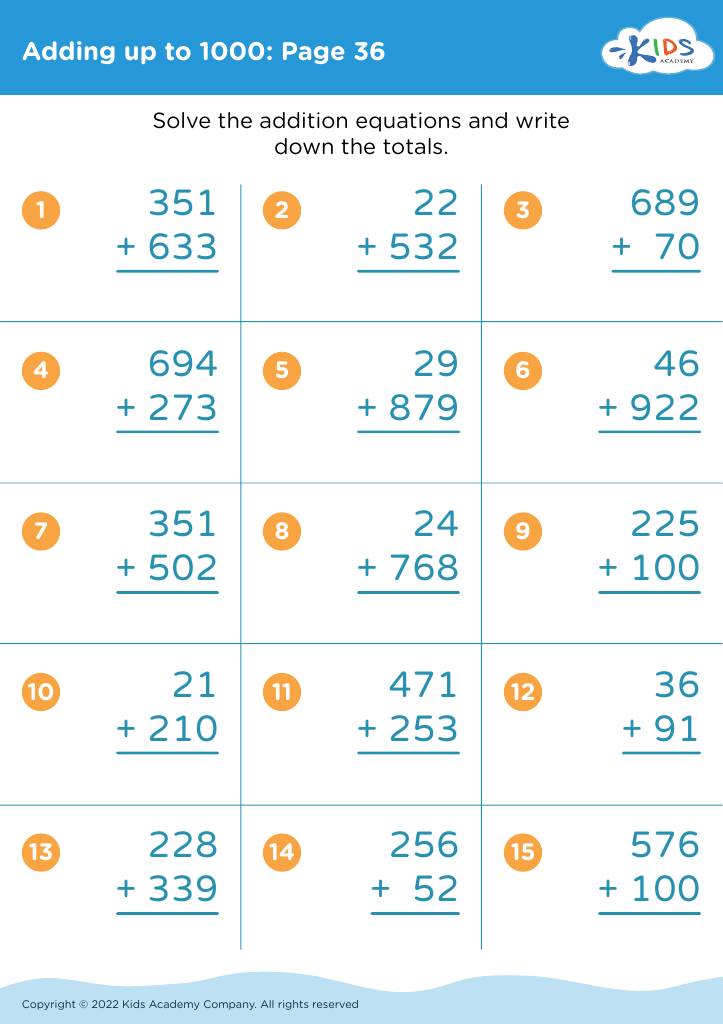
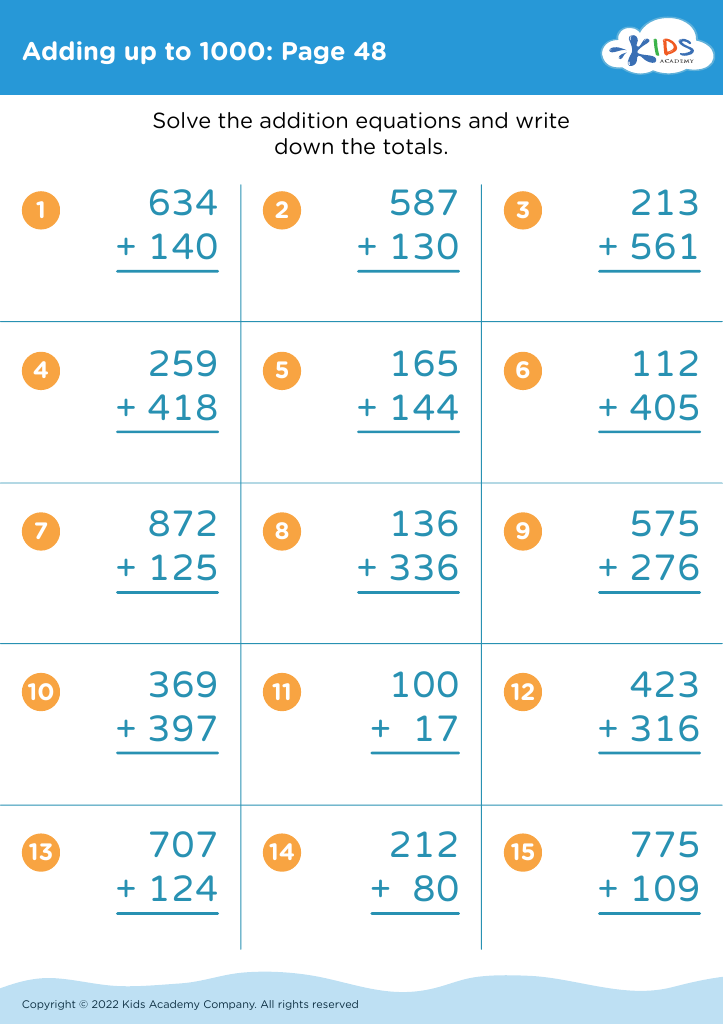
Enhance your child's fine motor skills with our “Fine Motor Skills Adding up to 1000 Worksheets” designed for ages 3-9! These engaging worksheets combine essential math concepts and fine motor development, offering fun exercises such as tracing, cutting, and drawing. As your child practices adding numbers up to 1000, they will also strengthen their hand-eye coordination and dexterity. Perfect for early learners, these worksheets provide a versatile learning experience that fosters both math proficiency and fine motor abilities. Empower your child with the tools they need to succeed in both motor skills and mathematics—download now and watch their skills thrive!



Fine motor skills are crucial for young children's development, especially those aged 3-9. These skills involve the use of small muscles in the hands and fingers, allowing children to perform tasks such as writing, drawing, cutting, and manipulating small objects. Parents and teachers should care about fine motor development because it has a significant impact on a child's overall learning and independence.
Firstly, strong fine motor skills are essential for academic success. Writing and drawing are fundamental parts of early education, and children with well-developed fine motor skills are typically more confident and proficient in these areas. This confidence translates to better learning outcomes.
Secondly, fine motor skills contribute to daily life tasks, fostering independence. As children learn to dress themselves, eat, and participate in play, they gain self-esteem and a sense of accomplishment, which is vital for emotional development.
Furthermore, fine motor skill development is linked to cognitive growth. Engaging in activities that strengthen these skills promotes problem-solving and encourages creativity.
In summary, fine motor skills play a vital role in children's academic performance, independence, and cognitive development. Therefore, parents and teachers should prioritize activities that enhance these skills to support holistic development.








