Fine motor skills (writing) Adding up to 1000 Worksheets for Ages 3-9
5 filtered results
-
From - To
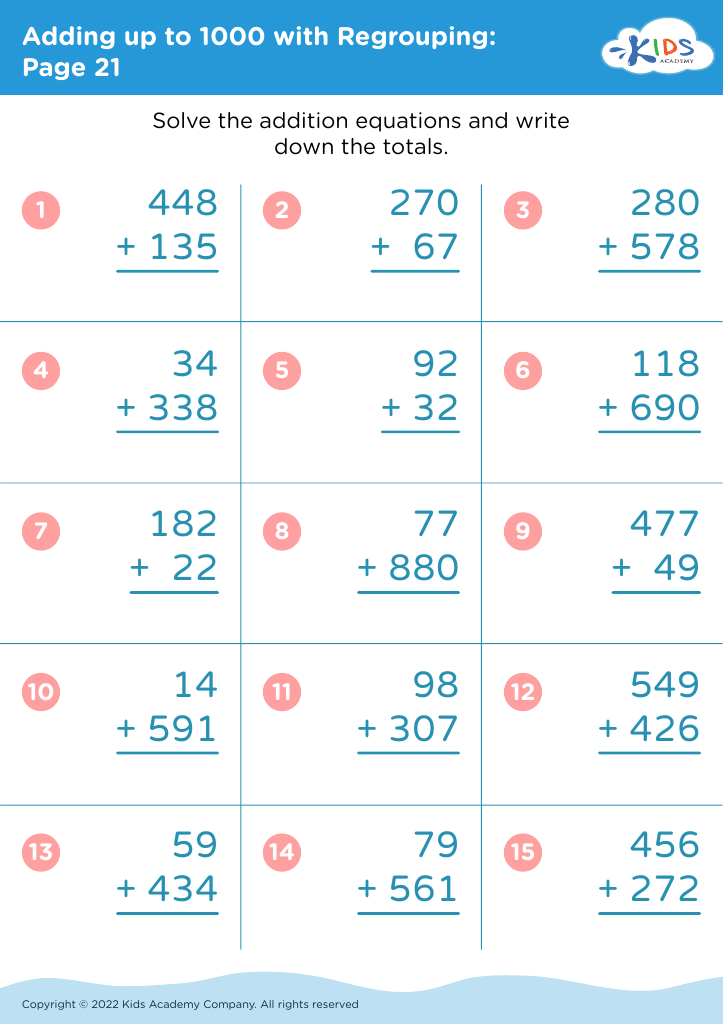
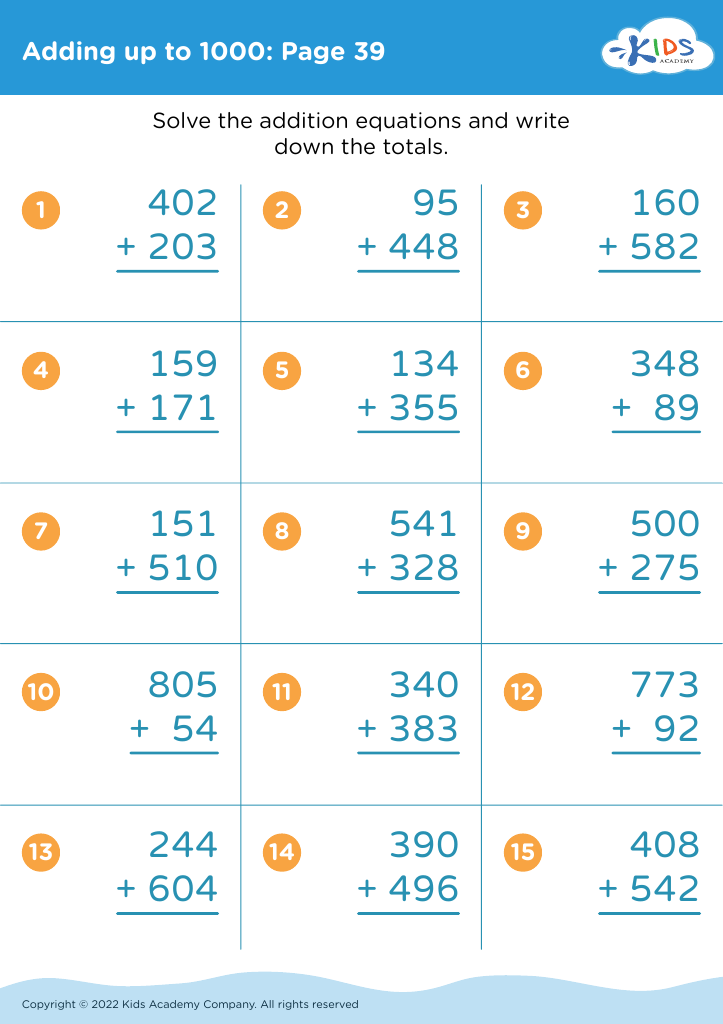
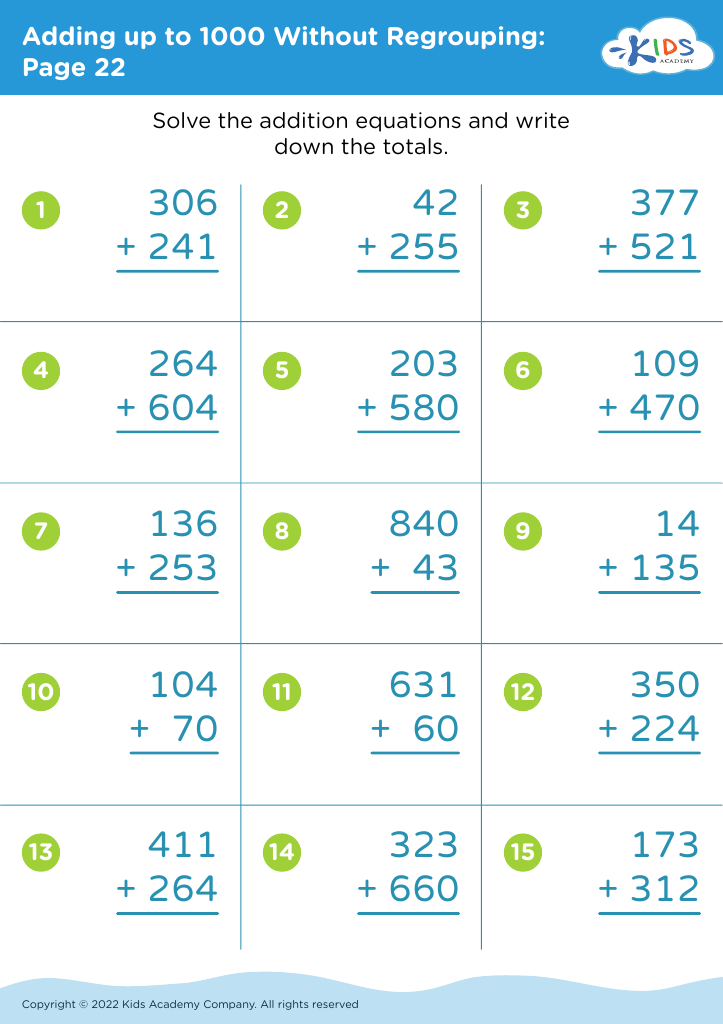
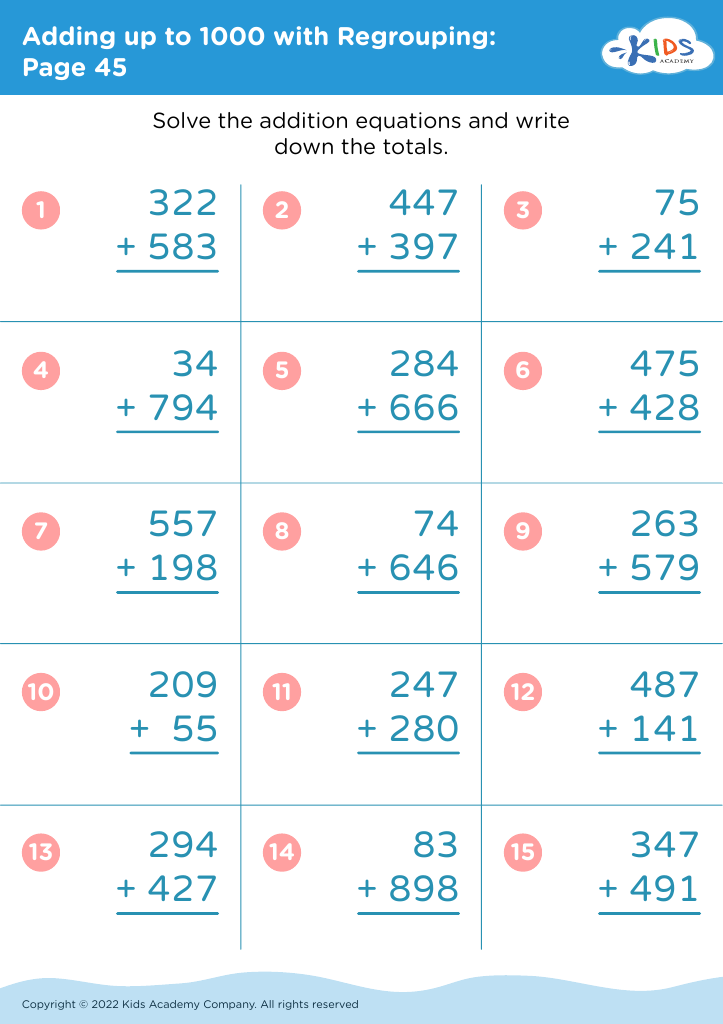
Discover our "Fine Motor Skills (Writing) Worksheets" designed for children ages 3-9, featuring engaging activities that help develop essential writing skills while mastering addition up to 1000. These worksheets provide a fun and interactive way for kids to enhance their pencil grip, hand-eye coordination, and overall dexterity as they complete various writing tasks. Ideal for homeschooling or classroom settings, our carefully crafted worksheets are perfect for reinforcing fine motor development in conjunction with mathematical skills. Encourage your child’s curiosity and confidence in both writing and math with over 1000 engaging additions that inspire learning through play!
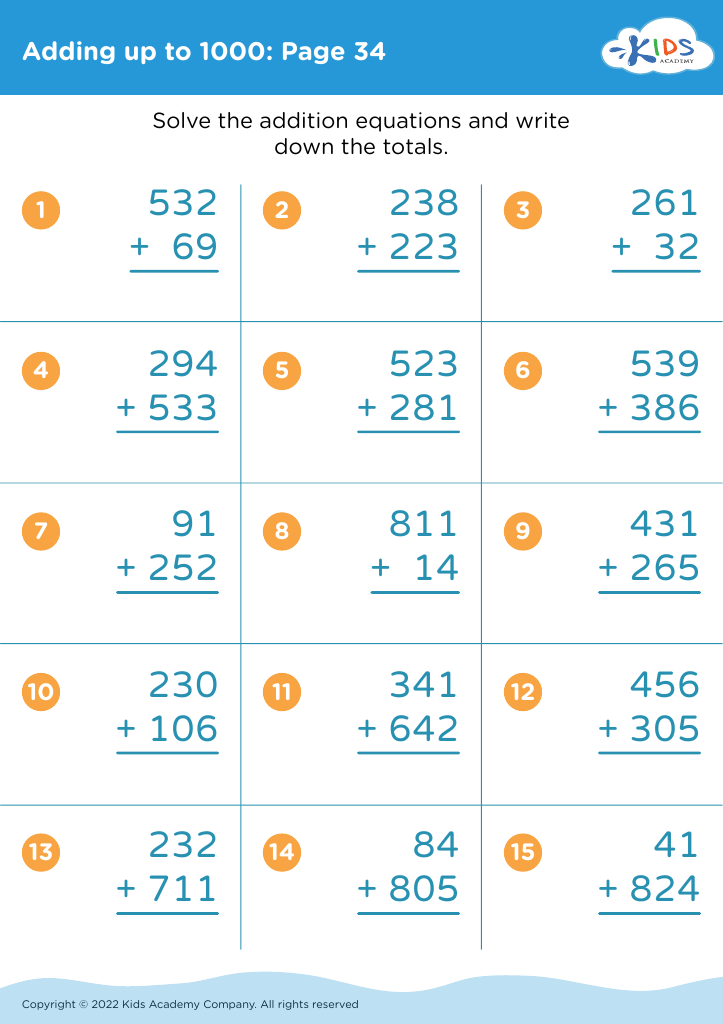



Fine motor skills are essential for children aged 3-9 as they form the foundation for various developmental milestones, particularly in writing. As children learn to control small movements using their hands and fingers, they become more adept at tasks like gripping pencils, cutting with scissors, and manipulating small objects. This is crucial not only for writing but also for other academic activities such as drawing, coloring, and even performing classroom tasks.
Strong fine motor skills foster independence, allowing children to complete tasks that boost their confidence and self-esteem. Moreover, these skills are closely correlated with cognitive development; as children engage in activities that encourage fine motor control, they also develop problem-solving skills and hand-eye coordination.
For parents and teachers, supporting fine motor skill development in early childhood is vital. Engaging children in various activities—such as stacking blocks, threading beads, and practicing writing—can invigorate their interest and skills. This foundation not only aids in academic success but also sets children on a path for a lifetime of capabilities, promoting their overall well-being. In summary, prioritizing fine motor skill practice can have lasting positive effects on children’s educational journeys, ensuring they are well-prepared for future learning challenges.








