Fraction simplification Adding up to 1000 Worksheets for Ages 3-9
7 filtered results
-
From - To
Discover our engaging "Fraction Simplification Adding Up to 1000 Worksheets" designed for children ages 3-9. These interactive worksheets provide a fun and educational way for young learners to master fraction simplification while sharpening their addition skills. With colorful visuals and age-appropriate exercises, students can build confidence in their mathematical abilities. Each activity encourages critical thinking and problem-solving, helping to reinforce foundational math concepts in a playful, engaging manner. Perfect for classroom use or home studies, these worksheets are an invaluable resource for parents and teachers alike, ensuring children enjoy learning while reaching their academic goals. Start simplifying fractions today!
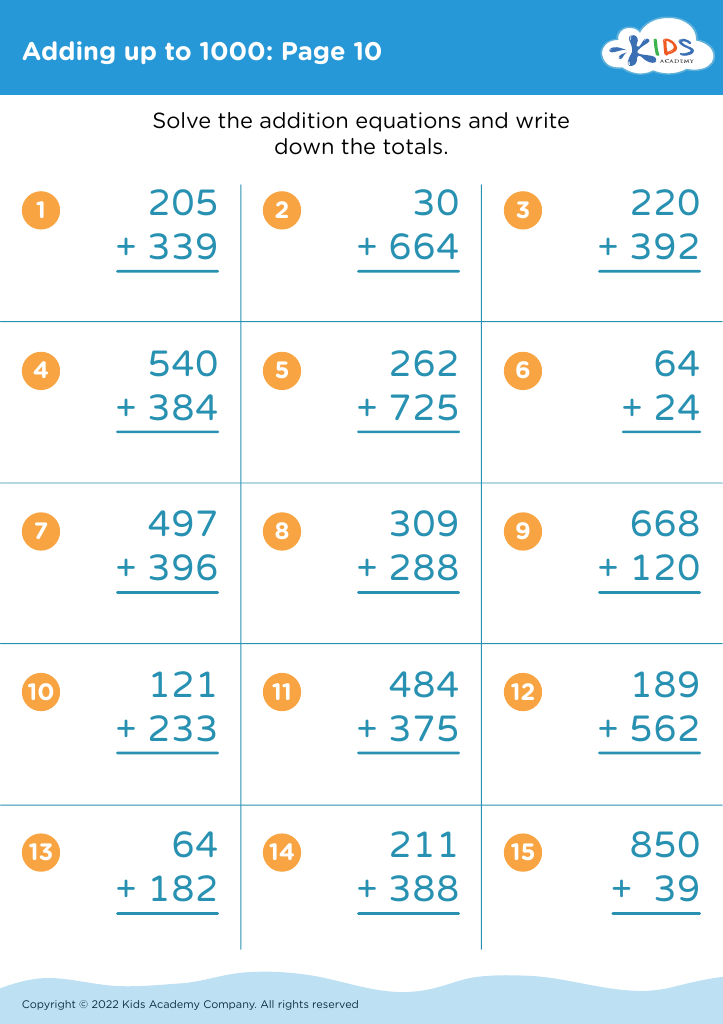
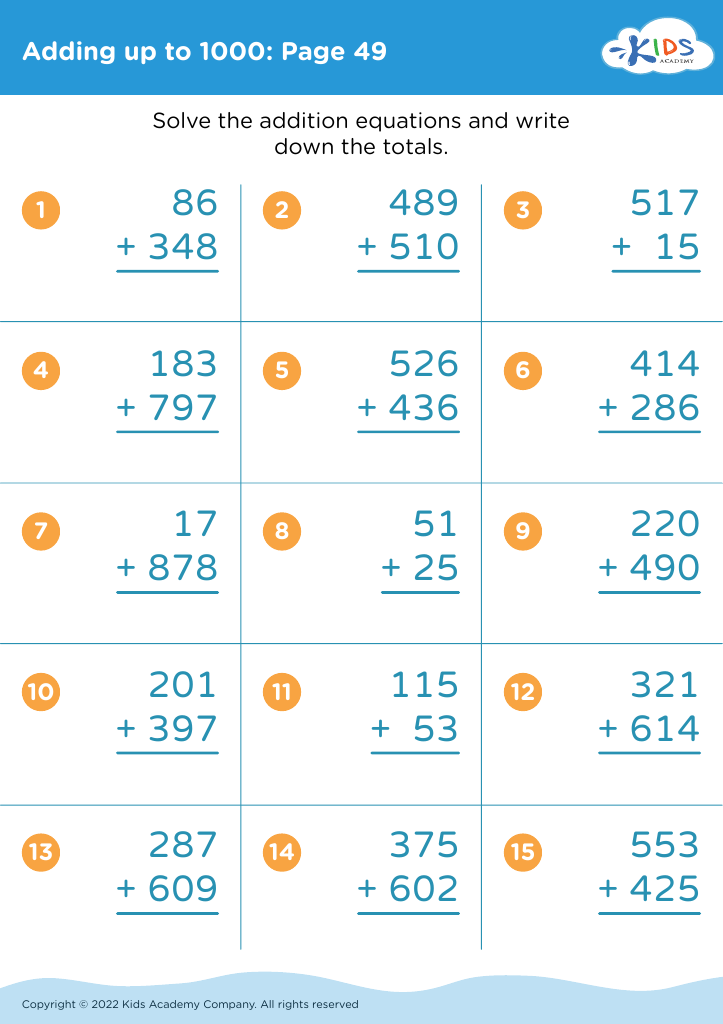
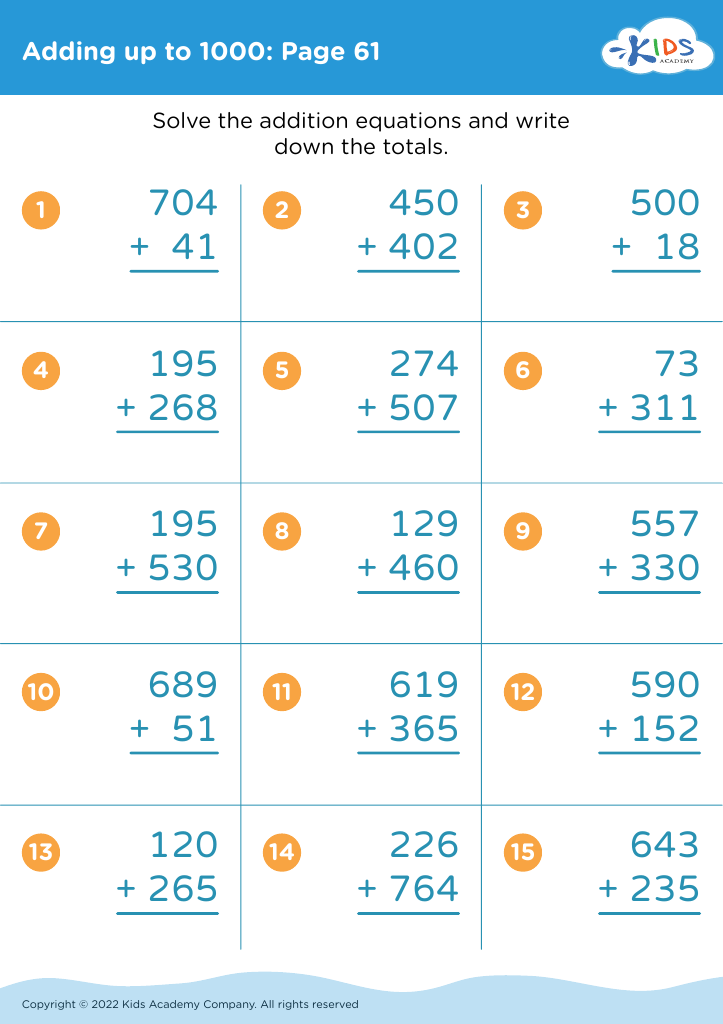
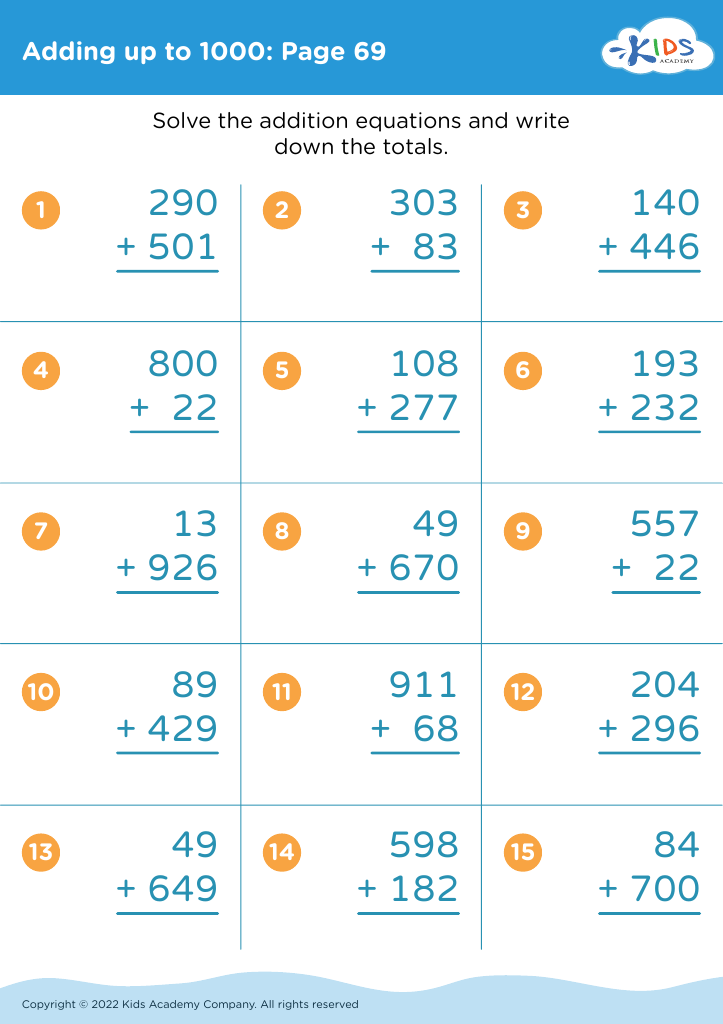
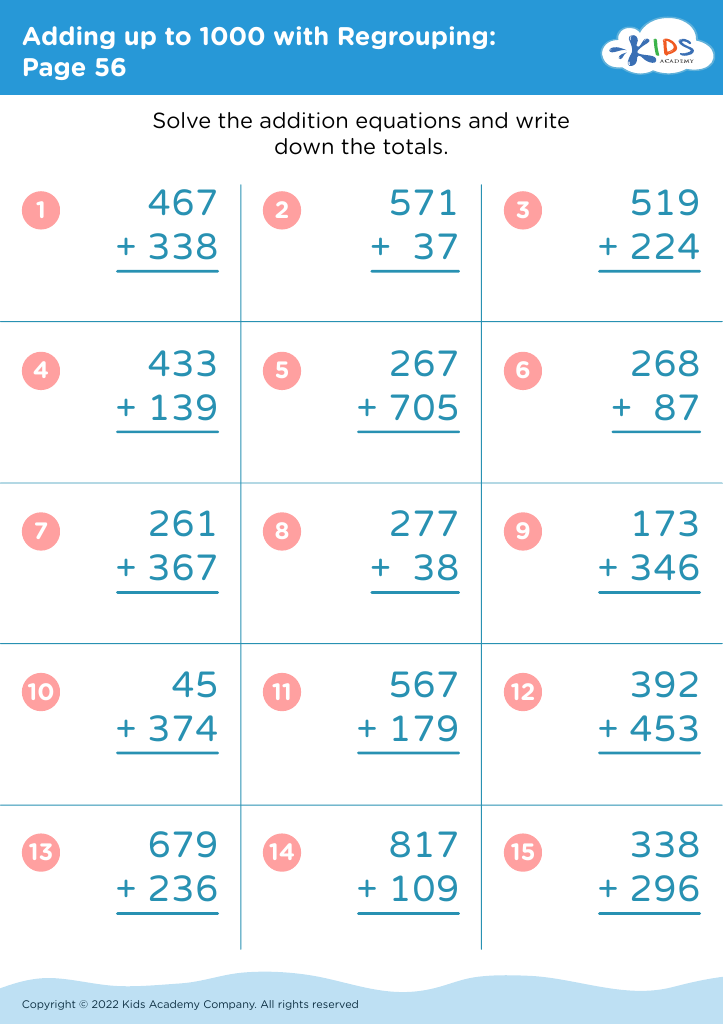
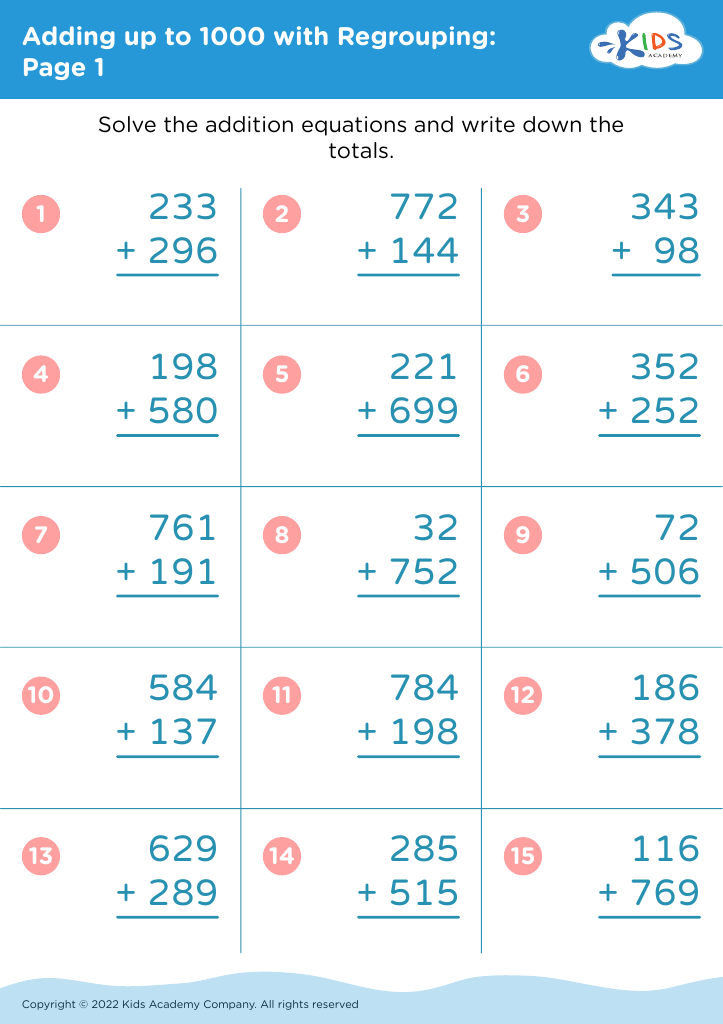
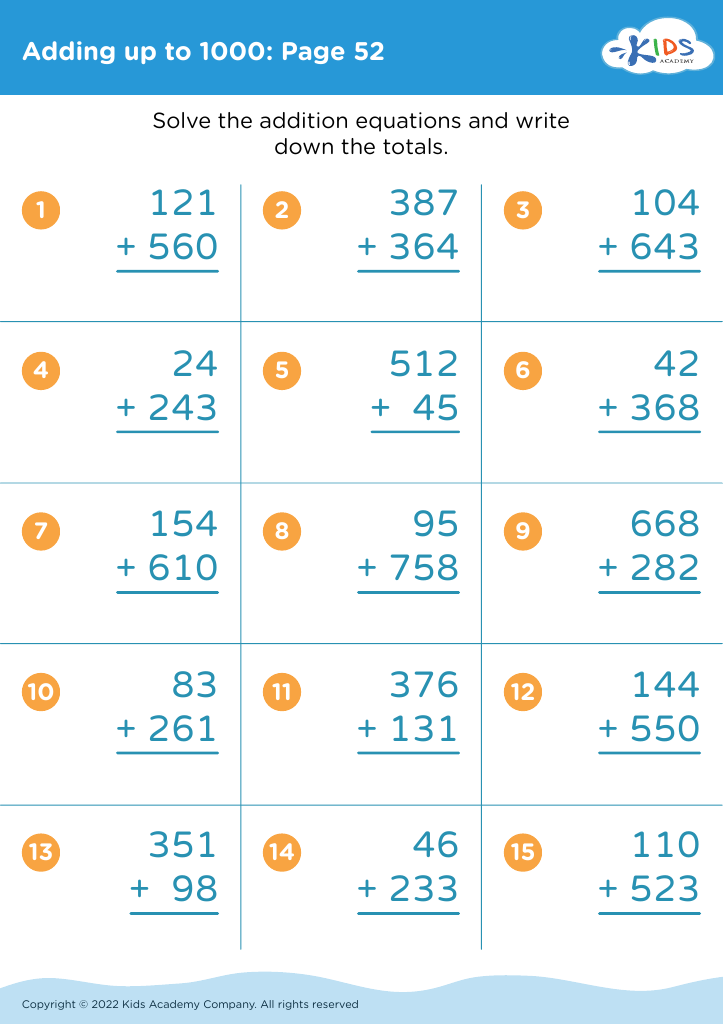



Parents and teachers should pay close attention to fraction simplification for children aged 3-9 for several important reasons. First, this foundational skill aids in the development of critical mathematical thinking. Recognizing and simplifying fractions helps children grasp the concepts of parts and wholes, which is vital for understanding more complex mathematical ideas later on.
Moreover, learning how to simplify fractions paves the way for enhanced problem-solving abilities. Children who can break down and simplify numbers will find it easier to handle addition and subtraction, especially when operations involve larger values that can sum up to 1000 or beyond. This ongoing practice nurtures confidence in their math skills, promoting a positive attitude towards learning.
Additionally, teaching children fraction simplification early on encourages perseverance and focus. It instills a sense of achievement as they progress from basic concepts to more complex operations.
Encouraging children to work with fractions and simplify them builds a strong mathematical foundation that extends beyond basic arithmetic. As they engage with fractions, they also develop spatial awareness, logical reasoning, and the ability to think abstractly—skills essential not only in math but throughout life. Ultimately, prioritizing this aspect of math education equips young learners for future academic success.








