Improving counting skills Adding up to 1000 Worksheets for Ages 3-9
4 filtered results
-
From - To
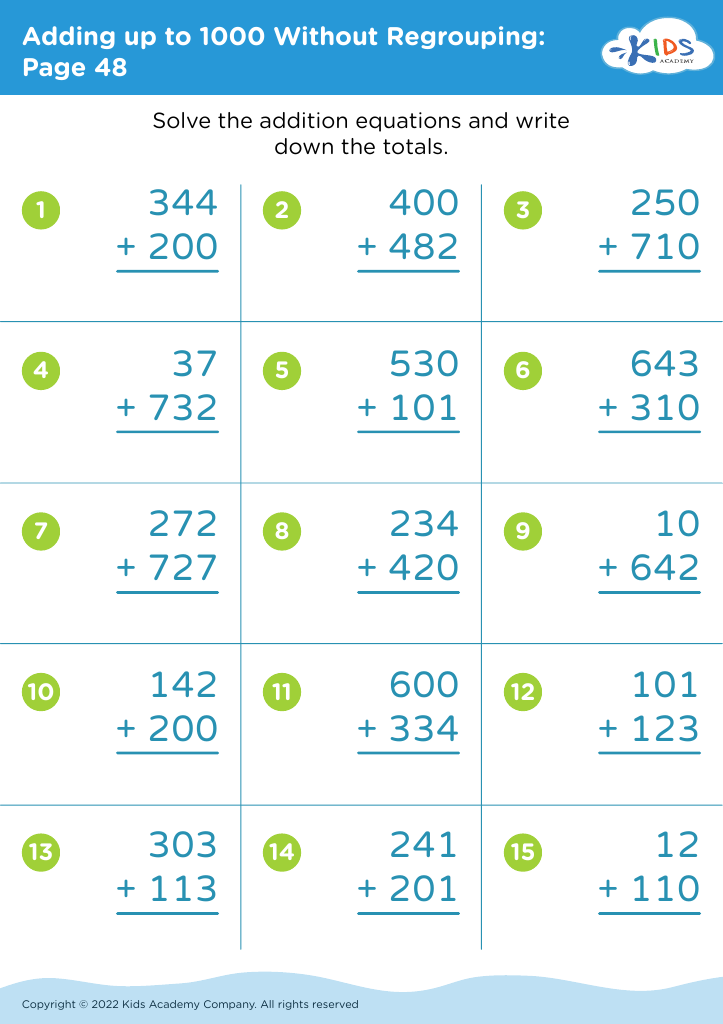
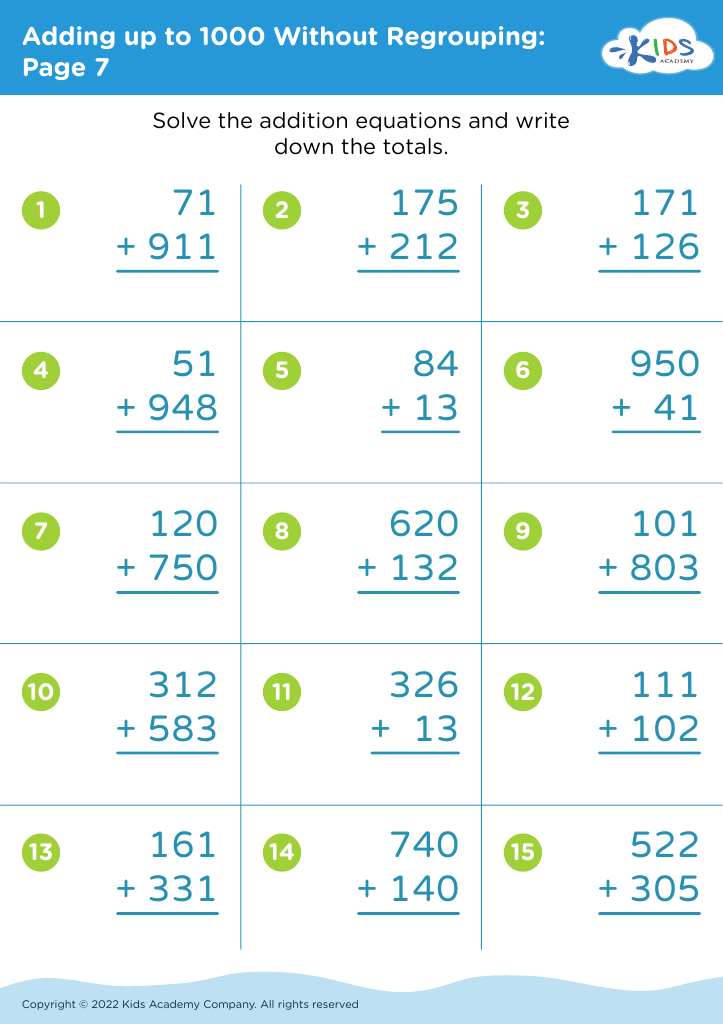
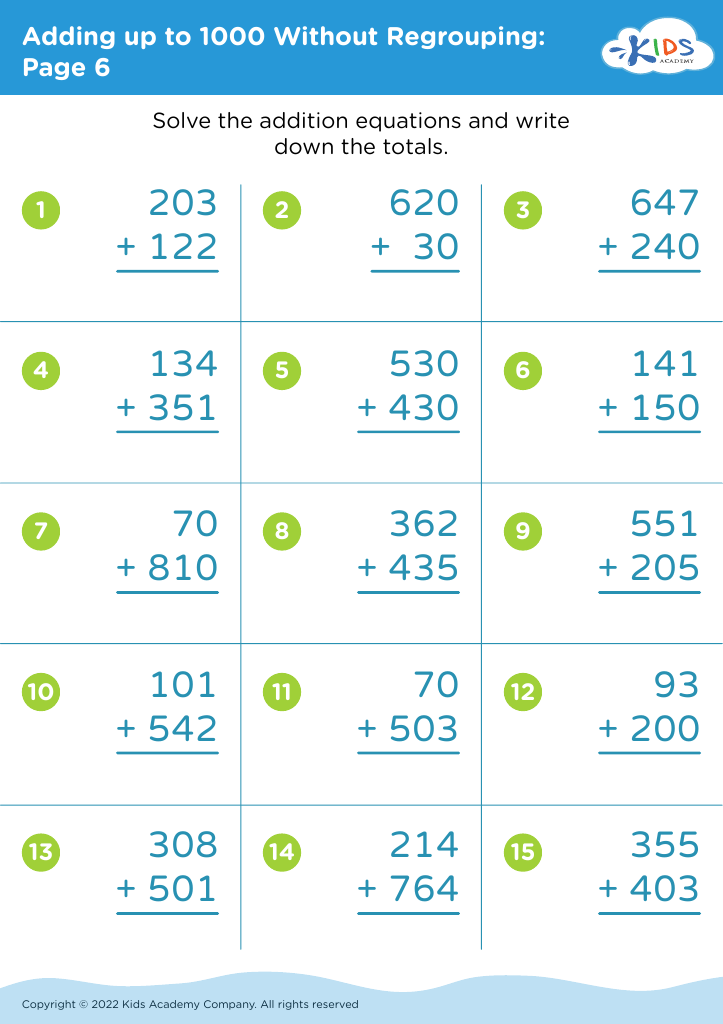
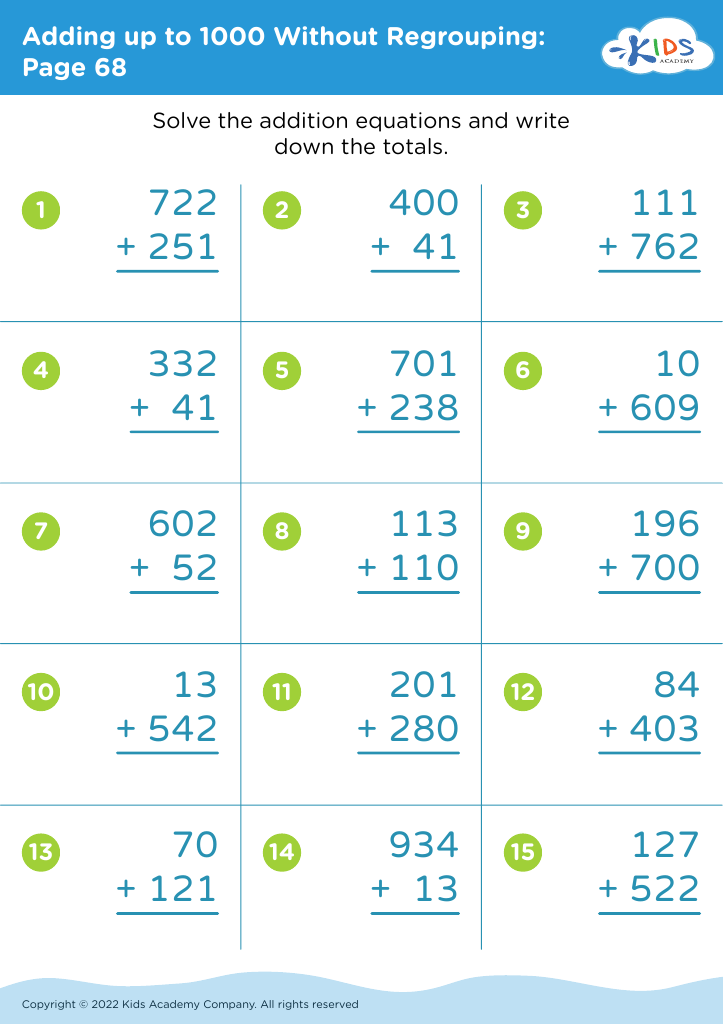
Enhance your child's numerical prowess with our "Improving Counting Skills Adding up to 1000 Worksheets," specially designed for ages 3-9. These engaging printables make learning fun and effective, addressing the unique developmental needs of young learners. Through a variety of exercises, children can gradually build their confidence in counting and adding numbers up to 1000, laying a strong foundation for future math success. With vibrant illustrations and user-friendly layouts, our worksheets capture the interest and imagination of growing minds, ensuring they eagerly return for more learning adventures. Unlock your child's potential with our expertly crafted resources today!



Improving counting skills up to 1000 for children ages 3-9 is a fundamental aspect of their early mathematical development, which provides the foundation for more advanced arithmetic and problem-solving skills. For parents and teachers, fostering these counting abilities is crucial for several reasons.
Firstly, strong counting skills are indicative of a child's ability to understand numerical concepts and relationships. This early numeracy lays the groundwork for more complex math operations such as addition, subtraction, multiplication, and division.
Secondly, these skills enhance cognitive development. As children practice counting to higher numbers, they expand their memory capabilities, attention to detail, and persistence. Engaging with numbers in playful and meaningful ways stimulates their curiosity and reinforces positive attitudes towards learning.
Furthermore, counting aids in daily life skills. Understanding numbers helps children navigate the world around them, from recognizing quantities while shopping to measuring ingredients in cooking. This practical application underscores the real-world relevance of math.
Lastly, children with strong counting skills tend to perform better academically. Early numeracy is a predictor of future success in other disciplines, including science and technology. By prioritizing counting skills, parents and teachers set the stage for lifelong learning and academic confidence.
In summary, improving counting skills up to 1000 for young children is a critical investment in their cognitive development, practical life skills, and academic success.








