Number Sequencing Adding up to 1000 Worksheets for Ages 3-9
5 filtered results
-
From - To
Unlock your child's mathematical potential with our engaging Number Sequencing Adding up to 1000 Worksheets designed for ages 3-9. Perfect for early learners and elementary students, these printable worksheets help children master vital sequencing skills through fun and interactive activities. By progressing through numbers incrementally, kids will enhance their logical thinking, number recognition, and addition proficiency. Whether you’re complementing classroom learning or providing extra practice at home, our worksheets are an invaluable resource for fostering confidence in young mathematicians. Start your child's journey to numerical excellence today with our thoughtfully crafted sequencing exercises.
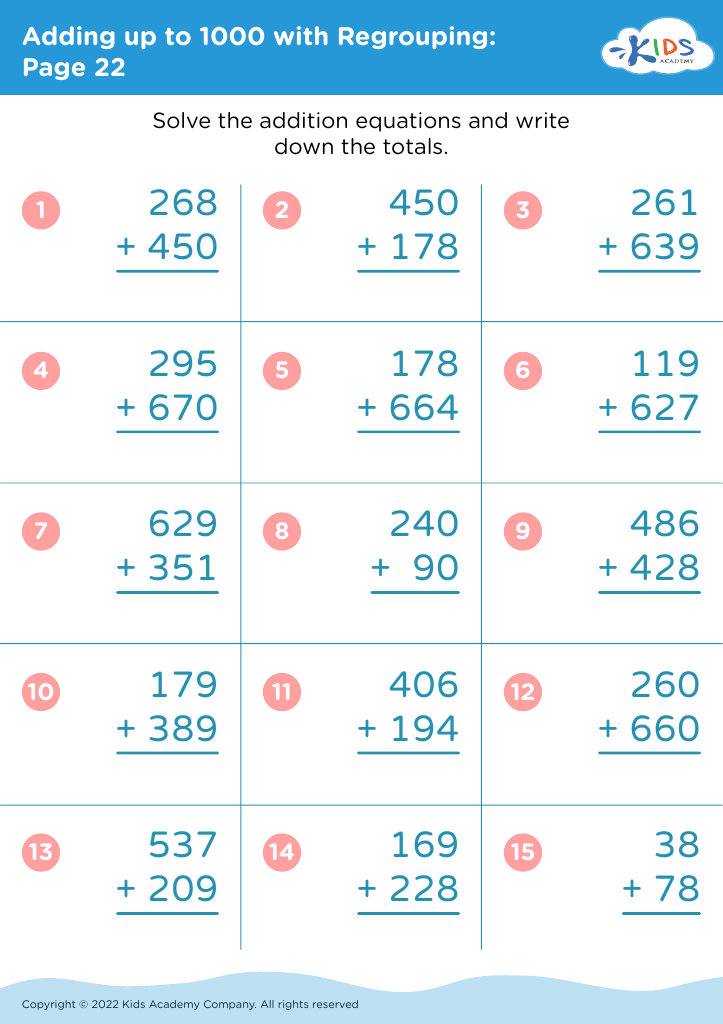
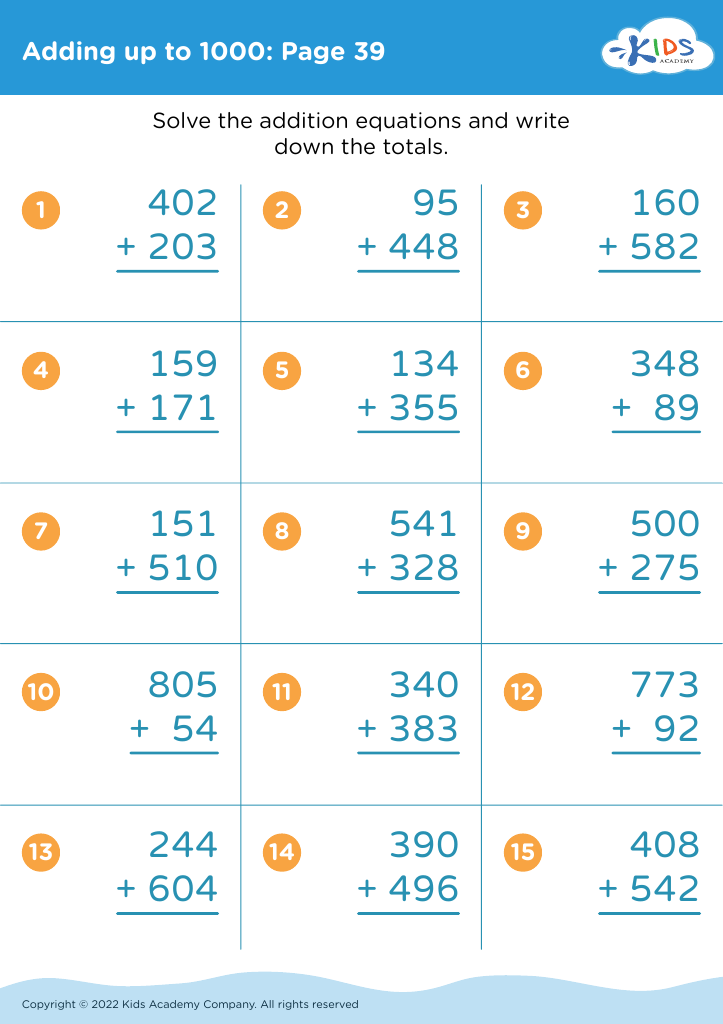
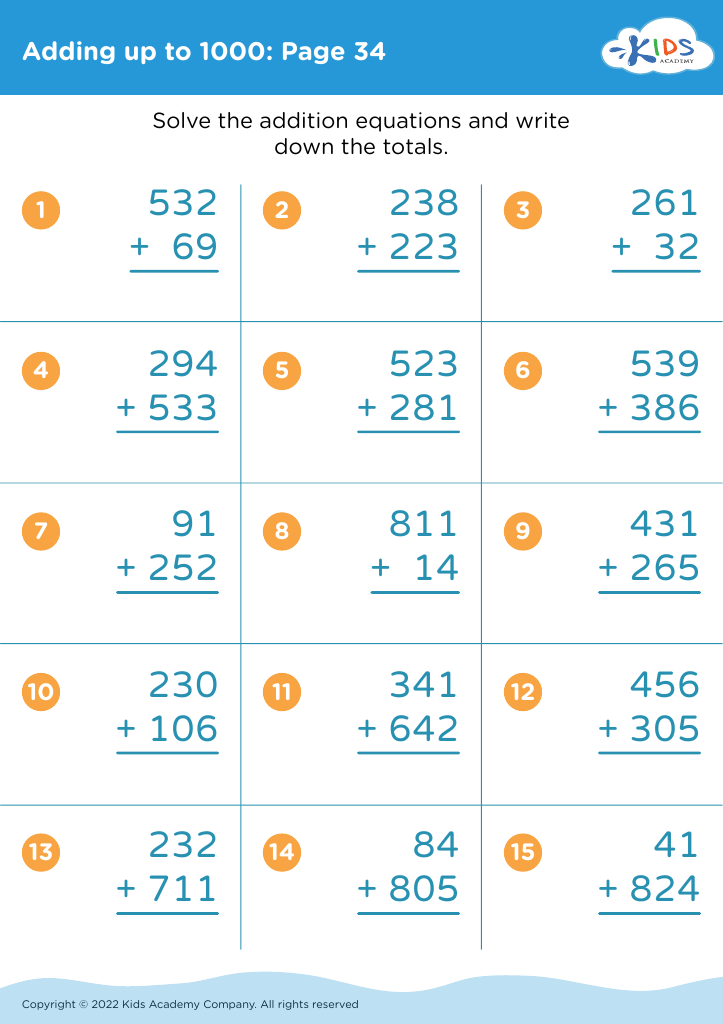
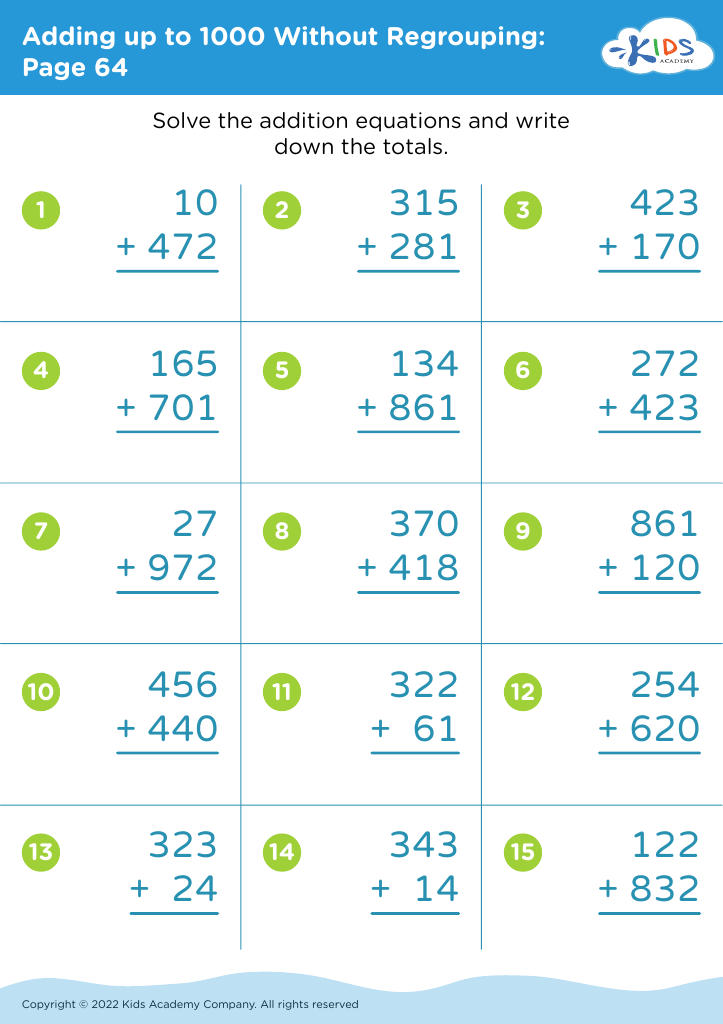
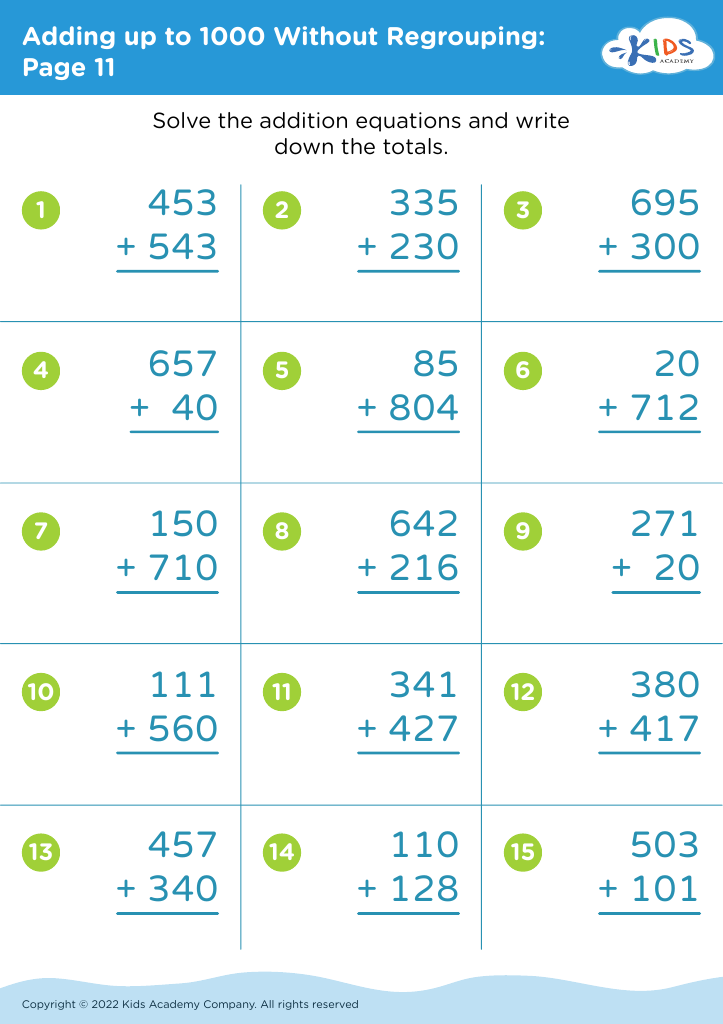



Number sequencing adding up to 1000 is crucial for children ages 3-9 because it builds a strong mathematical foundation essential for higher-level math concepts and day-to-day problem-solving skills. At this formative age, understanding number sequences helps children grasp the idea of numerical order and the relationship between numbers. This understanding is fundamental for addition, subtraction, multiplication, and division.
Practicing number sequencing fosters cognitive development, enhancing children’s ability to recognize patterns, predict outcomes, and logically approach problems. This skill not only supports math-specific learning but also benefits overall academic learning and critical thinking abilities.
Furthermore, mastering number sequences to 1000 integrates place value understanding, reinforcing concepts of units, tens, hundreds, and eventually thousands. This comprehension enables young learners to perform arithmetic operations more effectively and build confidence in mathematics.
Incorporating these exercises early on also helps children in real-life scenarios, such as handling money, telling time, and following sequences in daily tasks. Parents and teachers should thus emphasize this practice through engaging activities, games, and hands-on experiences, ensuring a well-rounded development of a child’s numerical literacy, which is crucial for academic success and practical life skills.








