Pattern recognition Adding up to 1000 Worksheets for Ages 3-9
3 filtered results
-
From - To
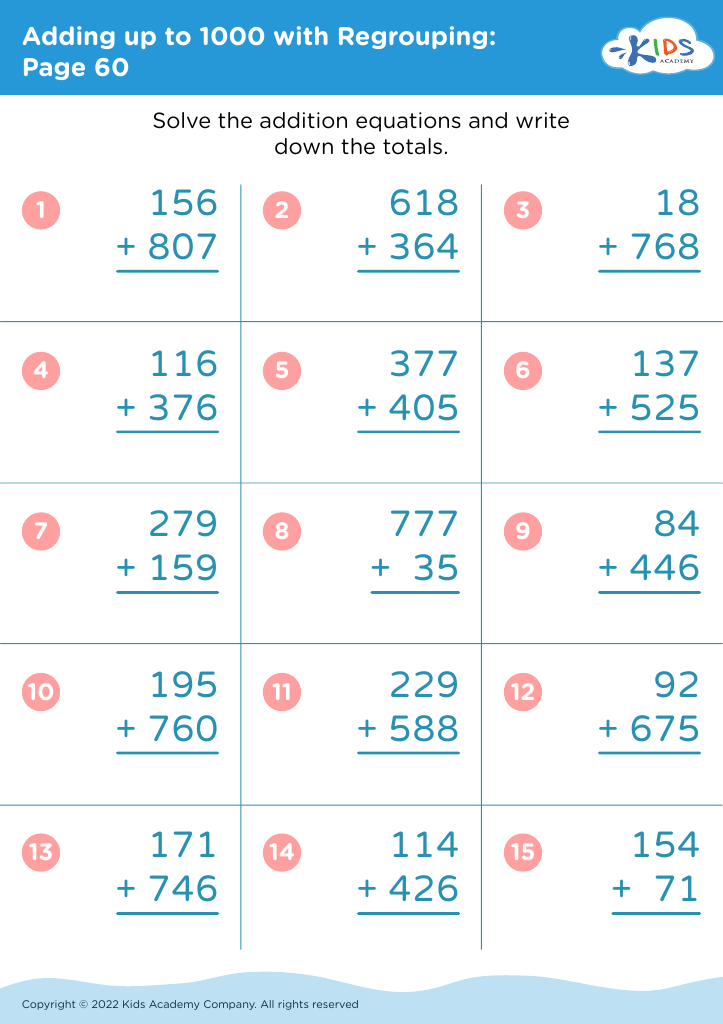
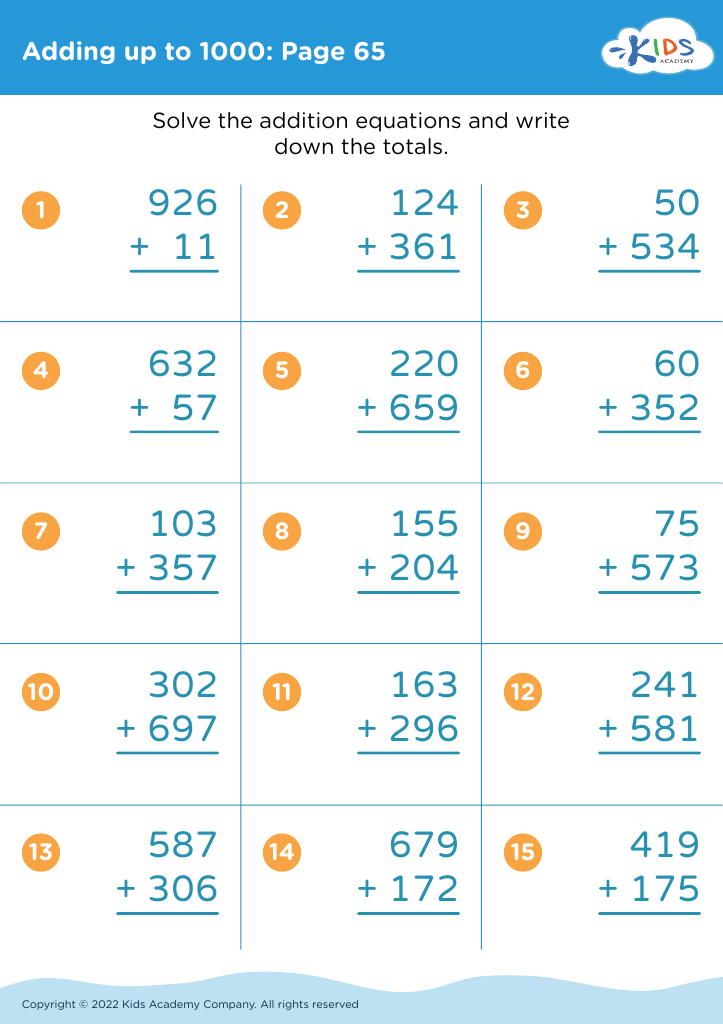
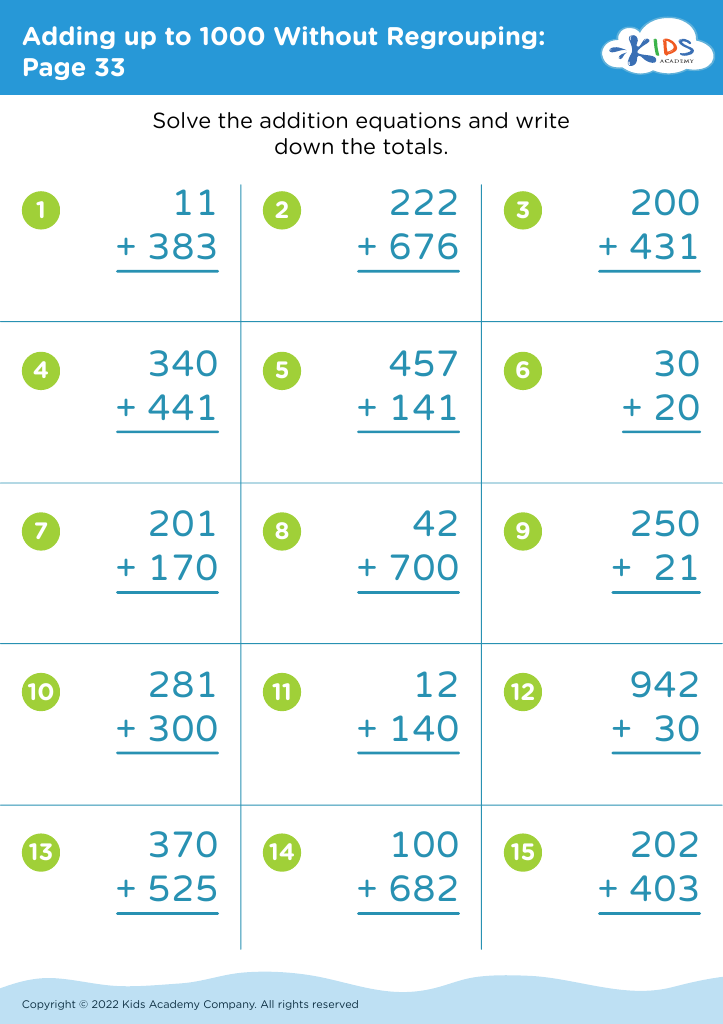
Discover the engaging "Pattern Recognition Adding up to 1000 Worksheets" designed for children ages 3-9. These thoughtfully crafted worksheets promote essential mathematical skills through fun and interactive exercises that focus on recognizing patterns. As kids explore various number sequences and relationships, they will enhance their critical thinking, problem-solving abilities, and overall confidence in math. Our printable resources incorporate colorful visuals and age-appropriate challenges, making learning enjoyable and accessible. Perfect for home or classroom use, these worksheets will help young learners develop a strong foundation in number recognition and addition, paving the way for future mathematical success. Start the journey today!



Pattern recognition is a fundamental cognitive skill critical for children's development, particularly for ages 3-9. Understanding patterns enhances a child's ability to make connections, identify relationships, and predict outcomes, which are essential components of logical reasoning and problem-solving. When children learn to recognize patterns, they develop foundational skills in mathematics, language arts, and even social interactions.
In the context of adding up to 1,000, pattern recognition helps children grasp numerical relationships and understand the base ten system. For example, recognizing that adding 10 repeatedly is a pattern can simplify otherwise intimidating arithmetic tasks. This skill not only makes math more accessible but also boosts confidence and fosters a positive attitude toward learning.
Moreover, engaging in pattern recognition activities keeps children active and engaged, promoting creativity and cognitive flexibility. Parents and teachers can incorporate patterns through games, rhythm, and art, making learning enjoyable. As children become proficient in recognizing patterns, they are better equipped to tackle more complex concepts in later years. Ultimately, fostering pattern recognition lays the groundwork for critical thinking, enabling children to navigate various academic challenges confidently and successfully throughout their educational journey.








