Problem-solving abilities Adding up to 1000 Worksheets for Ages 3-9
5 filtered results
-
From - To
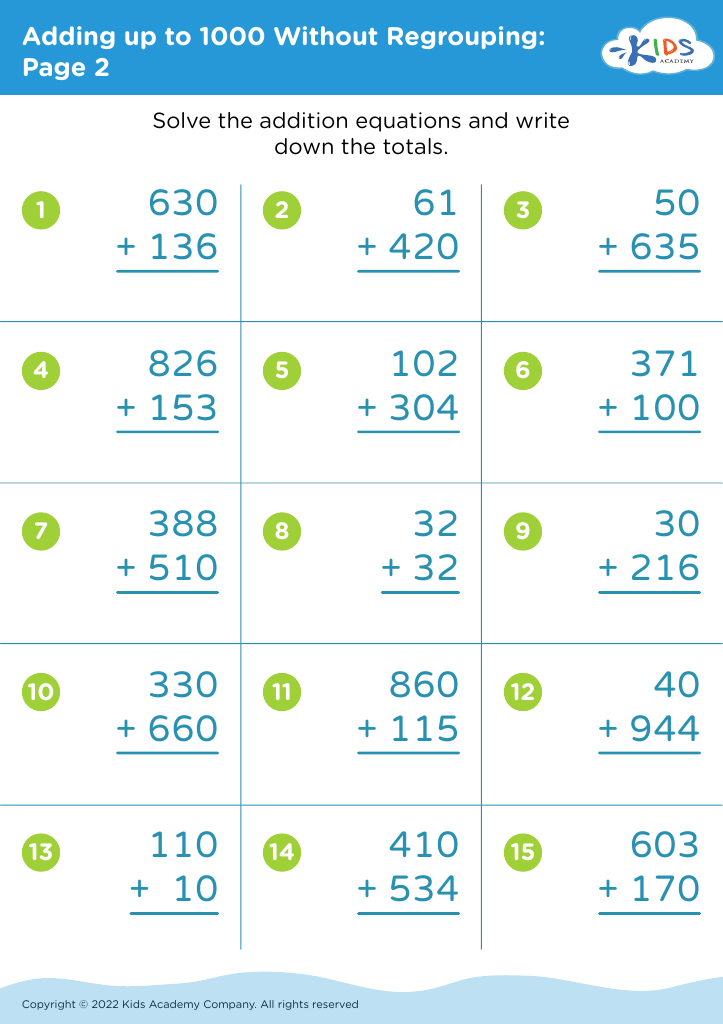
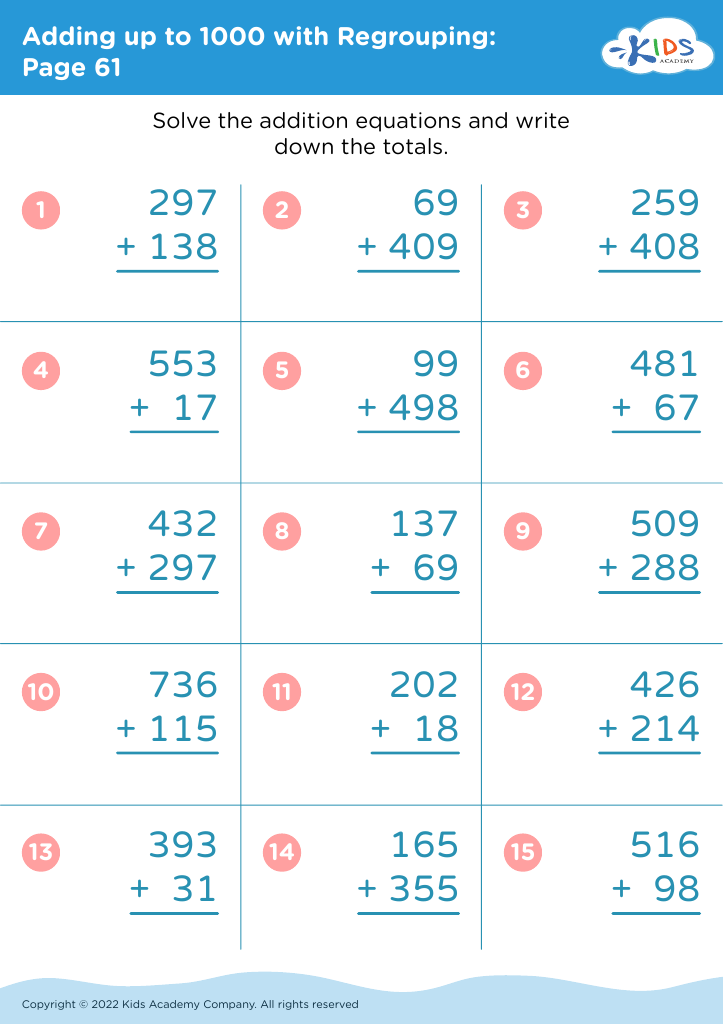
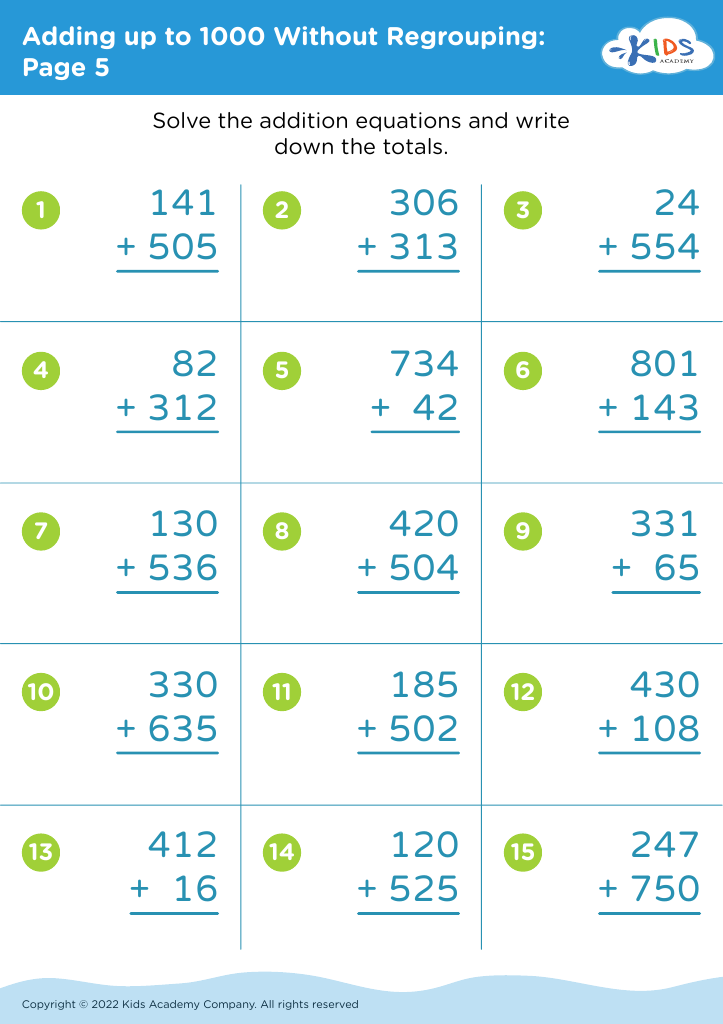
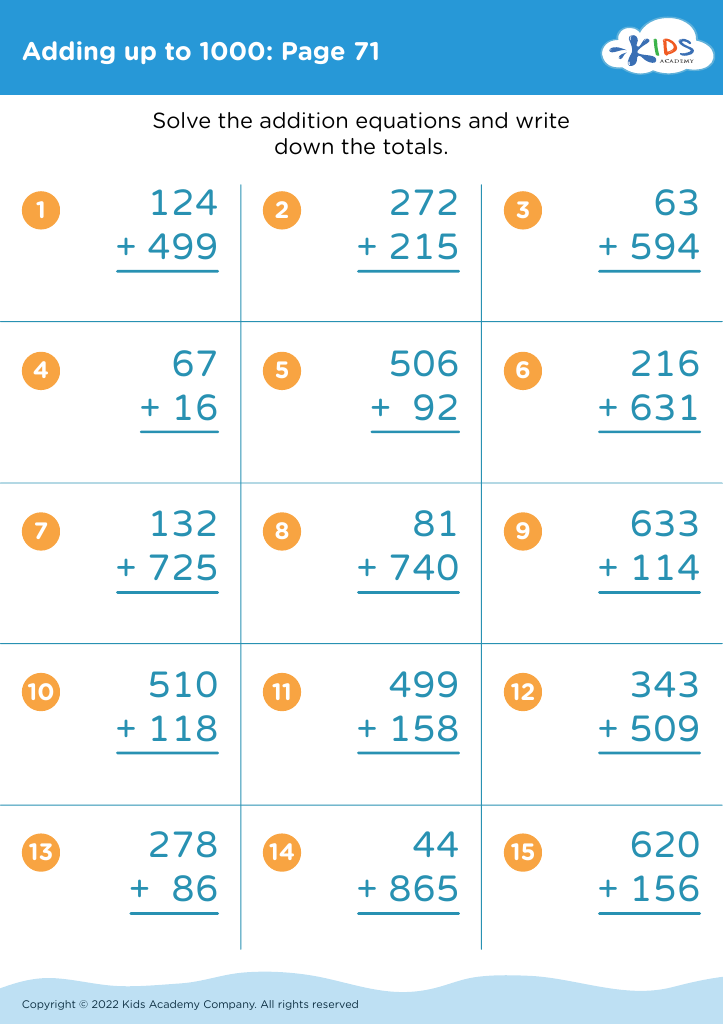
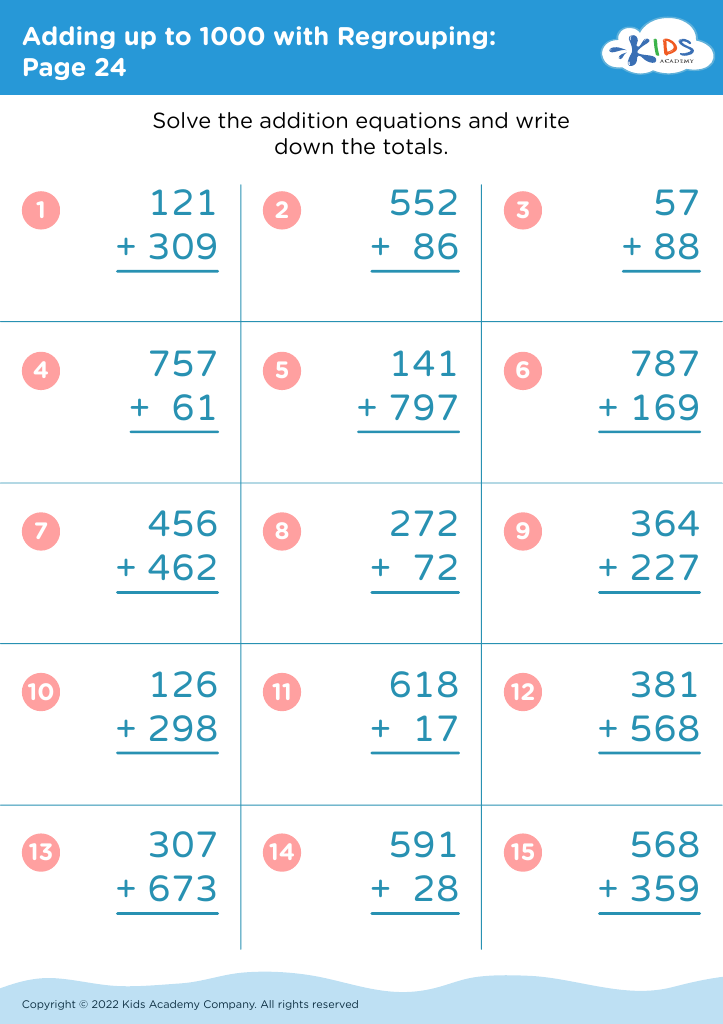
Unlock your child's potential with our "Problem-Solving Abilities Adding up to 1000 Worksheets" designed for ages 3-9. These engaging worksheets focus on developing essential problem-solving skills through fun and interactive activities. Your little ones will learn to visualize numbers, understand addition concepts, and enhance their critical thinking. Ideal for homeschooling or classroom use, these worksheets progressively build on difficulty, ensuring kids master fundamental mathematical concepts while enjoying the process. Foster a love for learning and confidence in math with our creative and age-appropriate resources. Watch as your child's problem-solving abilities flourish, paving the way for future academic success!



Problem-solving abilities are crucial for children aged 3 to 9 as they lay the foundation for critical thinking and lifelong learning. Encouraging problem-solving helps children develop cognitive skills necessary for various aspects of life, from academics to social interactions. At this age, children naturally encounter challenges that require them to think creatively and apply logic, which fosters independence and resilience. Parents and teachers play a vital role in guiding and nurturing these skills through engaging activities and supportive environments.
A strong emphasis on problem-solving also enhances a child's ability to navigate everyday situations, promoting confidence and adaptive thinking. Children learn to analyze problems, weigh options, and assess outcomes—skills that will serve them well throughout life. Additionally, fostering problem-solving abilities aligns with modern educational goals, which focus on critical thinking over rote memorization.
By nurturing a child's problem-solving skills, parents and teachers can help them build the essential toolkit needed for success in school and beyond. Promoting a problem-solving mindset encourages perseverance, helps children learn from mistakes, and prepares them to tackle complex challenges in an ever-changing world. Hence, active engagement in developing these abilities is an investment in a child's future learning and development.








