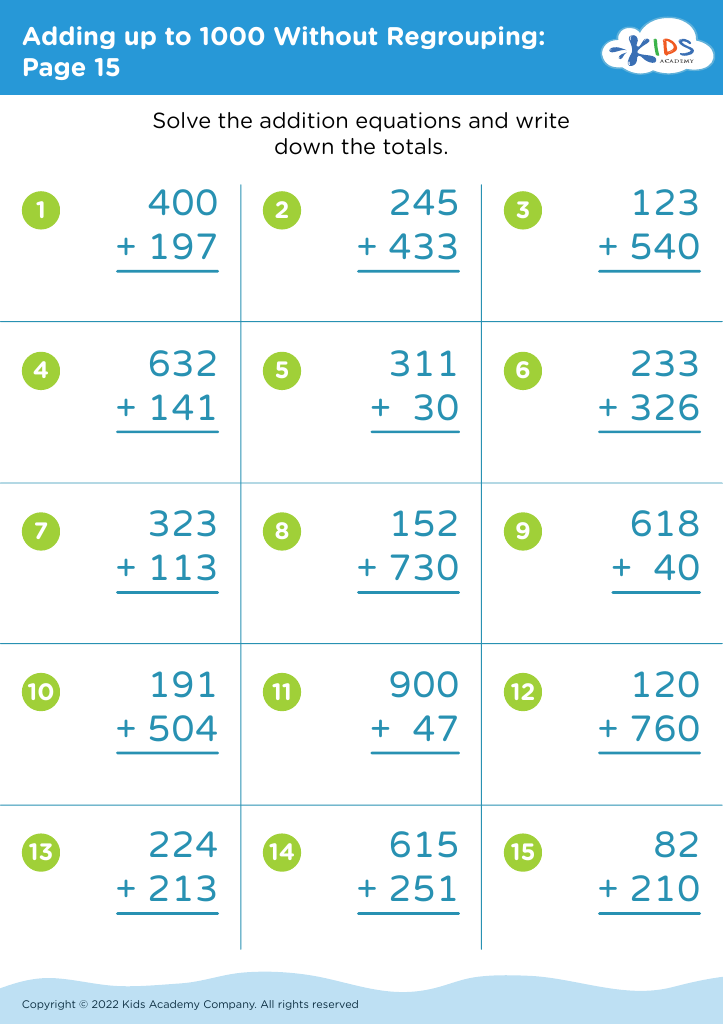




Problem-solving skills are essential for children's development, especially for ages 3-9, as they lay the groundwork for critical thinking and lifelong learning. During these formative years, children are naturally curious and eager to explore their world. Parents and teachers should care about fostering these skills because they enable children to navigate challenges and build resilience in an increasingly complex environment.
As children engage in problem-solving activities, they learn to explore different strategies, weigh options, and draw conclusions, promoting cognitive flexibility. This not only enhances mathematical skills, such as understanding numbers and operations, but also nurtures logical reasoning and creativity.
Moreover, cultivating problem-solving skills contributes to social-emotional development. Children learn to collaborate, share ideas, and handle frustrations, essential skills for interacting with peers and adults alike. By encouraging discussions about problem-solving processes, adults can help children articulate their reasoning, enhancing their communication skills.
Ultimately, supporting young learners in developing these skills sets them on a successful path in both academic and personal life, empowering them to tackle future challenges with confidence and adaptability. Parents and teachers play a pivotal role in this journey, creating a positive impact on children's cognitive and social development.








