Recognize patterns Adding up to 1000 Worksheets for Ages 3-9
6 filtered results
-
From - To
Explore our engaging "Recognize Patterns Adding Up to 1000" worksheets designed for children ages 3-9! These fun and interactive activities help young learners develop essential math skills by identifying numeric patterns that lead to sums of 1000. With a variety of captivating visuals and age-appropriate challenges, these worksheets foster critical thinking, boost number recognition, and enhance problem-solving abilities. Our resources are perfect for classroom settings or at-home learning, making math enjoyable for every child. Watch as your little ones gain confidence and competence in math while exploring these dynamic pattern recognition exercises! Let’s make learning math a delightful adventure!
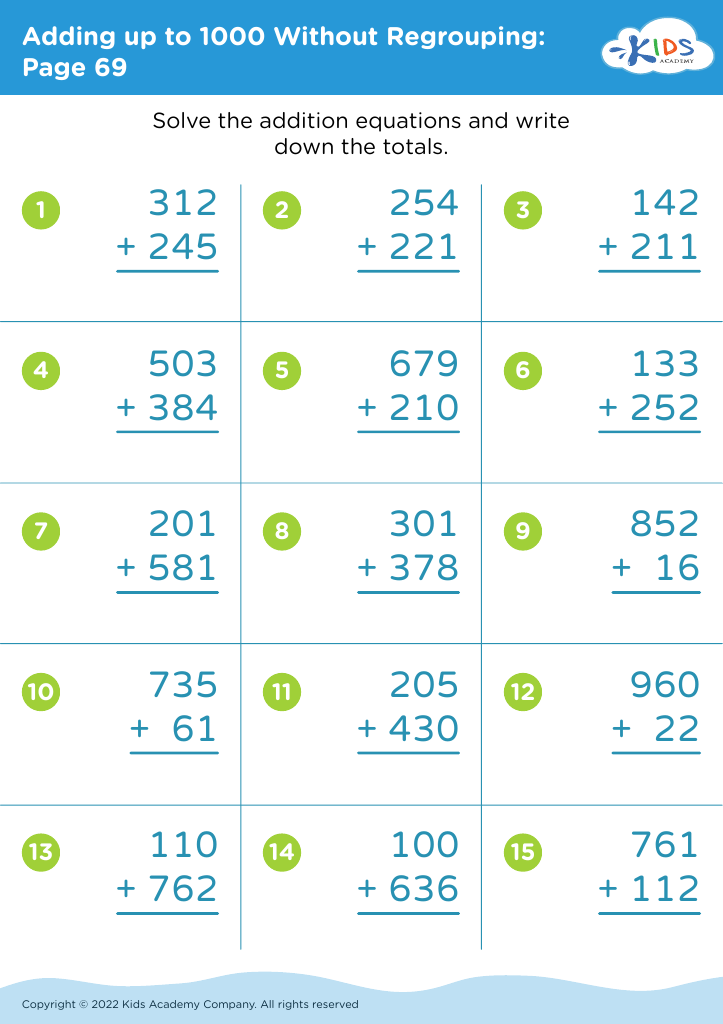
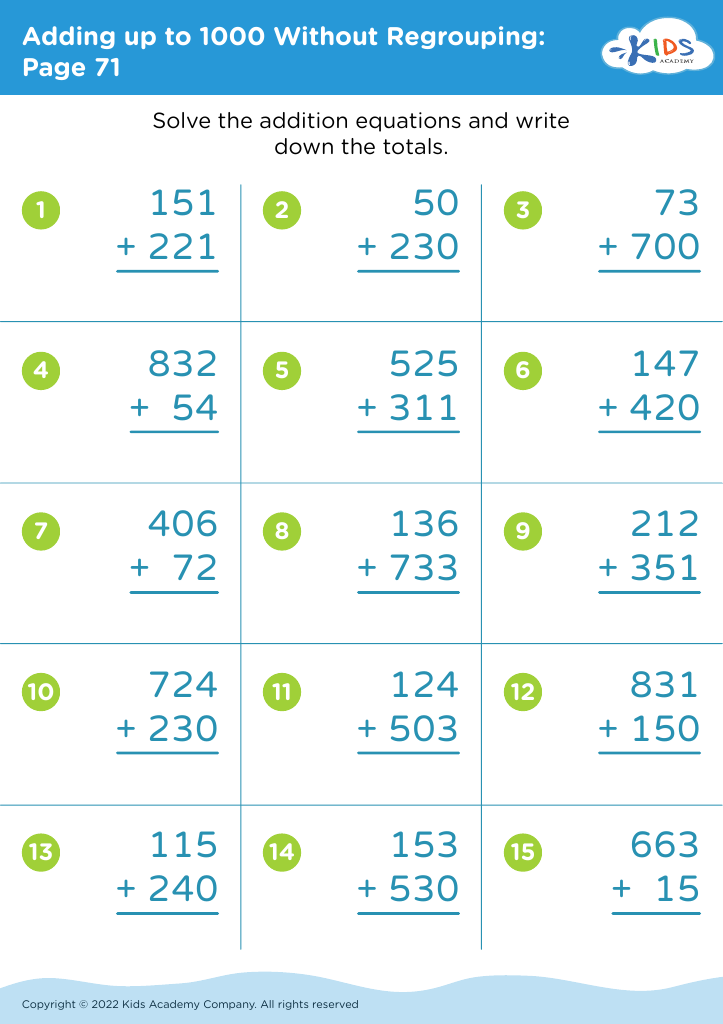
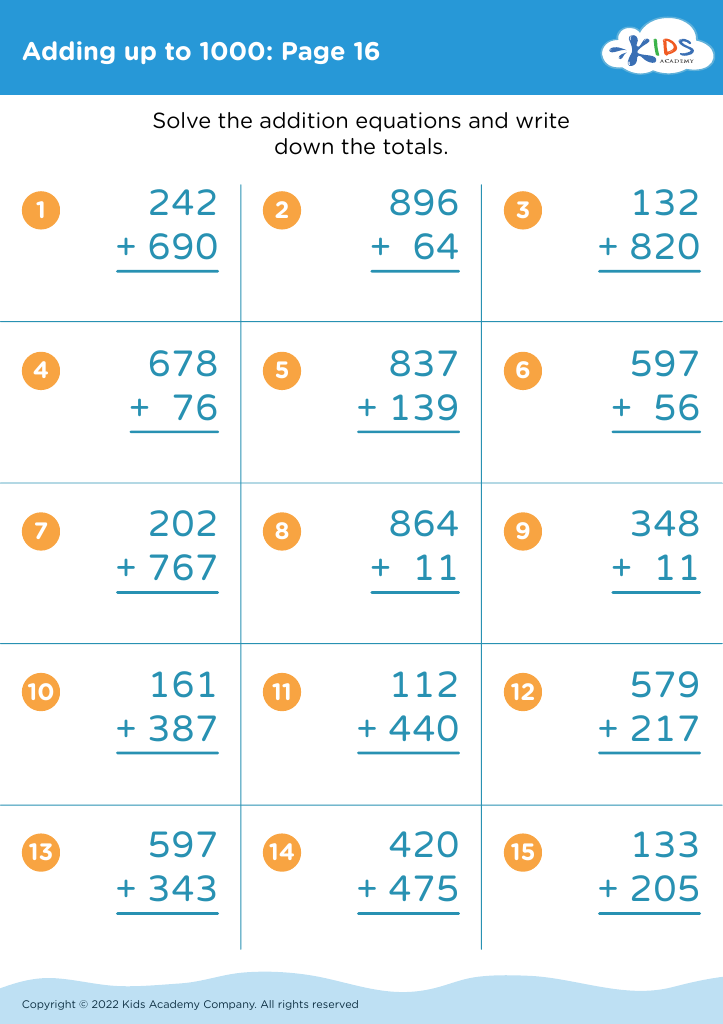
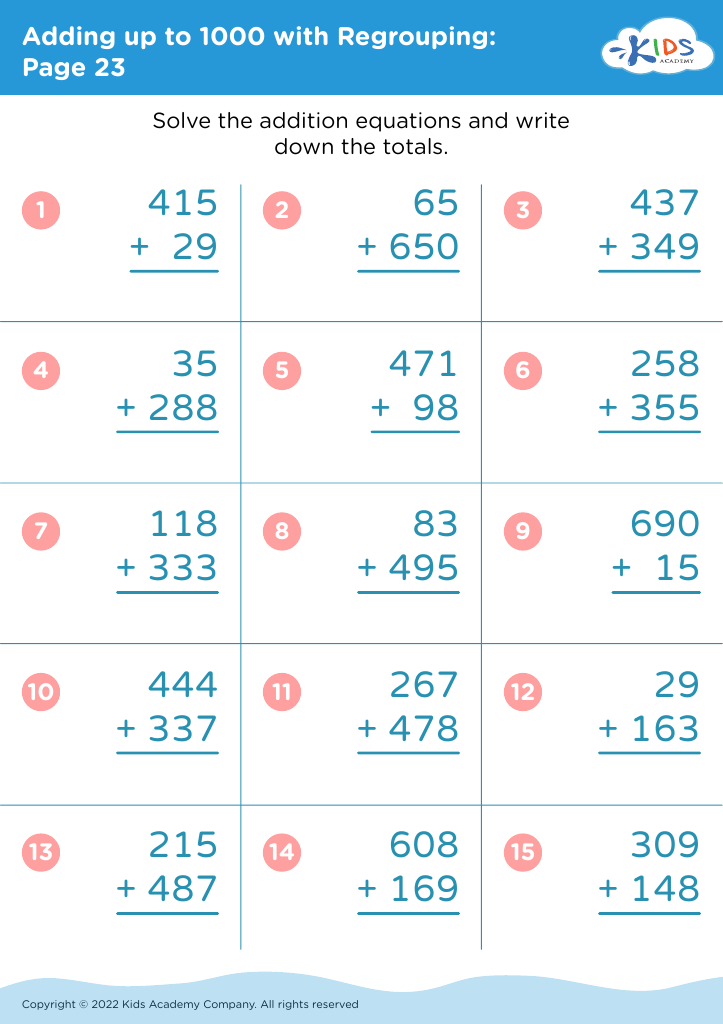
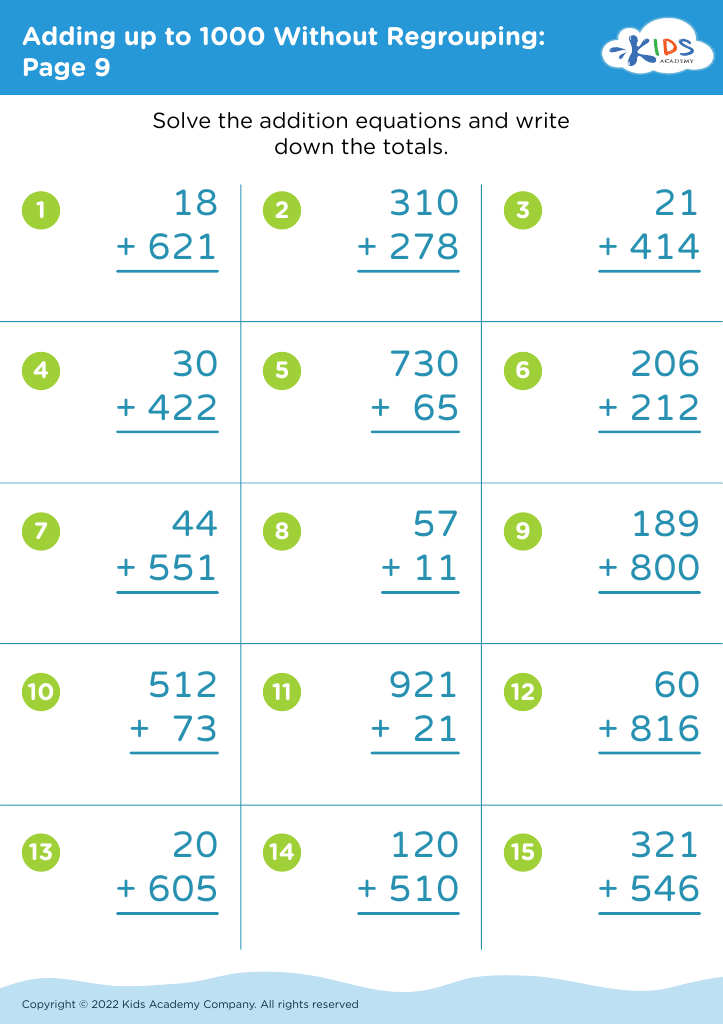
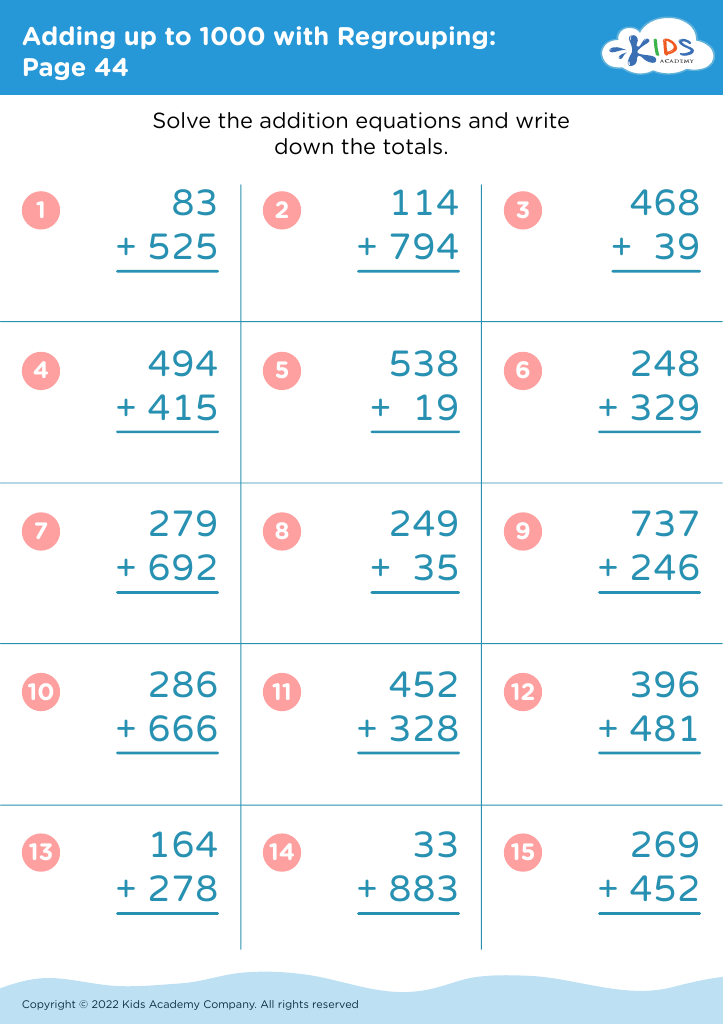



Recognizing patterns and understanding how to add up to 1000 are fundamental skills for children aged 3-9 that lay the groundwork for future math concepts. When parents and teachers focus on these skills, they help children develop critical thinking and problem-solving abilities that are essential for lifelong learning.
Pattern recognition enhances cognitive development, enabling children to see relationships and make predictions. For instance, identifying number patterns assists students in grasping more complex arithmetic and algebraic concepts later on. Similarly, learning to add numbers to reach 1000 engages children’s counting skills and promotes number sense, fostering confidence in their mathematical abilities.
By encouraging these skills, parents and teachers support children’s emotional and intellectual growth. Engaging in activities that promote pattern recognition and addition makes learning fun and interactive, which can nurture a love for math. Additionally, mastering these skills equips children to tackle real-life situations involving budgeting, measurement, and problem-solving.
In essence, prioritizing pattern recognition and the ability to add up to 1000 provides children with the foundation they need for academic success and equips them with tools that are applicable in daily life, bolstering their overall educational journey.








