Understand patterns Adding up to 1000 Worksheets for Ages 3-9
3 filtered results
-
From - To
Discover engaging "Understand Patterns Adding Up to 1000 Worksheets" designed for children aged 3-9. These worksheets help young learners recognize and explore numerical patterns, enhancing their addition skills while building a strong mathematical foundation. With a variety of fun activities, kids will enjoy identifying relationships between numbers and mastering the concept of addition up to 1000. Parents and educators can easily incorporate these resources into daily lessons to promote critical thinking and problem-solving abilities. Perfect for homework or classroom use, these interactive worksheets make learning math enjoyable and effective, ensuring that children are well-equipped for future academic challenges.
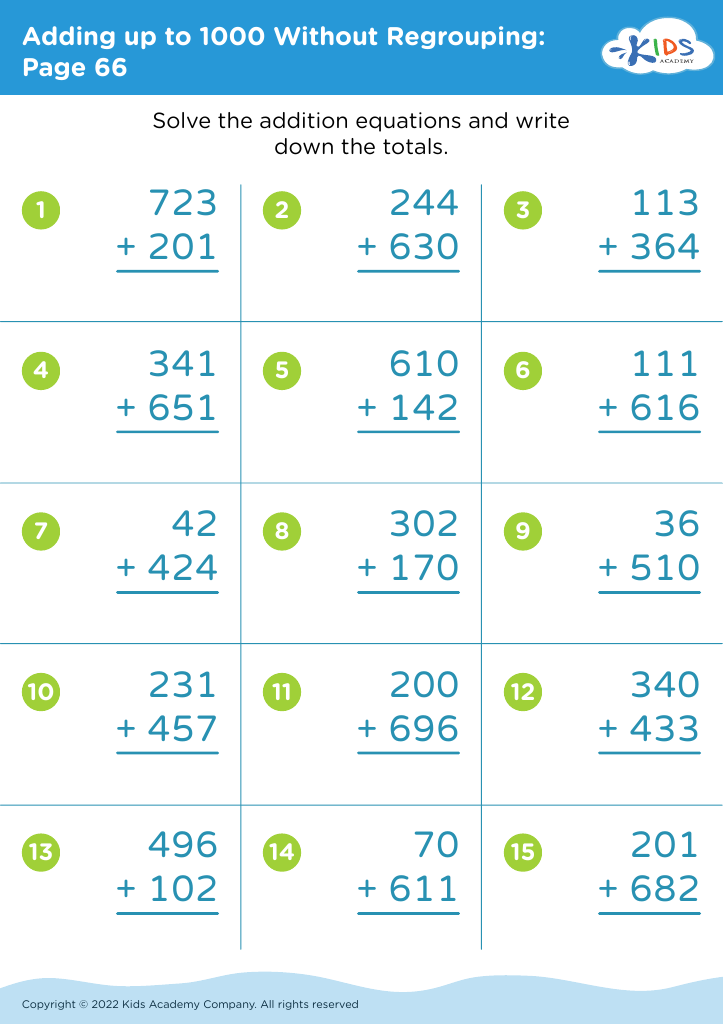
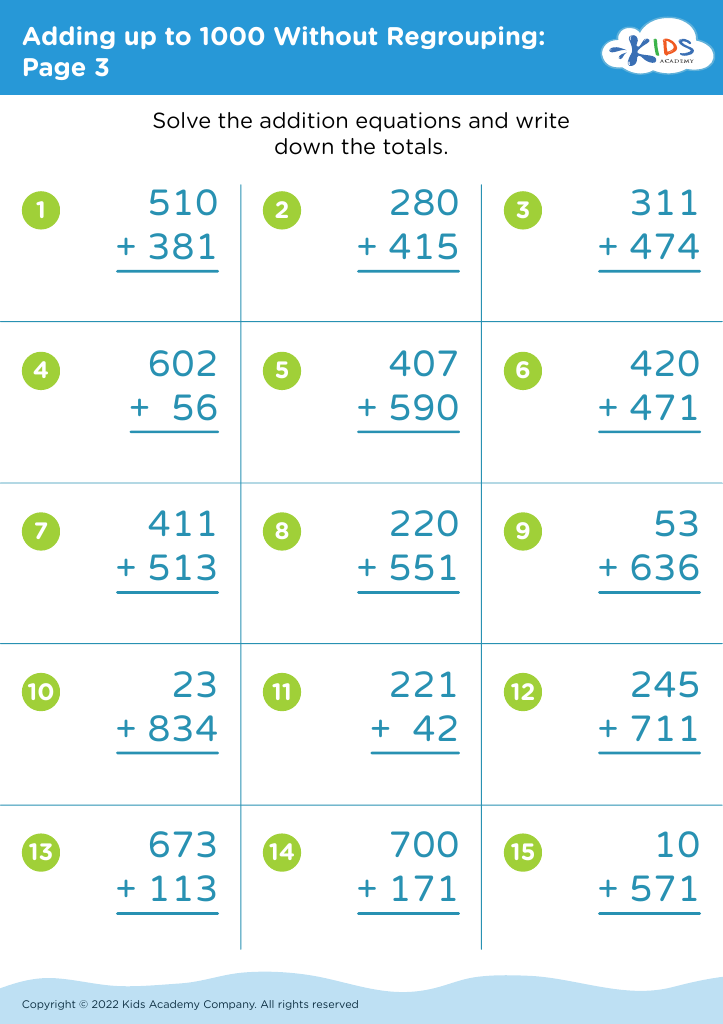
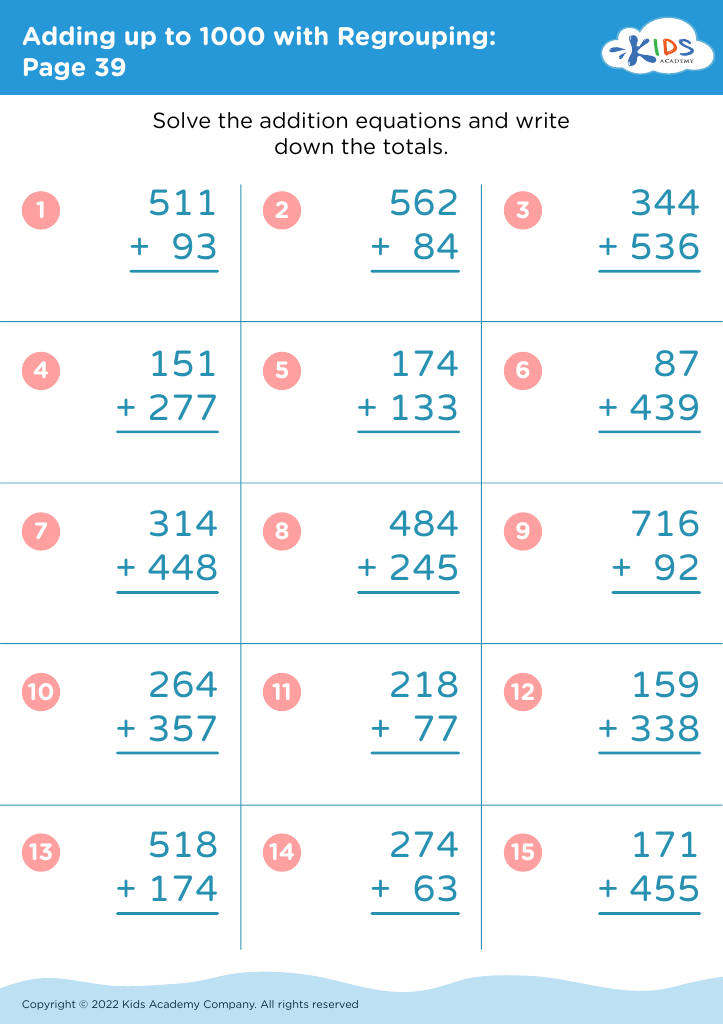



Understanding patterns and the concept of adding up to 1000 is crucial for children aged 3-9, as it lays the groundwork for essential mathematical skills and critical thinking. When children recognize patterns, they enhance their cognitive abilities, making it easier for them to solve problems and identify relationships between numbers. Introduce young learners to patterns through everyday examples, from simple sequences in nature to play with colors and shapes, helps foster curiosity and engagement in learning.
Adding up to 1000 is also significant for developing number sense. Mastery of this skill empowers children with the confidence to tackle larger math challenges, understand place value, and appreciate how numbers interact. This foundational knowledge flows into advanced topics such as addition, subtraction, and even basic algebra later in their education.
Additionally, engaging in pattern recognition and number exploration not only promotes numerical fluency but also critical life skills such as perseverance, focus, and logical reasoning. Fostering these competencies encourages a love for math, breaking the stereotype that math is difficult or unapproachable. In essence, investing in these early mathematical concepts equips children for success in their academic journey and everyday life.








