Understand subtraction Adding up to 1000 Worksheets for Ages 3-9
3 filtered results
-
From - To
Discover our engaging "Understand Subtraction Adding Up to 1000 Worksheets" designed specifically for children ages 3-9. These worksheets promote foundational math skills, allowing young learners to grasp the concept of subtraction through fun and interactive exercises. By exploring various subtraction methods, including visual aids and real-life applications, kids enhance their problem-solving abilities while building confidence in math. Perfect for home or classroom use, our resources cater to visual, auditory, and kinesthetic learners alike. Foster a love for numbers and support your child's educational journey with our carefully crafted worksheets that make subtraction both easy and enjoyable!
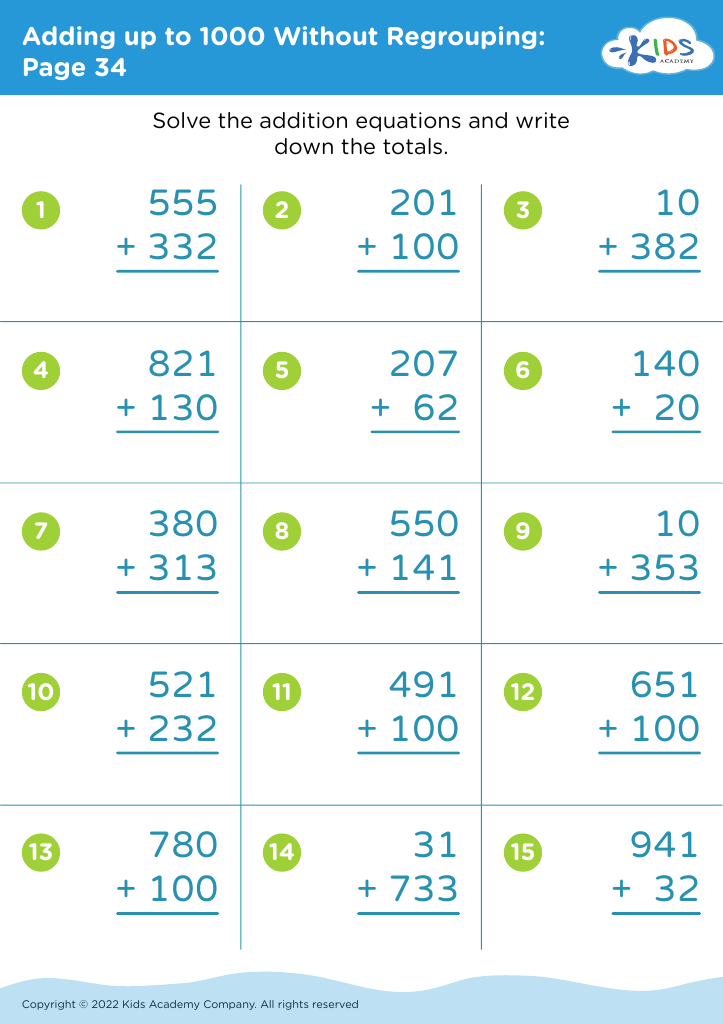
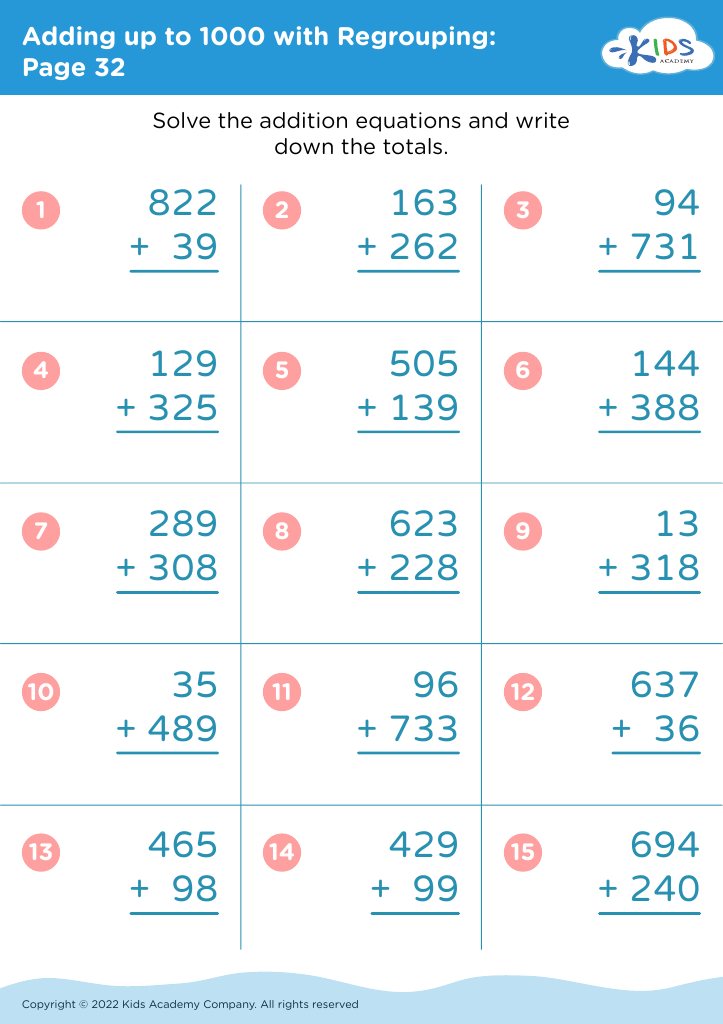
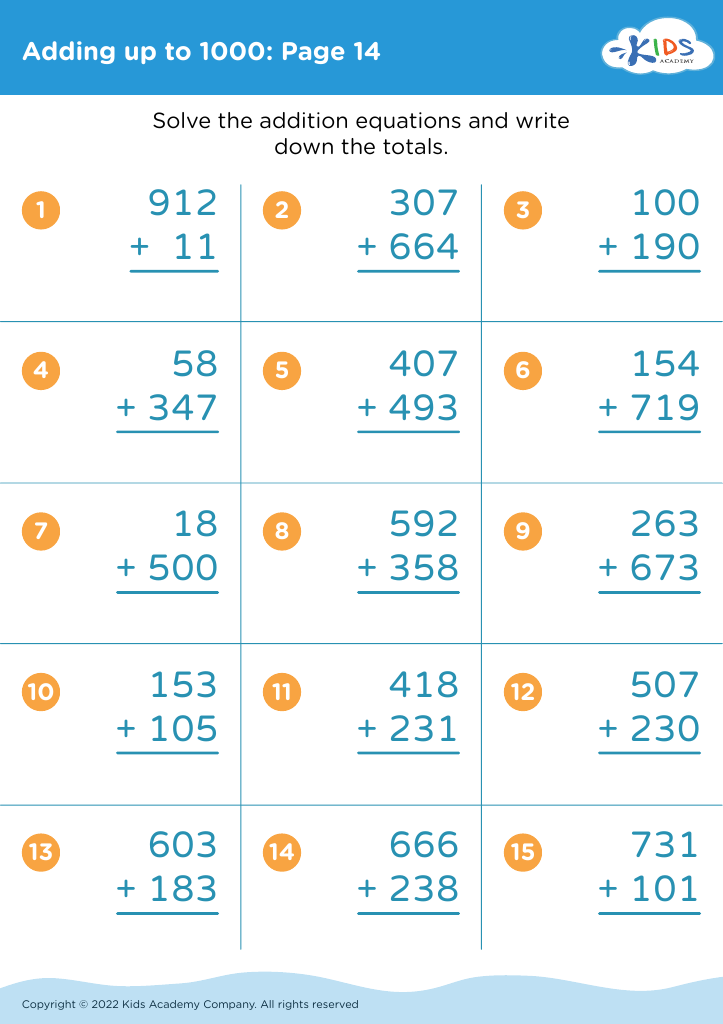



Teaching subtraction, particularly up to 1000, is crucial for children aged 3-9 as it establishes a foundational understanding of mathematics essential for their future academic success. At this age, children are highly impressionable, and grasping the concept of subtraction forms the basis for more complex mathematical operations later on.
First, understanding subtraction enhances problem-solving skills, allowing children to navigate daily situations that require them to think critically. For example, if a child knows that 10-4 equals 6, they can apply this knowledge in practical scenarios, such as determining how many toys they have left after giving some away.
Moreover, early mastery of subtraction promotes numerical fluency, which is vital for overcoming challenges in higher-level math as they progress through school. This fluency builds their confidence, enabling them to tackle larger mathematical concepts without fear.
Additionally, incorporating subtraction into early education enhances cognitive development by encouraging children to envision numbers and quantities in a more abstract way. When parents and teachers prioritize making subtraction fun and engaging through games and daily contexts, it fosters a love for learning that lasts a lifetime. Overall, understanding subtraction is not just about numbers; it impacts reasoning, critical thinking, and overall academic confidence.








