Understanding patterns Adding up to 1000 Worksheets for Ages 3-9
5 filtered results
-
From - To
Explore our engaging "Understanding Patterns Adding up to 1000 Worksheets" designed for children aged 3-9! These worksheets are specifically crafted to enhance mathematical understanding through recognizing patterns in addition. By combining visual aids and interactive exercises, young learners will grasp how numbers relate and accumulate to 1000. Our resources include various formats tailored to different learning styles, ensuring your child develops a strong foundation in math while having fun. Perfect for parents and educators alike, these worksheets promote critical thinking and problem-solving skills, setting the stage for future success in mathematics. Dive into a world of numbers and patterns today!
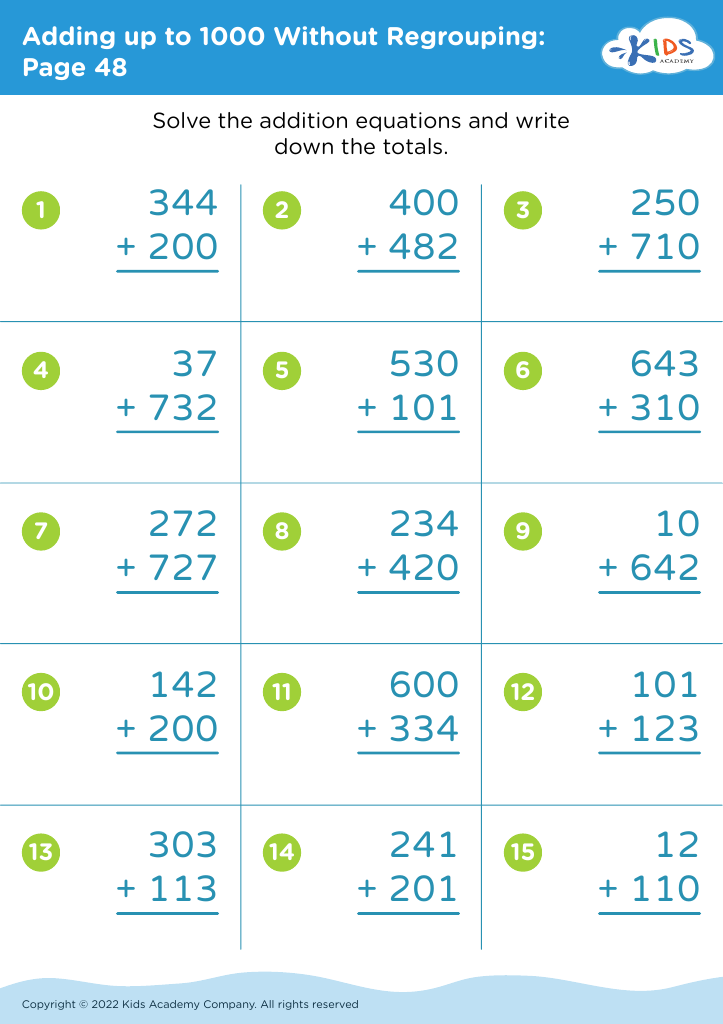
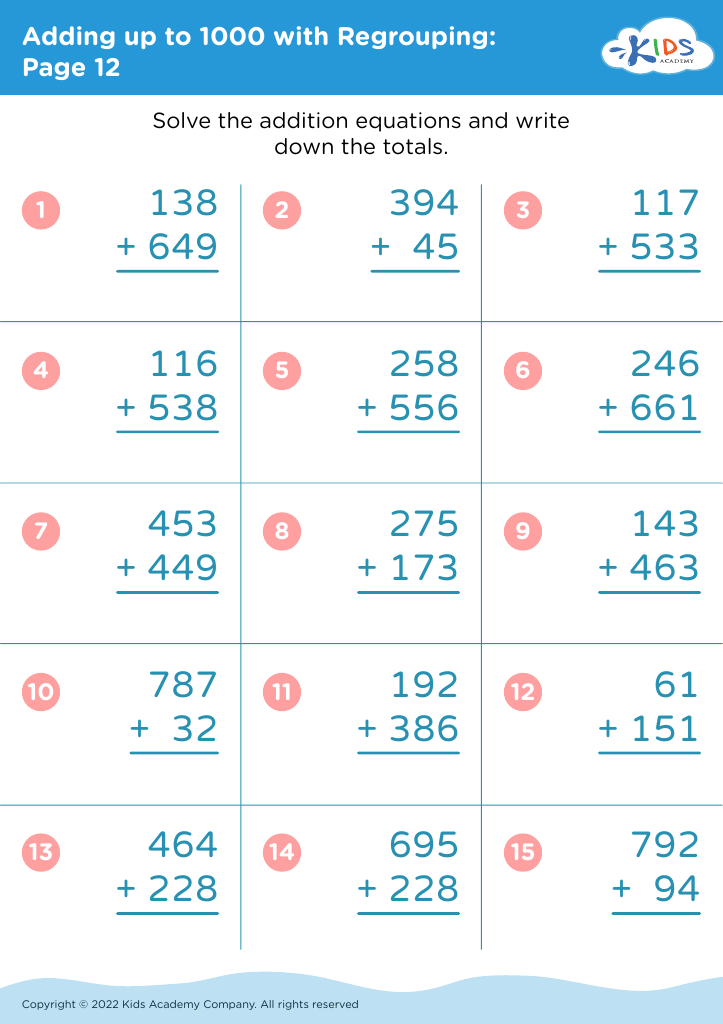
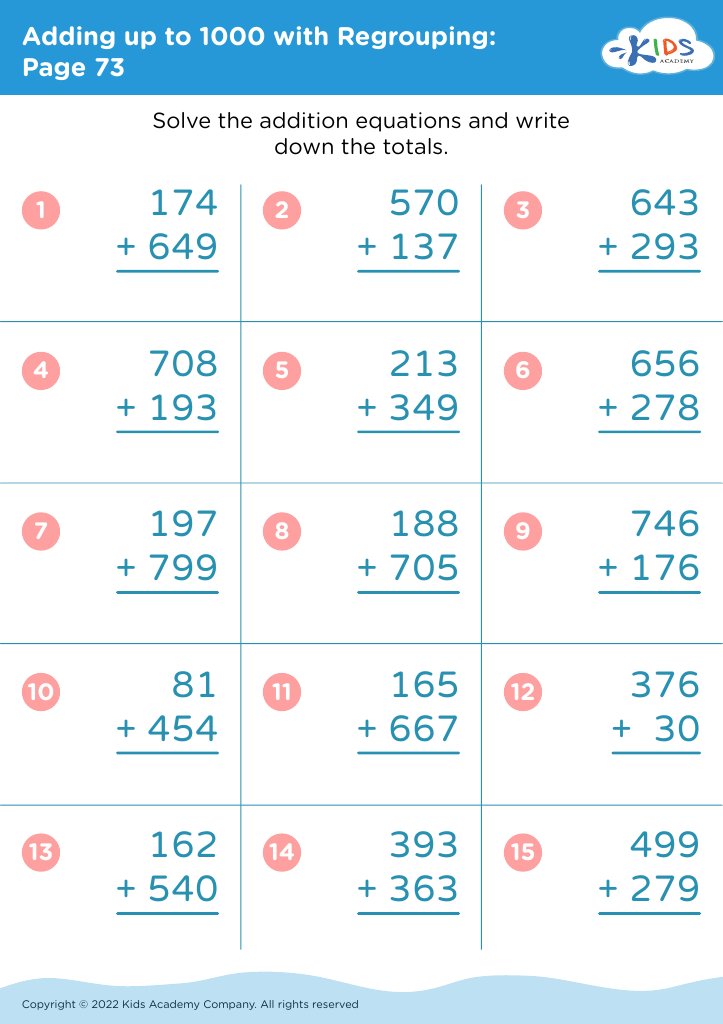
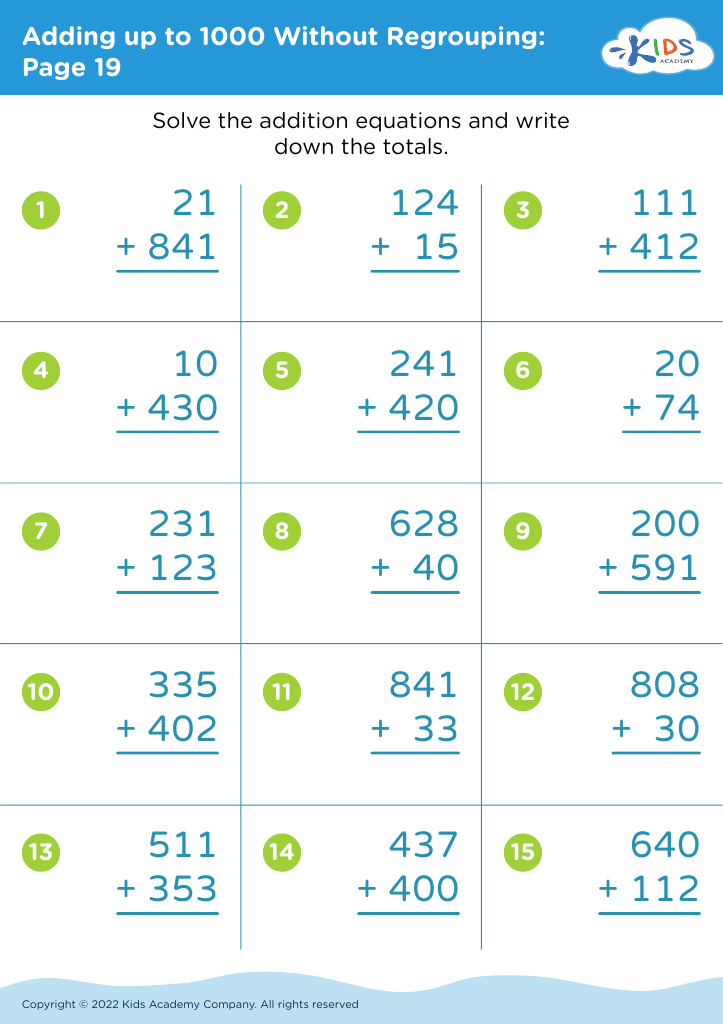
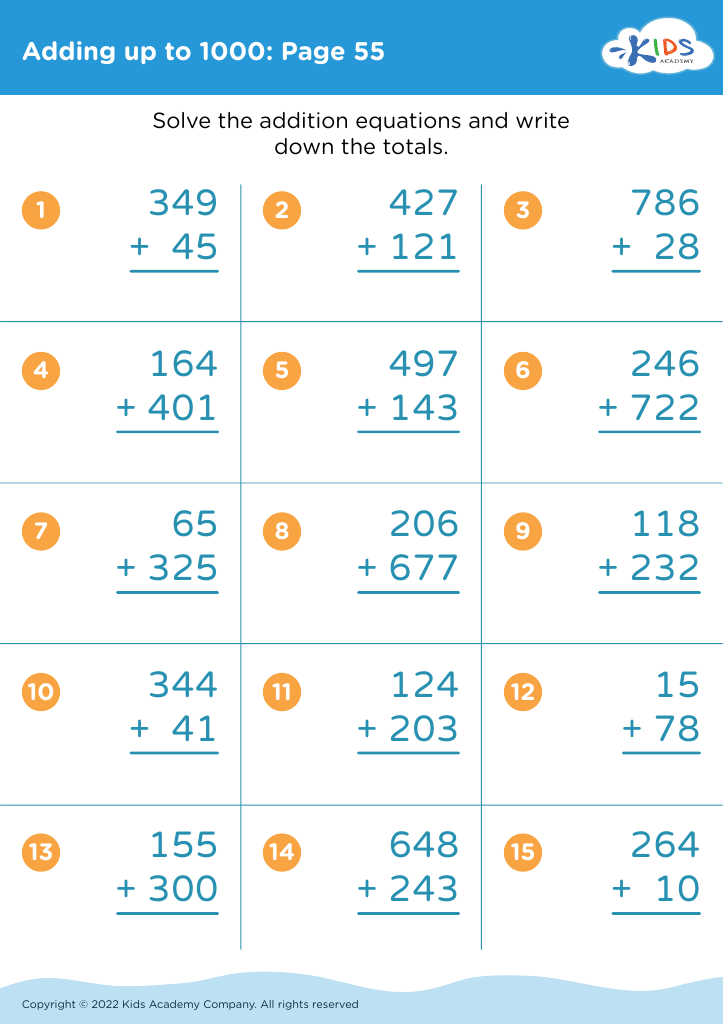



Understanding patterns and adding up to 1000 is crucial for children aged 3-9, as it lays the foundation for critical thinking and problem-solving skills. Recognizing patterns helps young learners make connections between numbers and concepts, fostering cognitive development. For instance, identifying sequences in numbers prepares children for more complex mathematical operations, promoting a strong number sense early on.
Furthermore, learning to add up to 1000 encourages mental math and enhances arithmetic skills. It allows children to gain confidence in their numerical abilities, which is vital for success in more advanced mathematics as they progress through school. Engaging with these concepts cultivates perseverance and resilience, valuable traits that extend beyond math itself.
Additionally, these early math skills are directly linked to overall academic performance. Children who develop a solid understanding of patterns and large numbers are typically better prepared for standardized tests and other assessments.
For parents, supporting their child's learning in this area can lead to a more profound engagement in their education. Teachers, on the other hand, can create activities that promote teamwork and collaboration, making learning enjoyable and interactive. In essence, understanding patterns and large additions is essential for nurturing lifelong learners.








