Understanding Sequences Adding up to 1000 Worksheets for Ages 3-9
6 filtered results
-
From - To
Explore our "Understanding Sequences Adding up to 1000 Worksheets" designed for children aged 3-9! These engaging and interactive worksheets help young learners grasp the concept of numerical sequences while developing essential addition skills. By practicing with fun exercises, kids will enhance their number recognition, counting, and problem-solving abilities as they work towards mastering sequences that total up to 1000. Ideal for both classroom settings and at-home learning, our resources cultivate a strong math foundation through structured practice and playful learning. Encourage your child's mathematical journey today with our comprehensive worksheets, ensuring they feel confident and excited about numbers!
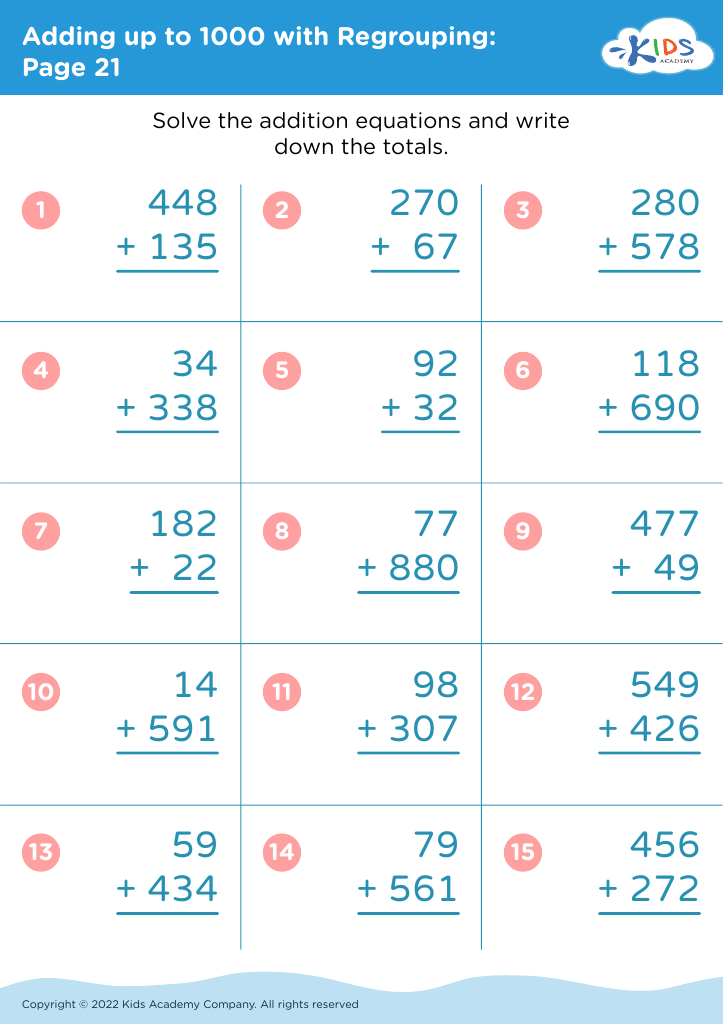
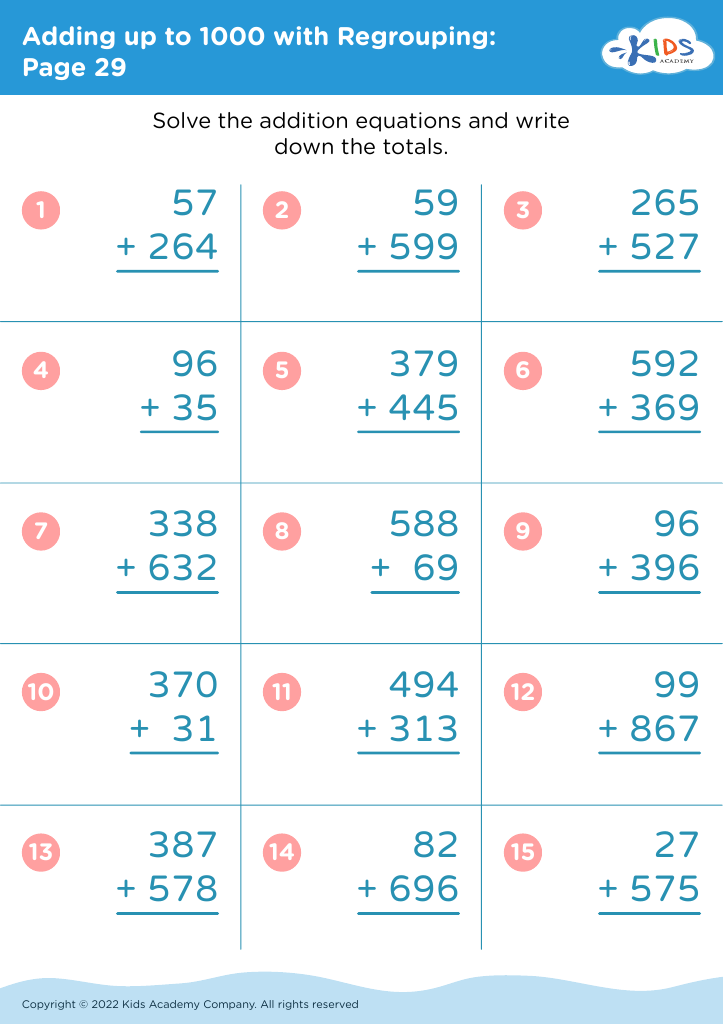
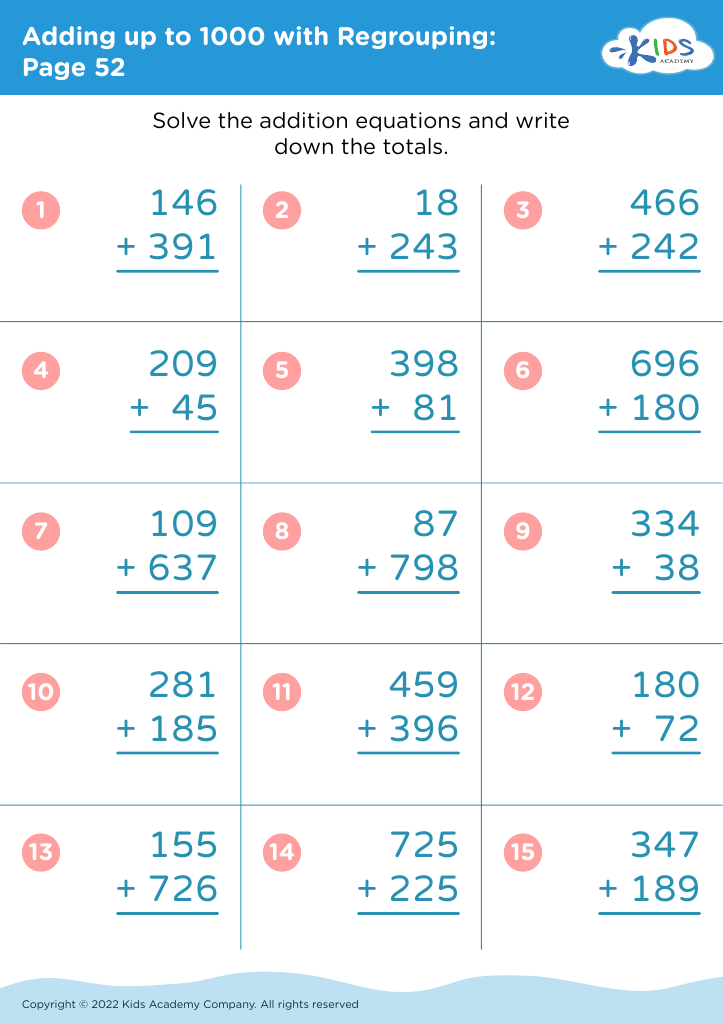
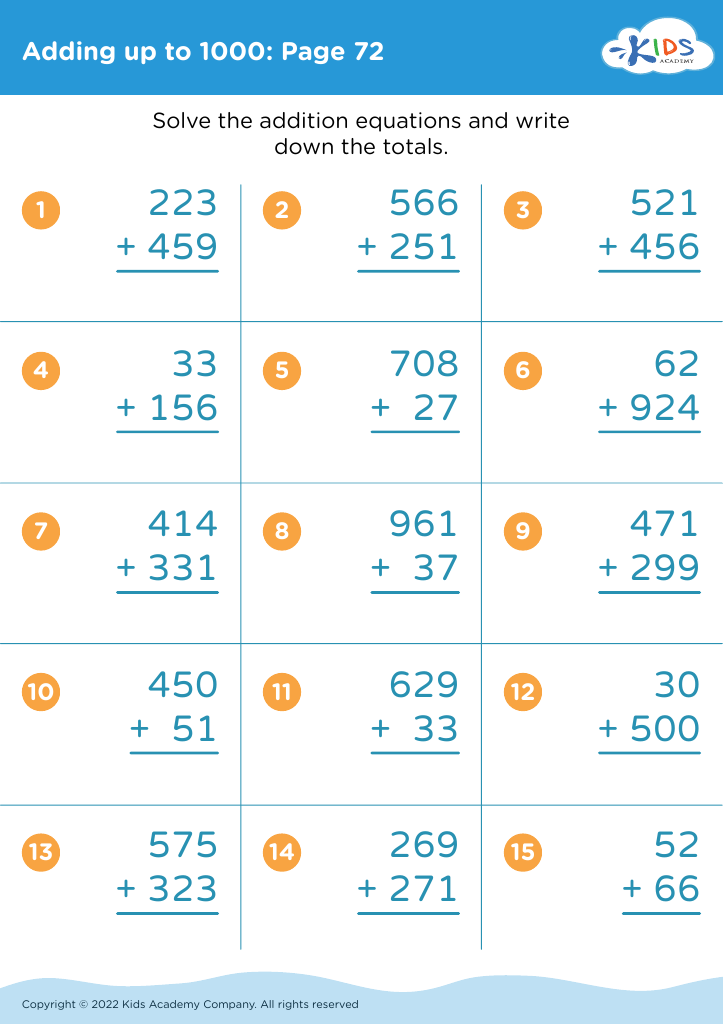
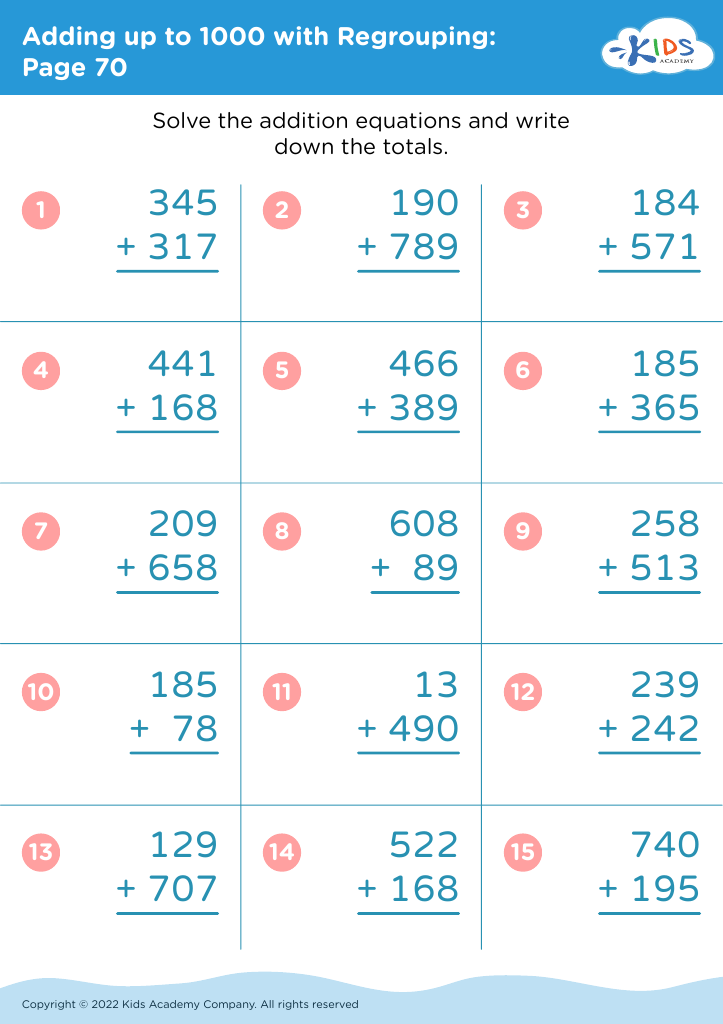
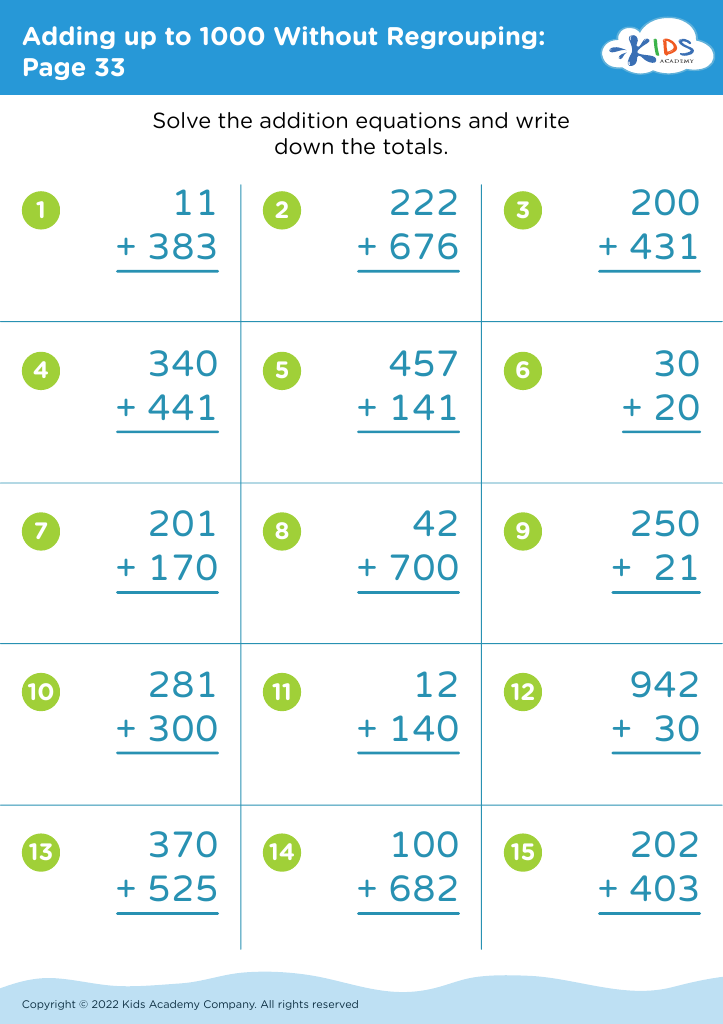



Understanding sequences and basic addition concepts is crucial for children aged 3-9, as it forms the foundation for their numerical literacy and problem-solving skills. Recognizing and mastering sequences, such as counting by twos or fives, helps children understand patterns, which not only enhances their math knowledge but also fosters critical thinking.
When children learn to add numbers to reach a total of 1000, they develop an awareness of number relationships, gain confidence in their mathematical abilities, and enhance their cognitive skills. Engaging with such concepts early prepares them for more complex operations in later grades, grounding their learning in real-world applications.
Moreover, integrating activities that involve sequences and addition into play routines fosters collaboration and communication among peers. Teachers and parents can support this learning by incorporating fun games, storytelling, and hands-on activities that capture children's interests while reinforcing these important mathematical skills.
By making sense of sequences and approaching larger sums like 1000, children not only acquire essential skills but also develop a positive attitude towards mathematics, setting the stage for lifelong learning and success in the subject.








