Understanding sequencing Adding up to 1000 Worksheets for Ages 3-9
3 filtered results
-
From - To
Enhance your child's mathematical skills with our "Understanding Sequencing: Adding Up to 1000" worksheets, designed for ages 3-9. These engaging, age-appropriate resources help children master the critical concept of sequencing in addition. By practicing with fun activities, kids will learn to effectively organize numbers, recognize patterns, and understand the order of addition operations. Our worksheets promote cognitive development, boost problem-solving skills, and build a solid foundation for future math challenges. Perfect for home or classroom use, these resources ensure learning is both educational and enjoyable. Start your child on the path to math success today with our comprehensive sequencing worksheets!
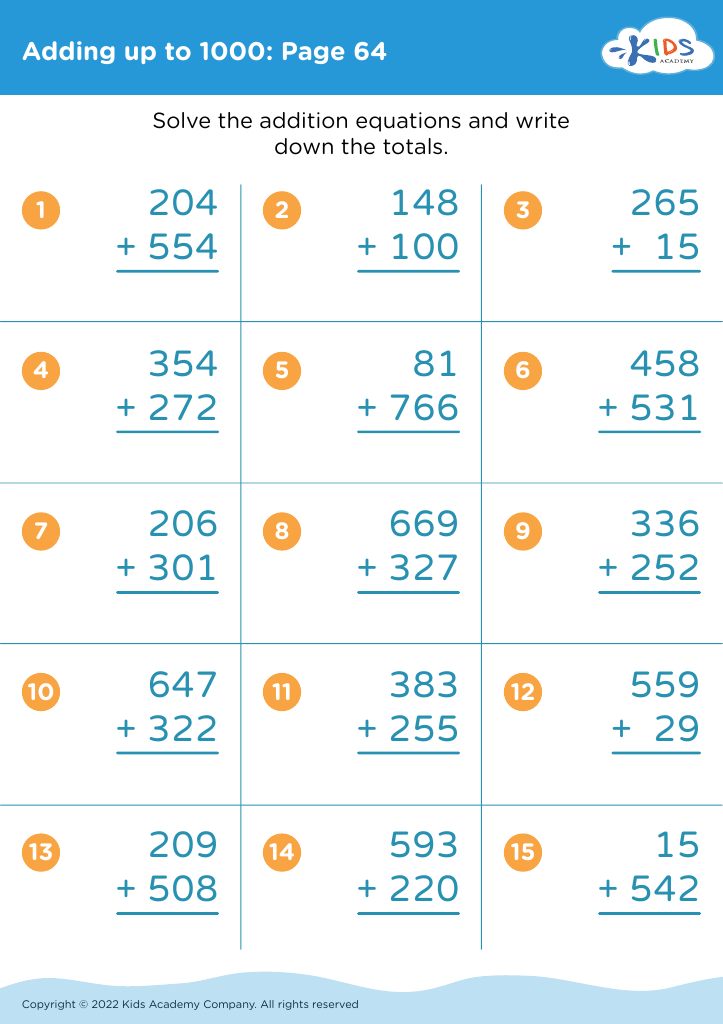
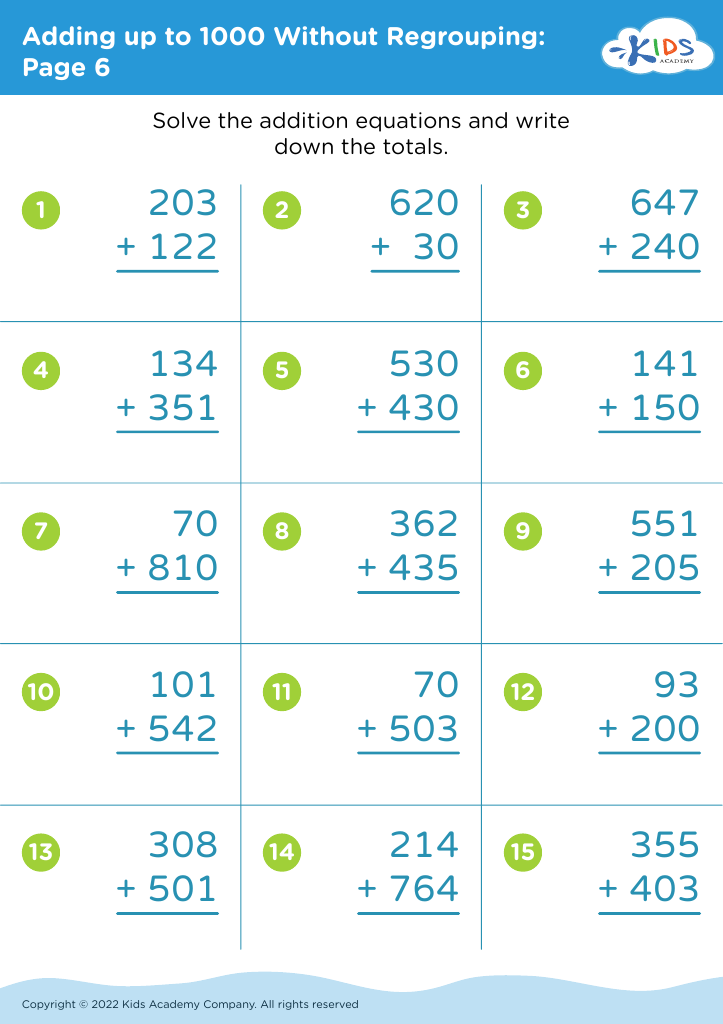
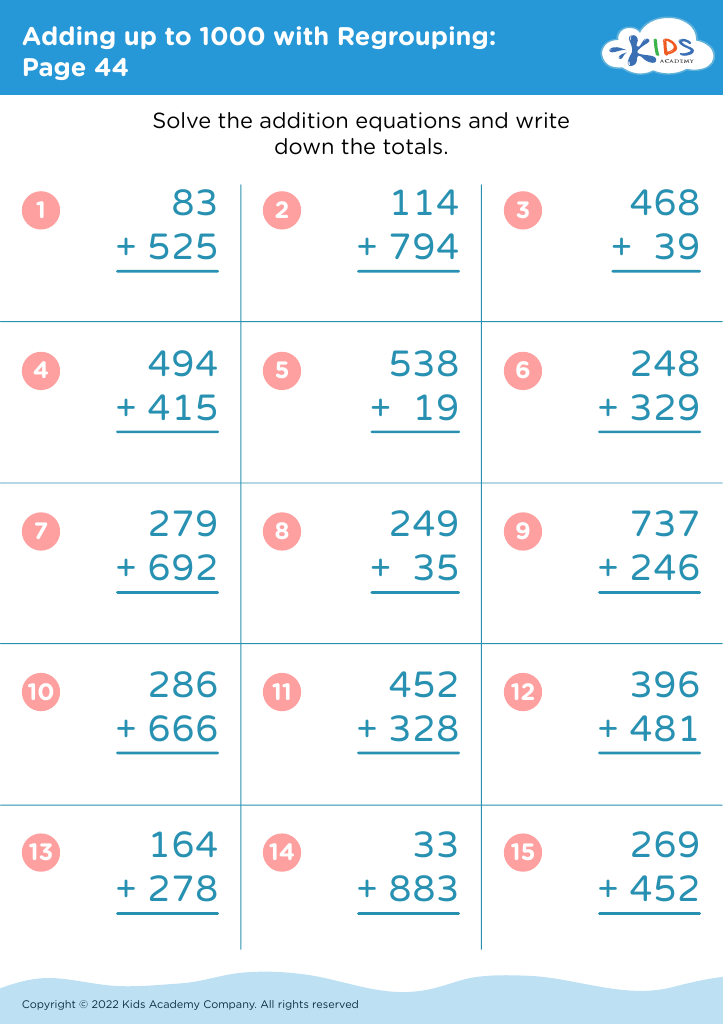



Understanding sequencing and the concept of adding up to 1000 is vital for children aged 3-9 as it forms the foundation for their mathematical development. As early grade teachers or parents, fostering these skills promotes critical thinking, problem-solving, and cognitive abilities essential in later learning. Sequencing helps children grasp the concepts of order and relationships, crucial for logical reasoning, storytelling, and everyday tasks.
Moreover, adding up to 1000 enhances their numerical literacy, enabling them to engage with larger numbers, which is increasingly relevant in our number-driven world. It teaches children the ability to break down numbers, recognize patterns, and understand place value—key concepts that support future mathematical success.
Encouraging these skills also builds confidence and fluency in mathematics, making the transition to more complex operations smoother. For instance, when children are comfortable with smaller sequences and addition, they are better prepared for multiplication and division later on.
Incorporating sequencing and addition activities in a playful, engaging manner makes learning enjoyable, fostering a lifelong love for math while helping children become competent learners. Therefore, parents and teachers should prioritize these concepts in early education to ensure children are well-equipped for their academic journey.








