Understanding symmetry Adding up to 1000 Worksheets for Ages 3-9
4 filtered results
-
From - To
Unlock your child's potential with our "Understanding Symmetry Adding up to 1000 Worksheets for Ages 3-9." Designed to merge fun and education, these worksheets encourage young learners to grasp symmetry and boost their math skills by combining shapes and numbers. Ideal for kids aged 3-9, these activities simplify complex concepts and make learning intuitive and engaging. Watch as your child develops confidence and enjoys mastering symmetry and addition up to 1000, all while fostering critical thinking and problem-solving skills. Perfect for homeschooling or supplemental practice, our worksheets are a powerful tool for mastering early math!
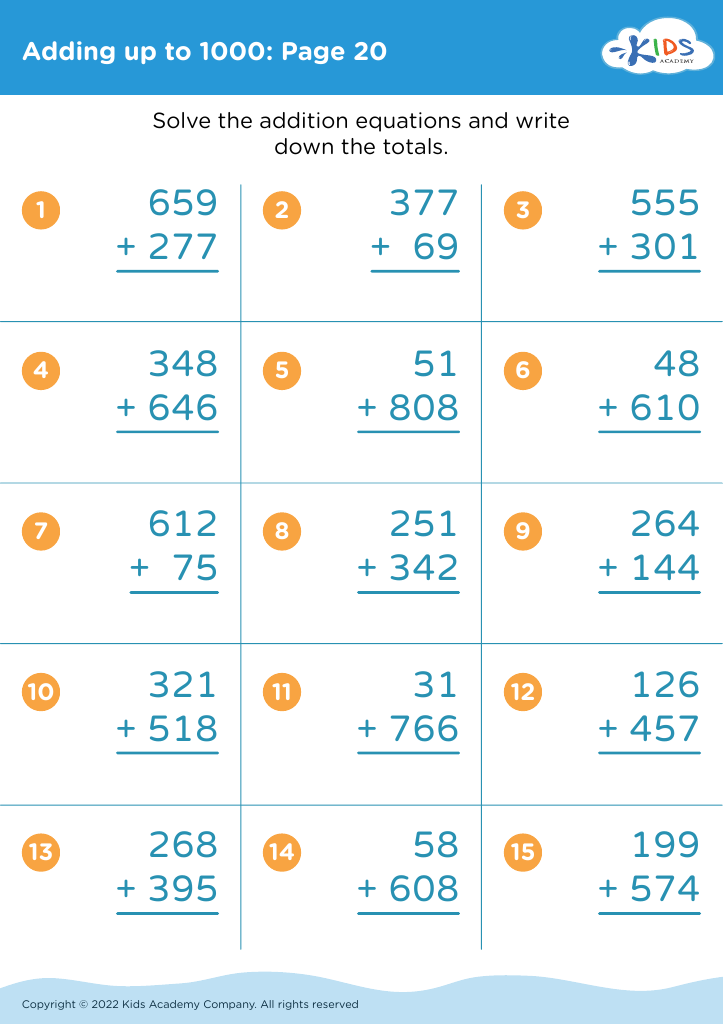
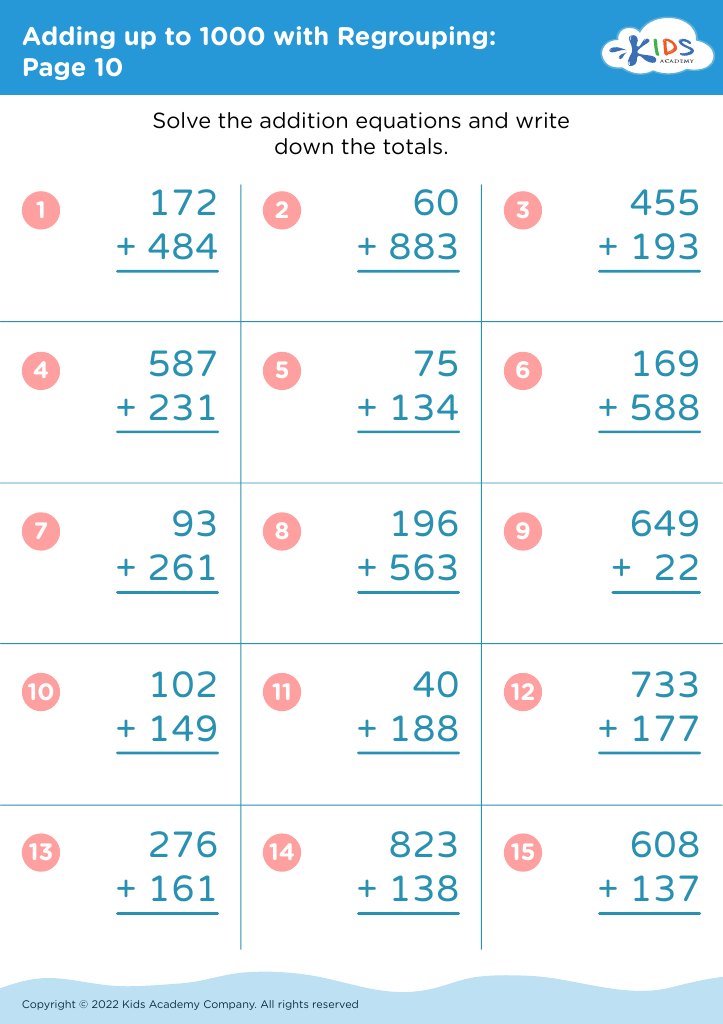
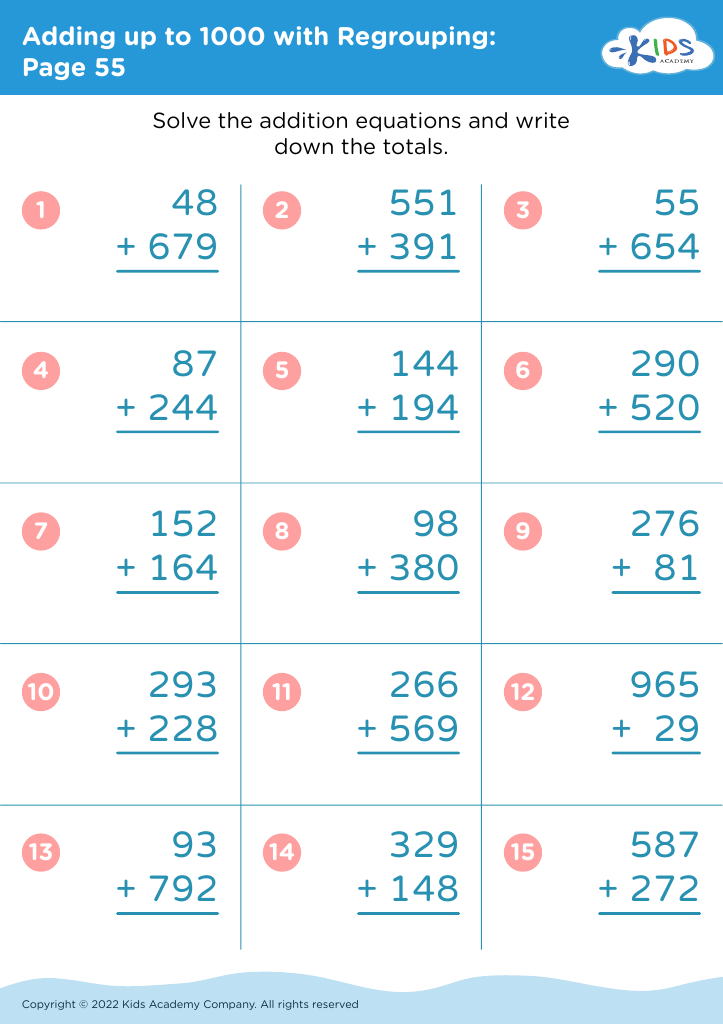
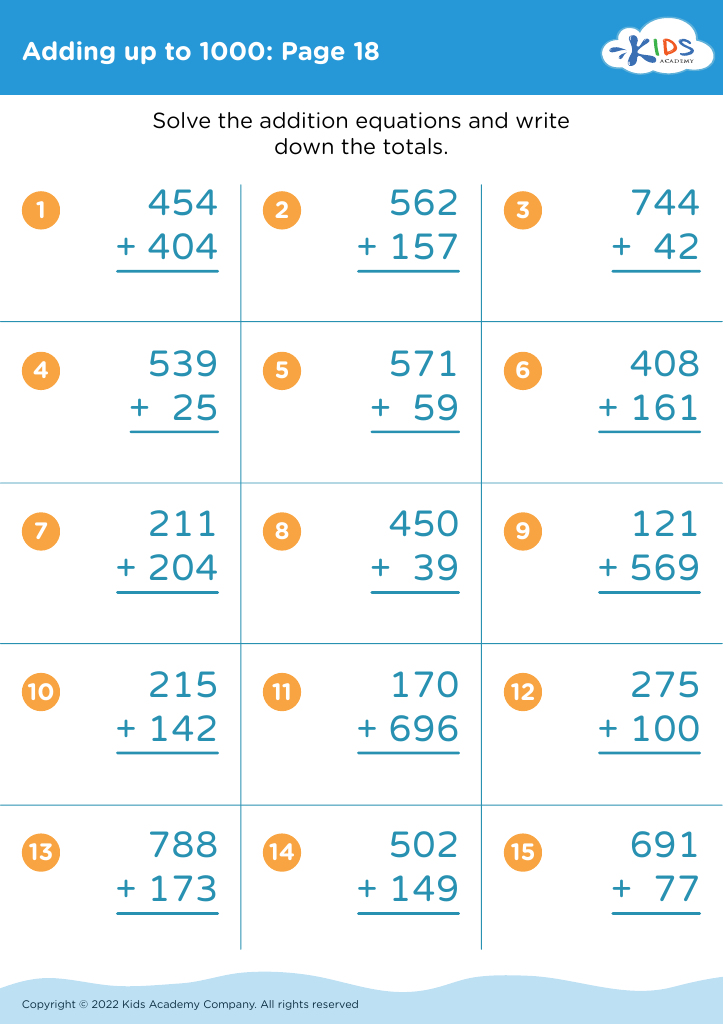



Understanding basic mathematical concepts such as symmetry and adding up to 1000 is crucial for young children, ages 3-9, as these skills form the foundation for more complex mathematical thinking and problem-solving. Symmetry introduces children to the concept of balance and pattern recognition. Recognizing symmetrical patterns helps children improve their spatial awareness, a key component in many areas of learning such as geometry, art, and even reading. It nurtures their ability to see relationships and improve their cognitive understanding of the world around them.
Adding up to 1000, on the other hand, builds foundational numeracy skills. Introducing children to higher numbers strengthens their arithmetic abilities, setting the stage for understanding place value, which is crucial for future mathematical learning. Working with larger numbers also enhances their confidence in handling more substantial mathematical tasks, promoting a positive attitude towards the subject. This early exposure aids in developing problem-solving skills and logical thinking.
Parents and teachers should actively encourage these skills to foster a love for math, propelling children toward future academic success. Emphasizing these areas cultivates a student's ability to approach various situations with analytical and strategic thinking, skills that are invaluable both inside and outside the classroom.








