Visual interpretation Adding up to 1000 Worksheets for Ages 3-9
3 filtered results
-
From - To
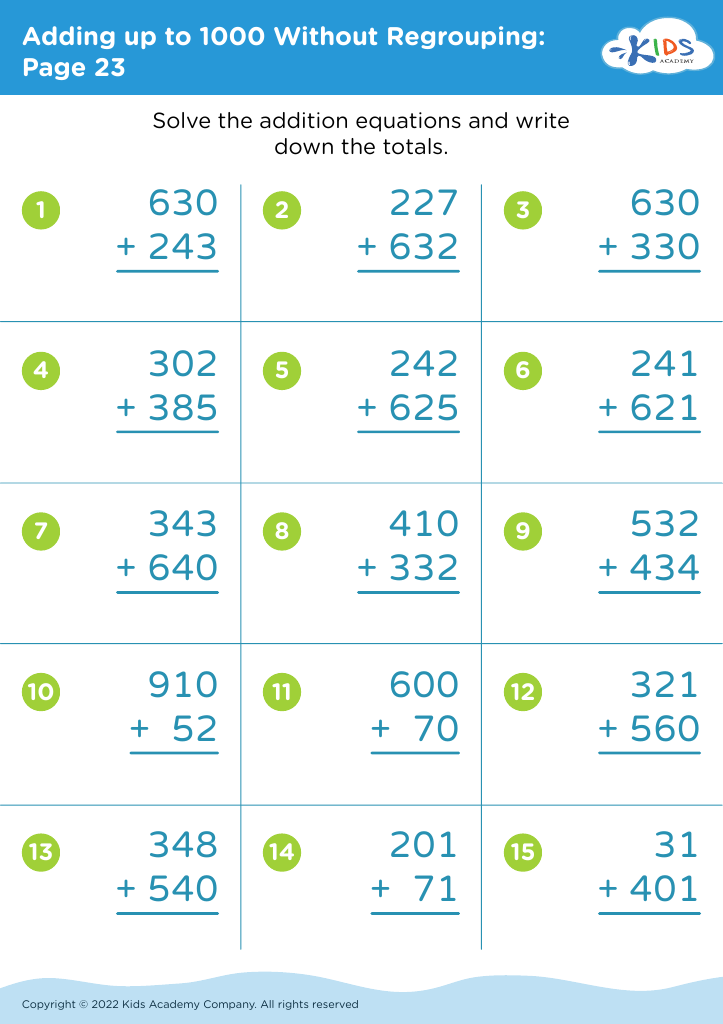
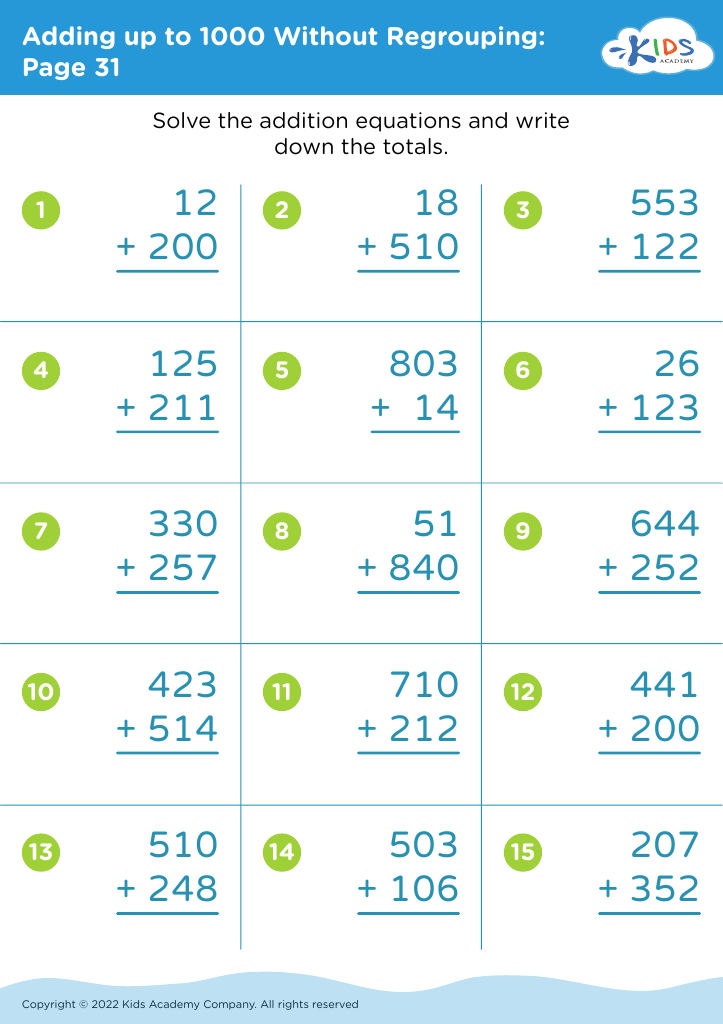
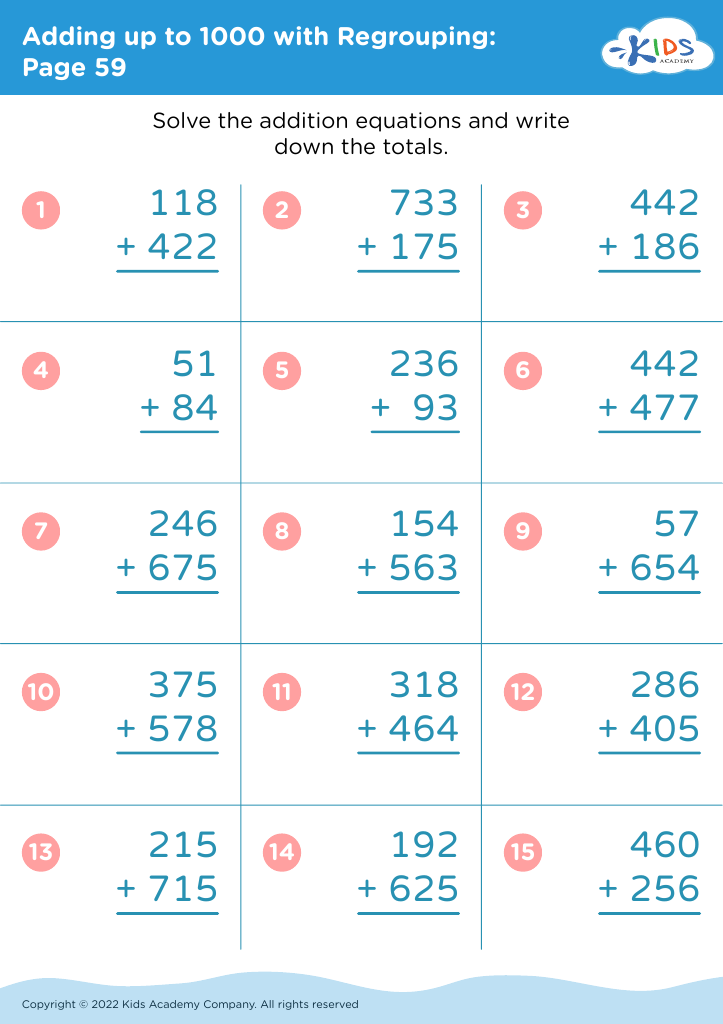
Unlock the power of visual learning with our "Visual Interpretation: Adding Up to 1000 Worksheets" designed for ages 3-9. These engaging worksheets enhance mathematical skills by helping children visualize and understand the concept of addition up to 1000. With vibrant illustrations and interactive activities, young learners can easily grasp number relationships and improve their problem-solving abilities. Our carefully crafted resources foster critical thinking and encourage a love for math through fun challenges and colorful designs. Perfect for home or classroom use, these worksheets make learning enjoyable and effective, laying a strong foundation for future mathematical success. Start your child's educational journey today!



Visual interpretation is a crucial skill for children ages 3-9, as it lays the foundation for critical thinking and problem-solving. During these formative years, young learners develop their ability to understand and process visual information, which is vital across subjects like math, science, and art. Parents and teachers should care because strong visual interpretation skills enable children to make connections between abstract concepts and real-world applications. For example, being able to read graphs or interpret pictures helps them grasp mathematical ideas, such as addition, subtraction, and spatial reasoning.
Furthermore, engaging with visual materials encourages creativity and self-expression, which promotes emotional intelligence. Visual interpretation activities, such as discussing illustrations in books or analyzing artwork, enrich language development and storytelling capabilities. By actively nurturing these skills, adults can support children's cognitive and emotional growth.
Additionally, in our visually-driven world, these skills are imperative for successful navigating technology and media. Early interventions and activities focusing on visual literacy can set the stage for lifelong learning. By prioritizing visual interpretation, parents and teachers can empower children to become more confident, critical thinkers and effective communicators, ultimately fostering a love for learning that endures well beyond their early years.








