Addition skills Adding Up to 5 Worksheets for Ages 3-9 - Page 3
78 filtered results
-
From - To






%20(1).jpg)
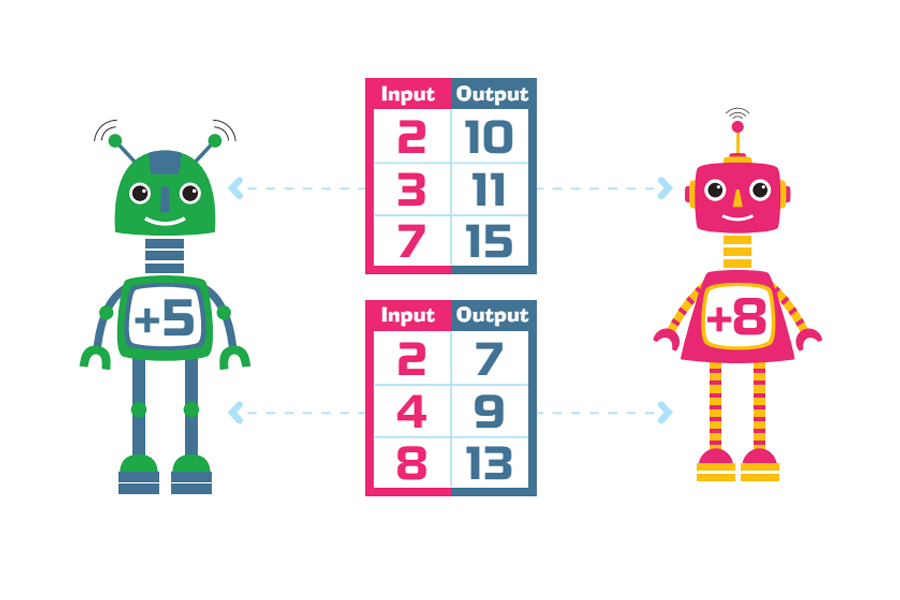
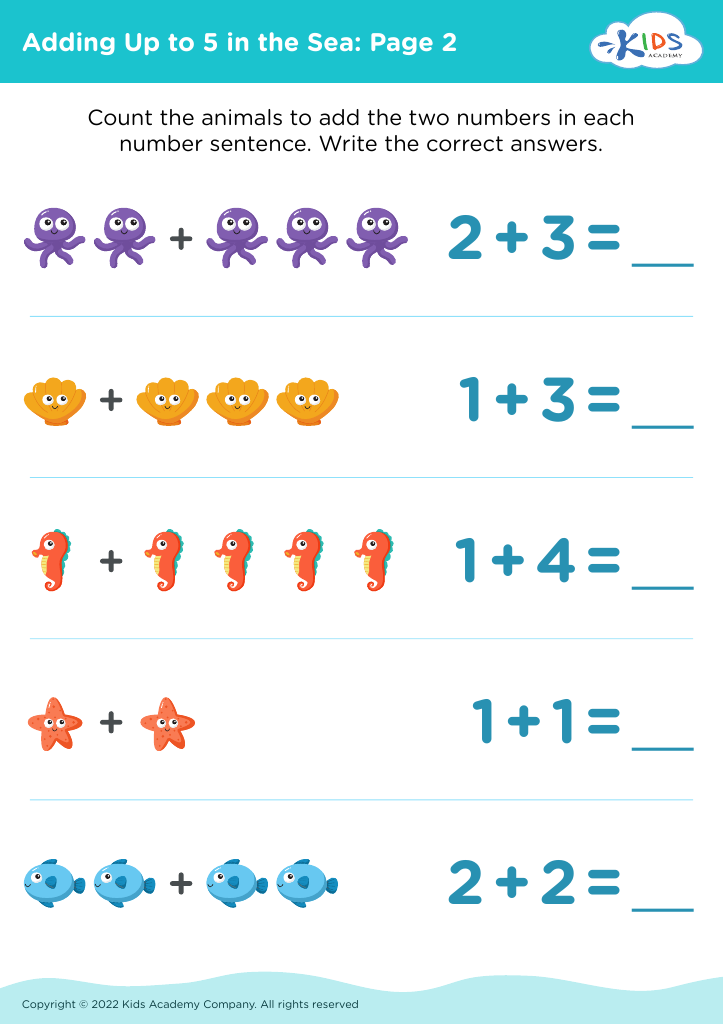
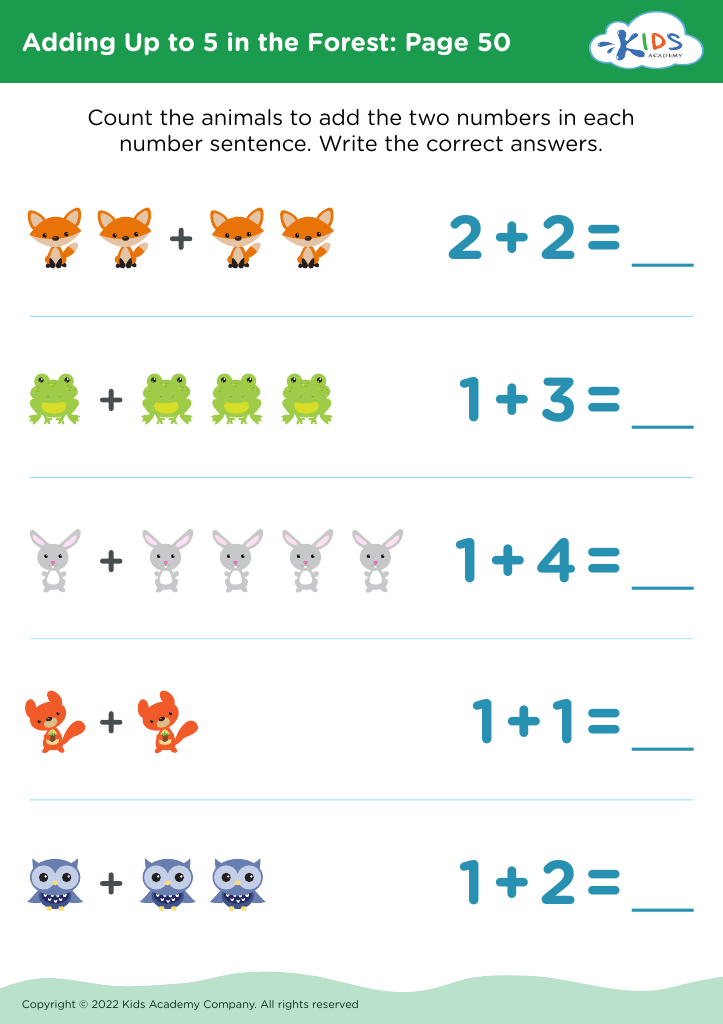
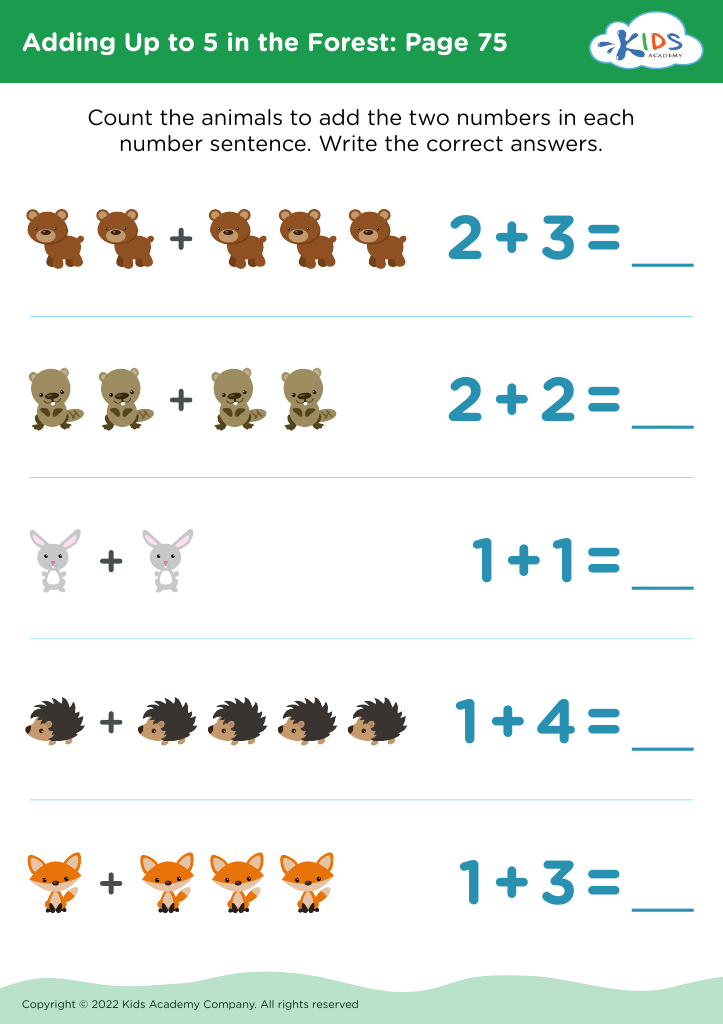
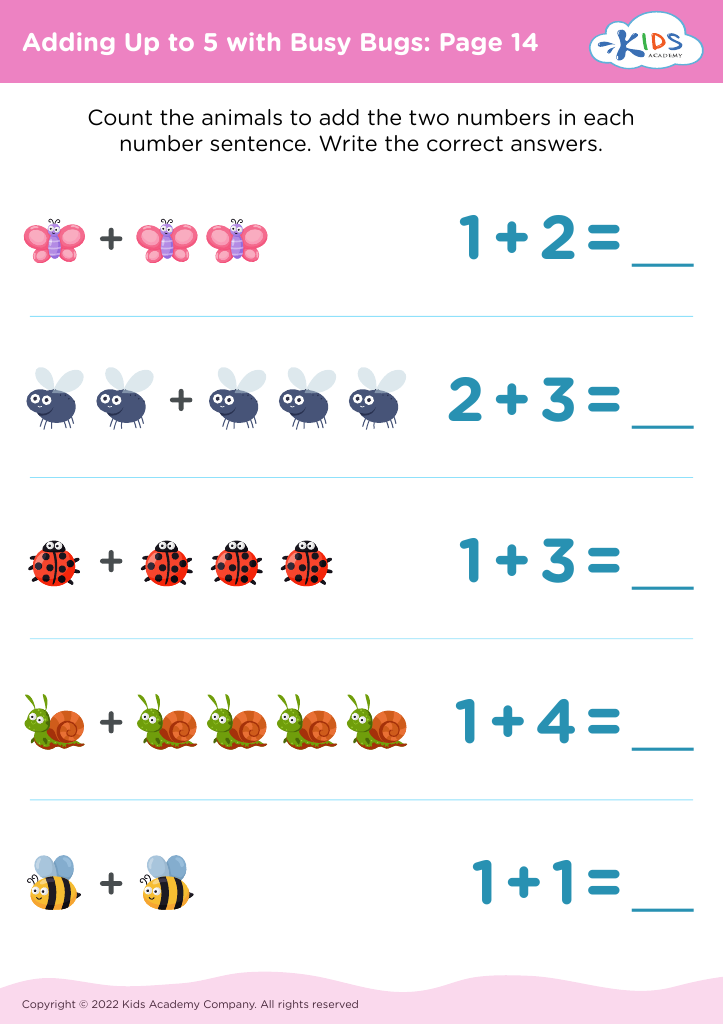
Parents and teachers should care about addition skills, particularly for sums up to 5, because this foundational competency lays the groundwork for future mathematical understanding. Early exposure to simple addition promotes cognitive development, enhances problem-solving abilities, and nurtures critical thinking skills in young learners.
From ages 3 to 9, children are rapidly developing their cognitive abilities, and mastering addition helps them to engage with the world conceptually before they transition to more complex operations. Learning to add numbers up to 5 offers a stepping stone for understanding quantities, patterns, and relationships among numbers.
Additionally, proficiency in basic addition fosters confidence. When children achieve success with small numbers, it builds their self-esteem and encourages a positive attitude towards learning math. It also prepares them for real-world applications, such as sharing items, grouping, and budgeting during everyday activities.
Furthermore, addition integrates easily into various subjects beyond math, enhancing literacy and social skills. Overall, supporting children's growth in addition skills up to 5 is crucial for their academic success, emotional well-being, and practical life skills. Parents and teachers have a vital role in nurturing these essential skills during a critical stage of development.








