Understanding number value Adding Up to 5 Worksheets for Ages 3-9
3 filtered results
-
From - To
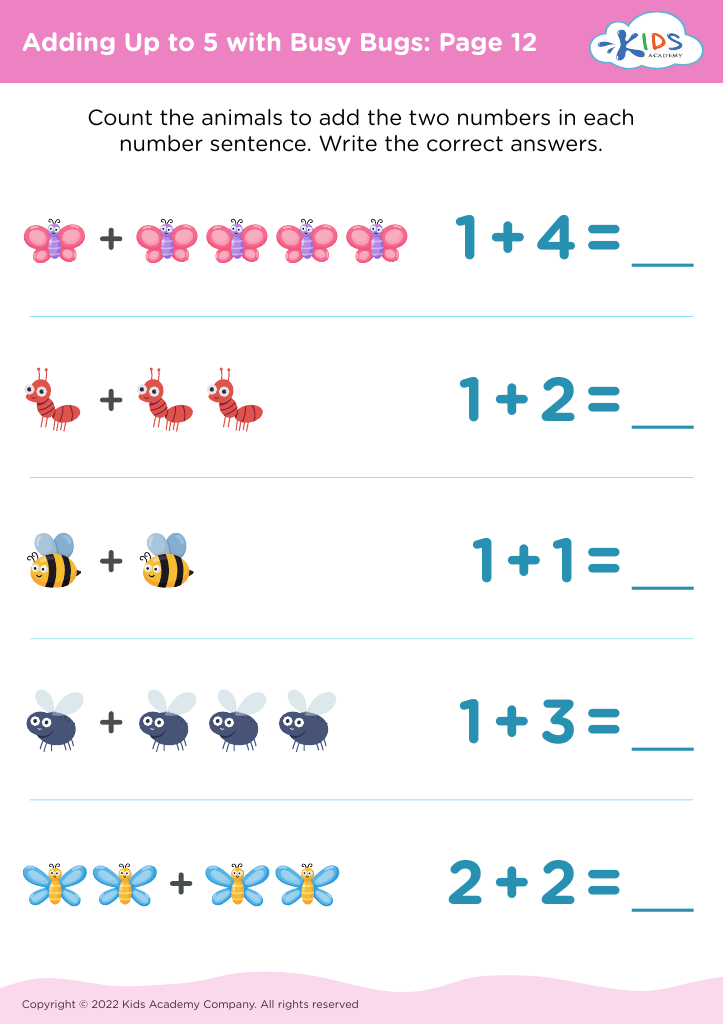
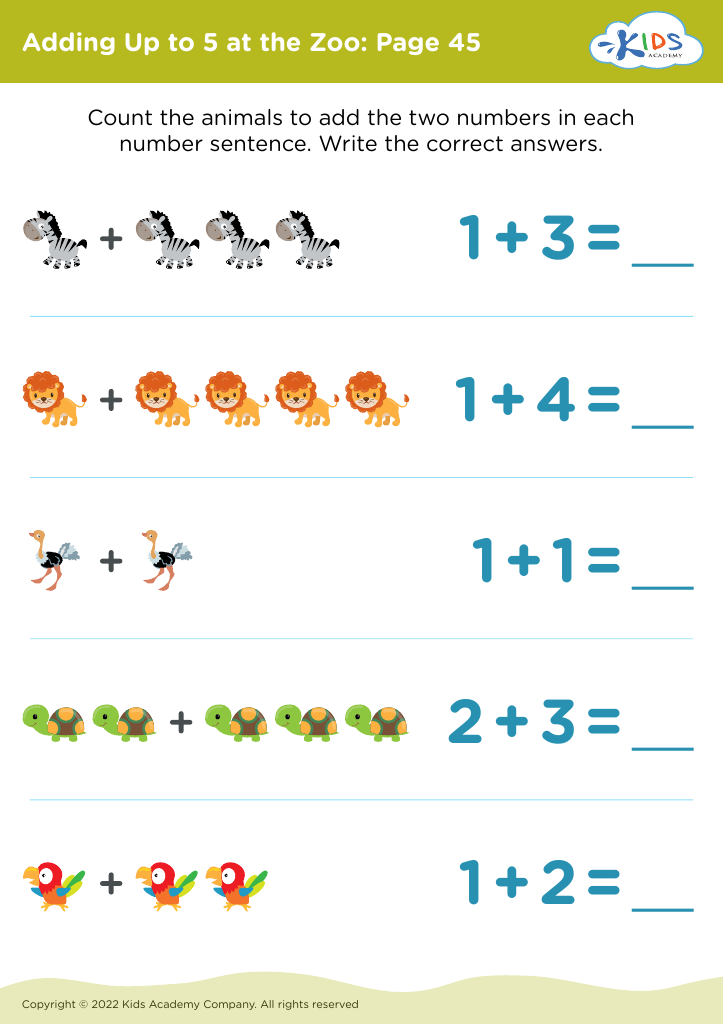
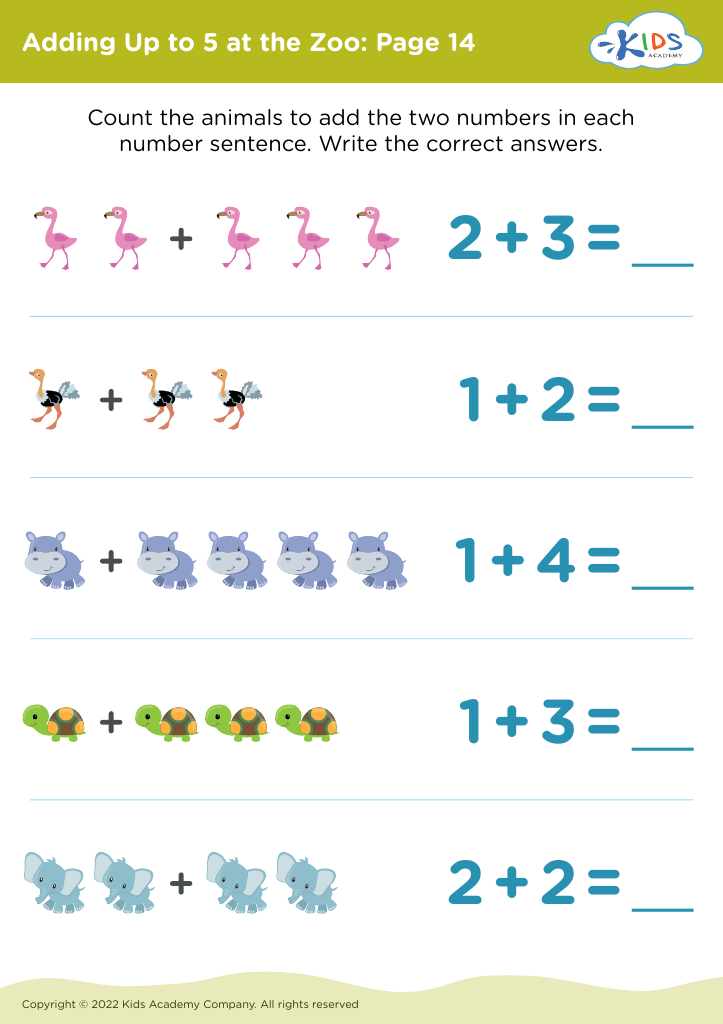
Explore our engaging "Understanding Number Value: Adding Up to 5 Worksheets" designed for children aged 3 to 9. These worksheets provide a fun and interactive way for young learners to grasp the concept of number value while honing their addition skills. The colorful designs and age-appropriate activities promote cognitive development as children practice combining numbers to reach a total of 5. Ideal for classrooms, homeschooling, or extra practice at home, these resources encourage critical thinking, boost confidence in math, and lay the foundation for future math success. Start your child’s journey toward numerical fluency today!




.jpg)



Understanding number value and the concept of adding up to 5 is essential for children aged 3-9, as it forms the foundation of their mathematical learning. At this developmental stage, children are naturally inquisitive and increasingly capable of grasping abstract concepts. By helping them understand number values, parents and teachers empower children to build strong numeracy skills, which are crucial for future math success.
Mastering the concept of adding up to 5 allows children to develop critical thinking abilities, improve problem-solving skills, and foster logical reasoning. It provides them with the confidence to tackle more complex arithmetic as they progress in their education. This crucial understanding also enhances their ability to recognize patterns—an essential skill in both math and everyday life.
Moreover, a solid comprehension of basic addition plays a pivotal role in building children's overall cognitive development. It promotes active engagement and stimulates curiosity, allowing children to explore mathematical concepts in a playful and meaningful way. When parents and teachers connect learning to real-life experiences, it creates a supportive environment where children can thrive and appreciate math. Ultimately, nurturing these foundational skills supports lifelong learning and opens doors for academic and personal growth.








