Understanding numeracy Adding Up to 5 Worksheets for Ages 3-9
4 filtered results
-
From - To
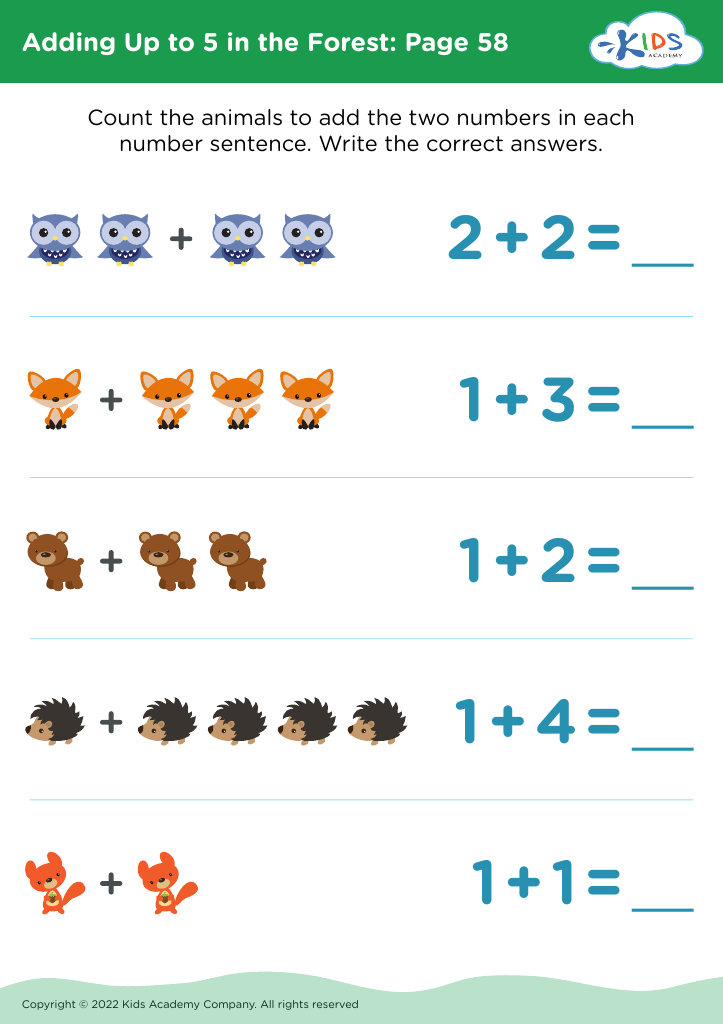
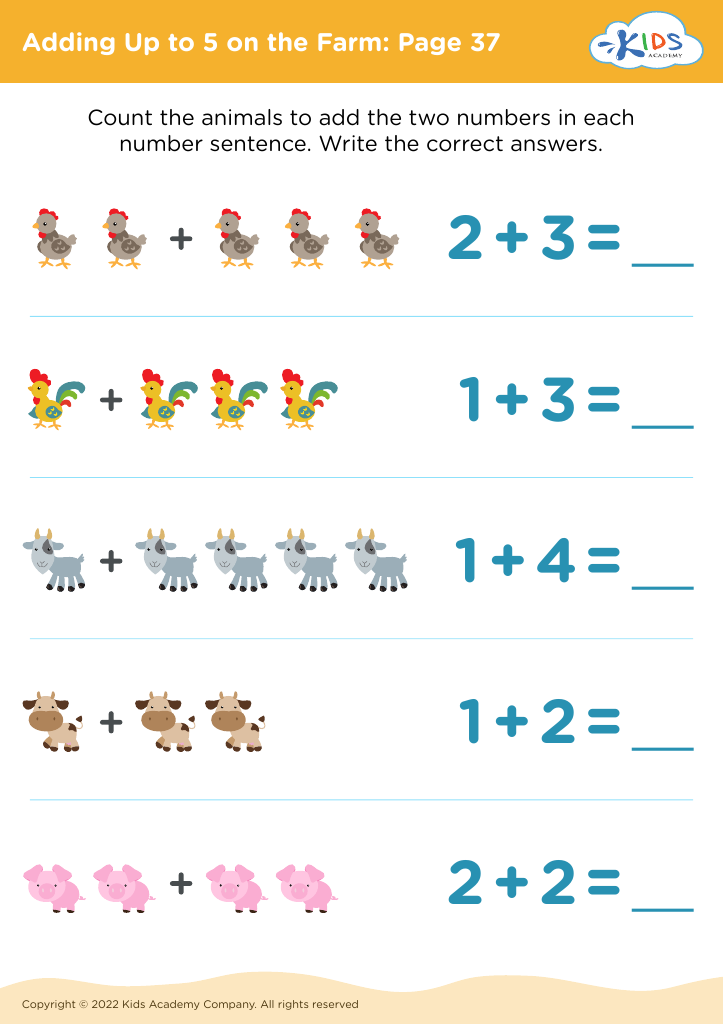
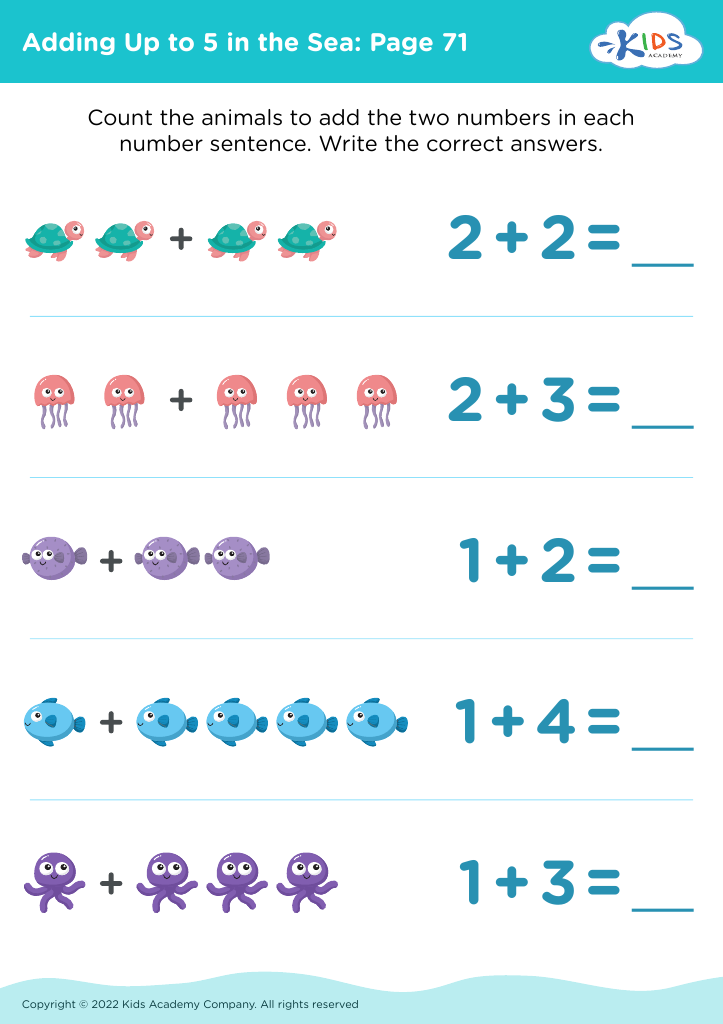
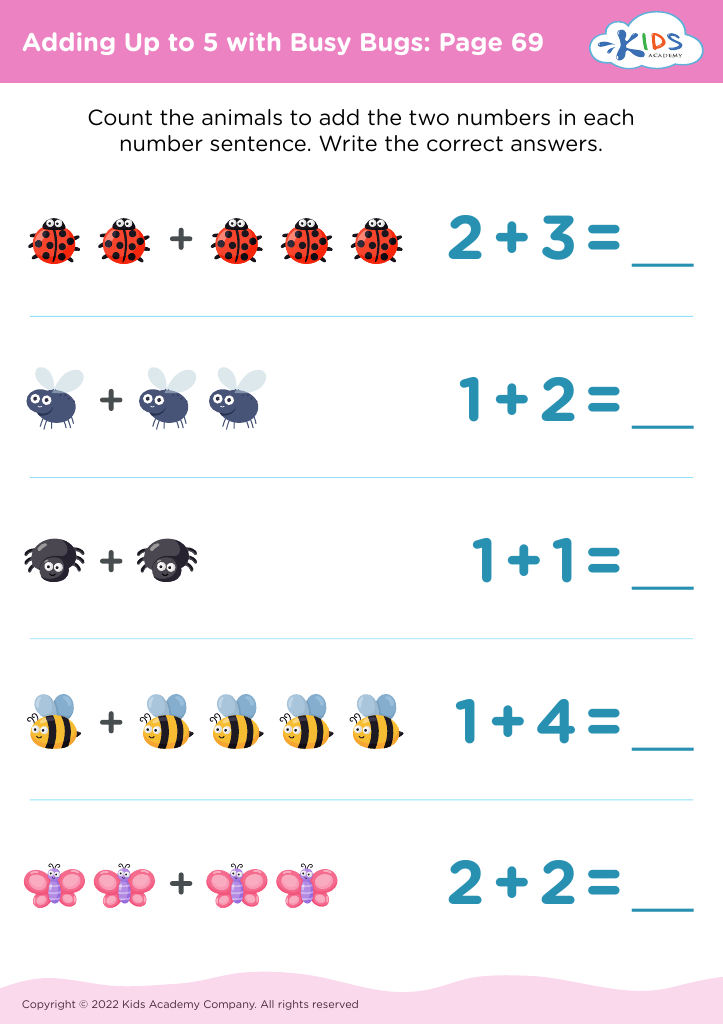
Unlock your child's math potential with our "Understanding Numeracy: Adding Up to 5 Worksheets" tailored for ages 3-9! These engaging, expertly designed worksheets build foundational skills in addition, focusing on numbers up to 5. Perfect for young learners, they promote numerical fluency through fun, interactive activities. These printable worksheets support teachers and parents in reinforcing core math concepts, ensuring a seamless and enjoyable learning experience. Watch your child gain confidence and excitement in their math journey with our meticulously crafted resources designed to simplify and solidify early numeracy skills. Start their path to math success today!





.jpg)


Understanding numeracy, especially basic concepts like adding up to 5, is crucial for children aged 3-9 as it lays the foundation for their entire mathematical education. During these formative years, children’s brains are highly receptive to new information and building blocks of knowledge. Ensuring proficiency in simple addition helps develop critical cognitive skills such as problem-solving, logical thinking, and pattern recognition.
Parents and teachers should care because early numeracy skills are strong indicators of future academic success. Mastery of additions up to 5 is often a child's first introduction to the abstract world of numbers. When children grasp these concepts early, they gain confidence, which encourages a positive attitude towards more complex mathematical challenges.
Furthermore, mathematics is integral to everyday life. Simple arithmetic is foundational for more advanced concepts that children will encounter later, such as multiplication, division, and beyond. Early numeracy also aids in developing fine motor skills through the manipulation of objects, promotes collaborative skills when working with peers, and enhances a child's ability to follow multi-step instructions.
In conclusion, a strong grasp of basic numeracy adds significant value to a child's early educational experiences and equips them with essential skills for both academic and practical life challenges. Investing effort in teaching these basics is, therefore, both wise and necessary.








