Problem-solving abilities Addition and Subtraction Word Problems Worksheets for Ages 3-9
4 filtered results
-
From - To
Boost your child's problem-solving skills with our engaging Addition and Subtraction Word Problems Worksheets designed for ages 3-9. These worksheets provide a fun and interactive way for young learners to tackle real-life math challenges. By reading and solving relatable word problems, children develop critical thinking, reasoning, and analytical skills essential for academic success. Our thoughtfully crafted worksheets encourage creativity in math, making learning enjoyable while reinforcing fundamental math concepts. Perfect for parents, teachers, and tutors, these resources will help guide children through their mathematical journey, paving the way for a confident future in math and beyond! Explore our collection today!
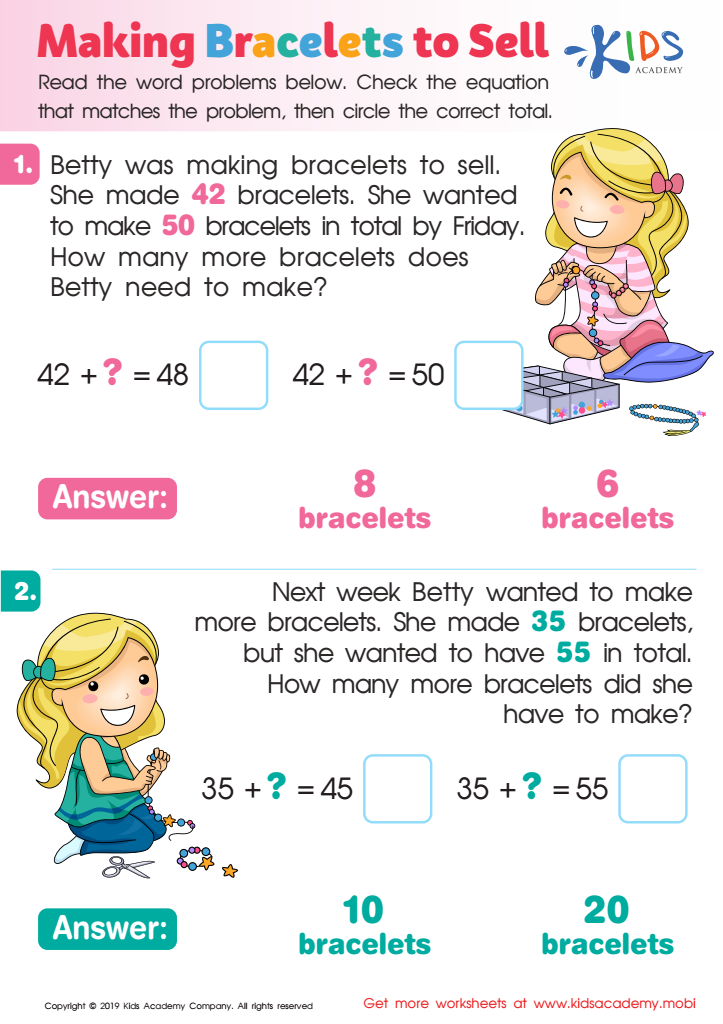
Making Bracelets to Sell Worksheet
 Assign to My Students
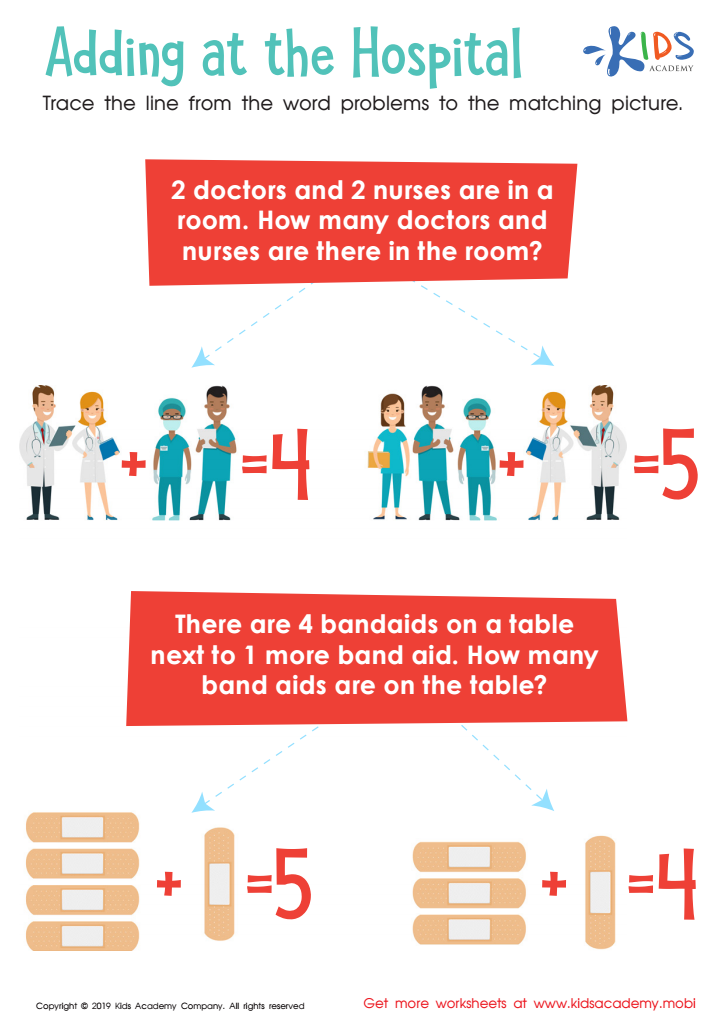
Adding at the Hospital Worksheet
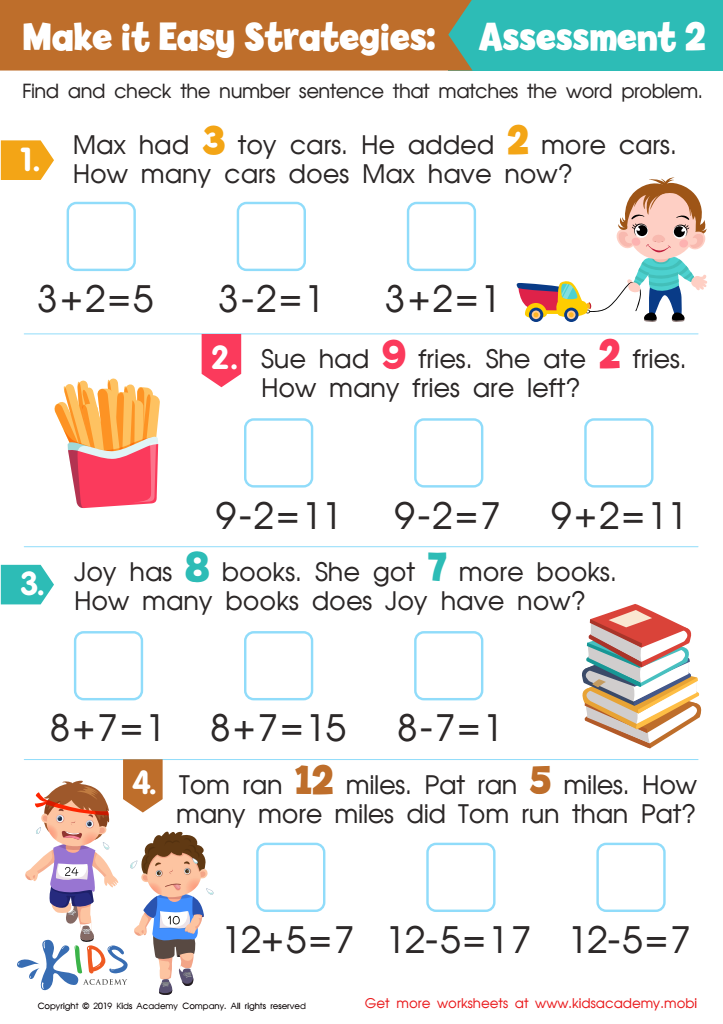
Make it Easy Strategies: Assessment 2 Worksheet
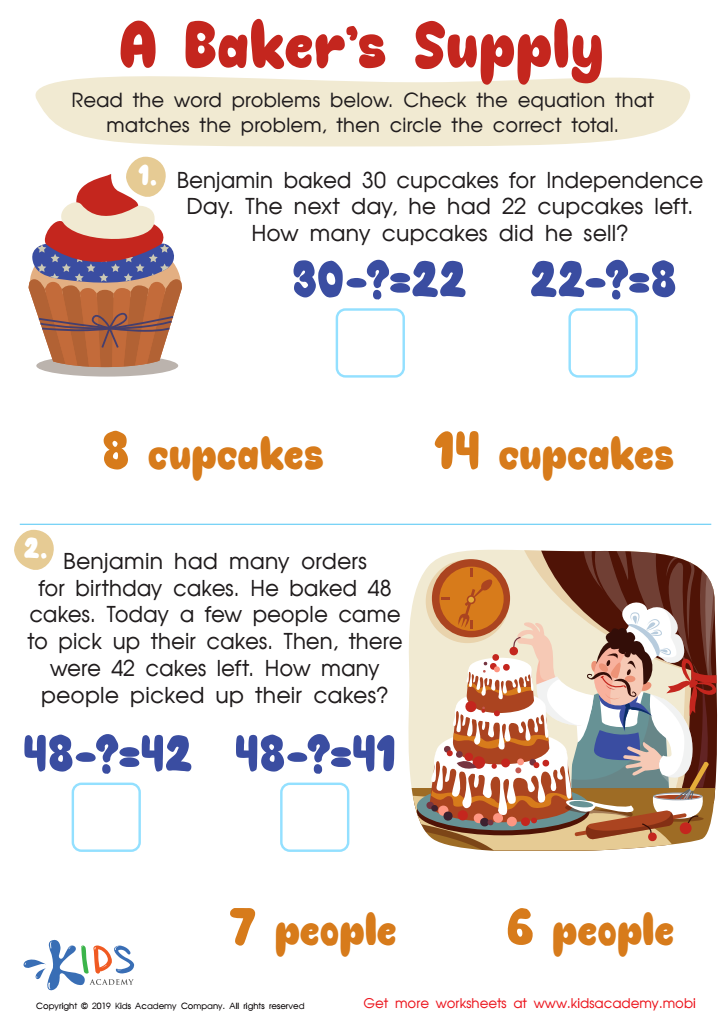
A Baker's Supply Worksheet








Problem-solving abilities, particularly in the context of addition and subtraction word problems, are crucial for children aged 3-9, and it's essential for parents and teachers to prioritize these skills. Engaging with word problems enhances children's critical thinking, reasoning, and analytical skills. As children navigate word problems, they learn to decipher information, identify key elements, and apply appropriate mathematical operations, fostering their overall cognitive development.
Moreover, mastery of addition and subtraction word problems lays a strong foundation for future mathematical learning. These basic operations are the building blocks for more complex concepts like division, multiplication, and eventually algebra. When children learn to represent and solve real-world problems mathematically, they see relevance in their studies, which can increase motivation and learning efficacy.
Furthermore, this experience promotes language development, as understanding word problems requires interpreting mathematical language and vocabulary. Parents and teachers can support this growth by providing engaging, context-rich problems and encouraging discussions around the strategies used to solve them.
Ultimately, nurturing problem-solving abilities in young learners cultivates confident, self-sufficient individuals, enabling them to tackle future academic challenges and helping them develop a positive attitude towards mathematics as a whole.