Fine motor skills (drawing lines) Addition & Subtraction Worksheets for Ages 3-9
3 filtered results
-
From - To
Enhance your child's fine motor skills while they explore the foundational concepts of addition and subtraction with our engaging worksheets designed for ages 3-9. Our printable activities specifically focus on drawing lines, offering a fun and interactive way for young learners to practice handwriting while mastering basic math skills. Each worksheet encourages hand-eye coordination, control, and dexterity, making learning both enjoyable and effective. Ideal for parents, teachers, or homeschooling, these worksheets provide a structured approach to developing essential skills that will support your child’s academic journey. Download and print today to inspire a love for learning in your little one!
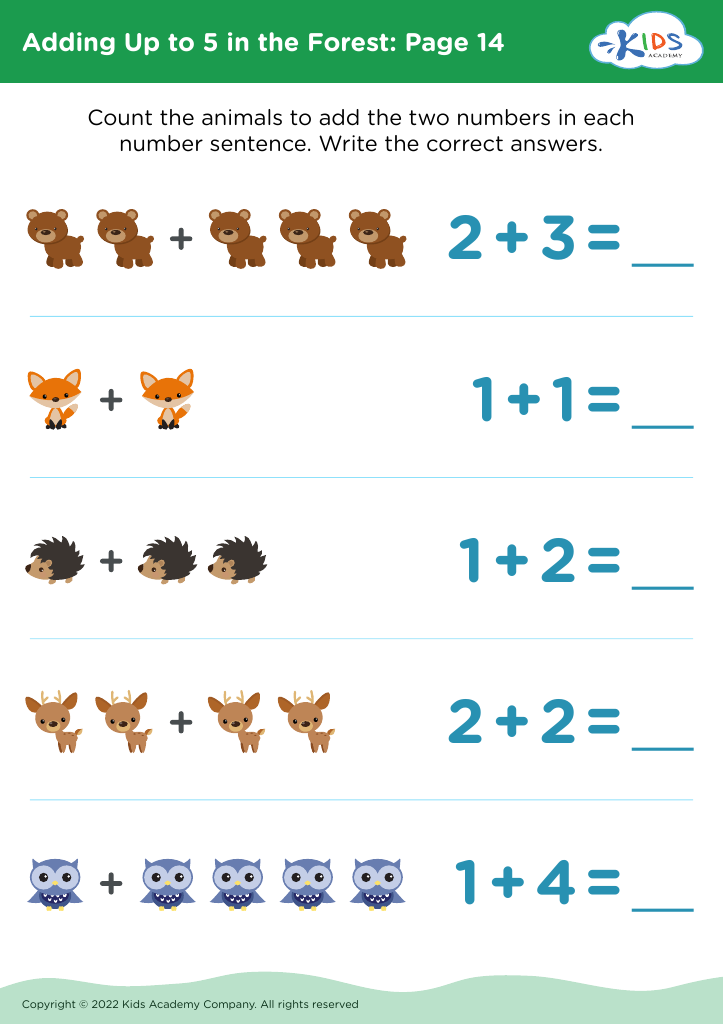
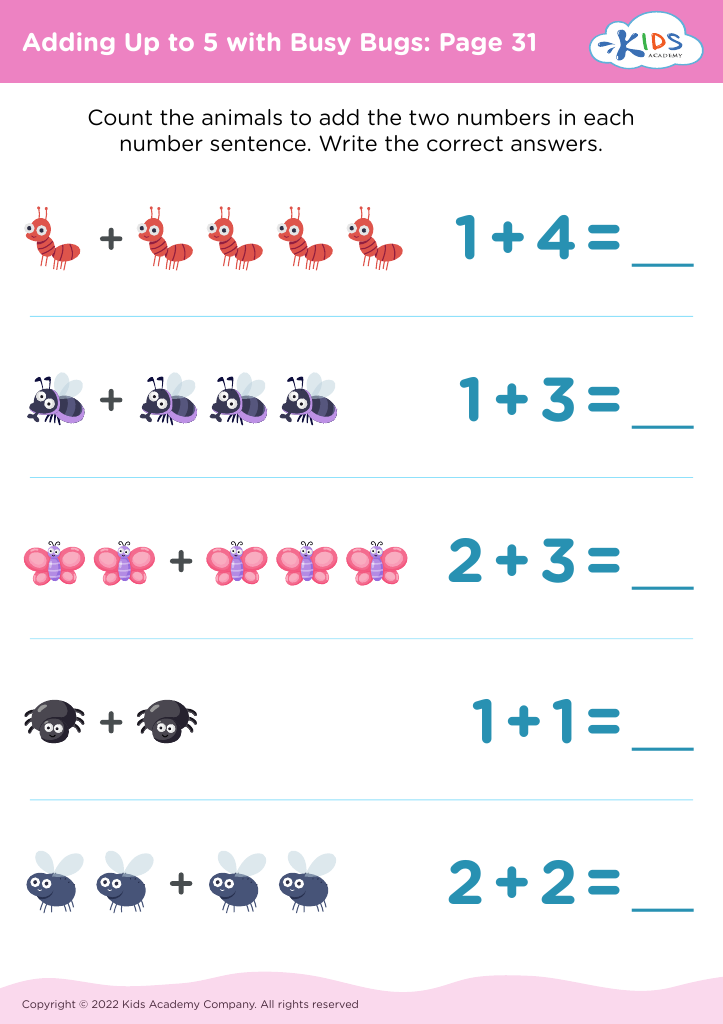
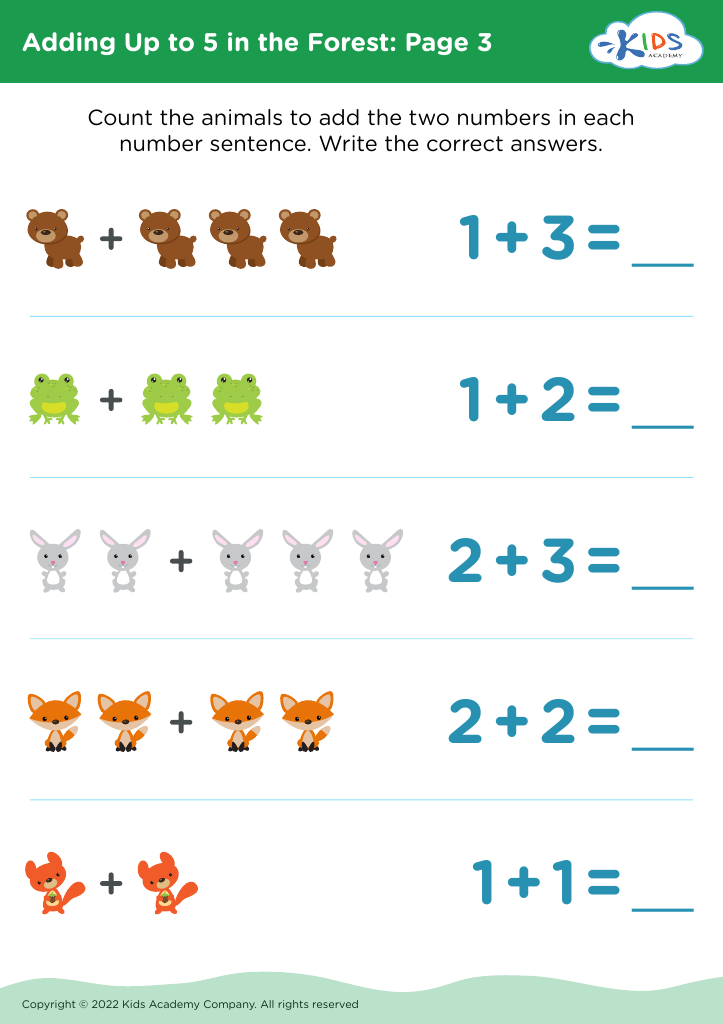








Fine motor skills, particularly in the context of drawing lines, are crucial for children aged 3-9 as they form the foundation for various developmental milestones. These skills involve the use of small muscle movements in the hands and fingers, which are essential for writing, drawing, and performing everyday tasks independently. Developing fine motor skills helps children gain hand-eye coordination, dexterity, and precision, all of which are vital for future academic success.
Addition and subtraction, introduced alongside fine motor activities such as drawing lines, create a holistic learning experience. These foundational math skills foster logical thinking and problem-solving abilities. When children engage in activities like drawing shapes or creating number line representations, they are practicing their fine motor skills while simultaneously reinforcing their understanding of mathematical concepts.
Parents and teachers should care about these skills because they significantly impact a child's overall confidence and readiness for school. Children who struggle with fine motor skills may face challenges in writing and math, leading to frustration and disengagement. Therefore, integrating fine motor activities with math education encourages a balanced development approach, ensuring children gain essential skills while enjoying the learning process.








