Practice inference skills Addition & Subtraction Worksheets for Ages 3-9
3 filtered results
-
From - To
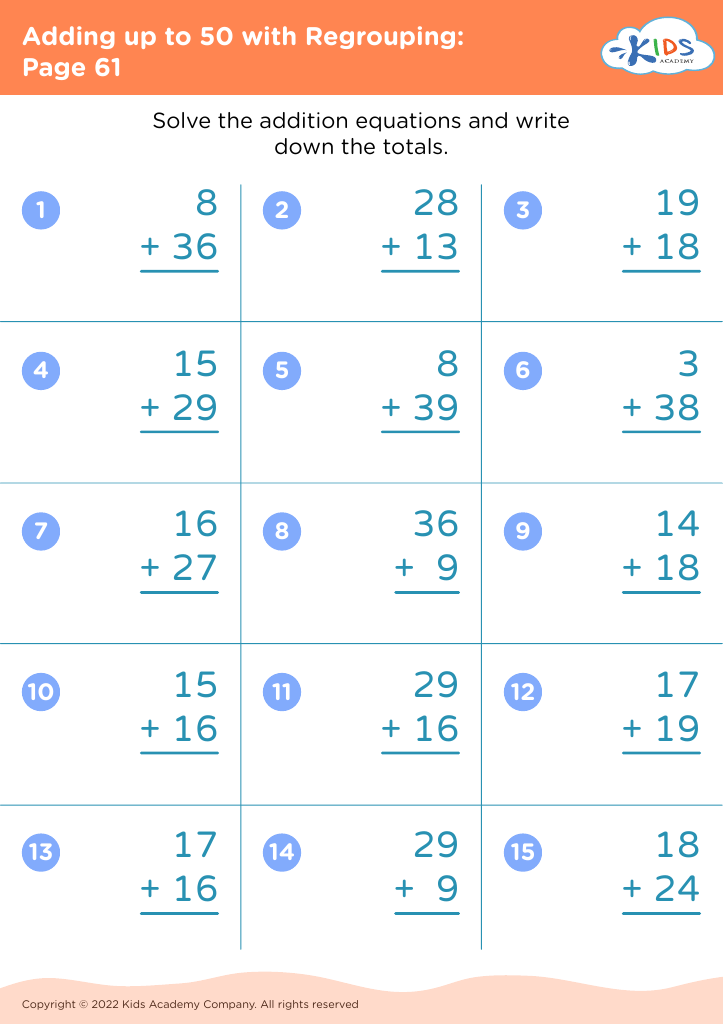
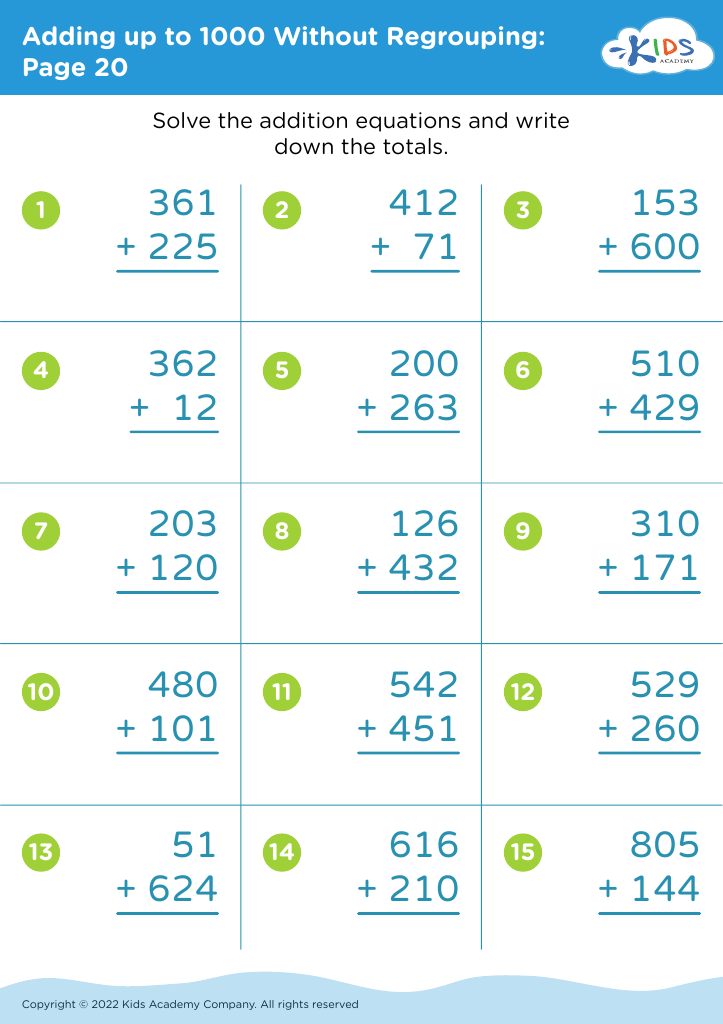
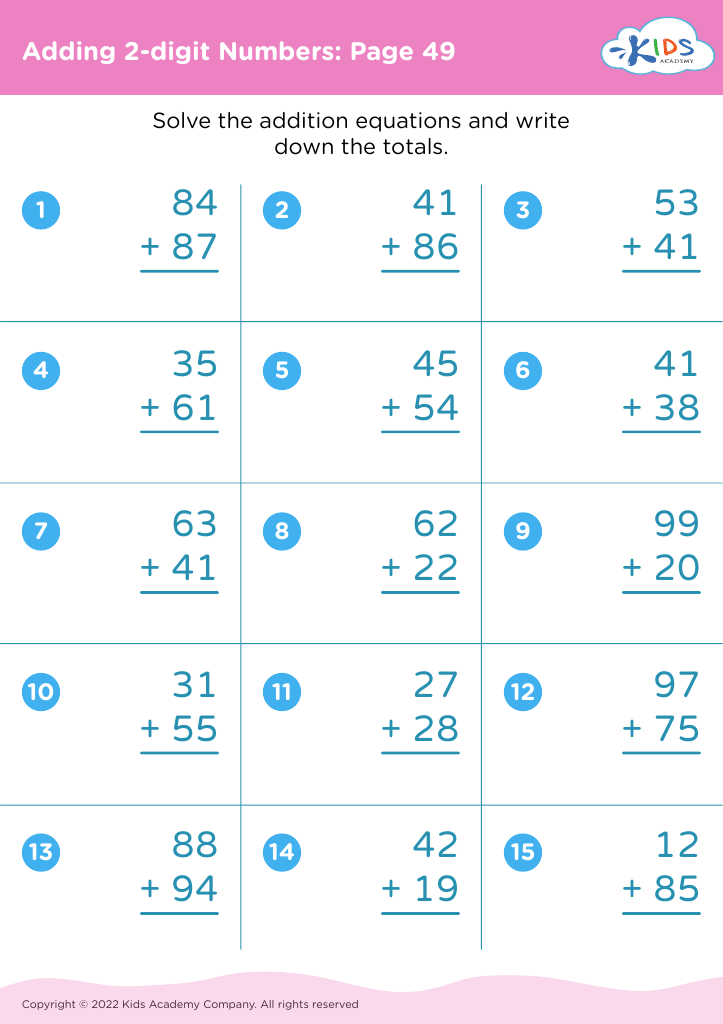
Enhance your child's mathematical journey with our "Practice Inference Skills: Addition & Subtraction Worksheets" designed for ages 3-9. These engaging printable worksheets focus not only on fundamental addition and subtraction concepts but also on developing inference skills, encouraging young learners to think critically. Children will tackle various scenarios that require reasoning and problem-solving, enabling them to apply math to real-life situations. With colorful visuals and age-appropriate challenges, our worksheets provide a fun, interactive way to boost confidence and understanding in math. Perfect for home or classroom use, these resources pave the way for proficient young mathematicians!








Parents and teachers should prioritize developing inference skills in addition and subtraction for children aged 3-9 because these foundational skills are critical for future mathematical aptitude and overall cognitive development. Inference skills enable children to make connections between concepts, enhancing their ability to understand mathematical operations beyond rote memorization. By grasping the reasoning behind addition and subtraction, children are better equipped to solve complex problems, engage in critical thinking, and apply their knowledge to real-life scenarios.
Moreover, cultivating these skills at an early age builds confidence in children as they explore math. Inference promotes a deeper understanding of patterns and relationships within numbers, which is essential not only for mathematics but also for success in other subjects. Engaged learning through manipulatives or interactive activities ensures that children find joy in learning, promoting lifelong enthusiasm for education.
Additionally, developing reasoning skills lays the groundwork for advanced mathematical concepts, such as multiplication and division, as well as essential problem-solving skills needed in daily life. Ultimately, investing in children’s inference skills during these formative years creates a solid foundation for their academic journey and prepares them for future challenges.








