Sea creatures identification Addition & Subtraction Worksheets for Ages 3-9
3 filtered results
-
From - To
Introducing our Sea Creatures Identification Addition & Subtraction Worksheets, designed specifically for children aged 3-9! These engaging worksheets blend marine exploration with foundational math skills, making learning both fun and educational. Young learners will identify various sea creatures while practicing essential addition and subtraction concepts. With vibrant illustrations and age-appropriate exercises, children will embark on an aquatic adventure, enhancing their math abilities and marine knowledge simultaneously. Ideal for preschools, kindergartens, and home schooling, our worksheets create an exciting environment for young minds to thrive. Dive into the world of numbers and ocean life with these delightful educational resources today!
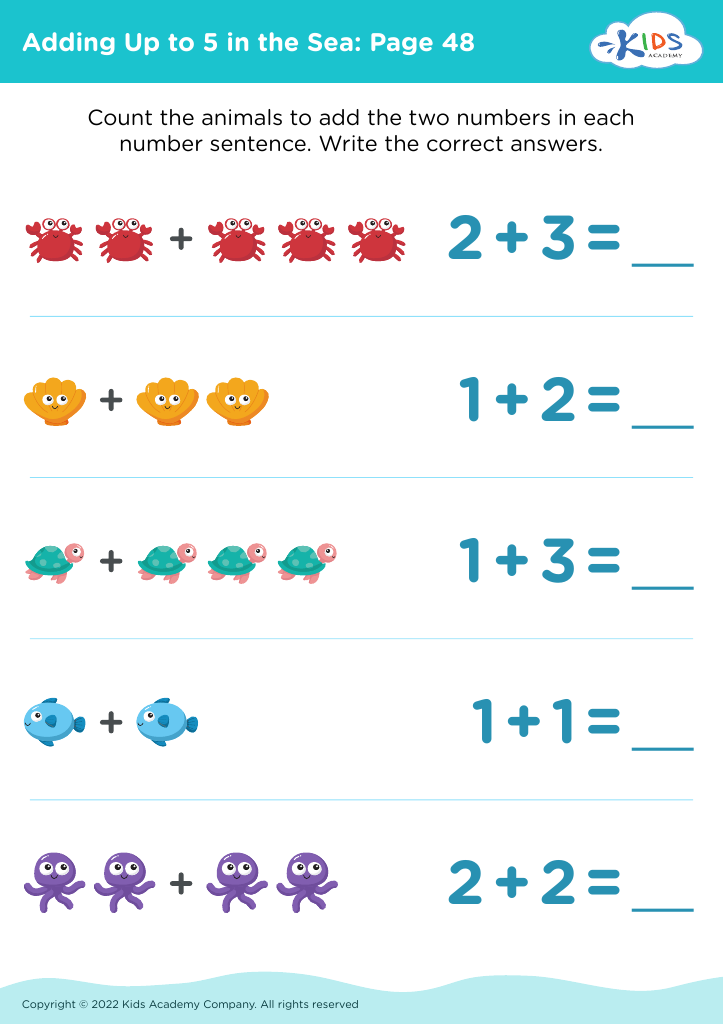
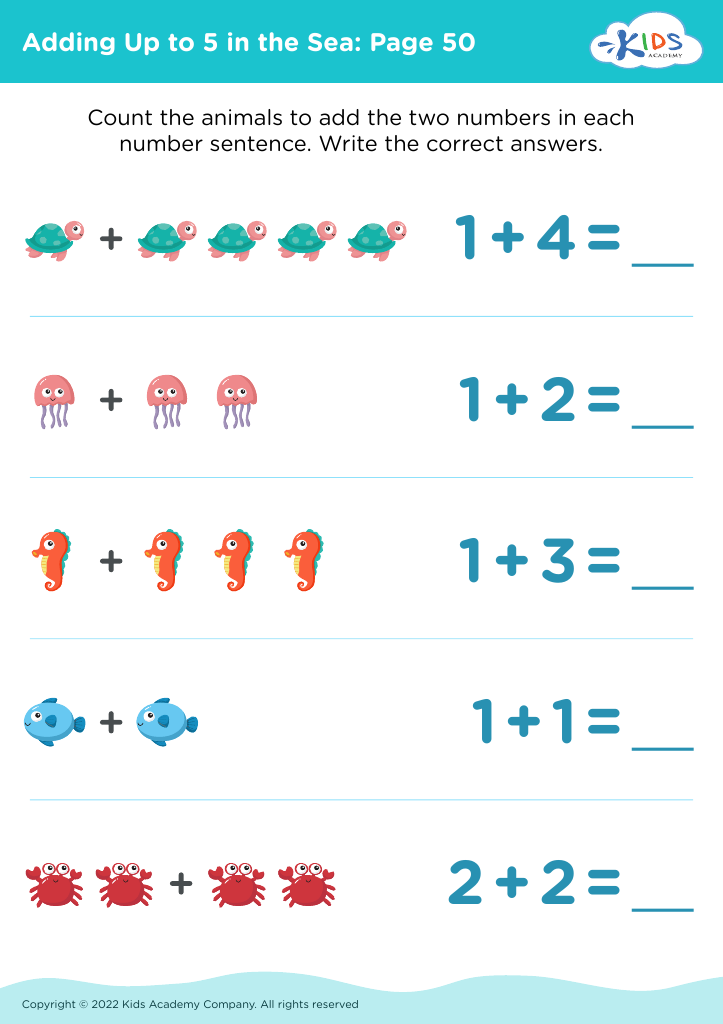
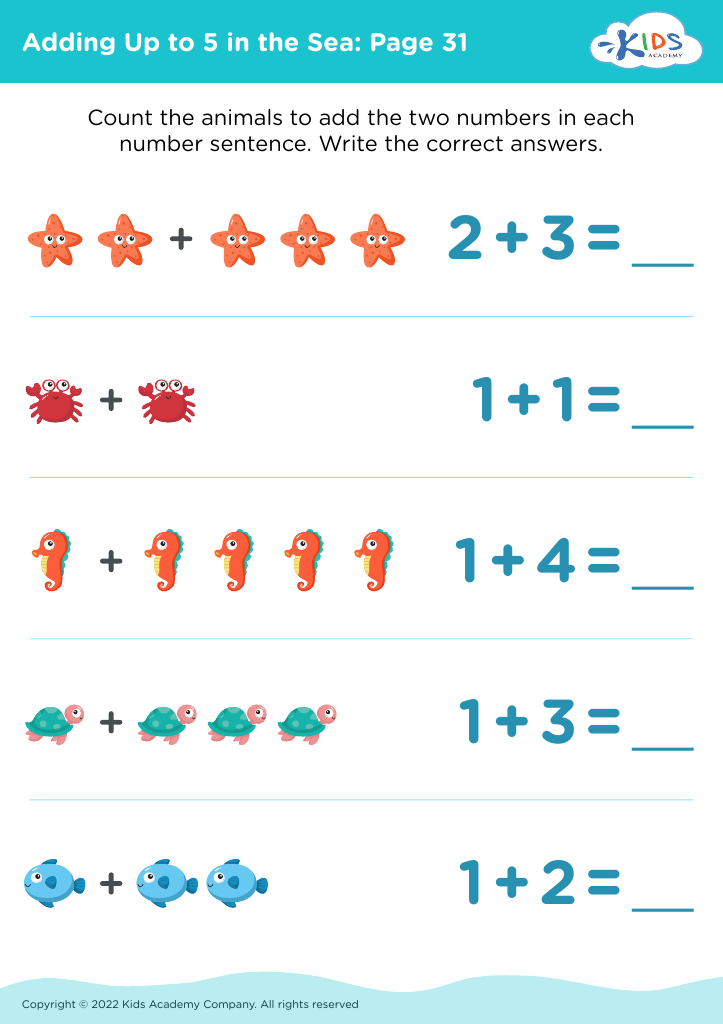








Ocean life captivates young learners, making it a valuable theme for teaching fundamental math skills like addition and subtraction. Understanding sea creature identification not only engages children's imaginations but also fosters a deeper connection to their environment. By integrating marine biology into math lessons, parents and teachers can create a rich, multidisciplinary learning experience that promotes curiosity and stimulates cognitive development.
For children aged 3-9, playful interaction with sea creatures can enhance learning through hands-on activities, visual aids, and storytelling. For instance, counting sea turtles in a story or adding starfish in a colorful worksheet helps make abstract math concepts more concrete. This context encourages children to practice crucial skills while forging an awareness of ocean health and biodiversity.
Additionally, teaching about sea creatures aids vocabulary development, supports critical thinking skills, and cultivates empathy through understanding ecosystems. By combining math with themes like oceanic life, parents and teachers can help children develop a well-rounded knowledge base while keeping their interest piqued. Ultimately, fostering a love for learning through creative subjects lays the groundwork for future academic success—an investment that benefits both students and society as a whole.








