Understanding division Addition & Subtraction Worksheets for Ages 3-9
5 filtered results
-
From - To
Explore our "Understanding Division" worksheets designed for children aged 3-9. These resources provide a fun and engaging way to introduce fundamental math concepts. Our comprehensive worksheets incorporate addition and subtraction skills to help young learners grasp the basics of division intuitively. Each activity encourages practice through colorful illustrations and interactive tasks, making learning enjoyable and effective. Ideal for both classroom settings and at-home learning, these worksheets are tailored to enhance comprehension and foster a strong foundation in math. Dive into the world of numbers with our expertly crafted worksheets and watch your child's confidence soar!
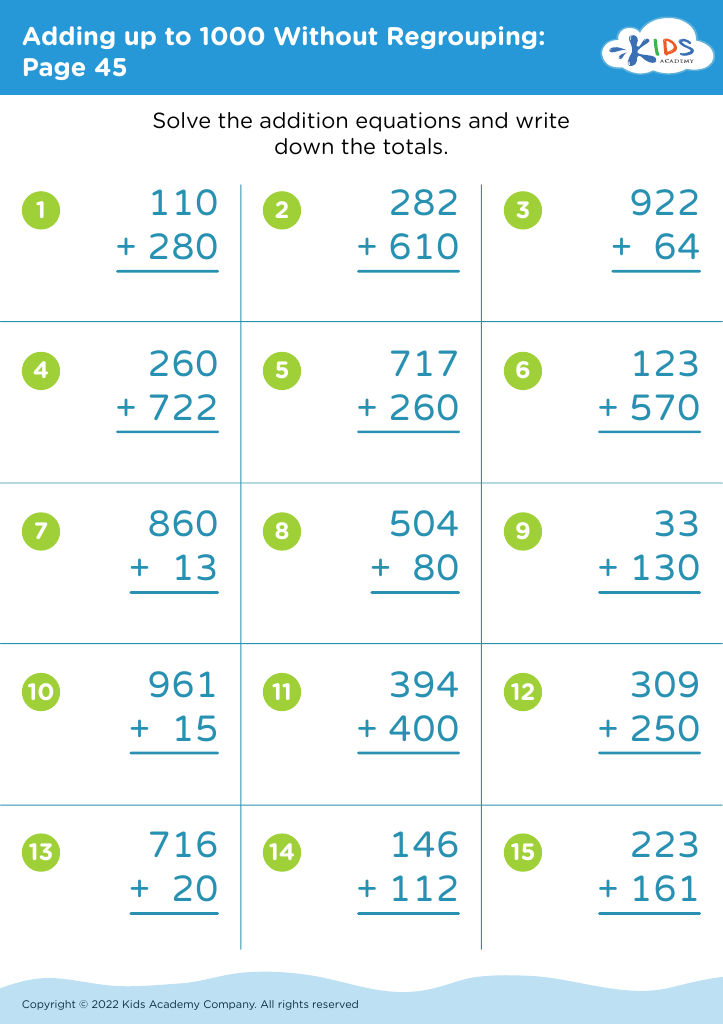








Understanding division, addition, and subtraction is crucial for children aged 3-9 as these foundational math skills are integral to their academic and everyday lives. Firstly, these concepts develop critical thinking and problem-solving abilities. Mastering basic operations helps children learn how to approach challenges methodically, fostering a mindset that values reasoning.
Moreover, these skills lay the groundwork for more complex mathematical concepts they will encounter in later grades. Children who grasp addition and subtraction early tend to transition more easily to multiplication and division, as they recognize patterns and relationships between numbers. This foundational understanding boosts their confidence and encourages a positive attitude toward math.
Additionally, arithmetic is not just a classroom subject; it finds relevance in daily scenarios like sharing snacks, counting objects, or managing money. When parents and teachers engage children in practical applications of math, they enhance understanding and retention, making learning more enjoyable and relevant.
Furthermore, early expertise in these skills supports academic success. Children proficient in basic math are often better prepared for standardized tests and real-world applications. By emphasizing the importance of division, addition, and subtraction during these formative years, parents and teachers significantly contribute to children's educational journey and future opportunities.








