Understanding quantity Addition & Subtraction Worksheets for Ages 3-9 - Page 2
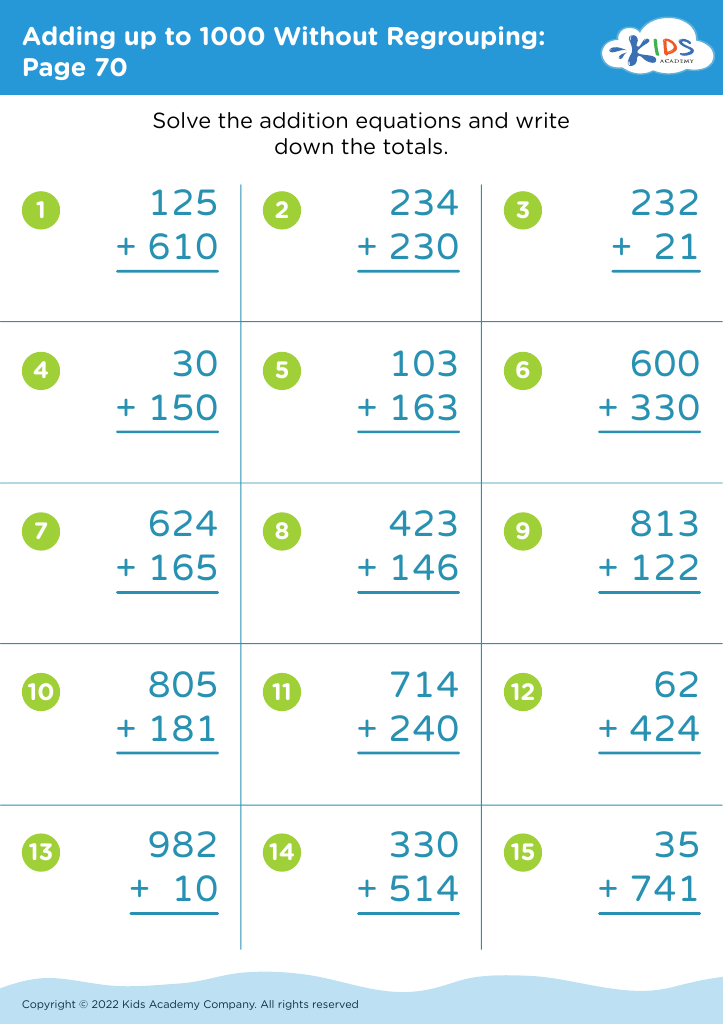
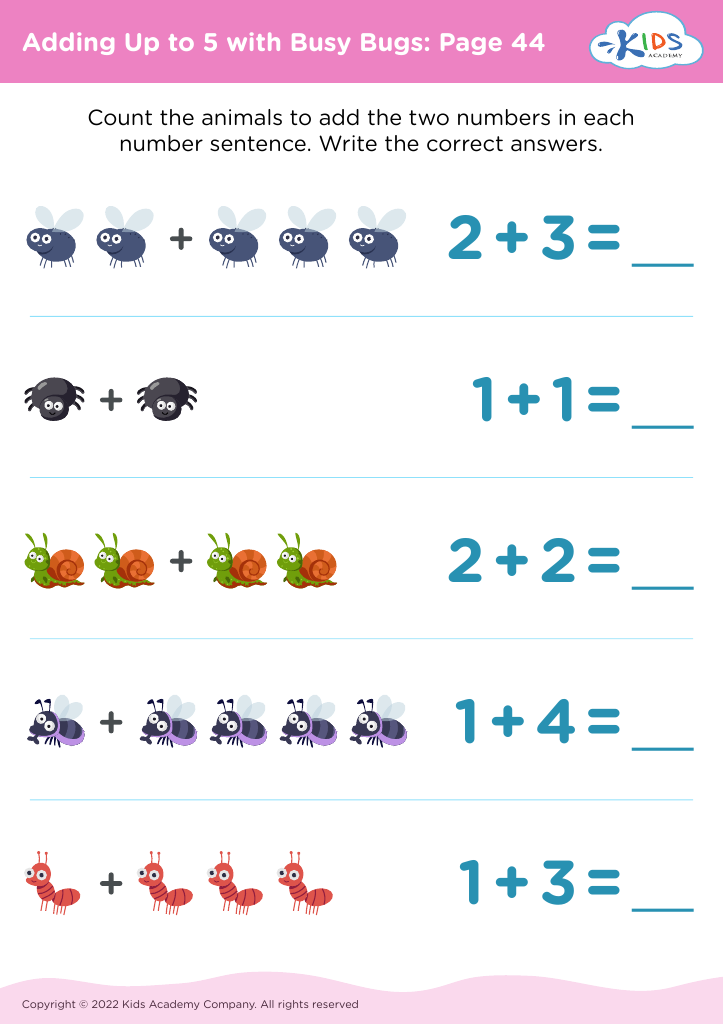
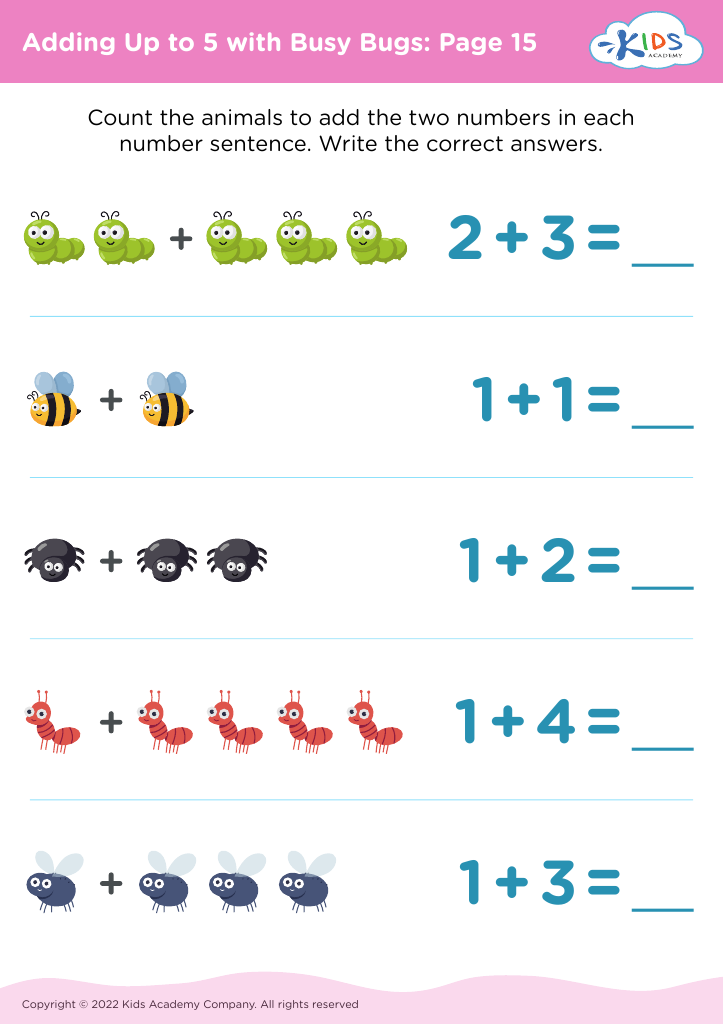








Understanding quantity, addition, and subtraction is crucial for children aged 3-9 as it lays the foundation for future mathematical skills and overall cognitive development. At this age, children are naturally curious and eager to learn about the world around them, making it the perfect time to introduce basic mathematical concepts.
Quantitative understanding helps children grasp the idea of how many items are present in a set, which is fundamental for everyday problem-solving scenarios. Early exposure to addition and subtraction promotes numerical literacy and encourages logical thinking. Moreover, engaging with these concepts enhances fine motor skills through hands-on activities, such as using manipulatives (like blocks or counters), which can lead to better retention.
Parents and teachers can support this learning by creating a positive and interactive learning environment. Activities like counting objects, playing math-related games, and incorporating math in daily routines foster skills in a way that's fun and relatable. Understanding quantity and basic operations not only drives academic success but also boosts confidence and critical thinking abilities in children. All these ingredients are essential for lifelong learning and adaptability in an increasingly numerate world.








