Filters

95 filtered results

Clear all filters
Favorites
With answer key
Interactive

95 filtered results

Difficulty Level

Grade


Check out this FREE Trial Lesson on Addition for age 3-9!

T

Favorites
With answer key
Interactive
  • 3-9
  • Animal recognition
  • Addition
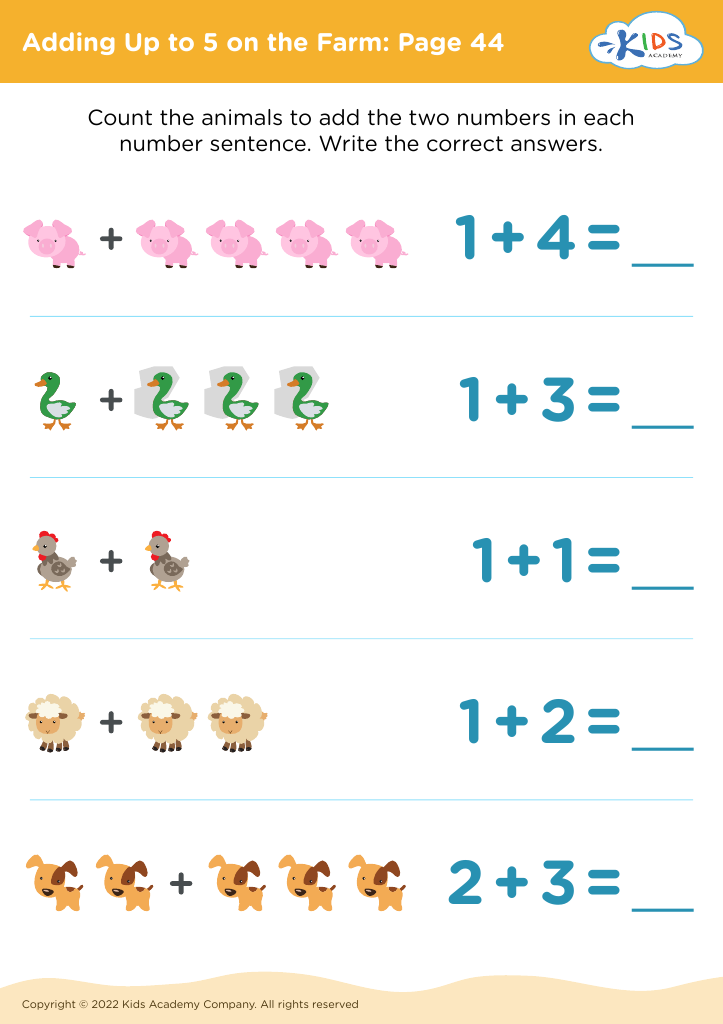
Adding Up to 5 on the Farm: Page 44
Worksheet
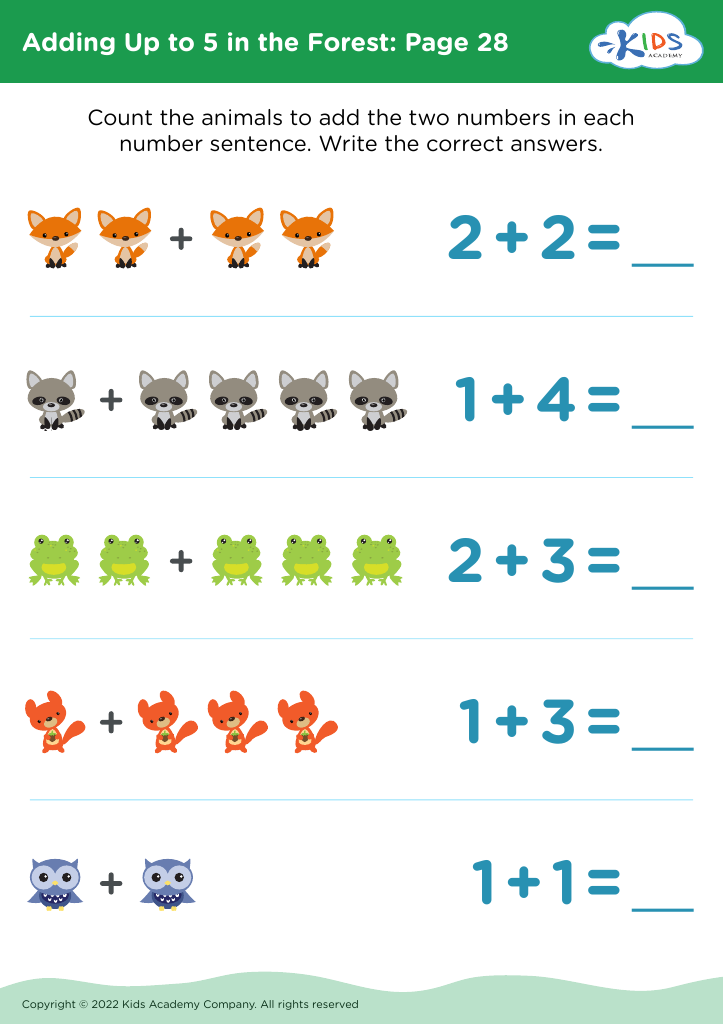
Adding Up to 5 in the Forest: Page 28
Worksheet
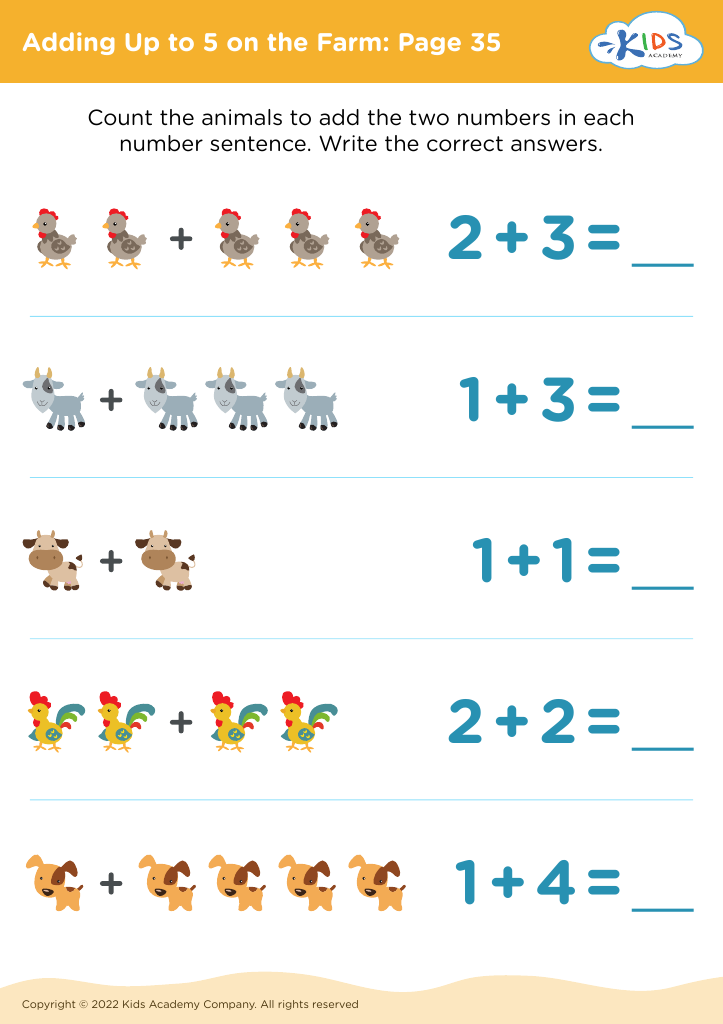
Adding Up to 5 on the Farm: Page 35
Worksheet
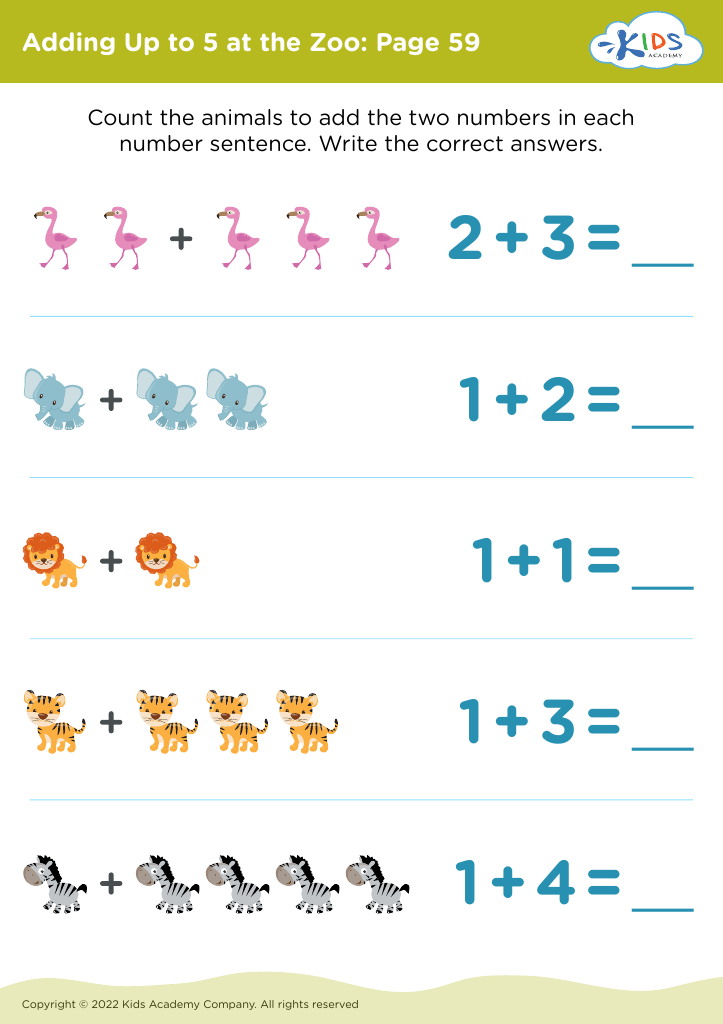
Adding Up to 5 at the Zoo: Page 59
Worksheet
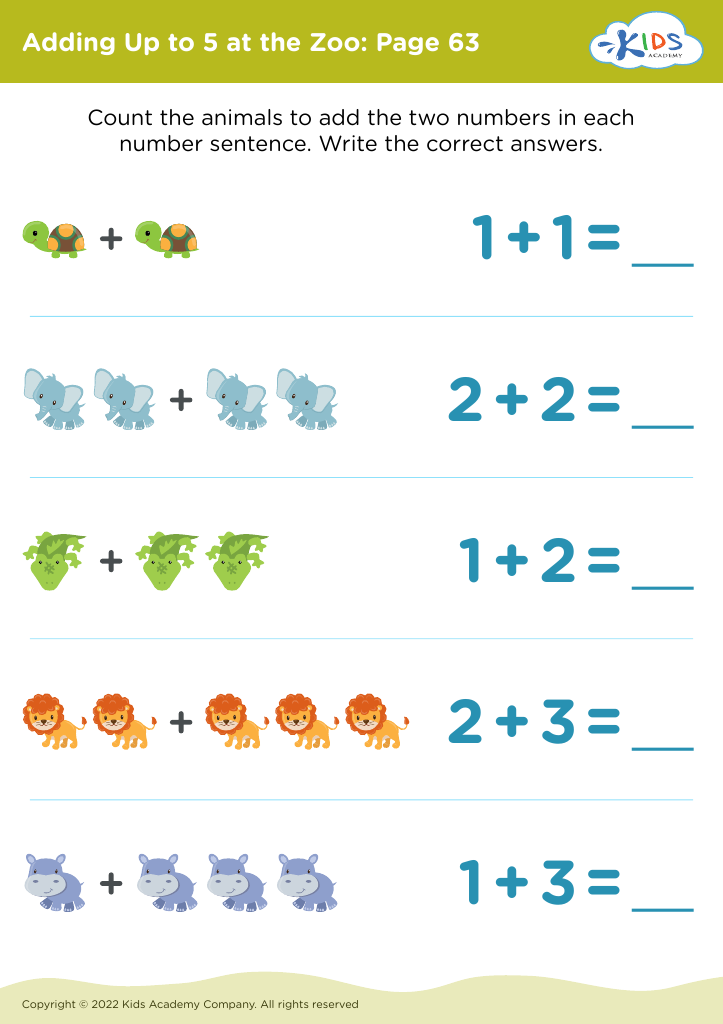
Adding Up to 5 at the Zoo: Page 63
Worksheet
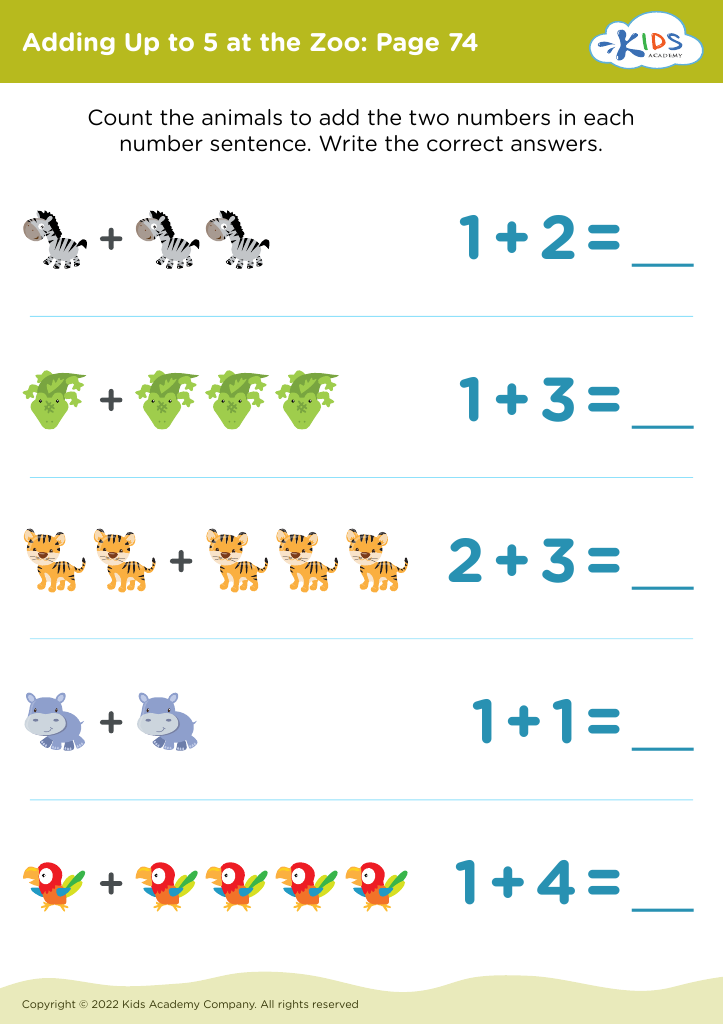
Adding Up to 5 at the Zoo: Page 74
Worksheet
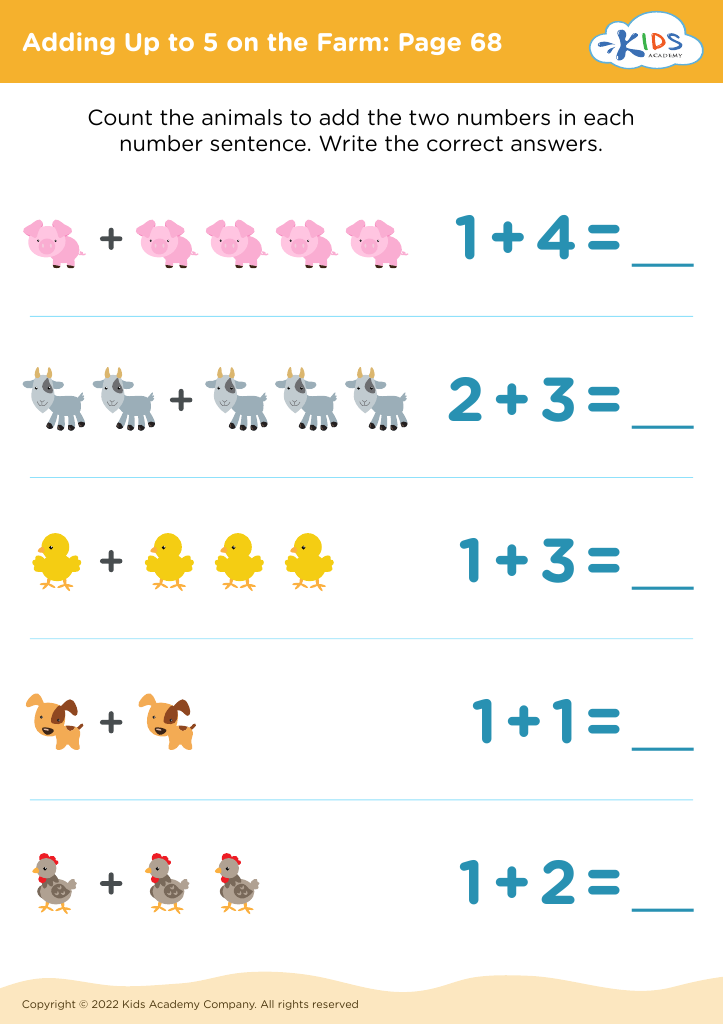
Adding Up to 5 on the Farm: Page 68
Worksheet
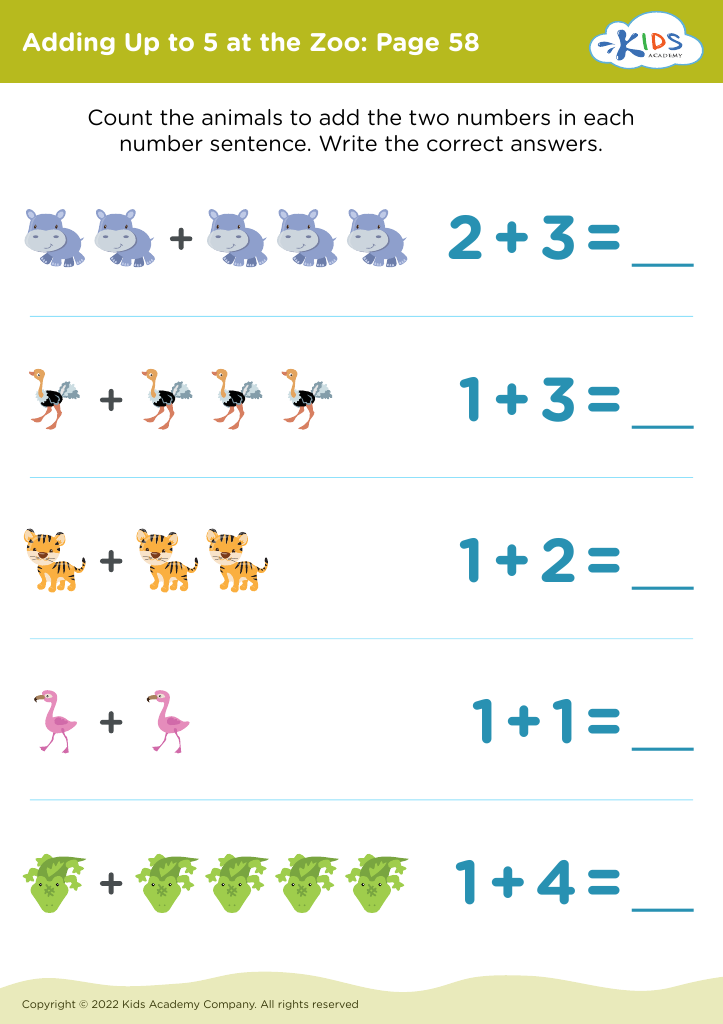
Adding Up to 5 at the Zoo: Page 58
Worksheet
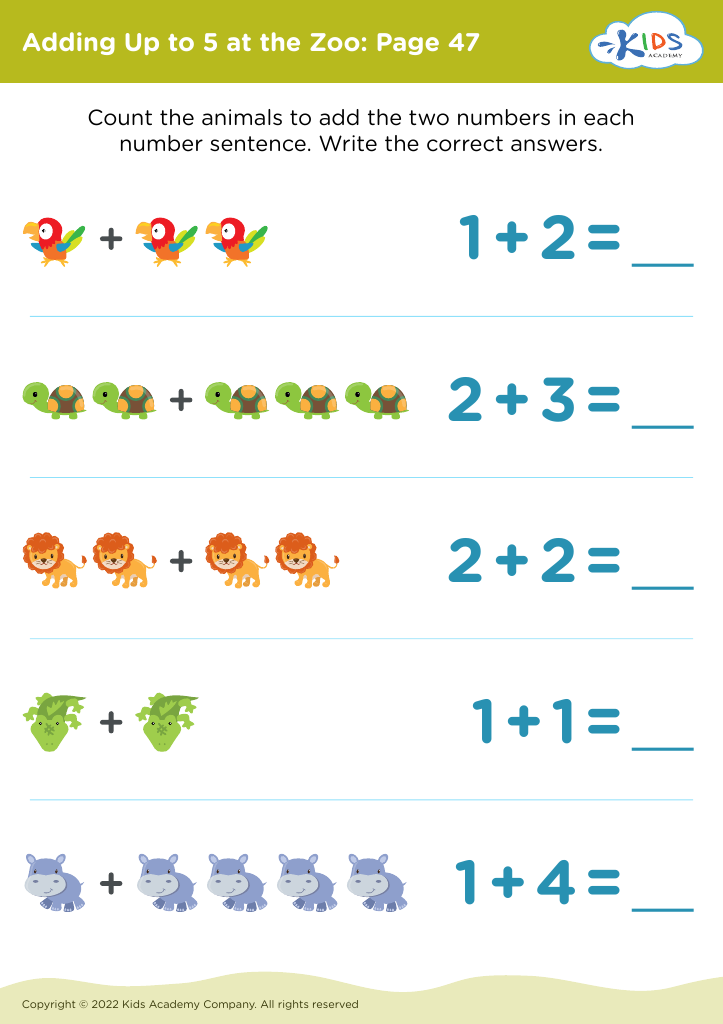
Adding Up to 5 at the Zoo: Page 47
Worksheet
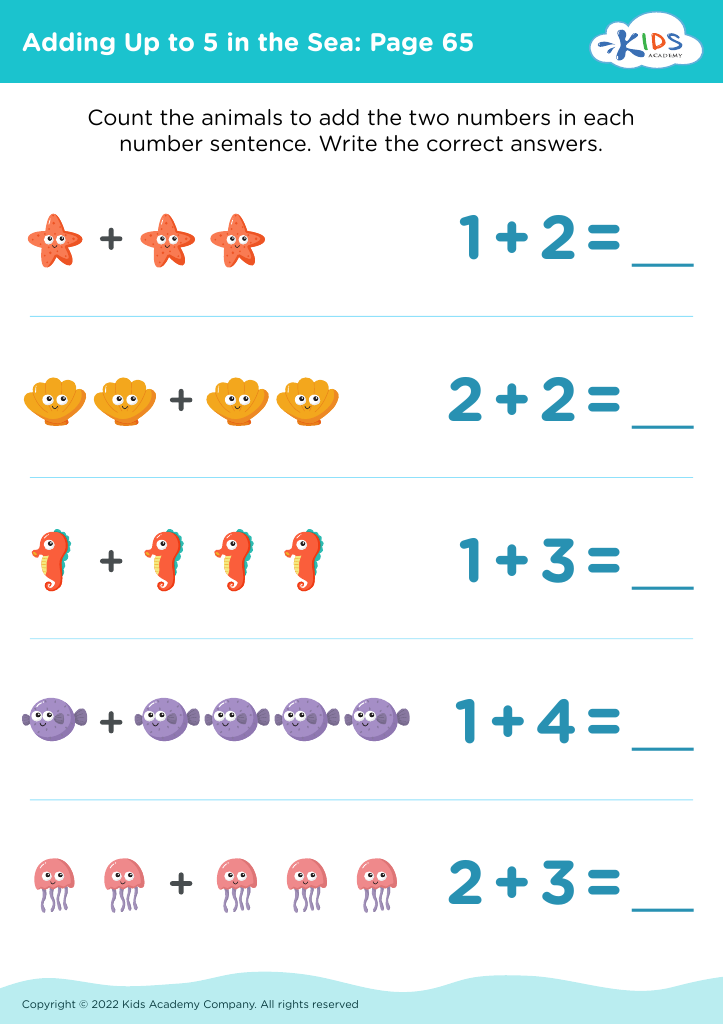
Adding Up to 5 in the Sea: Page 65
Worksheet
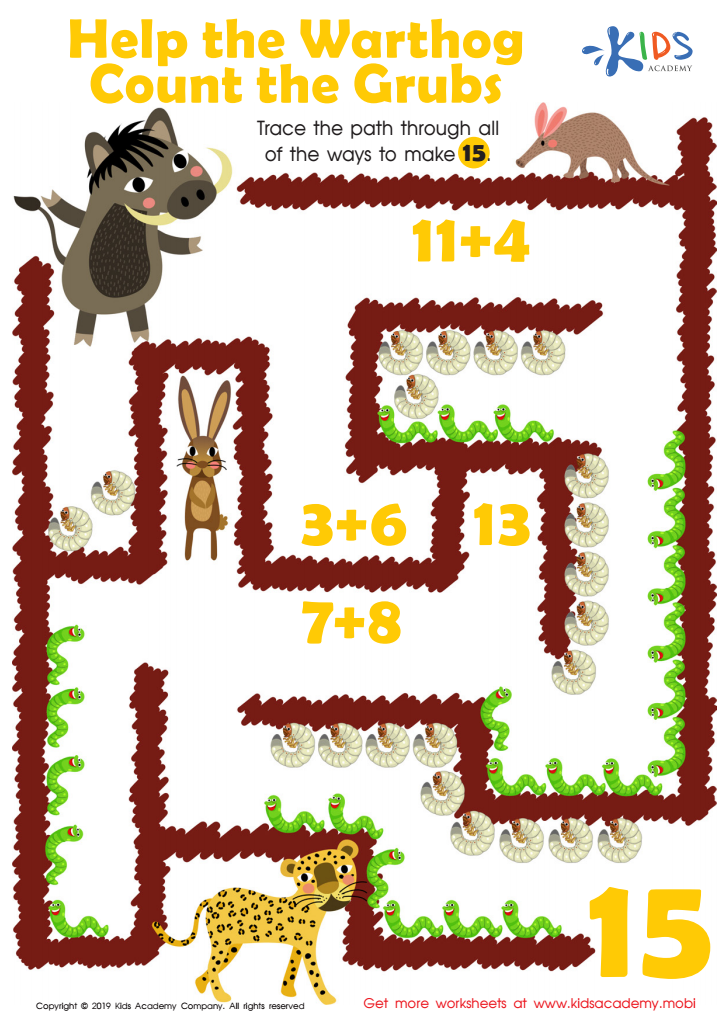
Help the Warthog Count the Grubs Worksheet

Help the Warthog Count the Grubs Worksheet

Test your kids' knowledge of wild animals. Ask them to name some they know, then have them identify the animals on this worksheet. If they can't, take the time to tell them the names. Finally, trace the warthog's path through the maze by solving the equations and going through paths that make 15.
Help the Warthog Count the Grubs Worksheet
Worksheet
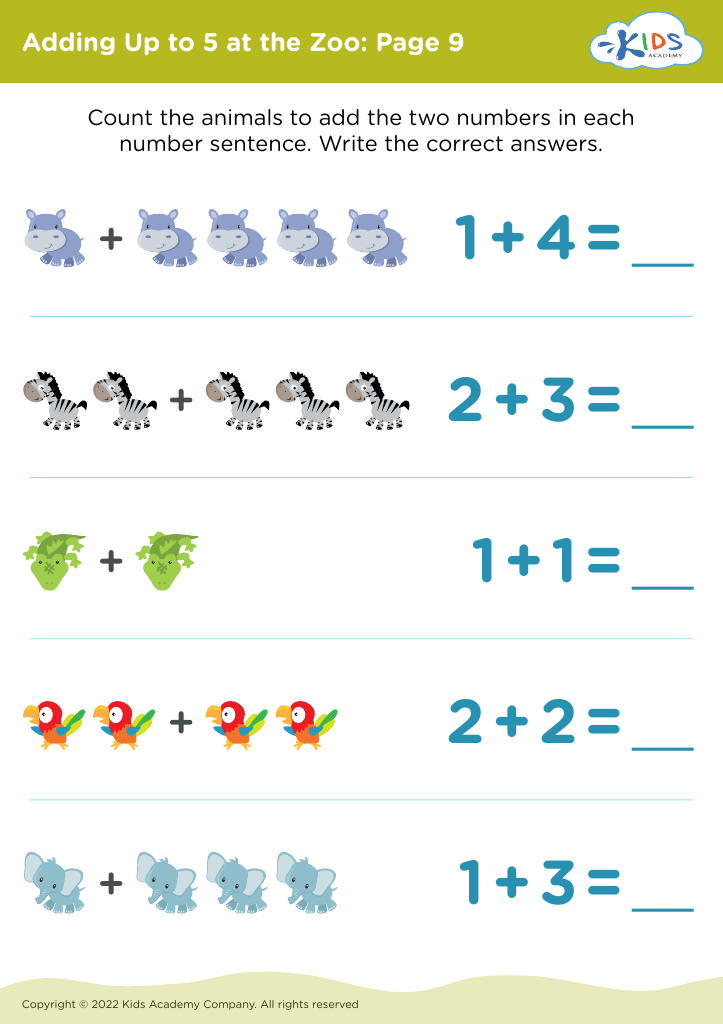
Adding Up to 5 at the Zoo: Page 9

Adding Up to 5 at the Zoo: Page 9

Adding Up to 5 at the Zoo: Page 9
Worksheet
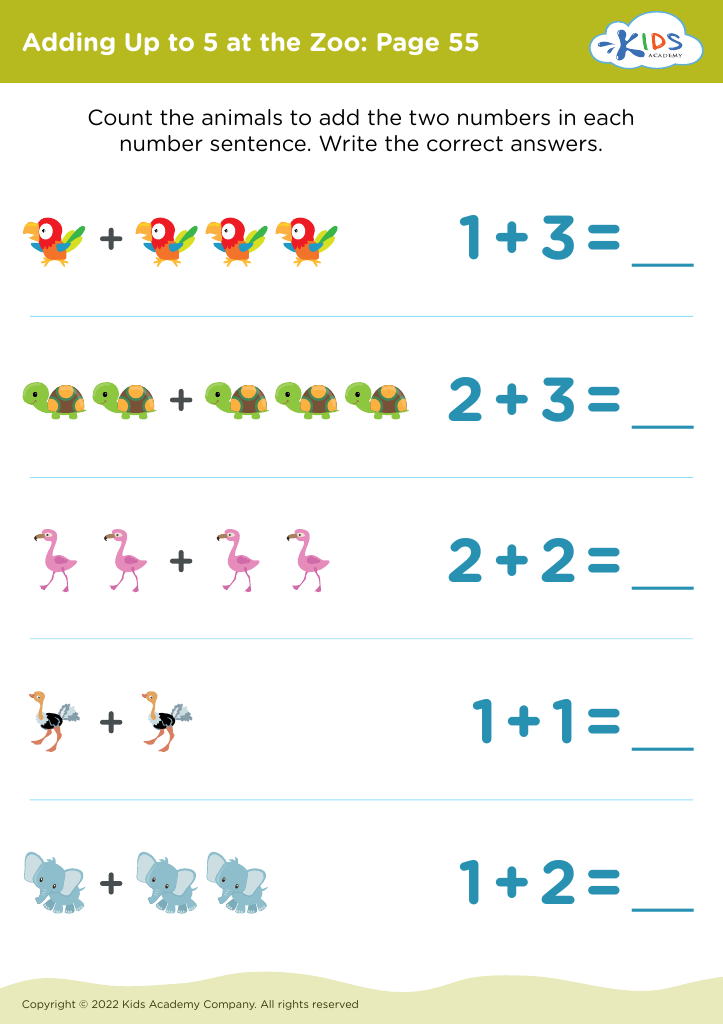
Adding Up to 5 at the Zoo: Page 55
Worksheet
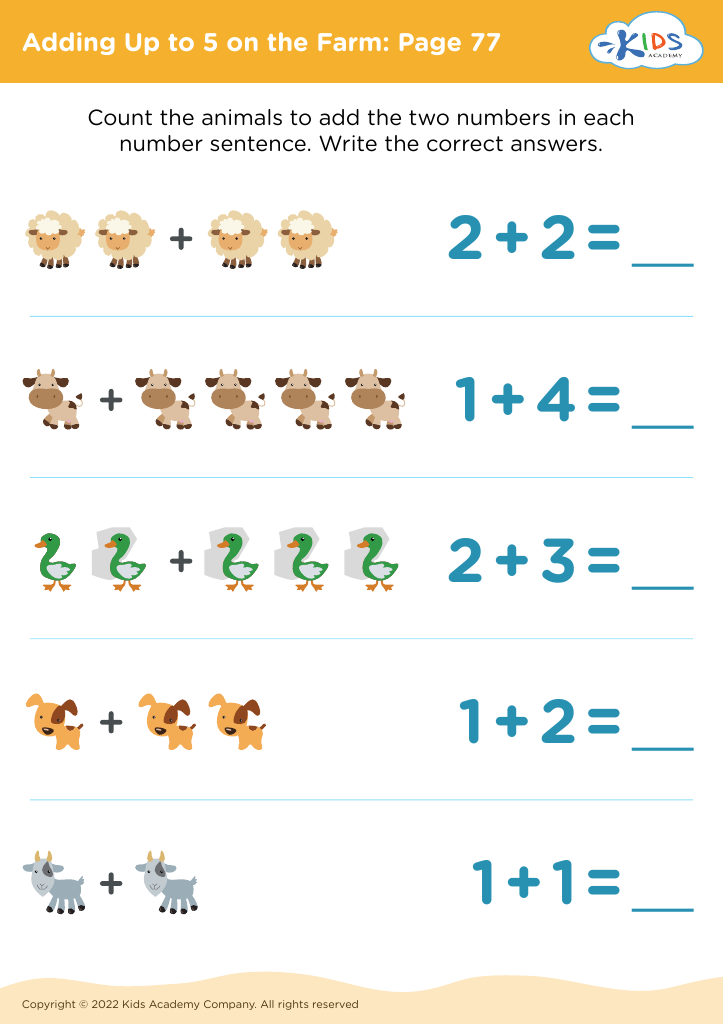
Adding Up to 5 on the Farm: Page 77
Worksheet
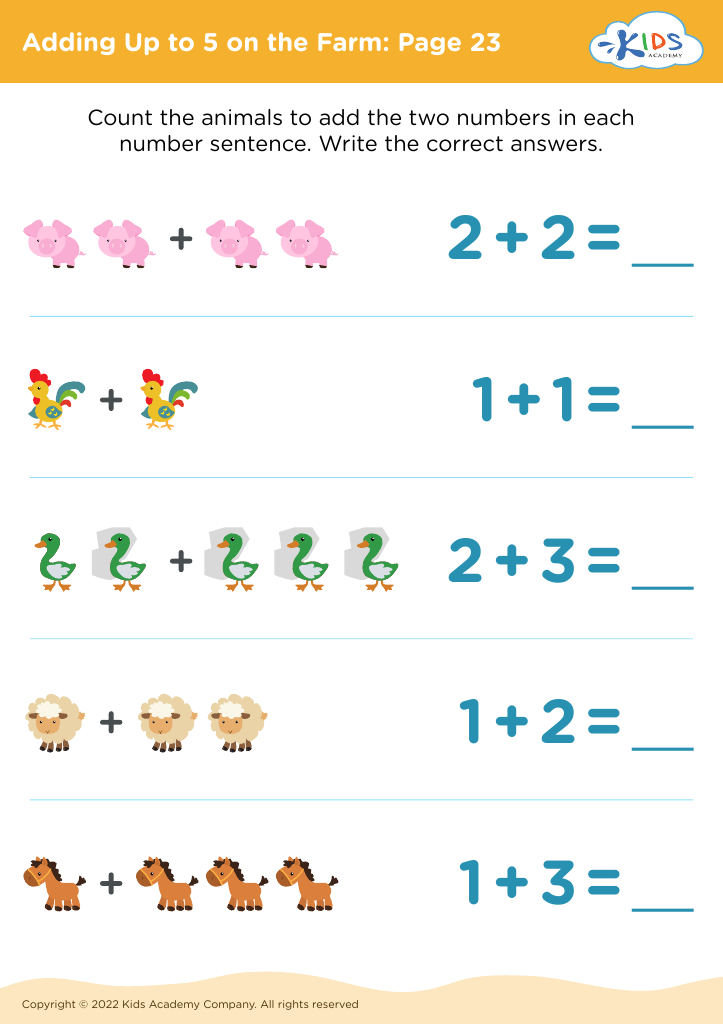
Adding Up to 5 on the Farm: Page 23
Worksheet
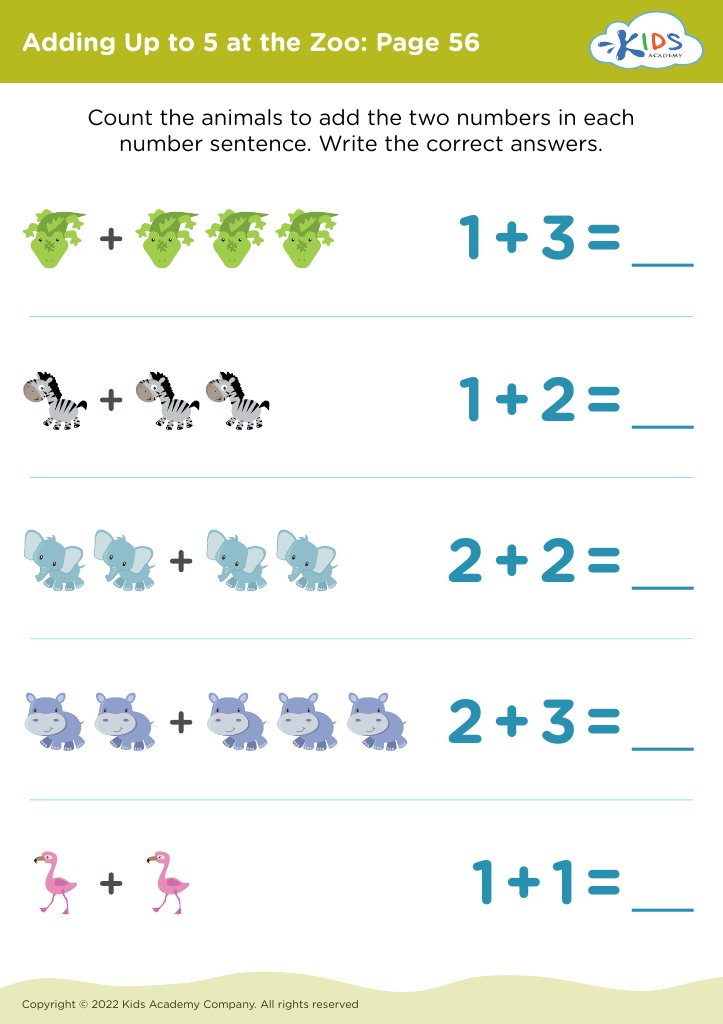
Adding Up to 5 at the Zoo: Page 56
Worksheet
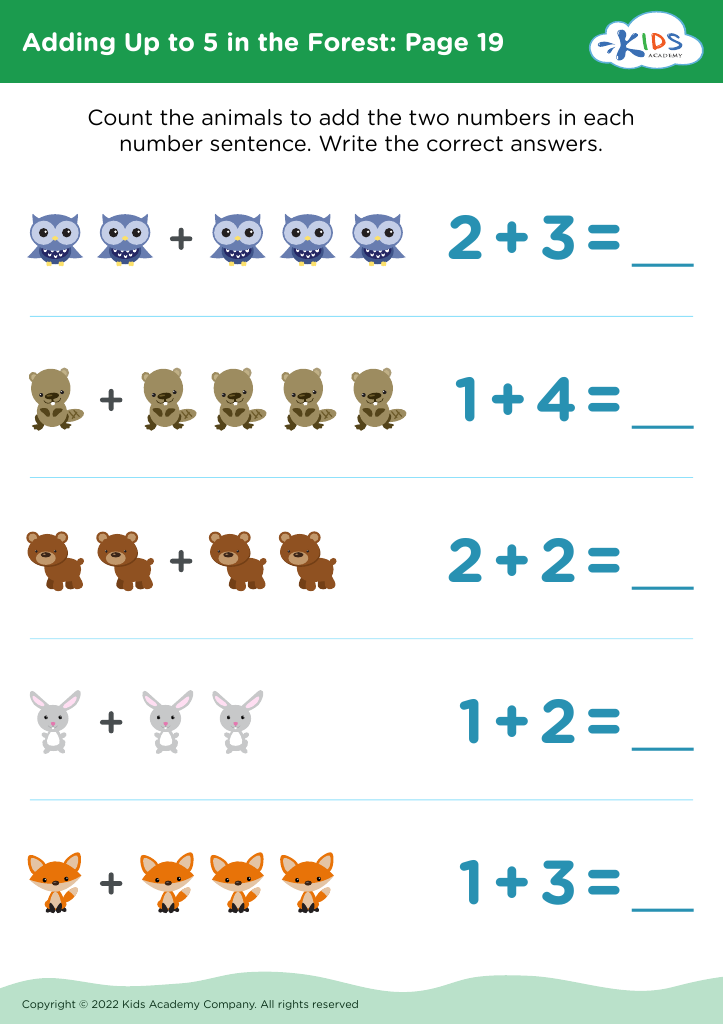
Adding Up to 5 in the Forest: Page 19
Worksheet
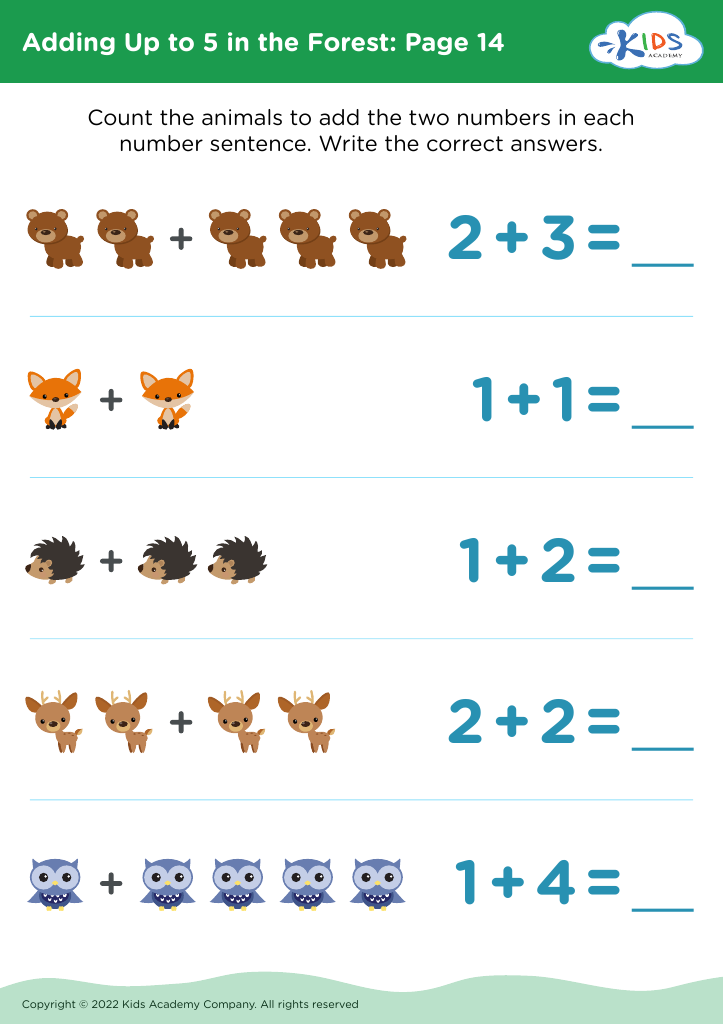
Adding Up to 5 in the Forest: Page 14
Worksheet
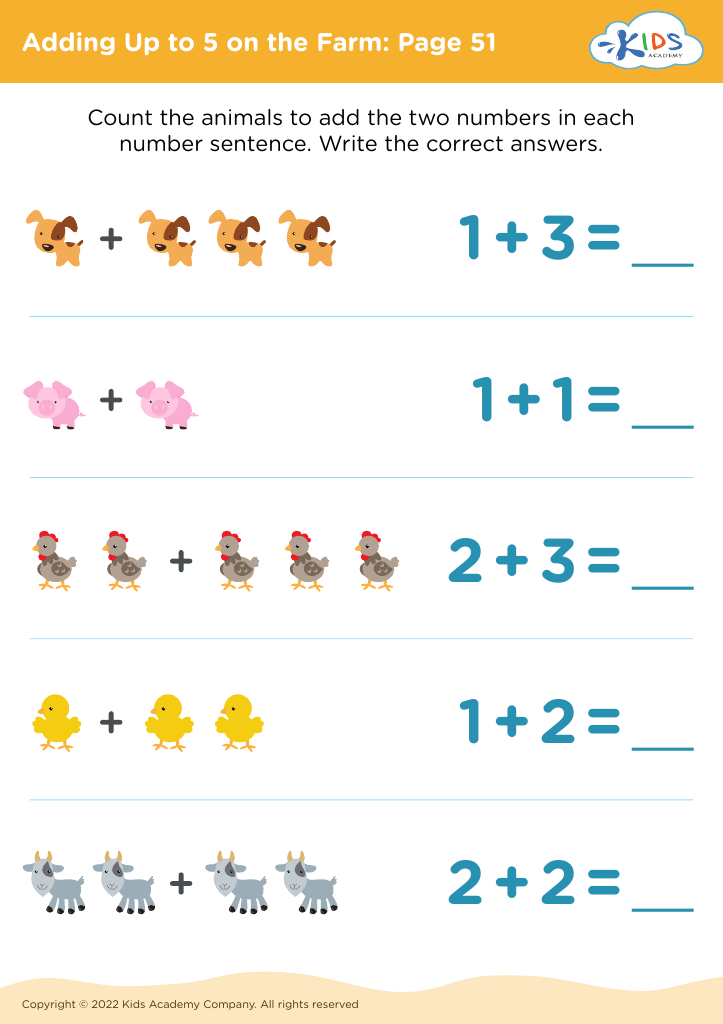
Adding Up to 5 on the Farm: Page 51
Worksheet
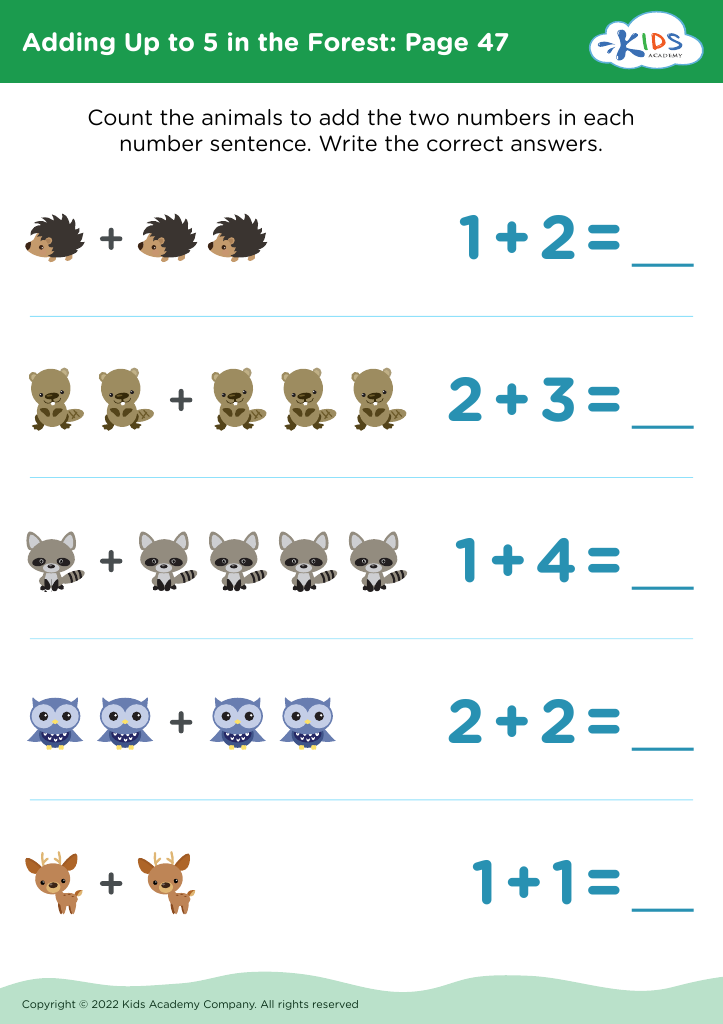
Adding Up to 5 in the Forest: Page 47
Worksheet
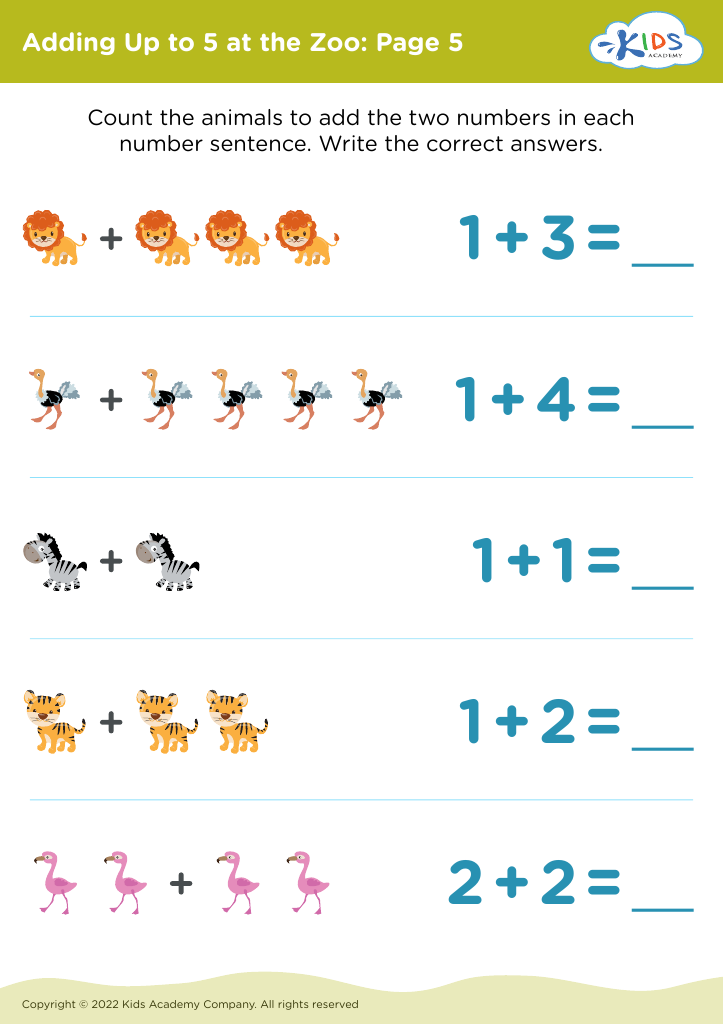
Adding Up to 5 at the Zoo: Page 5

Adding Up to 5 at the Zoo: Page 5

Adding Up to 5 at the Zoo: Page 5
Worksheet
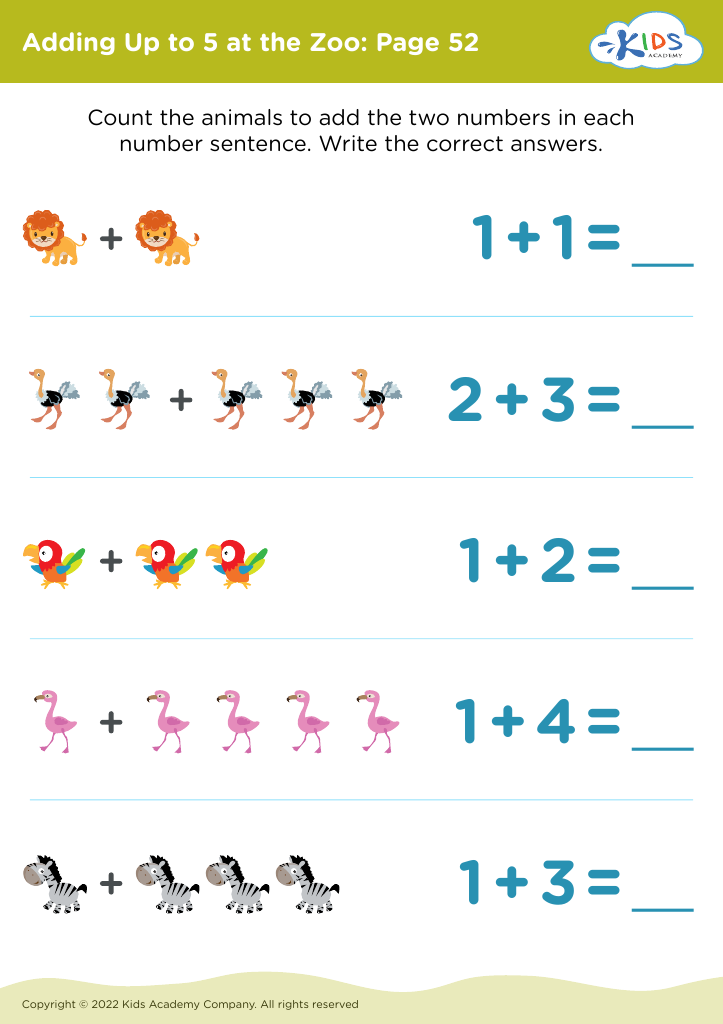
Adding Up to 5 at the Zoo: Page 52
Worksheet
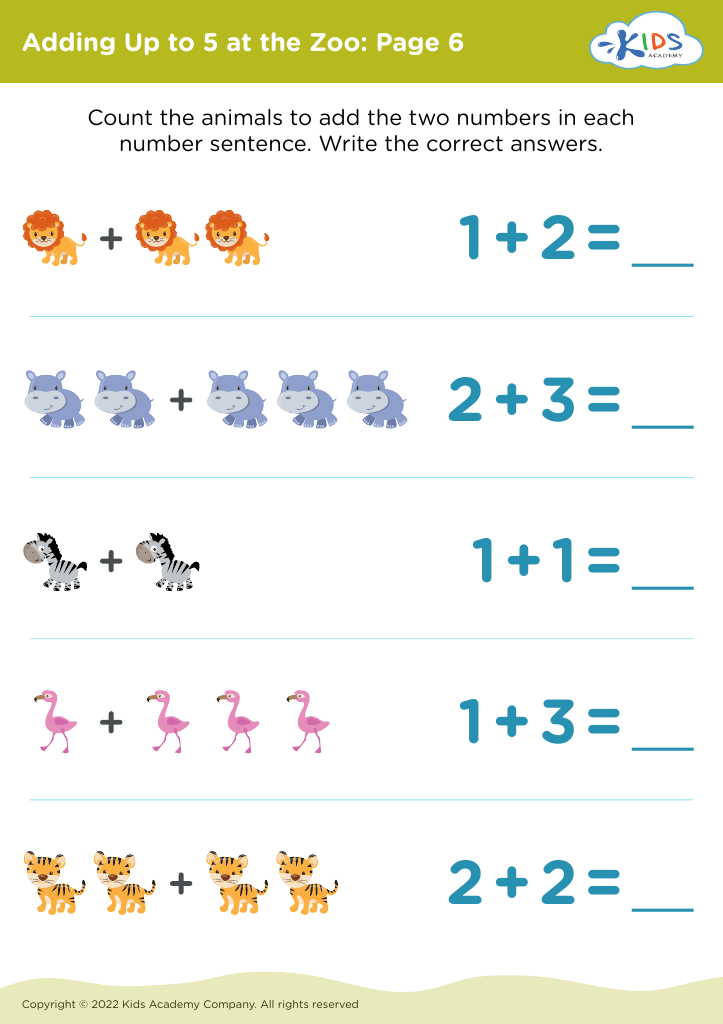
Adding Up to 5 at the Zoo: Page 6

Adding Up to 5 at the Zoo: Page 6

Adding Up to 5 at the Zoo: Page 6
Worksheet
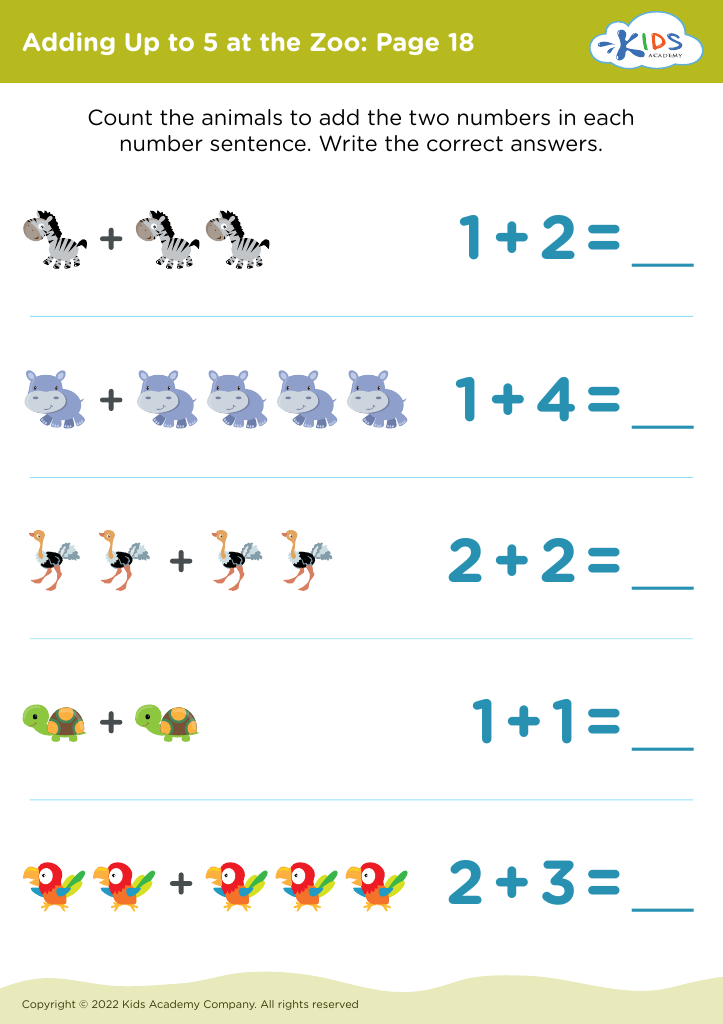
Adding Up to 5 at the Zoo: Page 18
Worksheet


Animal recognition addition is an essential learning tool for children aged 3-9, and parents and teachers should prioritize it for several reasons. First, it seamlessly combines fundamental math skills with visual recognition, making learning engaging and relatable. By utilizing animals kids are often familiar with, this approach fosters curiosity and natural interest, enhancing their motivation to learn.

Additionally, it promotes cognitive development. Recognizing and associating different animals with numbers helps build counting skills, number recognition, and the ability to perform basic addition. This early foundation in math can facilitate later success in more complex mathematical concepts.

Moreover, animal recognition addition can celebrate diversity in the animal kingdom, opening opportunities for discussions about nature, habitats, and the importance of conservation, which enrich children's knowledge beyond mathematics.

Engaging activities, such as using animal toys, storybooks featuring animals, or interactive digital games, aid varied learning styles and can be tailored to each child. Ultimately, nurturing this integrative approach creates a positive and enjoyable learning atmosphere, fostering a lifelong interest in math and science. Parents and teachers play a vital role in cultivating this dynamic, recognizing its importance in shaping a child’s academic journey and overall development.