Basic arithmetic understanding Addition Worksheets for Ages 3-9
4 filtered results
-
From - To
Boost your child's math skills with our Basic Arithmetic Understanding Addition Worksheets for Ages 3-9! Designed to make learning fun and effective, these printable worksheets focus on building a solid foundation in addition. Perfect for young learners, they include a variety of engaging activities to enhance number recognition, counting, and addition problem-solving skills. Whether your child is just beginning their math journey or needs extra practice, our worksheets provide a great resource for consistent learning. Discover a world where math becomes a delightful adventure for your child, ensuring they develop confidence and proficiency in basic arithmetic.
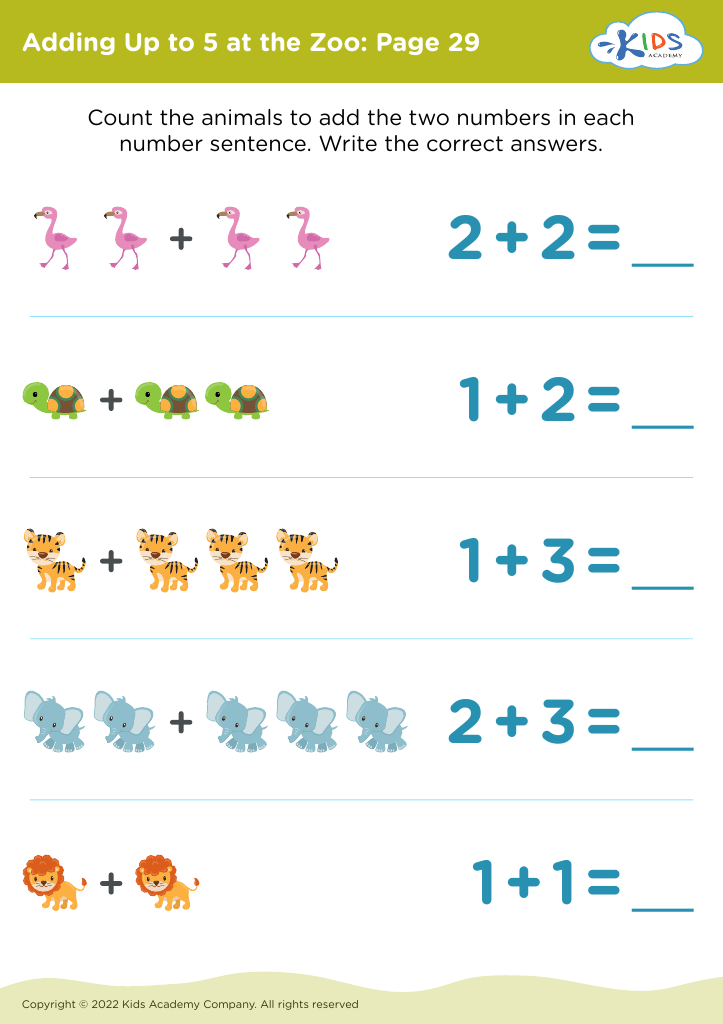
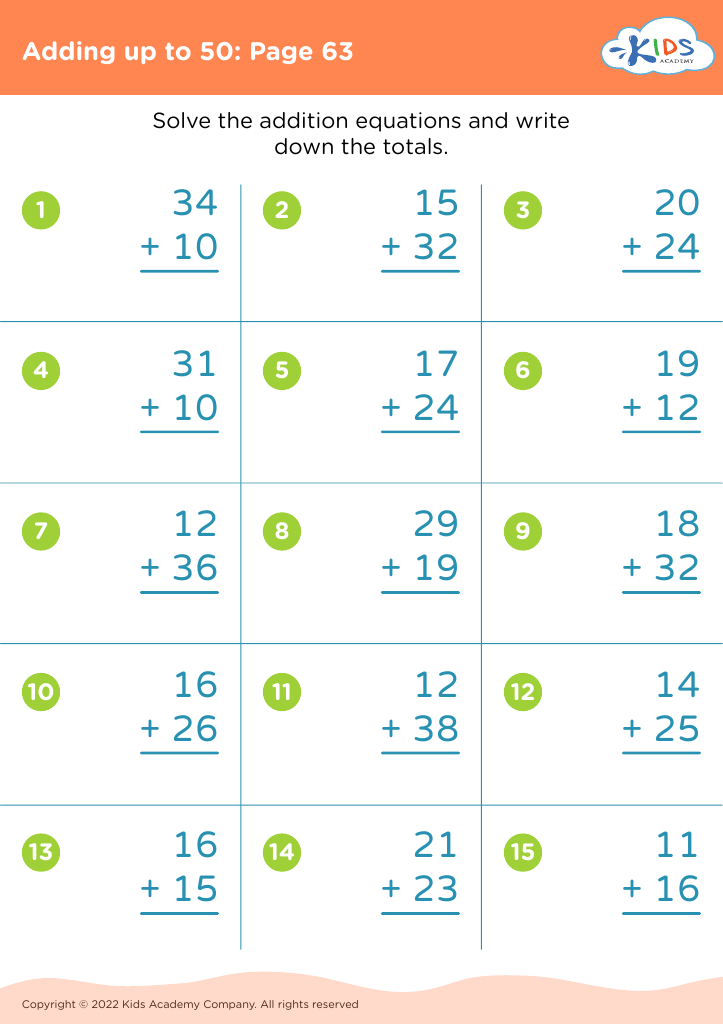
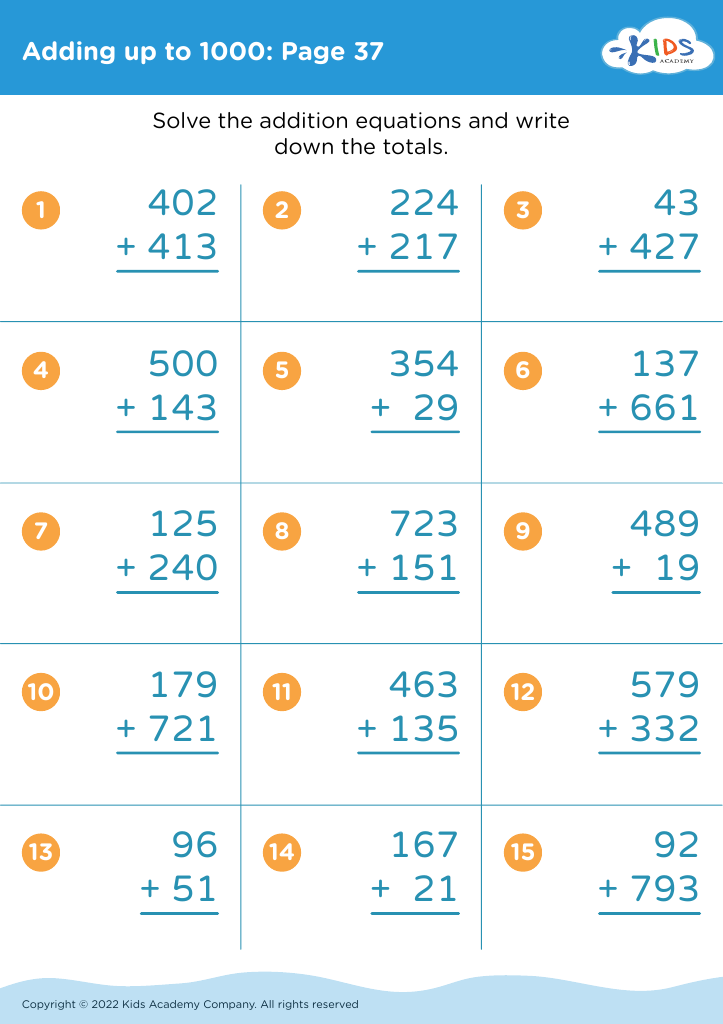
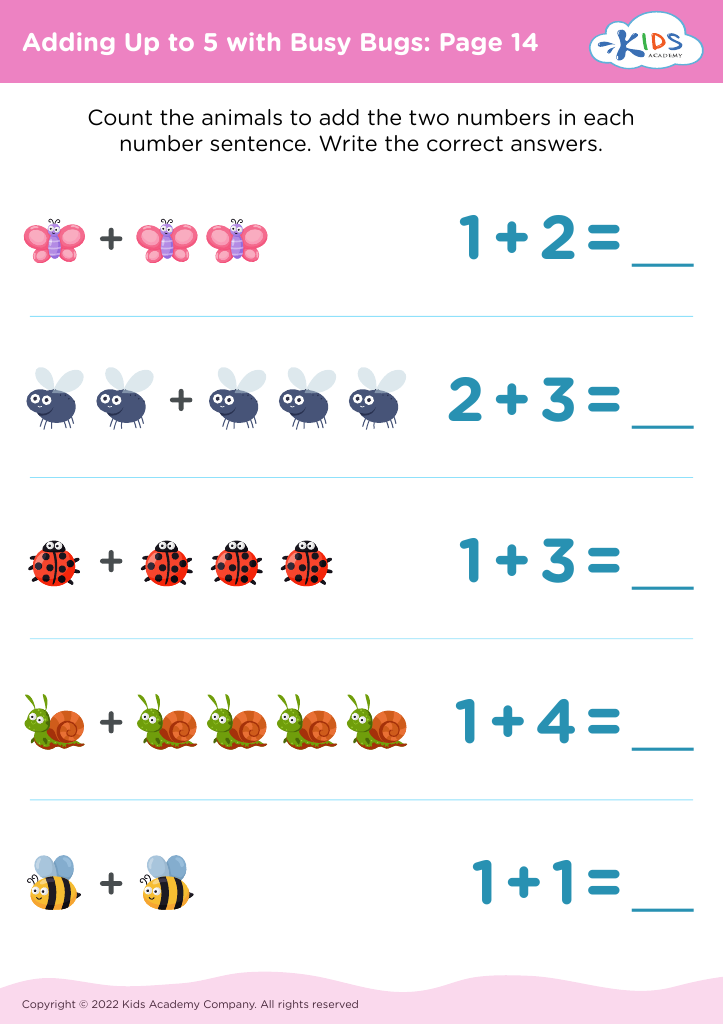








Parents and teachers should emphasize on ensuring children develop a basic understanding of addition between the ages of 3 and 9 because it forms the cornerstone of mathematical literacy and critical thinking. At this crucial developmental stage, young minds are highly receptive to new concepts and keenly learning how to interact with their environment. Establishing a solid grasp of addition aids in building confidence and a positive attitude towards numbers and math in general.
Basic arithmetic, particularly addition, introduces children to the concept of aggregating values, reinforcing skills such as counting, number recognition, and pattern identification. It lays the groundwork for more complex mathematical queries they will encounter in later years. When children grasp addition early, they adopt a logical approach to problem-solving, develop analytical skills, and are better prepared for future education in STEM (Science, Technology, Engineering, Mathematics) fields.
Additionally, early mastery of addition impacts daily life practicalities — helping children understand time, money, and measurement. For parents and teachers, fostering these skills means nurturing well-rounded individuals who enjoy learning, exhibit resilience in problem-solving, and possess a fundamental academic competence essential for life's myriad challenges. By prioritizing addition in early education, parents and teachers set children on a trajectory of intellectual curiosity and academic achievement.








