Developing problem-solving skills Addition Worksheets for Ages 3-9
6 filtered results
-
From - To
Explore our collection of "Developing Problem-Solving Skills Addition Worksheets" tailored for children ages 3-9. These engaging worksheets are designed to enhance critical thinking and foster a love for math while focusing on addition concepts. Featuring colorful visuals and interactive exercises, they encourage kids to explore different strategies and think analytically. Our resources support various learning styles and promote resilience, ensuring your child develops essential problem-solving skills in a fun and enjoyable way. Ideal for use at home or in the classroom, these worksheets pave the way for confident learners ready to tackle mathematical challenges. Start building your child’s math foundation today!
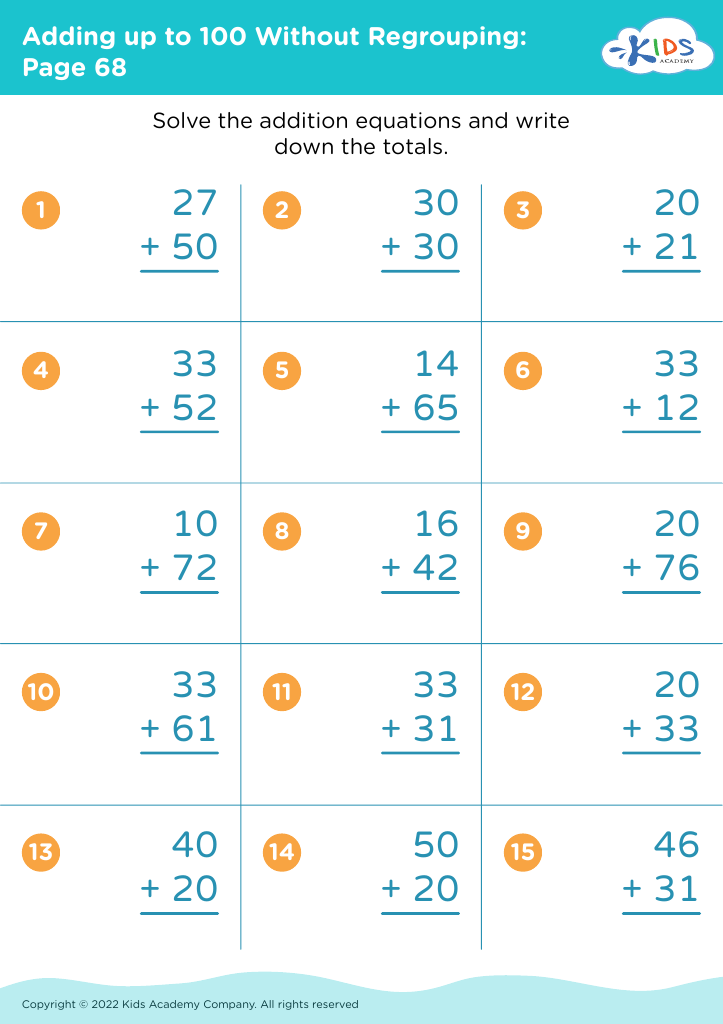
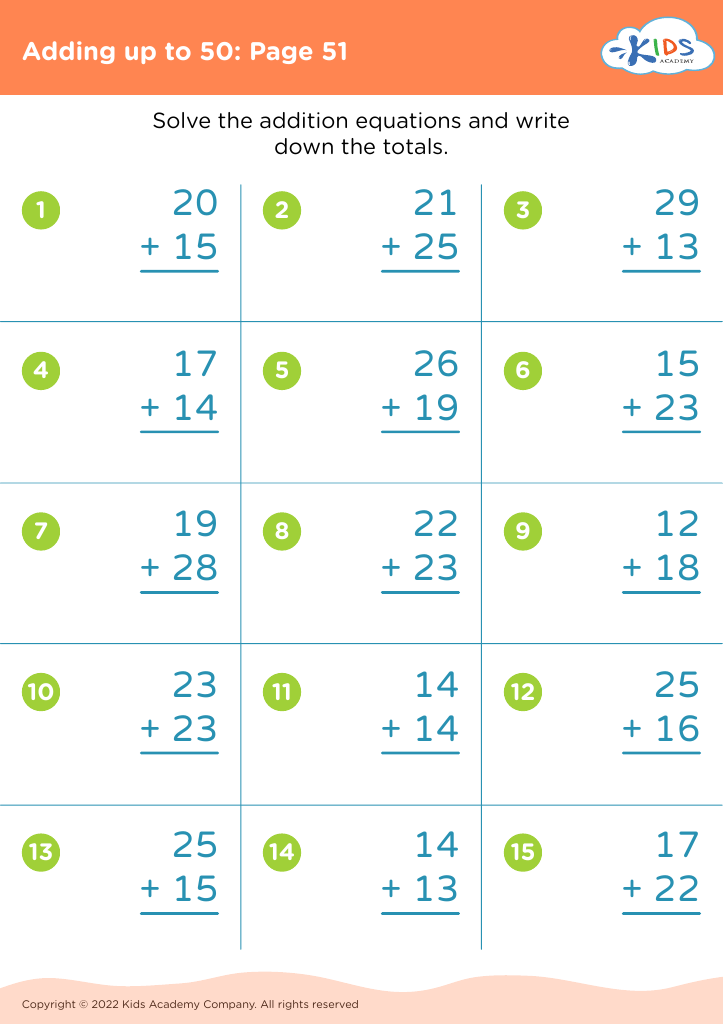
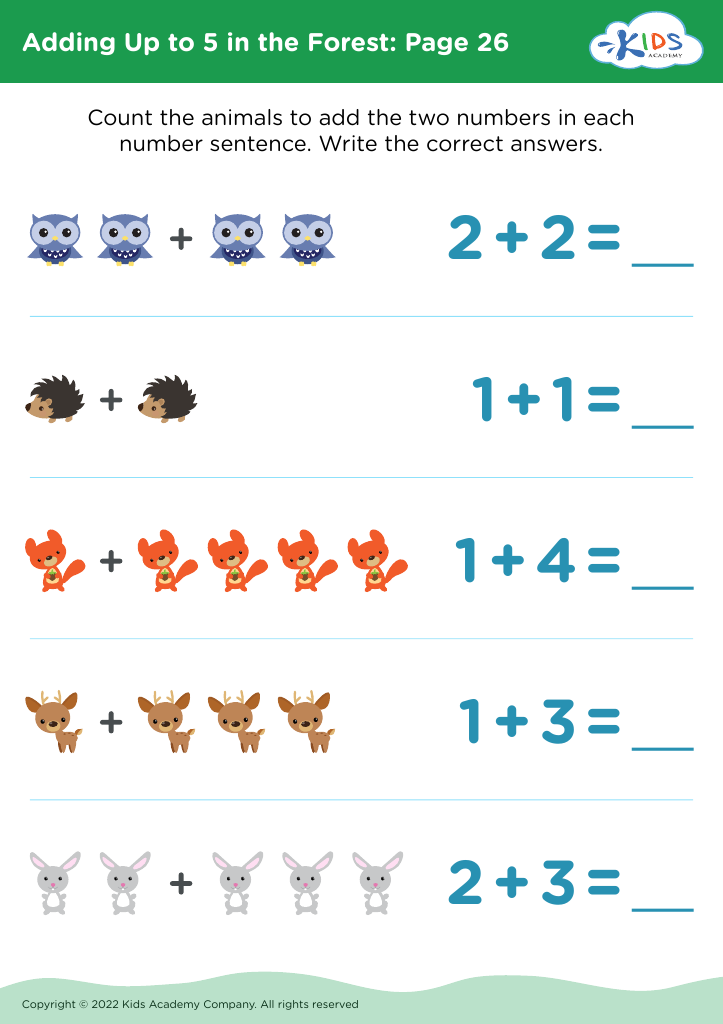
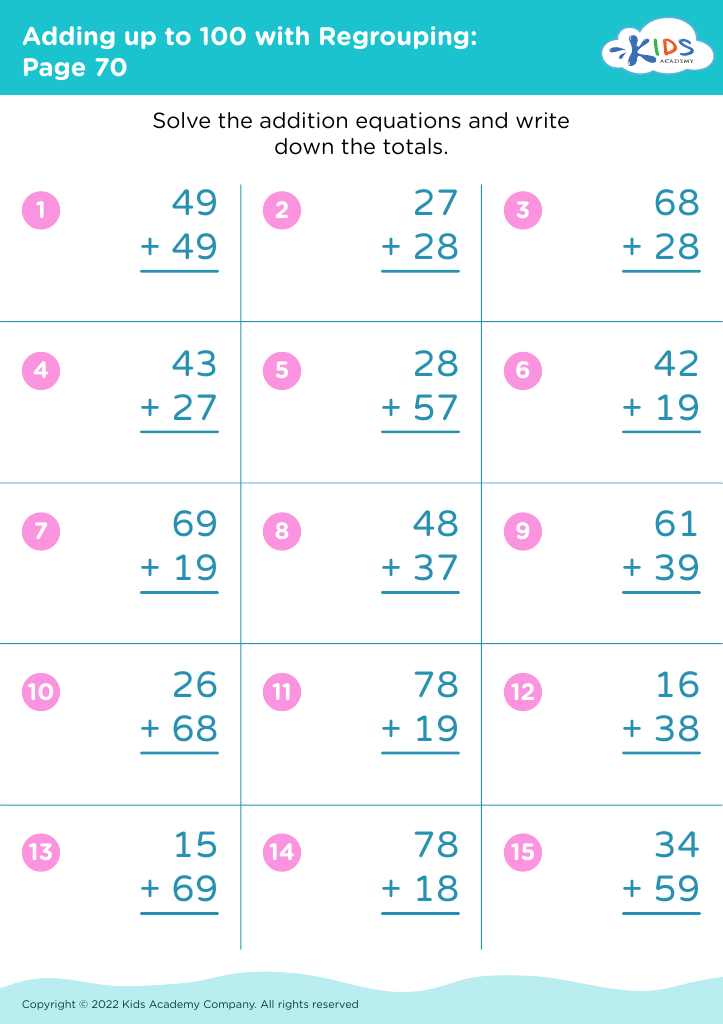
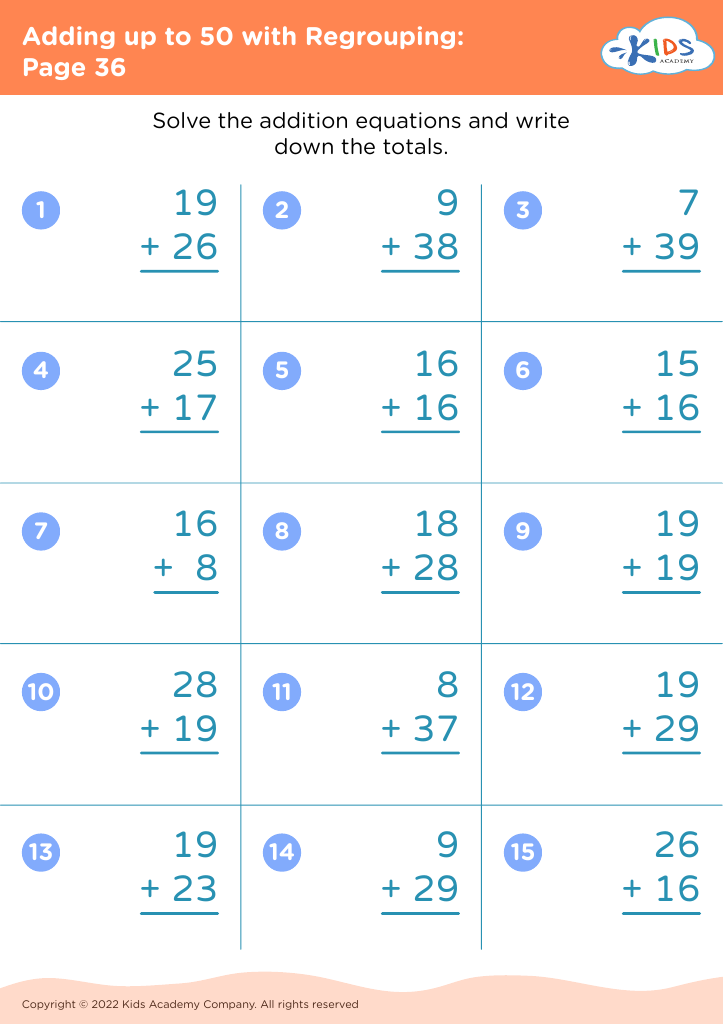
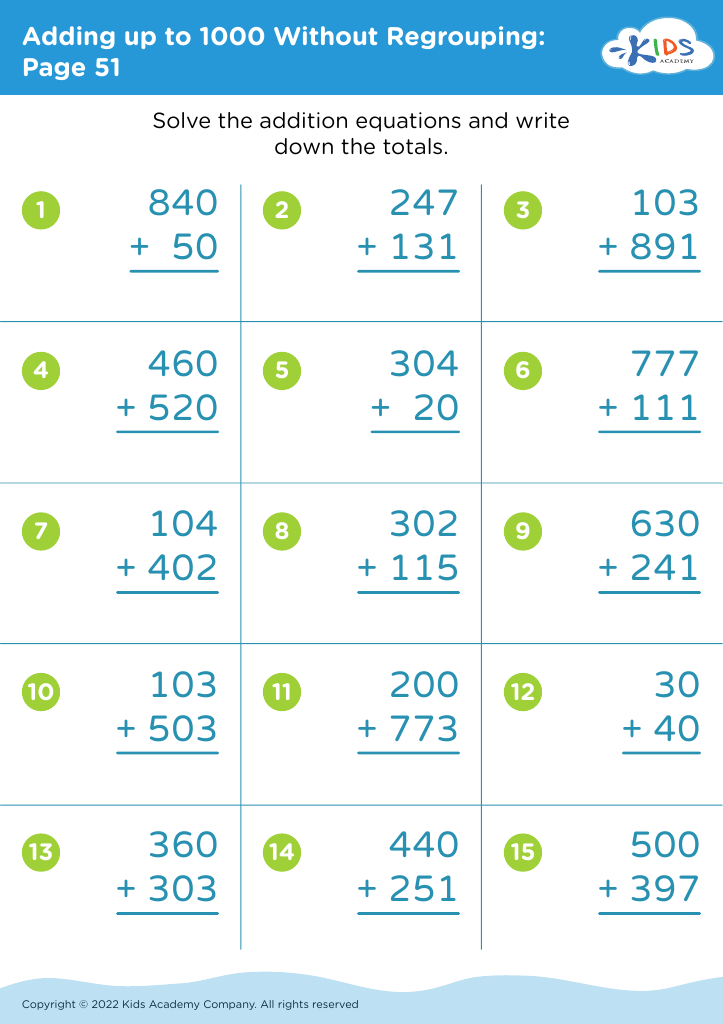








Developing problem-solving skills in children ages 3-9, especially in addition, is crucial for their cognitive and emotional growth. Early experiences with math support children's understanding of numbers and foster critical thinking. When children learn to solve addition problems, they not only grasp mathematical concepts, but also develop systematic thinking and persistence in the face of challenges.
Furthermore, these skills are foundational for later academic success. Problem-solving in math encourages children to approach difficult tasks logically, enabling them to navigate challenges not just in mathematics, but across all subject areas. As children engage in addition activities, they learn to identify patterns, make connections, and explore different strategies to reach a solution, thus building their confidence.
Additionally, problem-solving skills contribute to emotional resilience. As children learn to tackle problems effectively, they become adept at managing frustration and setbacks, understanding that mistakes are valuable learning opportunities. This resilience fosters a growth mindset, which is essential for lifelong learning.
For parents and teachers, nurturing these skills means laying a solid groundwork for children's future academic endeavors and equipping them with essential life skills, ultimately leading to well-rounded individuals capable of tackling challenges with confidence and creativity.








