Enhancing creativity Addition Worksheets for Ages 3-9
4 filtered results
-
From - To
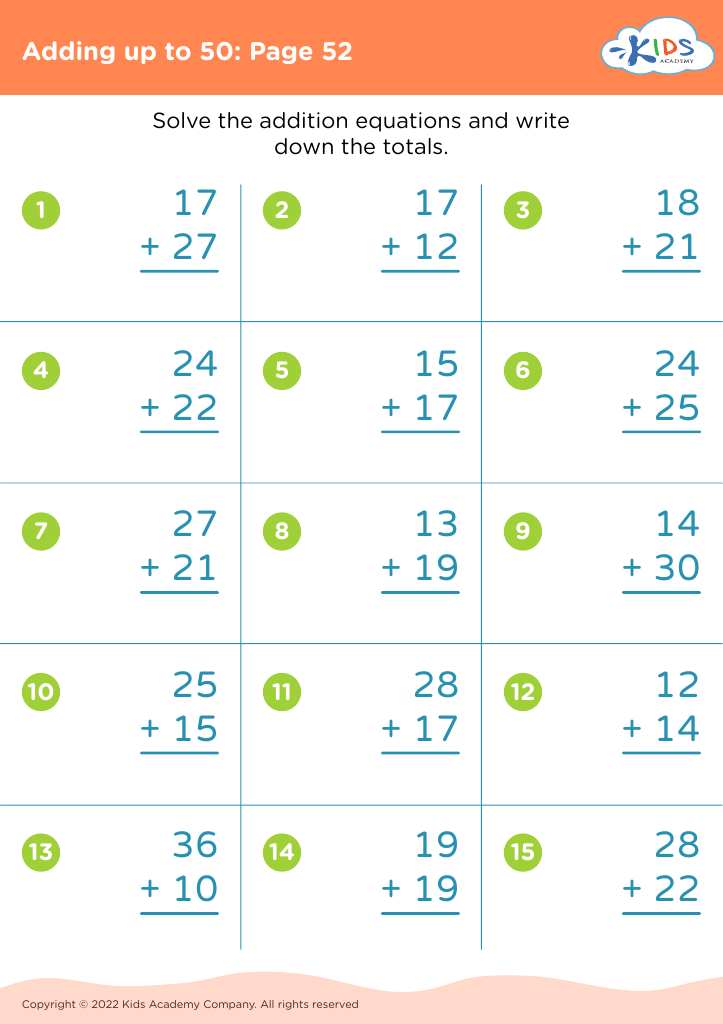
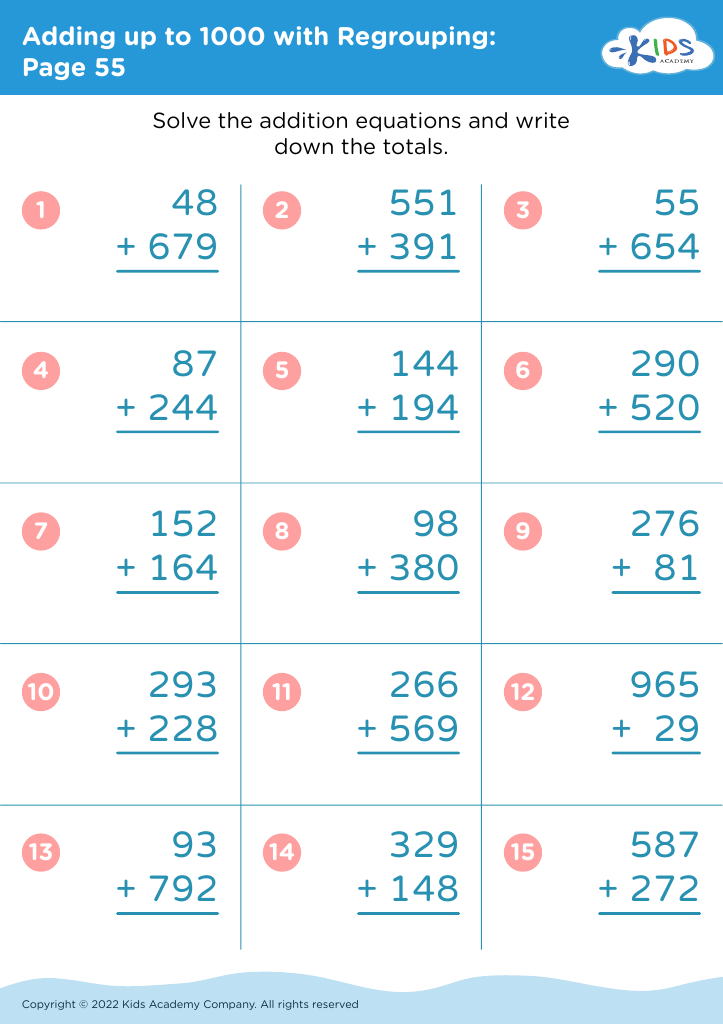
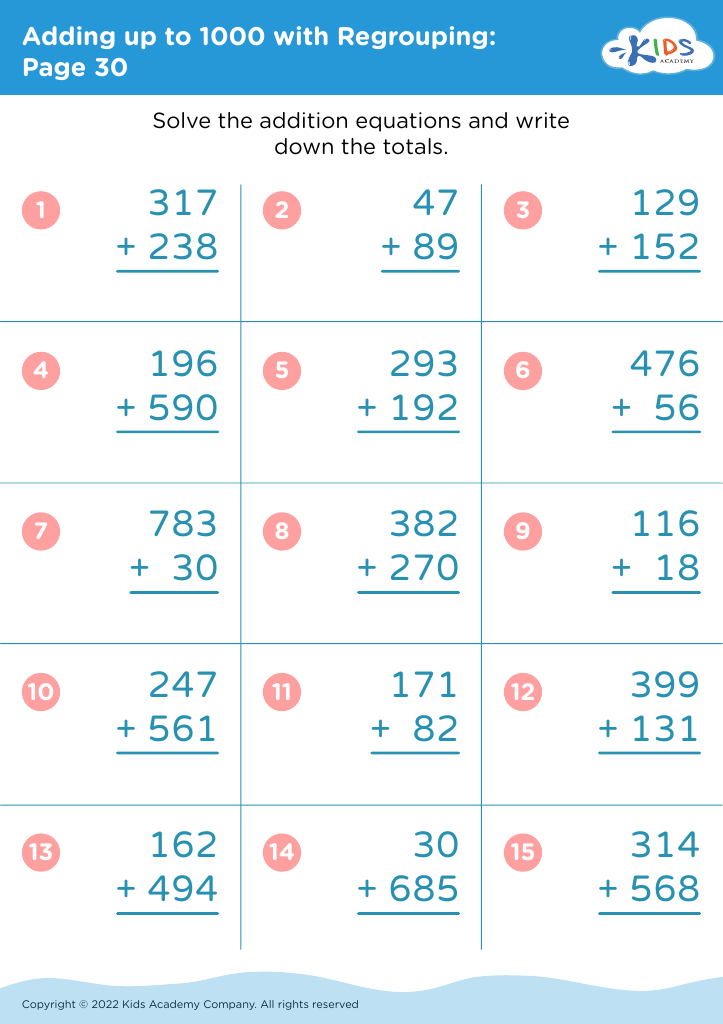
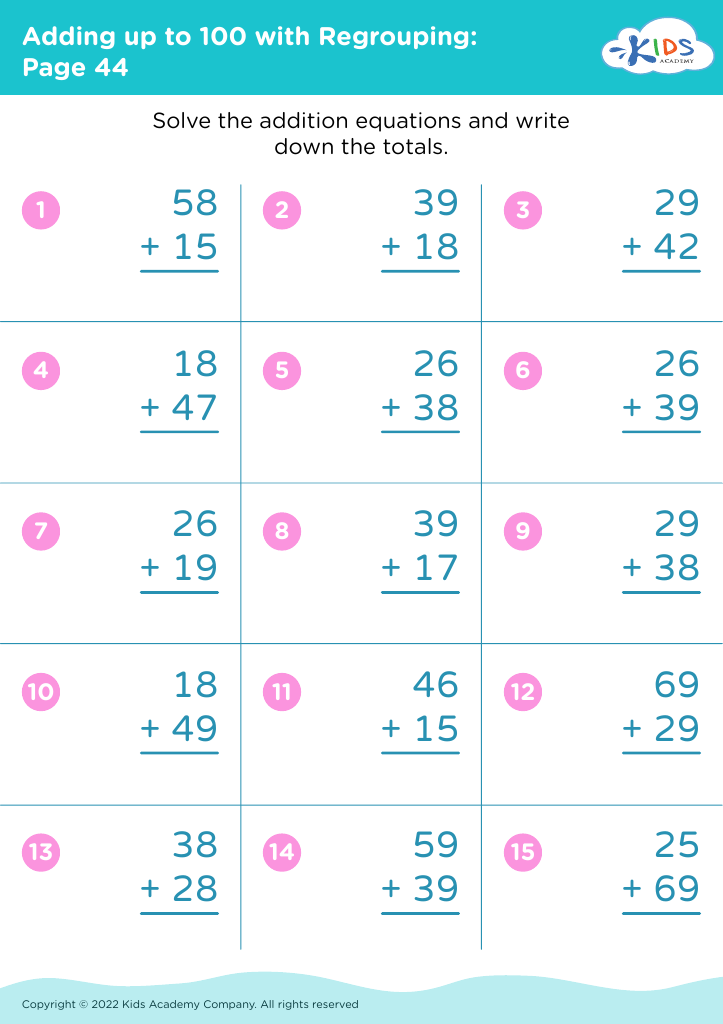
Unlock your child’s potential with our "Enhancing Creativity Addition Worksheets for Ages 3-9". These engaging resources combine basic math skills development with fun, creative activities. Perfectly tailored for young learners, our worksheets not only teach addition but also boost imagination and problem-solving skills. Vibrant illustrations and interactive exercises keep children captivated while they practice counting and adding. Suitable for preschool to elementary ages, these worksheets are designed to make learning math an enjoyable adventure. Give your child a head start in mathematics and creative thinking with our expertly crafted addition worksheets from Kids Academy.








Caring about enhancing creativity in children aged 3-9 is crucial for parents and teachers because creativity is a cornerstone of early development with long-term benefits. During these formative years, young minds are exceptionally receptive, absorbing and recreating information through imaginative processes. Encouraging creativity nurtures cognitive, social, and emotional growth.
Firstly, creative activities stimulate brain development, helping children improve problem-solving and critical-thinking skills. This is essential for academic success as it enhances their ability to understand and retain concepts beyond rote memorization.
Secondly, fostering creativity boosts self-expression and confidence. When children are encouraged to think creatively, they feel more valued and confident about their ideas. This self-assurance translates into better participation, higher motivation, and a more positive attitude towards learning.
Socially, working on creative tasks often involves collaboration, teaching children to communicate effectively, share, and develop empathy. Such experiences are invaluable in forming competent, well-rounded individuals.
Emotional development is also heightened through creativity, providing children with outlets to express feelings and manage stress. This early emotional literacy can lead to improved mental health and resilience.
In summary, by prioritizing creative skills in early childhood education, parents and teachers are investing in a strong foundation for lifelong learning, adaptability, and well-being.








