
Enhancing observation skills Addition Worksheets for Ages 3-9
3 filtered results
Difficulty Level
Grade
Age
-
From - To
Subject
Activity
Standards
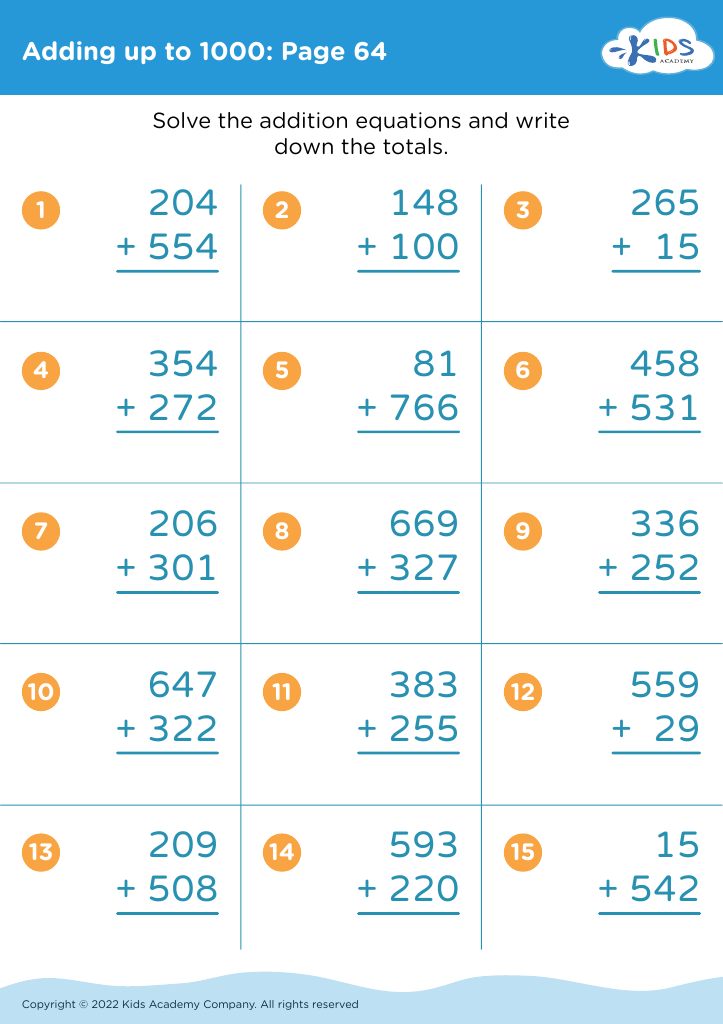
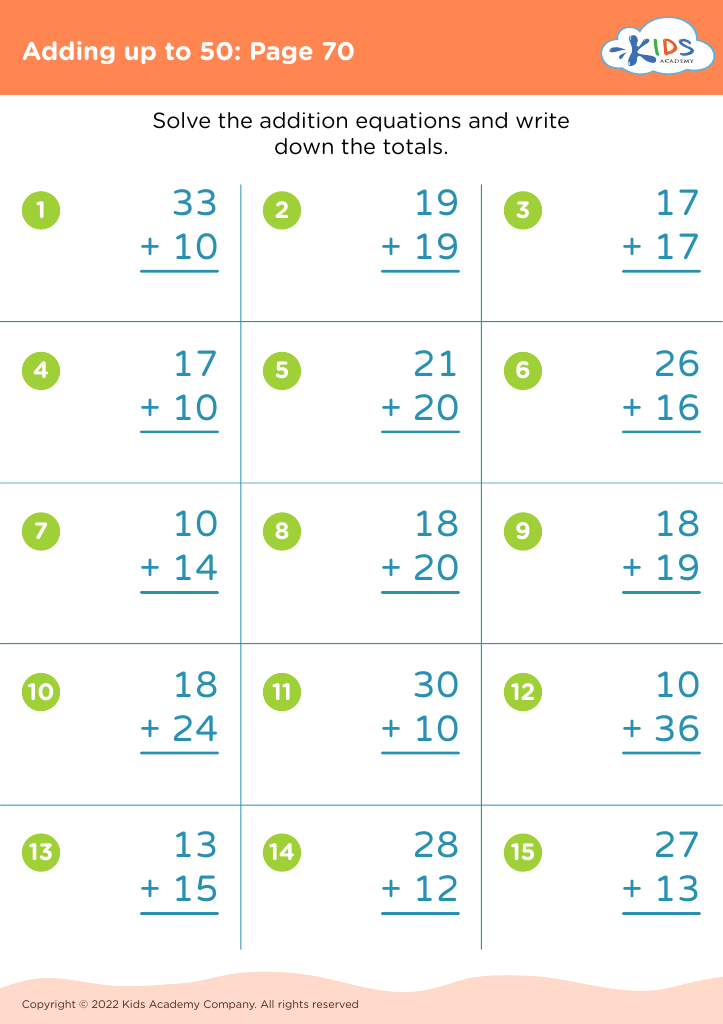
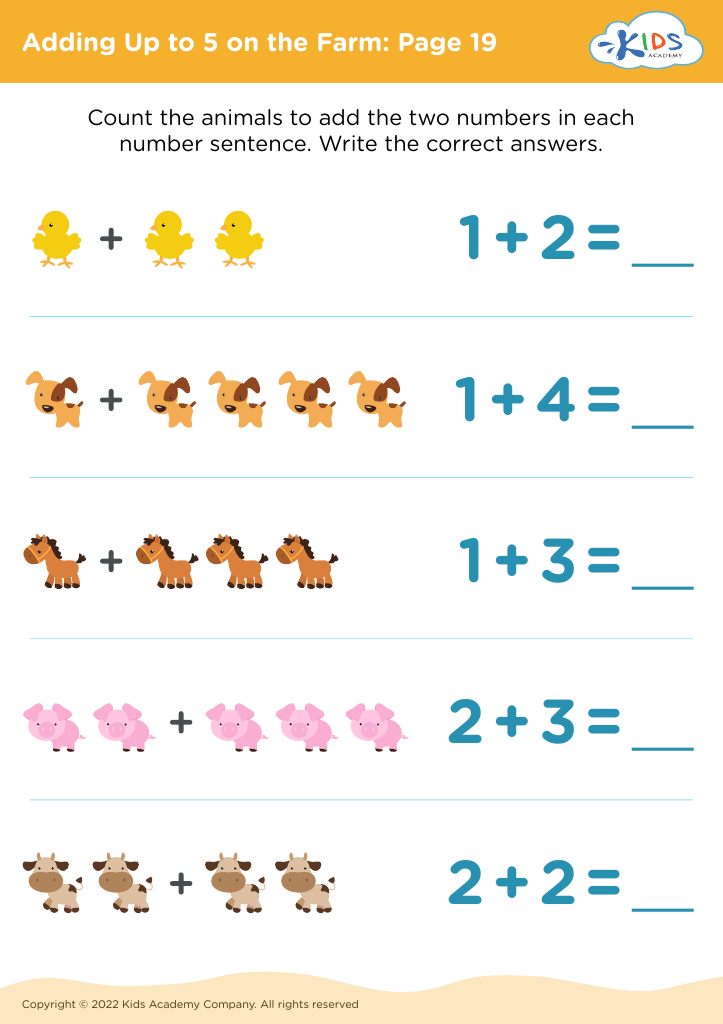
Unlock your child's potential with our "Enhancing Observation Skills Addition Worksheets for Ages 3-9." These expertly designed printables blend fun and education, sharpening observation skills while introducing addition concepts. Ideal for curious minds, each worksheet encourages children to spot patterns, identify numbers, and solve simple addition problems, fostering critical thinking and mathematical confidence. Perfect for young learners, our resources support developmental milestones, ensuring a solid foundation in math. Suitable for classroom and home use, these worksheets turn learning into an exciting adventure. Empower your child’s learning journey with structured activities at Kids Academy!
Favorites
With answer key
Interactive
Join Kids Academy for Free
Who is primarily going to use this learning content?




.jpg)



Enhancing observation skills in children aged 3-9 is crucial for their cognitive and educational development. At these formative stages, children are natural explorers, soaking in their surroundings and learning from every experience. Strong observation skills are foundational for all areas of learning, contributing significantly to academic success and critical thinking abilities.
Firstly, enhanced observation skills aid in language acquisition and literacy. By noticing details about letters, words, and grammar, children can improve reading and writing capabilities. In mathematics, keen observation helps them understand patterns and relationships, fostering numerical skills.
Secondly, these skills are vital for scientific inquiry and curiosity. Young children who can observe closely are better at exploring nature, conducting simple experiments, and making sense of the world. This encourages a sense of curiosity and analytical thinking, essential for problem-solving.
Emotionally and socially, good observation skills enable children to read social cues, understand emotions, and communicate effectively. This leads to better friendships and emotional intelligence, key components of a child's overall well-being.
Lastly, fostering observation early lays the groundwork for lifelong learning and adaptability. Parents and teachers who prioritize these skills help children become attentive, curious, and perceptive individuals, ready to tackle various challenges now and in the future.








