Improves number recognition Addition Worksheets for Ages 3-9
3 filtered results
-
From - To
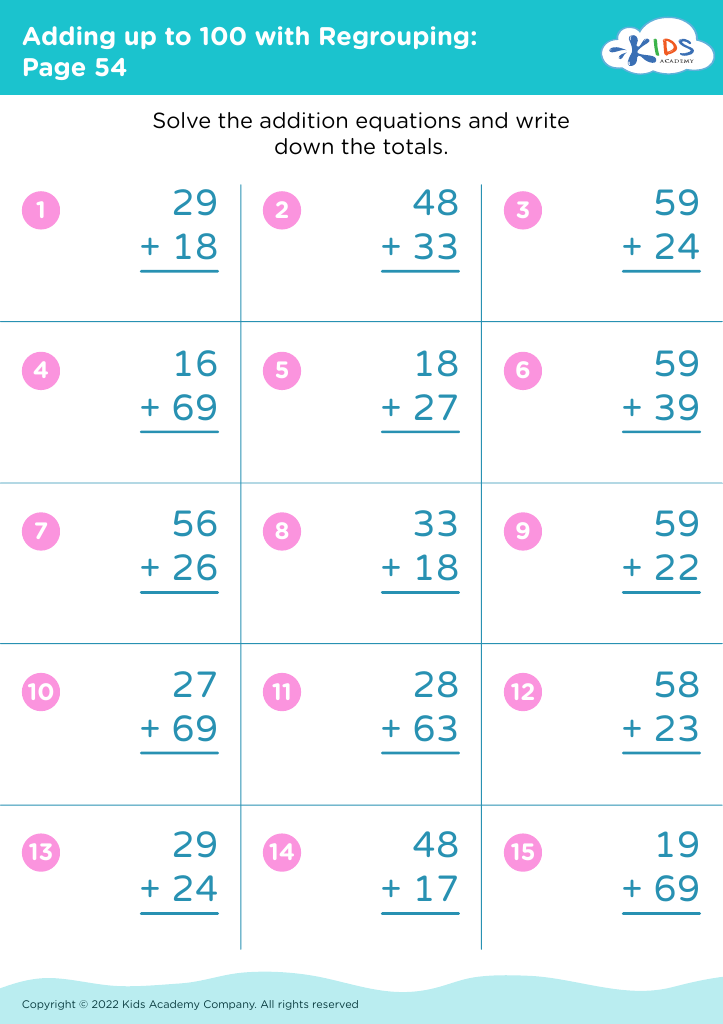
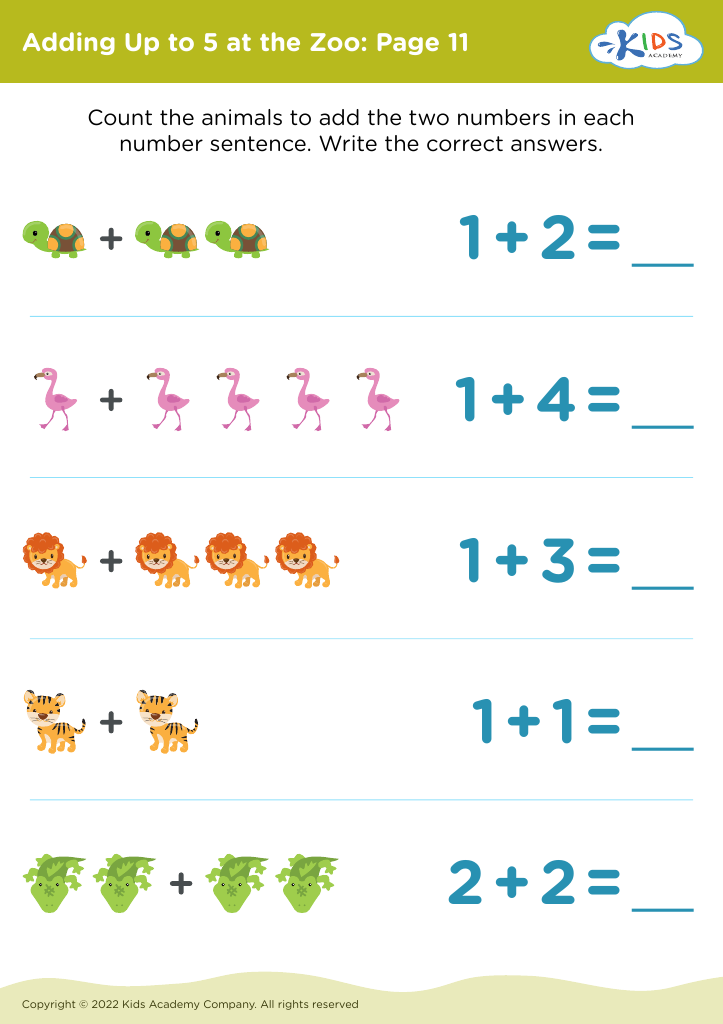
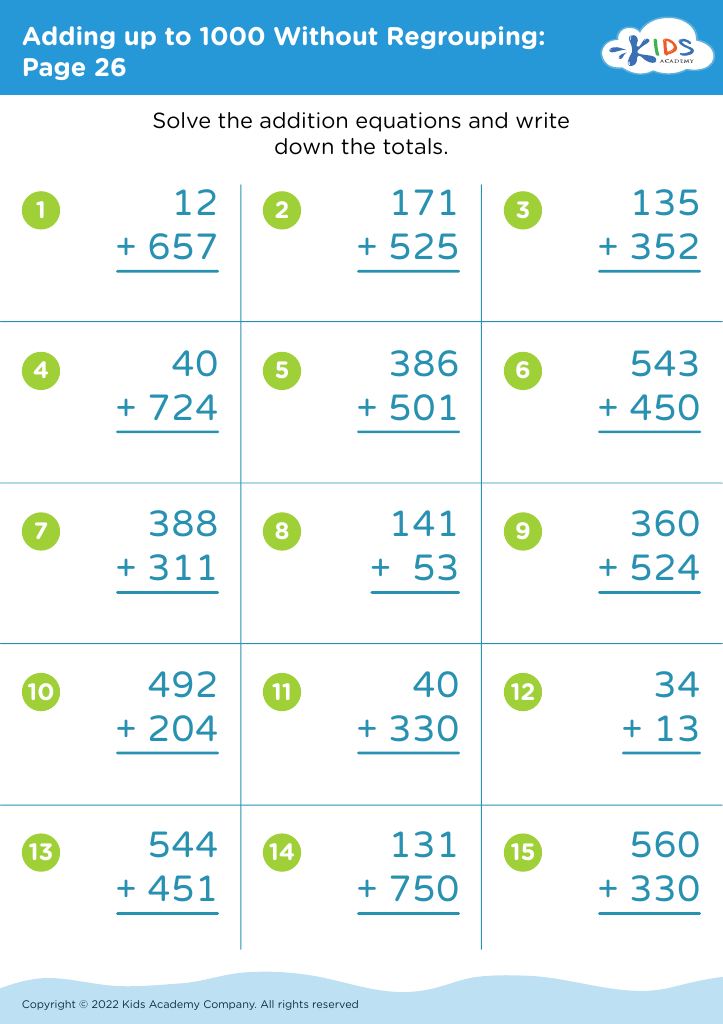
Discover our "Improves Number Recognition Addition Worksheets" designed specifically for children ages 3-9. These interactive and engaging worksheets help young learners master number recognition while also developing their addition skills. Each activity is carefully crafted to capture children's attention and make learning fun. By using colorful visuals and age-appropriate challenges, our worksheets boost confidence and familiarity with numbers. Perfect for both classroom settings and home practice, these resources are essential for early math development. Explore our wide range of printable worksheets and watch your child thrive as they explore the exciting world of numbers and addition!








Parents and teachers should prioritize improving number recognition and addition skills for children ages 3-9 as these foundational abilities are crucial for lifelong learning and everyday problem-solving. Early number recognition not only fosters basic math competence but also enhances critical thinking and cognitive development. When children can recognize numbers, they build confidence, which lays the groundwork for more complex mathematical concepts later on.
Moreover, mastery of addition helps children understand the relationship between numbers and shapes the way they approach tasks involving measurement and quantity in everyday life. Engaging young learners with fun and interactive activities can ignite their interest in mathematics, making it an enjoyable subject rather than a daunting challenge.
Early mathematical skills also contribute to better performance in school and can positively influence academic progress in other subjects. By focusing on these essential skills at an early age, parents and teachers can address learning disparities early on, ensuring that children are well-prepared for a wide range of future educational opportunities.
Ultimately, nurturing number recognition and addition skills not only cultivates essential academic abilities but also prepares children for responsible decision-making and logical reasoning in their daily lives.








