Improving subtraction skills Addition Worksheets for Ages 3-9
3 filtered results
-
From - To
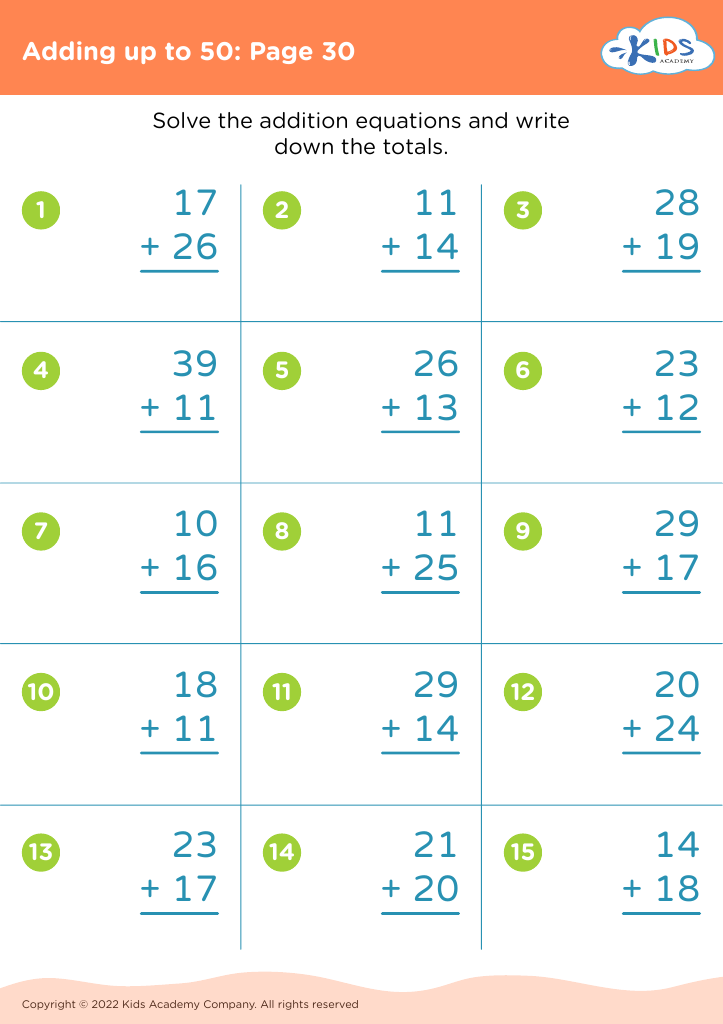
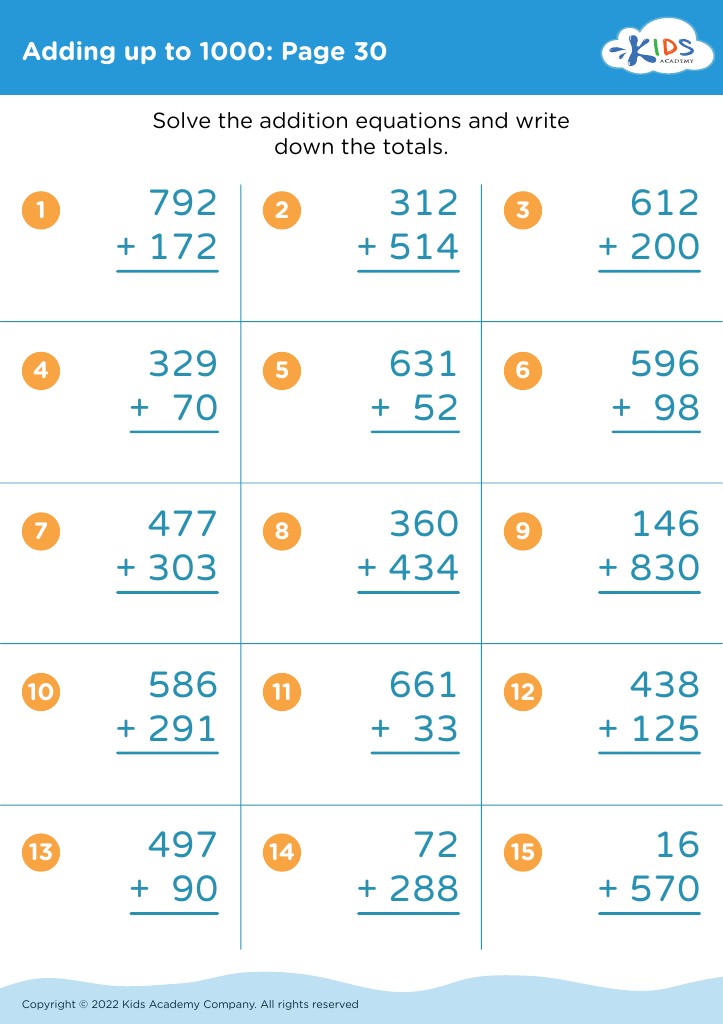
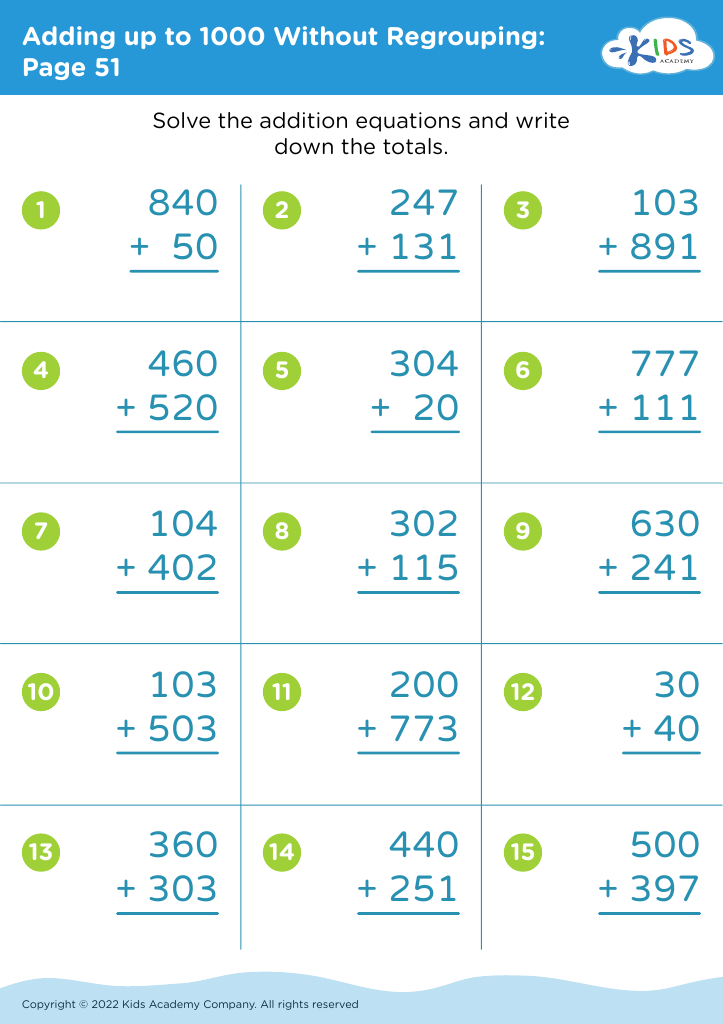
Welcome to our "Improving Subtraction Skills Addition Worksheets" section, designed for children aged 3-9. These engaging worksheets help young learners master subtraction concepts by integrating addition techniques, reinforcing their overall math foundations. Each worksheet offers a variety of exercises, from simple illustrations to interactive problems, ensuring a fun, educational experience. Our resources encourage critical thinking, problem-solving, and promote confidence in math skills. Whether used in classrooms or at home, these worksheets are perfect for fostering a love of math from an early age. Explore our collection today to support your child’s numerical journey and develop essential subtraction skills effortlessly!






.jpg)

Improving subtraction skills in children aged 3-9 is crucial for their overall mathematical development and cognitive growth. Early childhood is a formative period where foundational skills are established. Mastery of subtraction lays the groundwork for more complex math concepts, including addition, multiplication, and division, which will arise as the child progresses in their education.
Subtraction helps enhance problem-solving skills and critical thinking. As children learn to understand “how many are left” when objects are taken away, they develop logical reasoning and analytical abilities, essential for their future academic success. Additionally, practicing subtraction can improve a child’s confidence with numbers, reducing anxiety around math and creating a positive relationship with subjects that often pose challenges later on.
Furthermore, subtraction has real-world applications. It teaches children valuable life skills, such as budgeting and time management, which are crucial as they grow older. When parents and teachers focus on improving subtraction skills, they not only foster mathematical understanding but also encourage resilience, curiosity, and an affinity for learning. Ultimately, taking an active interest in fostering math skills during these formative years equips children for lifelong success.








