Discover our engaging Mental Math Practice Addition Worksheets designed specifically for children aged 3-9! These worksheets promote early numeracy skills and help young learners develop a strong foundation in addition. With a variety of activities that encourage mental calculation, students will enhance their problem-solving abilities while having fun. Our resources are tailored with colorful illustrations and age-appropriate challenges to keep children engaged and motivated. Perfect for classroom and home use, these worksheets can be easily printed and are ideal for reinforcing math concepts. Empower your child's confidence and competency in addition with our carefully crafted mental math practice worksheets!

Check out this FREE Trial Lesson on Addition for age 3-9!

Mental Math -Subtract and Add by 10 - Part 2

Favorites
With answer key
Interactive
  • 3-9
  • Mental math practice
  • Addition
Adding a Ten Worksheet

Adding a Ten Worksheet

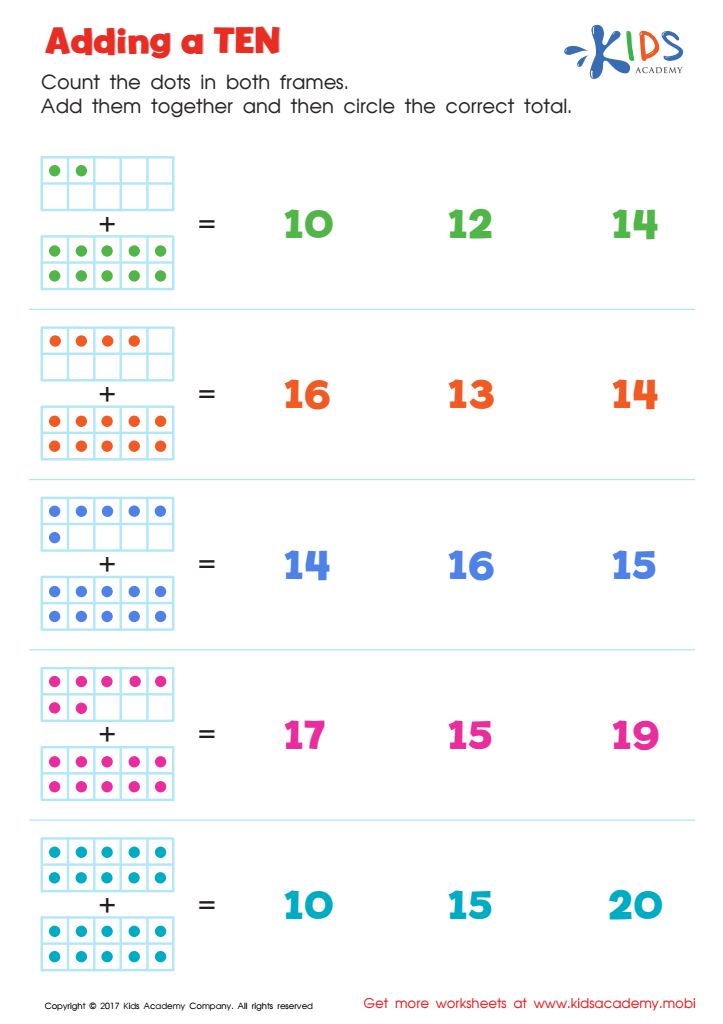
Kids Academy offers a colorful addition worksheet with counters in frames to help students learn to add by tens. This skill is essential for students to develop critical math skills and create a foundation for future math concepts. Visual aids aid in mastering this early skill, so get started learning today!
Adding a Ten Worksheet
Worksheet
7 Continents and 7 Seas Worksheet

7 Continents and 7 Seas Worksheet

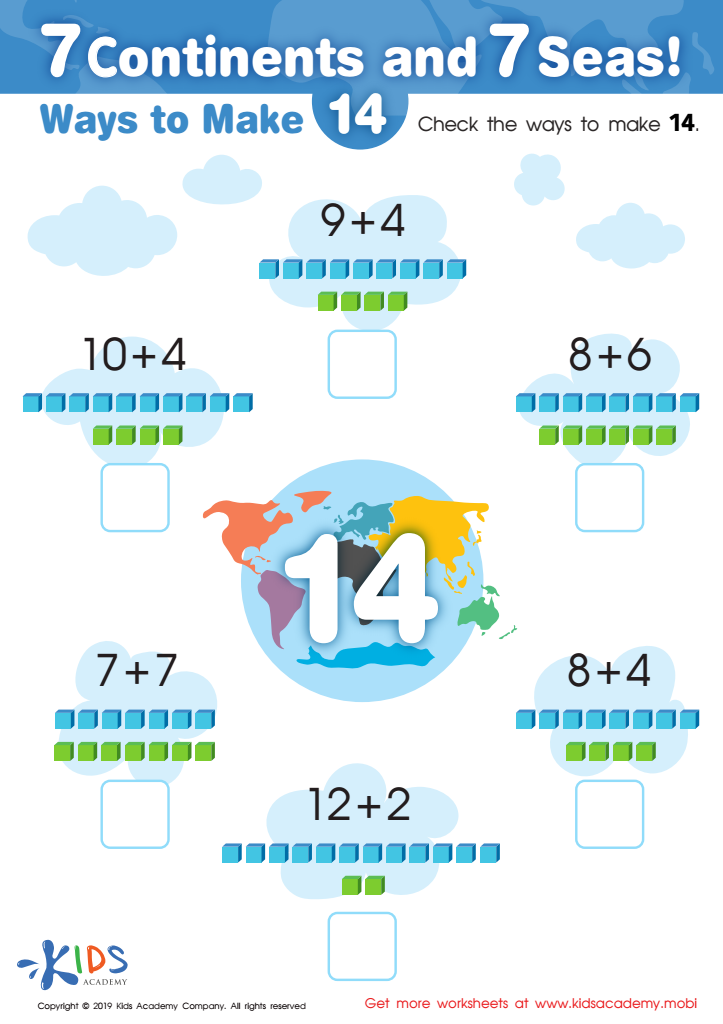
Remind kids of the continents and show them how different numbers can add up to the same figure. Give examples, like 2+2 =4, and 3+1 =4. Ask if they can provide other examples, then work through the simple additions in this worksheet with them. Ask them to circle all equations that make 14.
7 Continents and 7 Seas Worksheet
Worksheet
Adding at the Hospital Worksheet

Adding at the Hospital Worksheet

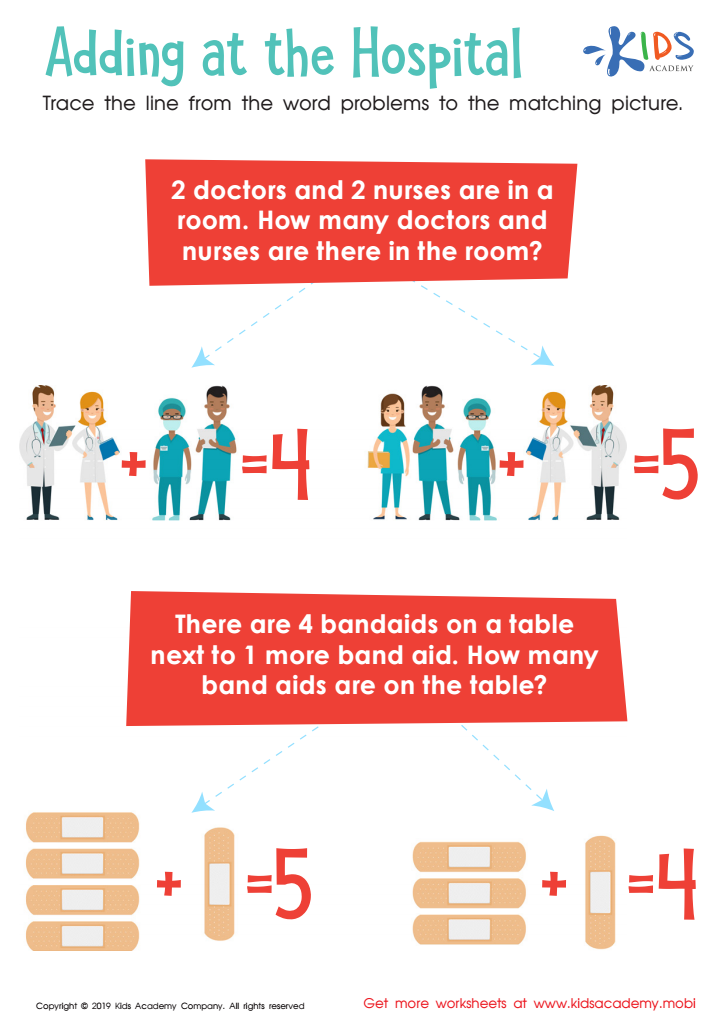
A hospital visit doesn't have to be scary for kids. With this worksheet, they can count along with doctors and nurses, by reading the word problems and tracing lines to the corresponding picture. Guide them through it and you'll help them have a fun experience.
Adding at the Hospital Worksheet
Worksheet
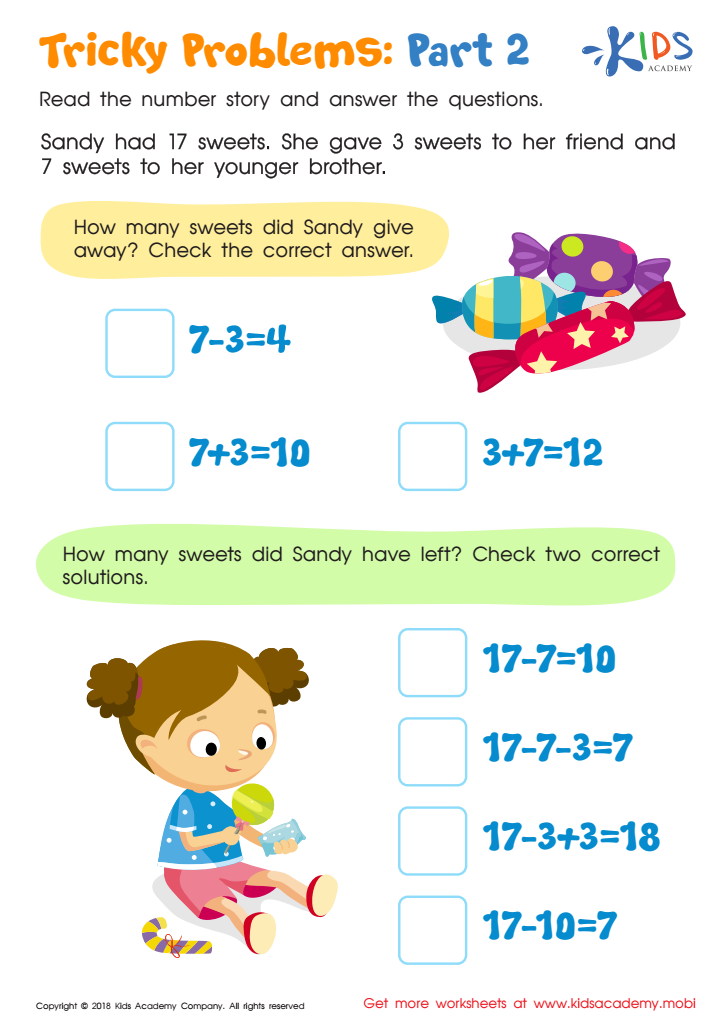
Tricky Problems Worksheet: Part 2

Tricky Problems Worksheet: Part 2

Help your little math learner visualize number stories with this engaging worksheet. They'll connect pictures to the story and use math facts to find the sums. After that, they'll be able to identify the correct number sentences to match. Let them practice and get better at problem solving!
Tricky Problems Worksheet: Part 2
Worksheet
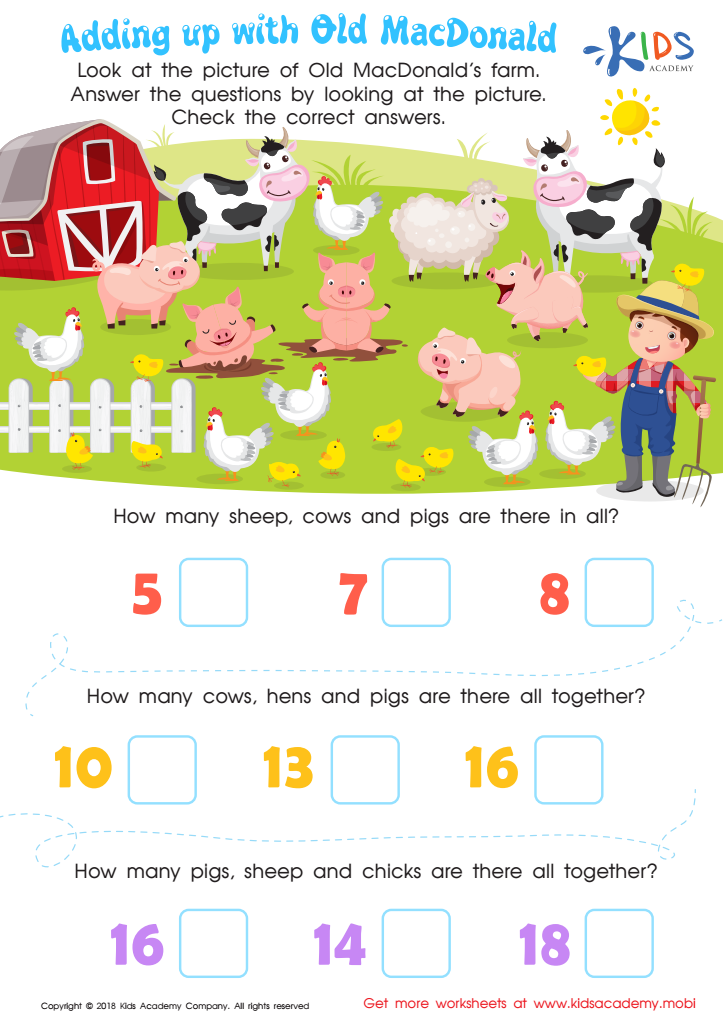
Adding Up with Old MacDonald Worksheet
Adding Up with Old MacDonald Worksheet
Old MacDonald needs help counting his animals! Give your little math whiz a fun challenge with a free PDF worksheet. They'll love counting the animals and doing basic addition with two or three addends. Who knew math could be so much fun on the farm?
Adding Up with Old MacDonald Worksheet
Worksheet
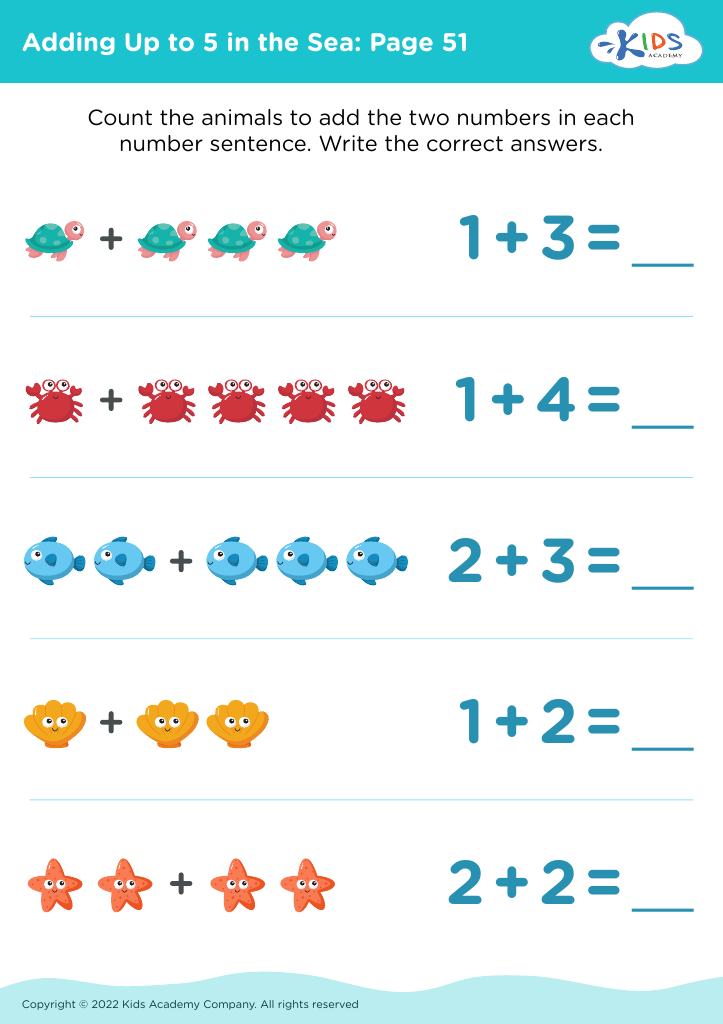
Adding Up to 5 in the Sea: Page 51
Worksheet
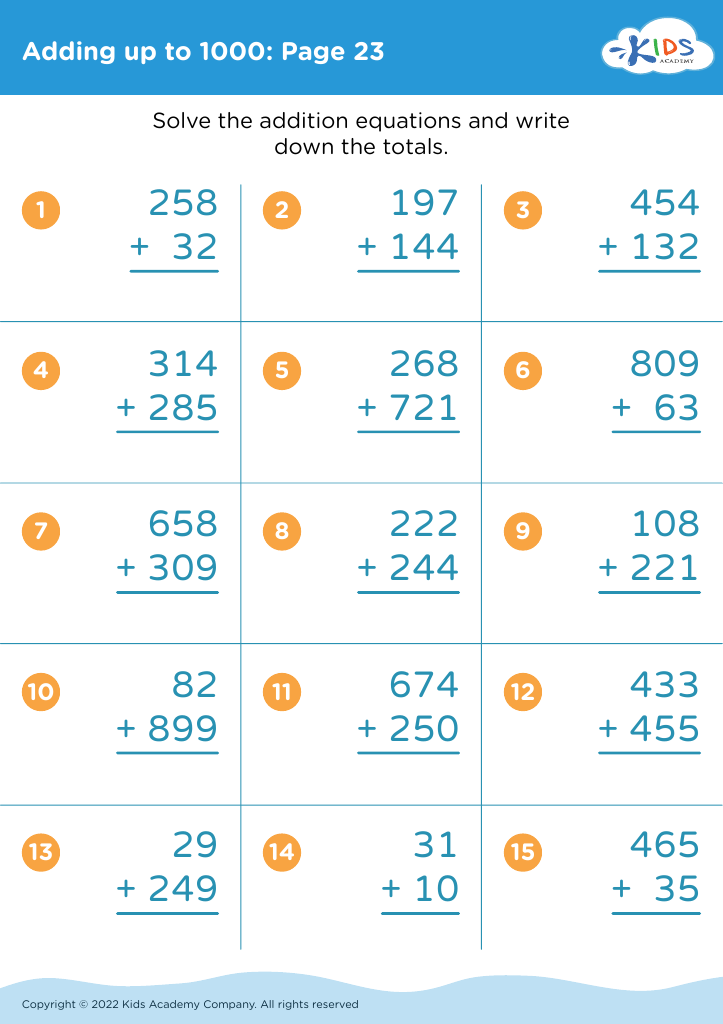
Adding up to 1000: Page 23

Adding up to 1000: Page 23

Adding up to 1000: Page 23
Worksheet
Different Ways to Add Worksheet


Different Ways to Add Worksheet

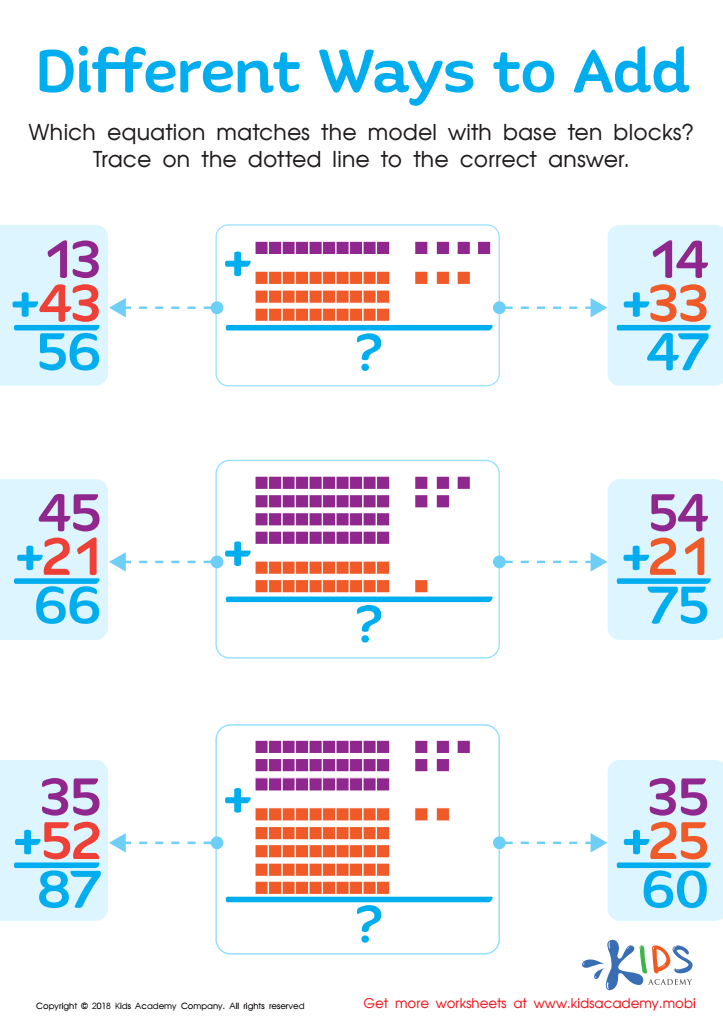
This worksheet enhances math skills by having students match equations to base ten pictures and tracing lines. It not only helps with fine motor skills, but also encourages number sense, with various ways to add and build upon existing math knowledge.
Different Ways to Add Worksheet
Worksheet


Mental math practice in addition is crucial for children aged 3-9, as it lays a solid foundation for their overall mathematical development. During these formative years, children are highly receptive to new concepts and skills, making it an ideal time to introduce and reinforce mental addition strategies.

First, mental math enhances cognitive skills like memory, concentration, and problem-solving abilities. By practicing addition mentally, children learn to think critically and develop their reasoning skills, which benefits all areas of learning.

Additionally, mental math fosters confidence. When children can easily perform addition in their heads, they build self-esteem and a positive attitude towards math, reducing anxiety related to numbers. This confidence increases their willingness to tackle more complex problems as they progress.

Furthermore, it promotes number sense—the ability to understand and manipulate numbers effectively. Through repeated practice, children develop a better grasp of relationships between numbers, allowing for quicker and more efficient calculation.

Lastly, mental math can be a fun and engaging activity. Parents and teachers can incorporate games, challenges, and everyday situations that make learning enjoyable. This engagement not only makes math a positive experience but also encourages a lifelong love for learning. Therefore, prioritizing mental math practice in early childhood sets the stage for academic success.