
Observation skills Addition Worksheets for Ages 3-9
3 filtered results
Difficulty Level
Grade
Age
-
From - To
Subject
Activity
Standards
Enhance your child's learning with our engaging Observation Skills Addition Worksheets, specifically designed for ages 3-9. Each worksheet integrates fun activities that boost both math and observation skills. Young learners will not only practice addition but also develop critical thinking by identifying patterns, counting objects, and solving puzzles. Perfect for preschoolers and early elementary students, these worksheets make math both educational and enjoyable. Created by educational experts, they cater to different learning paces and styles, ensuring every child can thrive. Discover the perfect blend of learning and play, and watch your child’s confidence soar!
Favorites
With answer key
Interactive
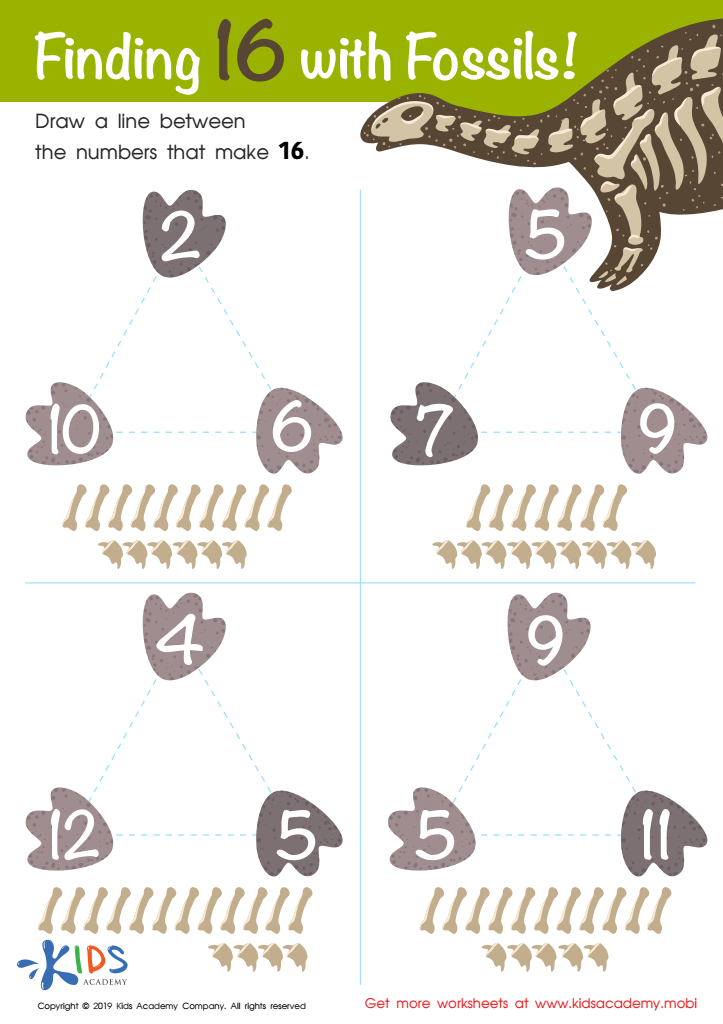
Finding 16 With Fossils Worksheet
Experts hunt for fossils, dig them up, and study them to learn more about past life forms - how they lived, what they looked like, and when they lived. Show kids the picture in this worksheet and point out the fossils. Help them count the bones and draw a line between the numbers that add up to 16 in each triangle.
 Assign to My Students
Finding 16 With Fossils Worksheet
Worksheet
Join Kids Academy for Free
Who is primarily going to use this learning content?








Observation skills are the foundation for learning and development in children aged 3-9. These skills are critical because they enhance a child's ability to notice details, patterns, and differences in their environment, which is key to understanding the world around them. For parents and teachers, fostering strong observation skills helps children improve their attention span, memory, and cognitive development.
When children practice observing, they become more aware and mindful, which aids in their ability to follow instructions, solve problems, and make decisions. For example, noticing changes in their classroom or analyzing the details in a story illustration can aid in comprehension and critical thinking. These skills are not only essential for academic success by improving literacy and numeracy but also serve as life skills, making them more empathetic and socially aware.
Moreover, well-developed observation skills in early childhood set the groundwork for scientific thinking. It encourages inquiry-based learning where children learn to ask questions, make predictions, and gather information. This cultivation of curiosity and analytical thinking nurtures early passion for science and exploration.
In essence, parents and teachers should care deeply about enhancing observation skills in young children because it impacts their holistic development, laying a robust foundation for future learning experiences and overall life skills development.








