Problem-solving abilities Addition Worksheets for Ages 3-9 - Page 2
29 filtered results
-
From - To
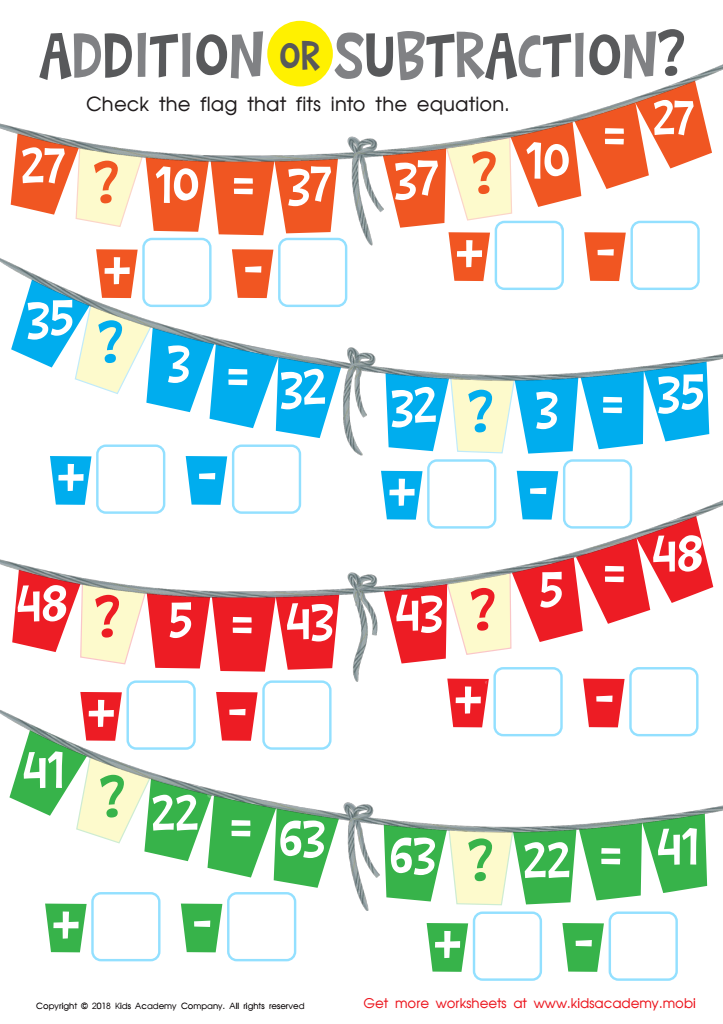
Addition or Subtraction? Worksheet
 Assign to My Students
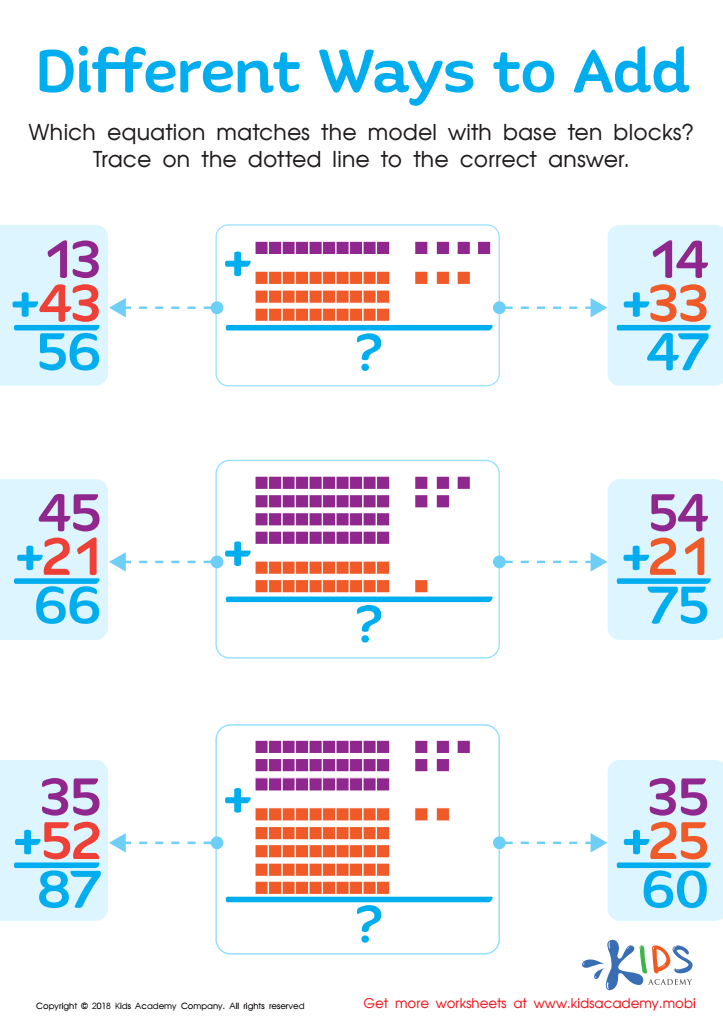
Different Ways to Add Worksheet
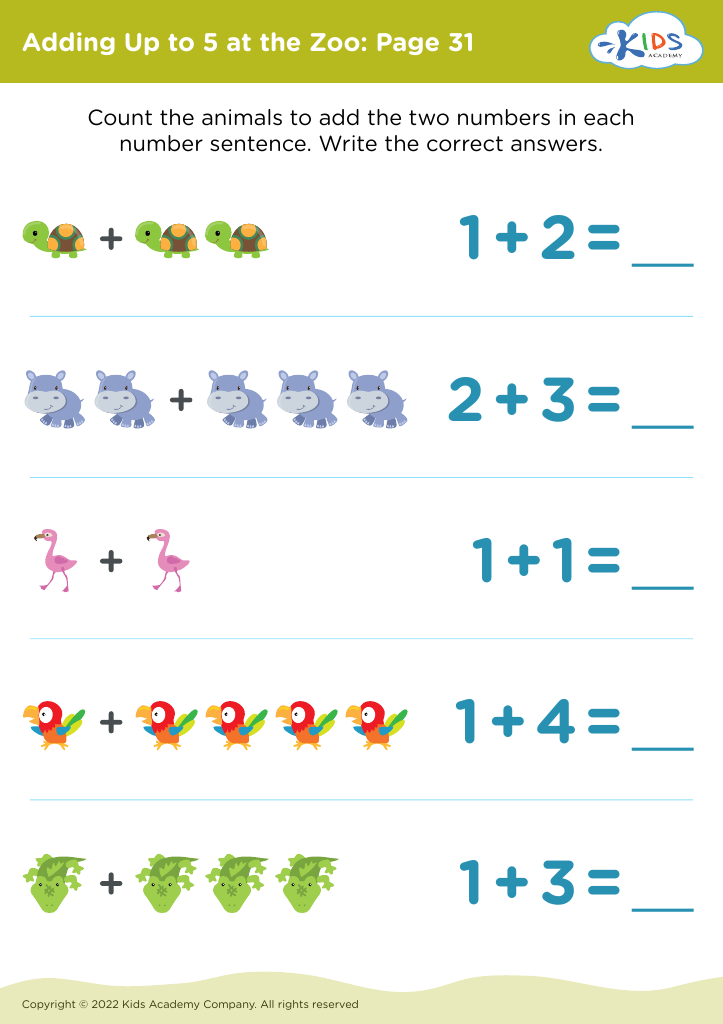
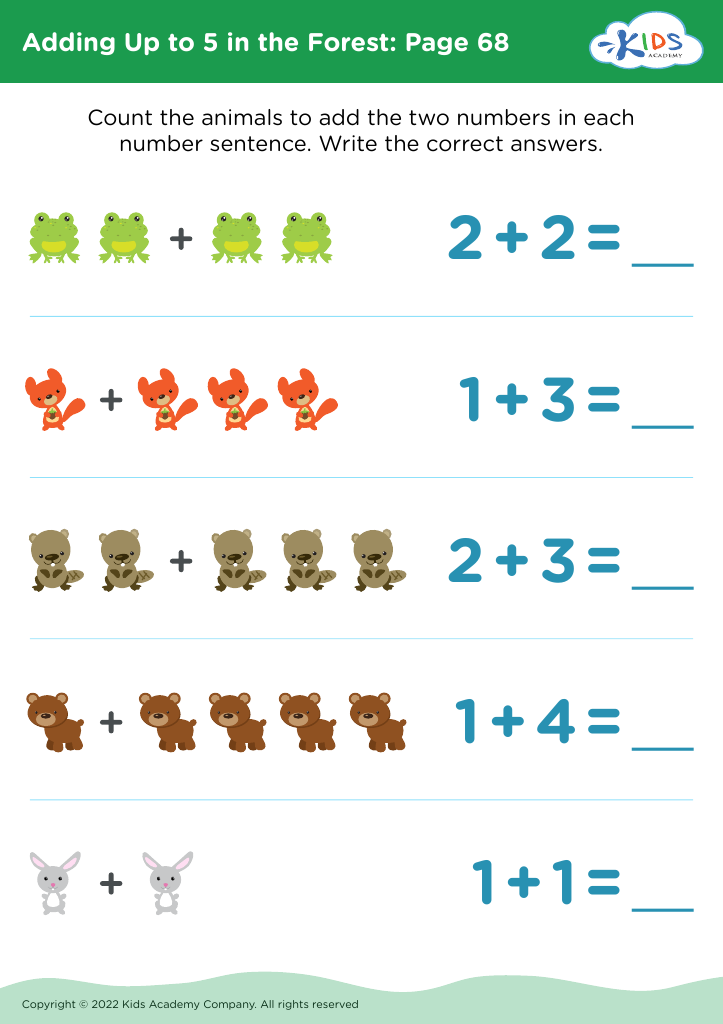
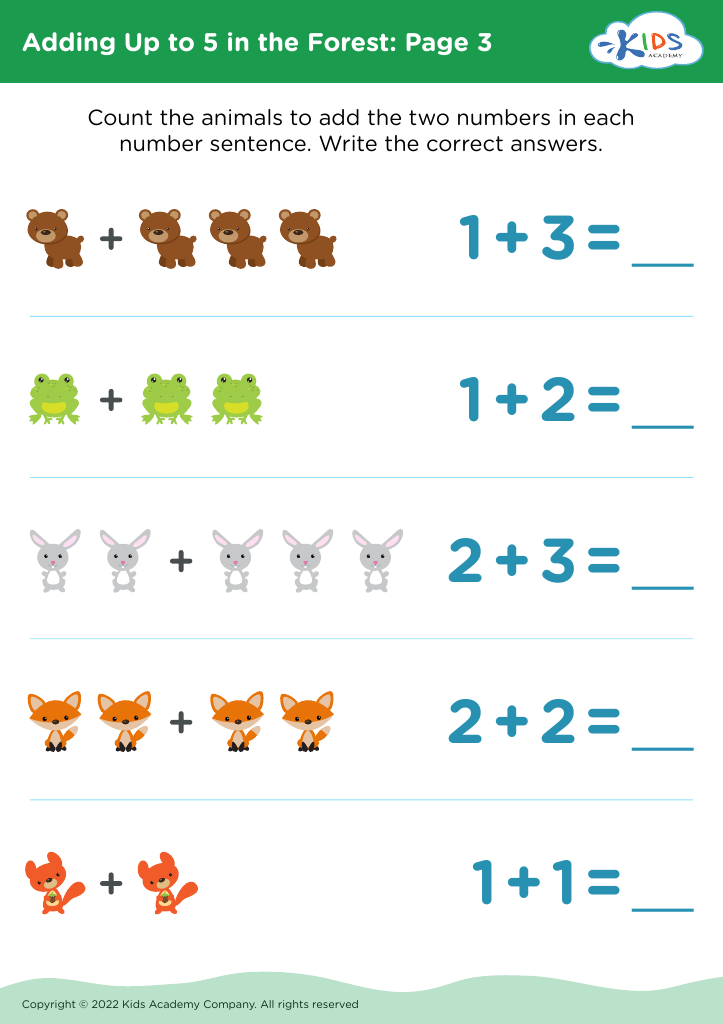








Problem-solving abilities in addition for children aged 3-9 are crucial not only for mathematical understanding but for overall cognitive development. At this age, children are in a formative stage where they are developing critical thinking skills, logic, and reasoning. Mastering addition helps them recognize patterns, make connections, and understand relationships between numbers, which forms a foundation for more complex mathematical concepts.
In addition, problem-solving in addition encourages perseverance and resilience. When children face challenges in solving addition problems, they learn to strategize, experiment, and find solutions, cultivating a growth mindset. This resilience will benefit them in all areas of life, from social interactions to academic pursuits.
Furthermore, early mastery of addition can boost children's confidence and motivation toward learning. When parents and teachers prioritize problem-solving abilities, they create a supportive and interactive environment that promotes exploration and curiosity. Ultimately, fostering these skills prepares children not just for immediate mathematical tasks but equips them with essential tools for future academic challenges and everyday situations. Prioritizing problem-solving in addition, therefore, serves as a stepping stone not just in mathematics, but across various aspects of children's formative development.








