Understand sequences Addition Worksheets for Ages 3-9
5 filtered results
-
From - To
Unlock the charm of learning with our "Understand Sequences Addition Worksheets for Ages 3-9." Specifically designed to cater to young, budding mathematicians, these worksheets focus on helping kids master addition through engaging sequence activities. With interactive exercises and cute illustrations, children will develop a strong foundation in understanding numerical patterns and addition concepts. These worksheets not only promote math skills but also encourage critical thinking and logical reasoning. Perfect for parents and educators, our resources offer a fun, educational experience to enhance your child’s learning journey. Boost their math confidence with our sequenced addition worksheets!
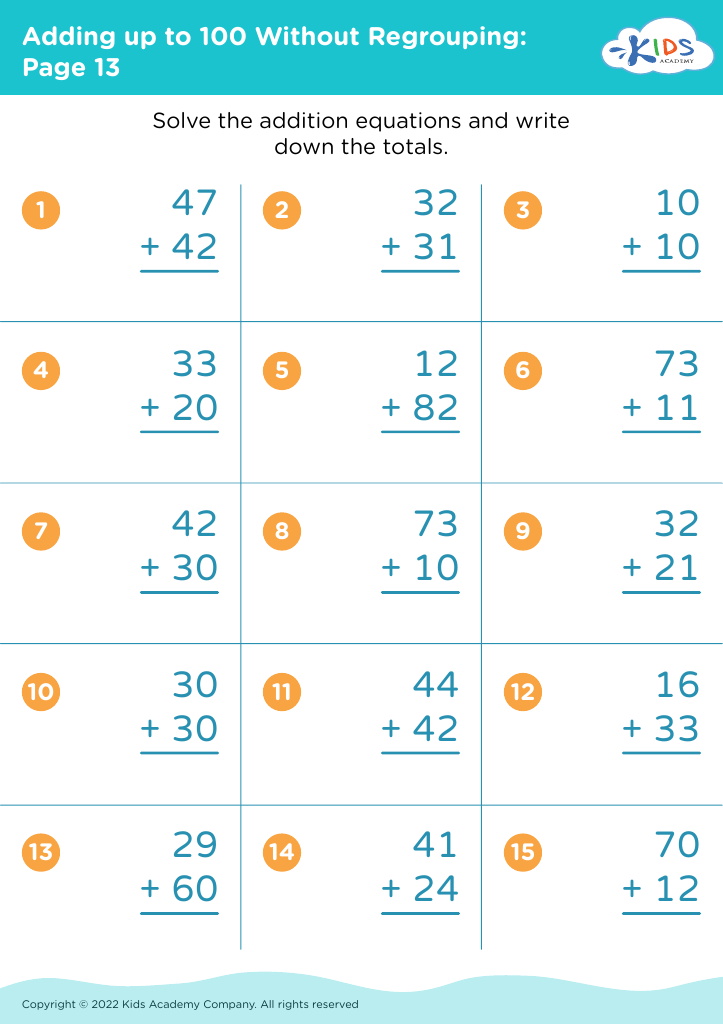
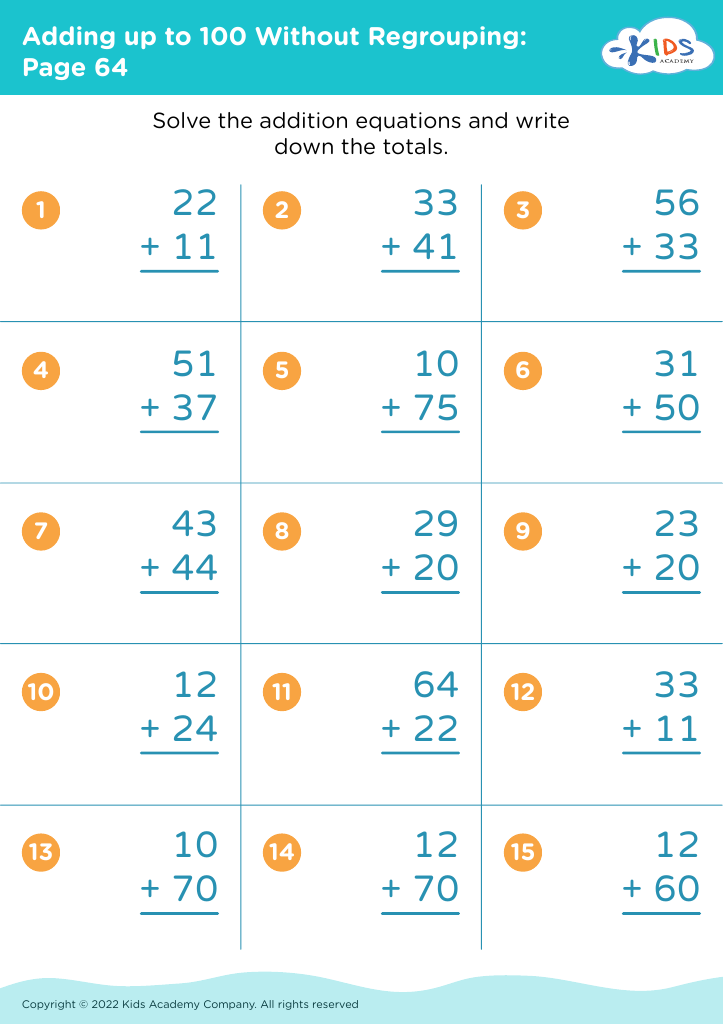
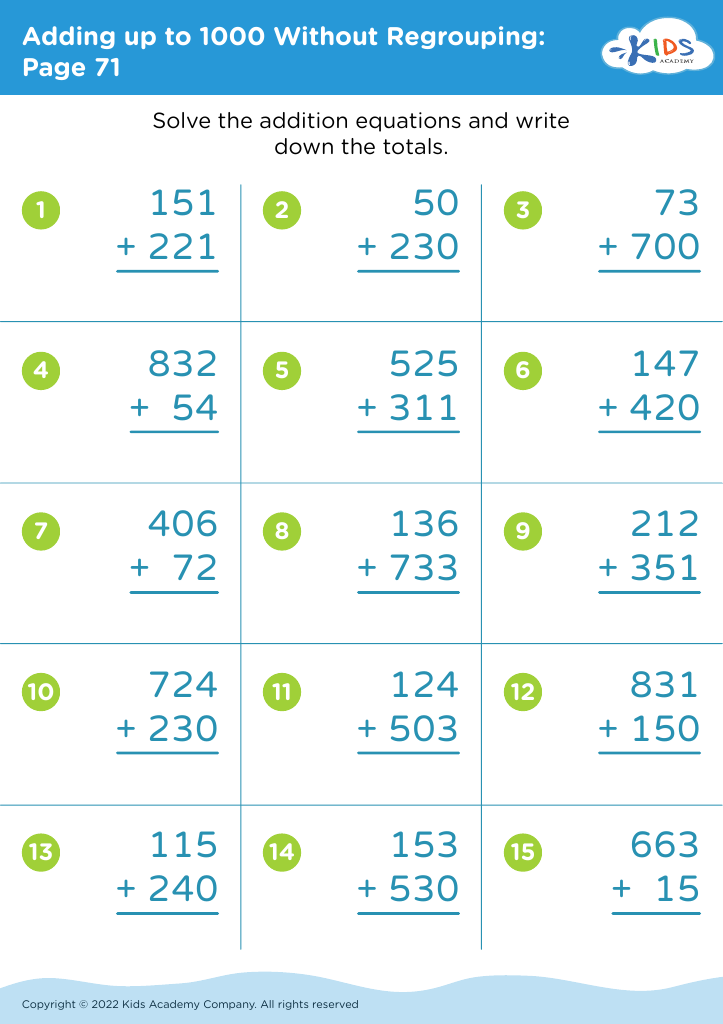
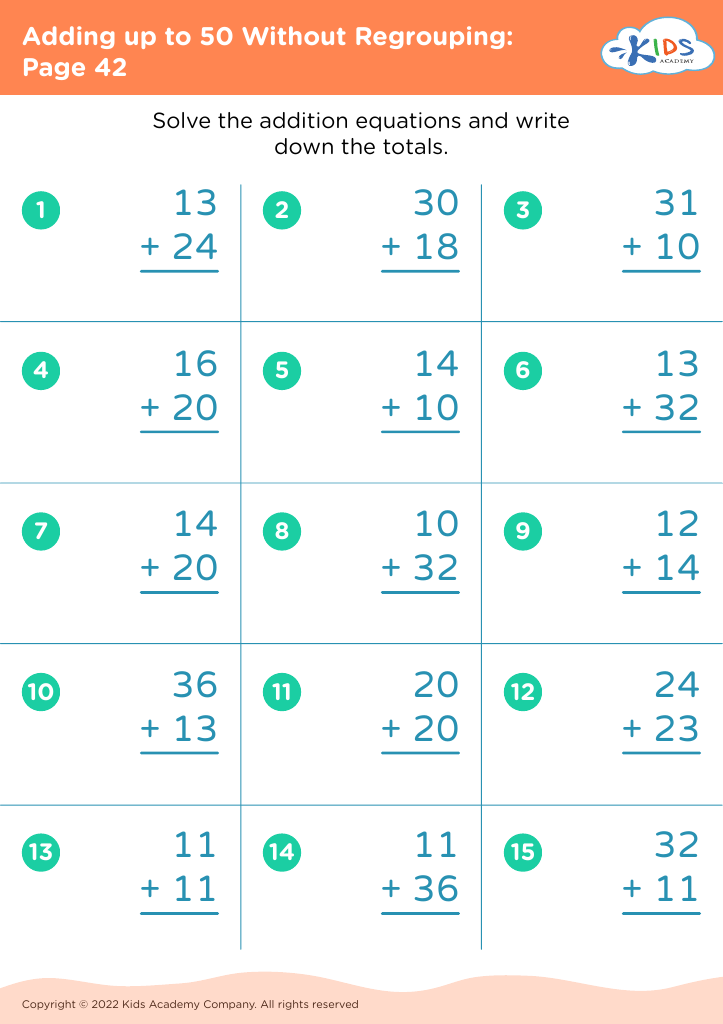
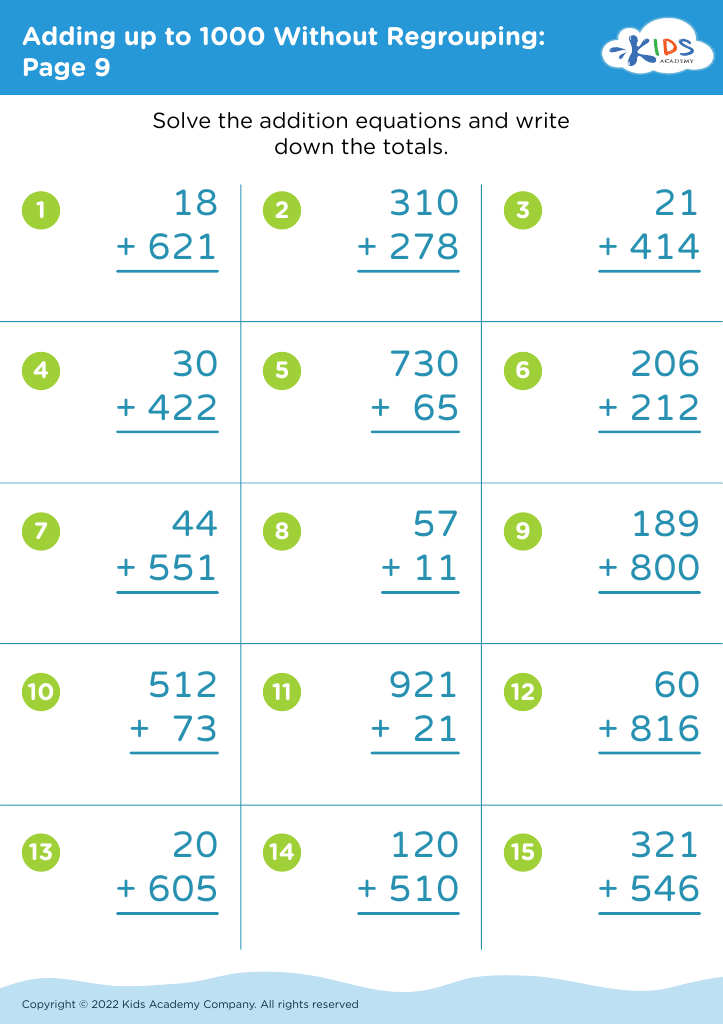




.jpg)



Understanding sequences and addition for children aged 3-9 is vital for their cognitive and academic development. These basic math skills lay the cornerstone for higher-level mathematical concepts. When children grasp the concept of sequences, they learn to recognize patterns and develop critical thinking skills, which are essential for problem-solving in daily life.
Addition, on the other hand, is the building block of arithmetic. Mastering addition early helps children develop number sense, which is crucial for more advanced math topics like subtraction, multiplication, and division. Performing addition problems enhances memory and improves a child's ability to process information quickly, which benefits other areas of learning and daily activities.
Furthermore, these skills foster self-confidence and independence. When children successfully complete sequence and addition tasks, they feel proud of their accomplishments, which boosts their self-esteem. It also instills a lifelong love for learning. Given that math is an integral part of our world—whether in shopping, planning, or cooking—the importance of nurturing mathematical skills from an early age cannot be overstated.
For parents and teachers, focusing on these foundational skills helps set children up for future academic success. Engaging in fun, hands-on learning activities can make the process enjoyable and help maintain a child's interest, ensuring that these essential skills are thoroughly embedded.








