Understanding patterns Addition Worksheets for Ages 3-9 - Page 2
29 filtered results
-
From - To
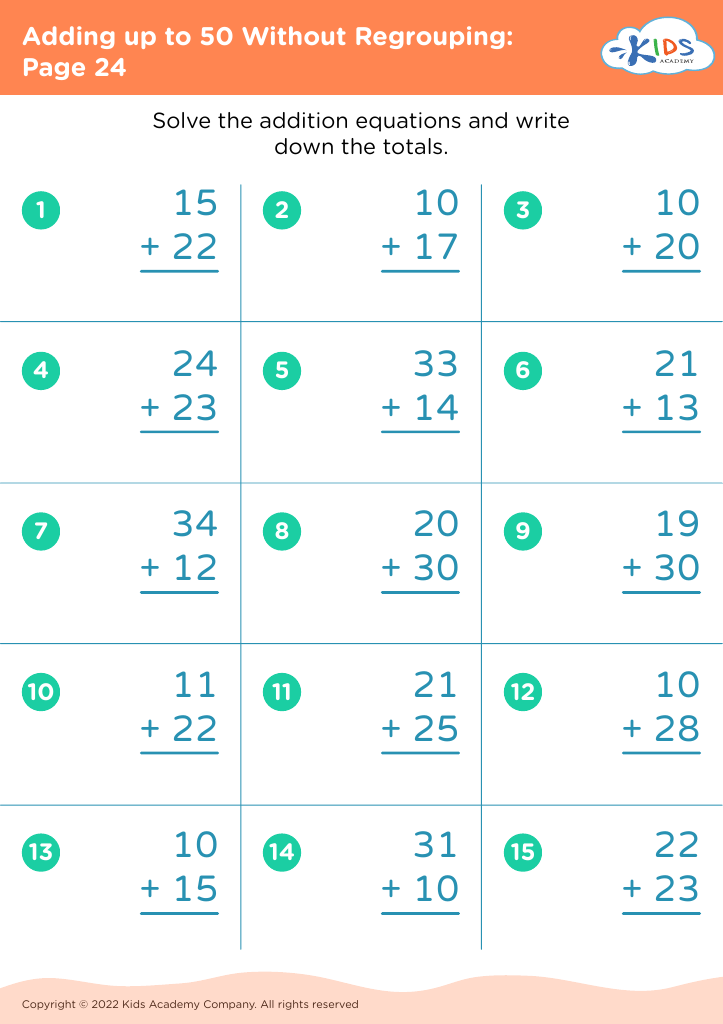
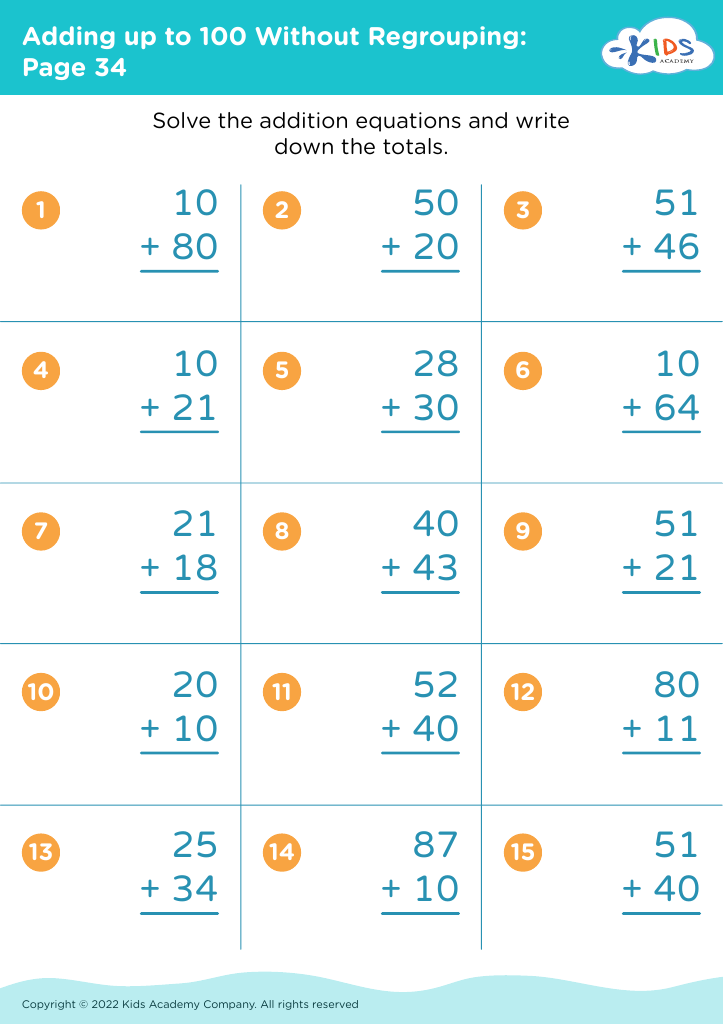
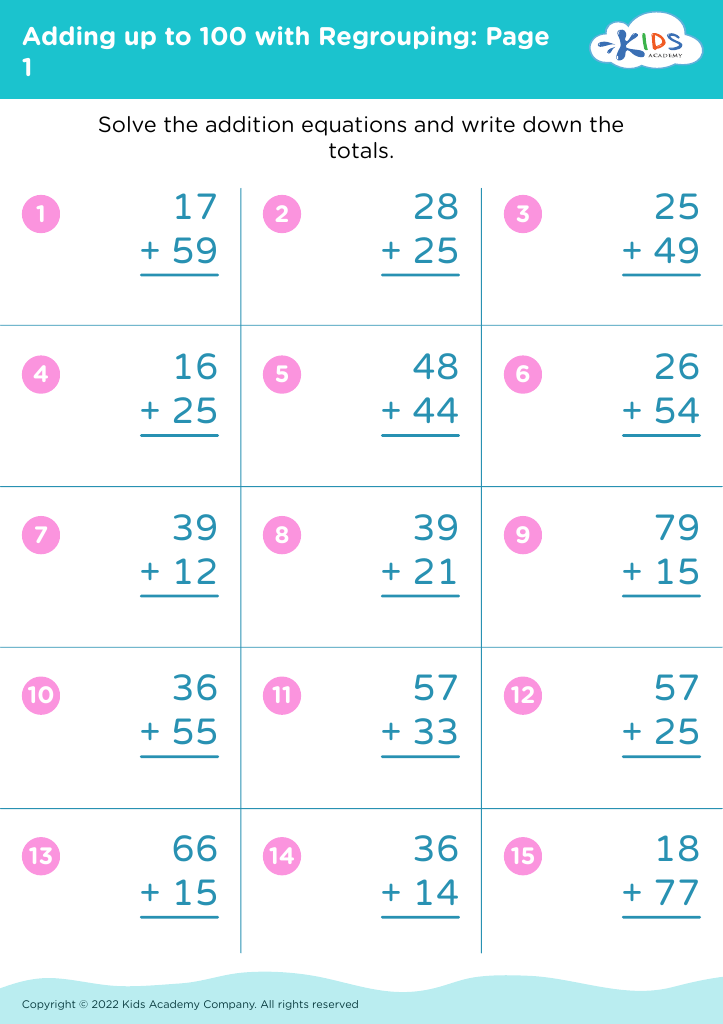
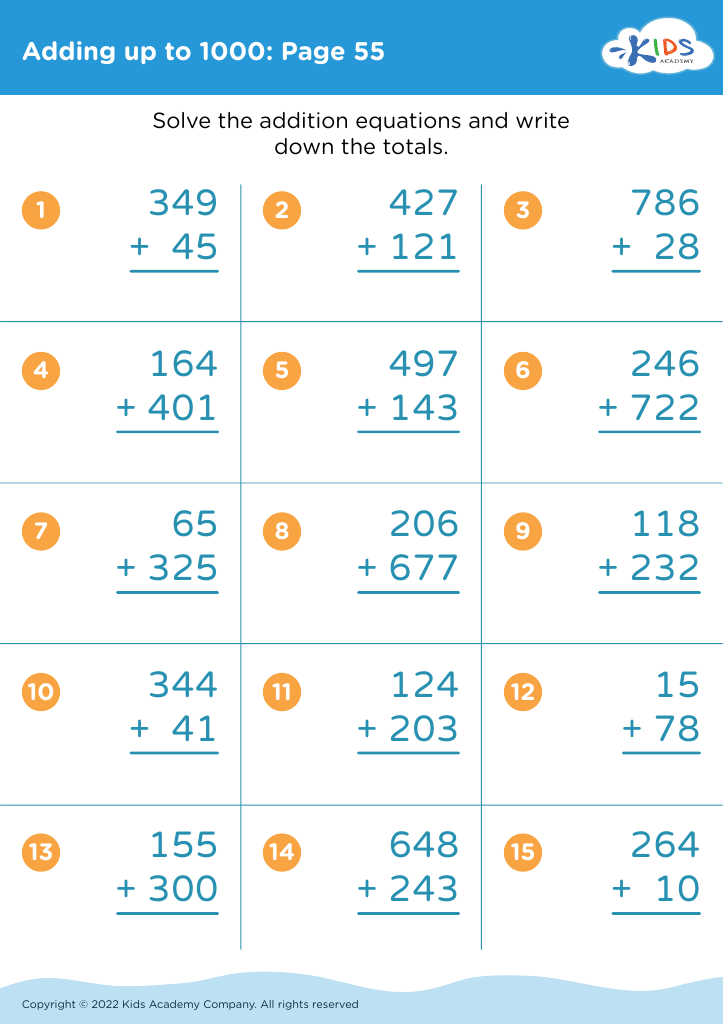
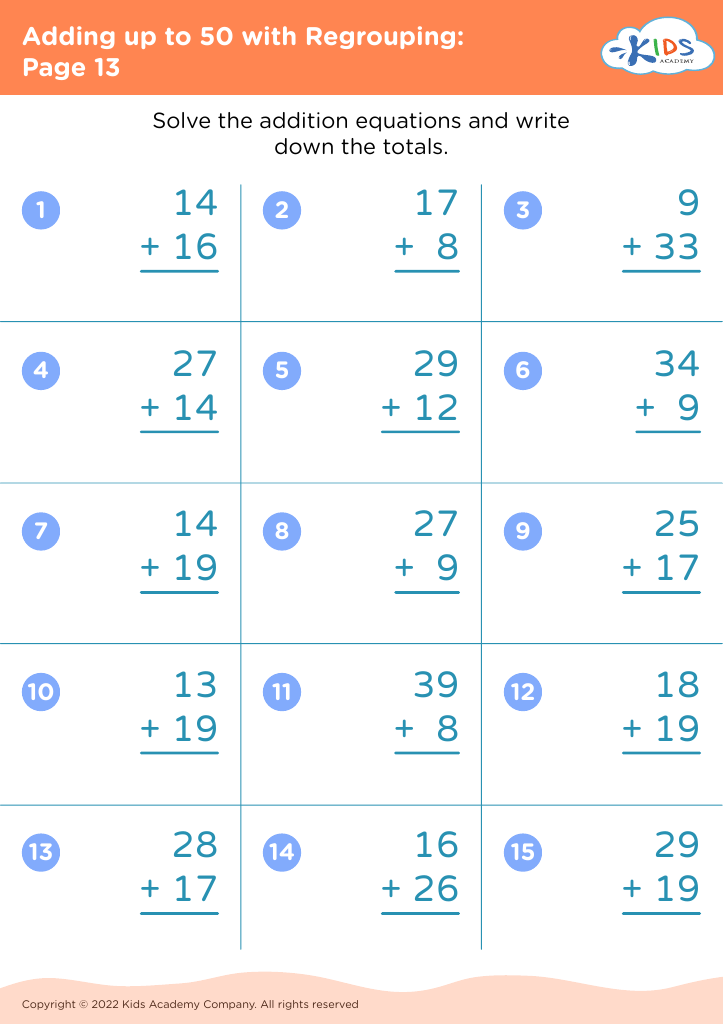








Understanding patterns and addition is crucial for children ages 3-9 as it lays the foundation for their mathematical thinking. Patterns help children recognize relationships and predict outcomes, which enhances their problem-solving skills. These skills are vital not only in mathematics but also in everyday life. When children can identify a pattern, they begin to understand that mathematics is consistent and logical, making it less intimidating.
Addition, on the other hand, is one of the foundational operations of mathematics. Mastery of addition enables children to grasp more complex mathematical concepts later on, such as subtraction, multiplication, and division. By engaging with addition through patterns, children can explore numerical relationships, which fosters a deeper understanding of quantities and operations.
For parents and teachers, focusing on patterns in addition makes learning enjoyable and interactive. Age-appropriate activities, such as singing songs, using visual aids like blocks, or engaging in hands-on games, can stimulate children’s interest and participation. By nurturing an early understanding of these concepts, you equip children with essential skills that will support their academic growth and boost confidence, ultimately contributing to their overall development as critical thinkers and lifelong learners.








