Understanding time Addition Worksheets for Ages 3-9
6 filtered results
-
From - To
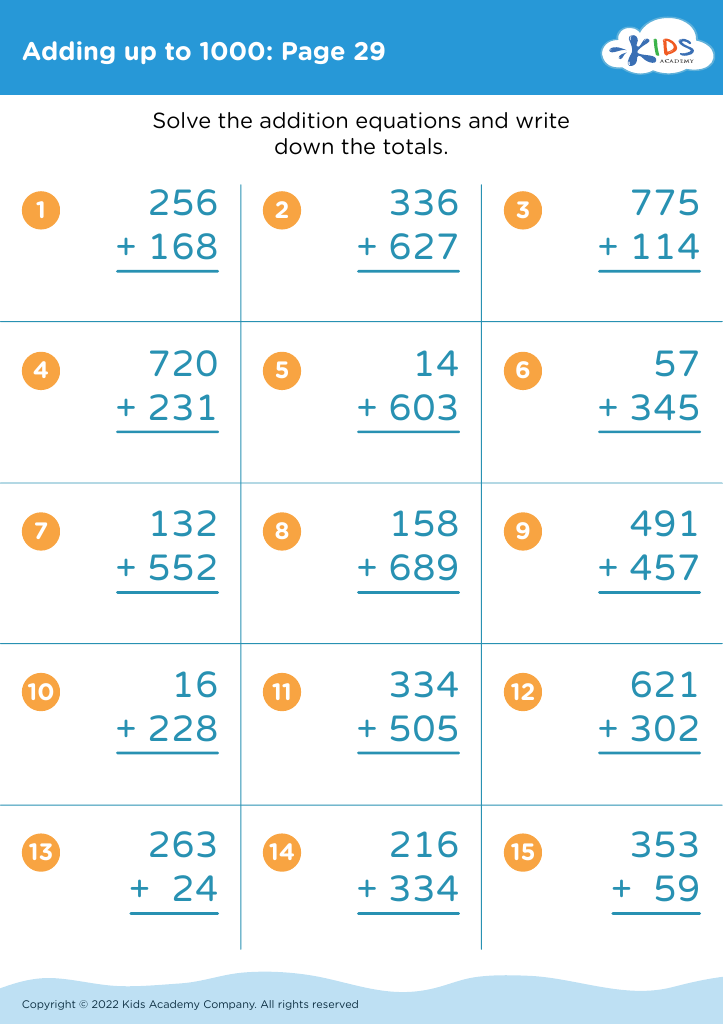
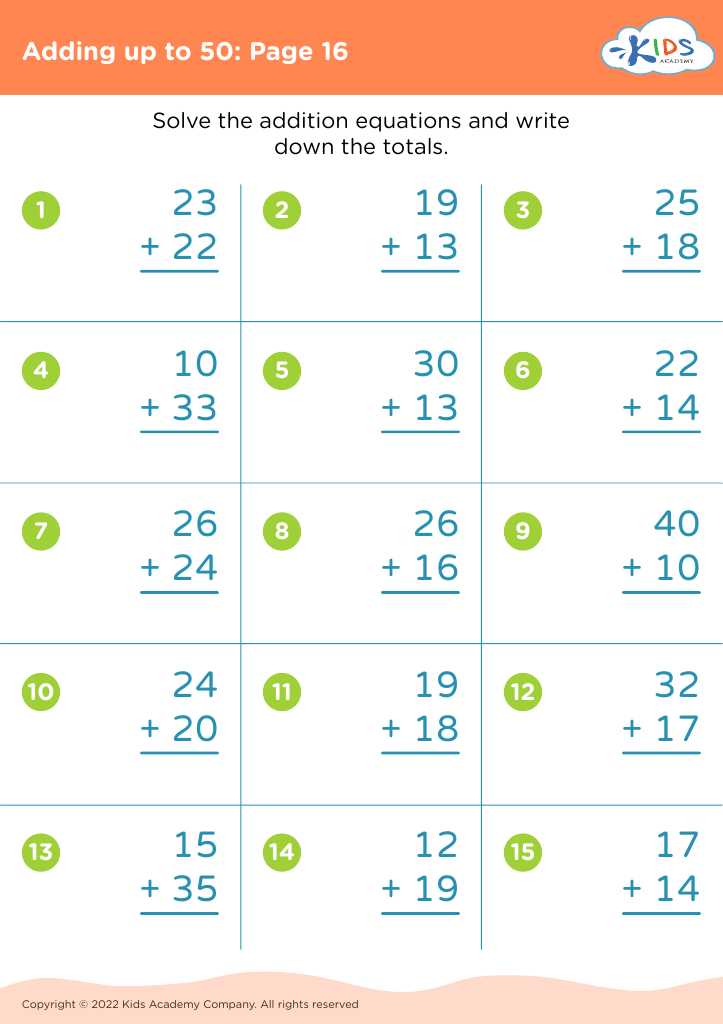
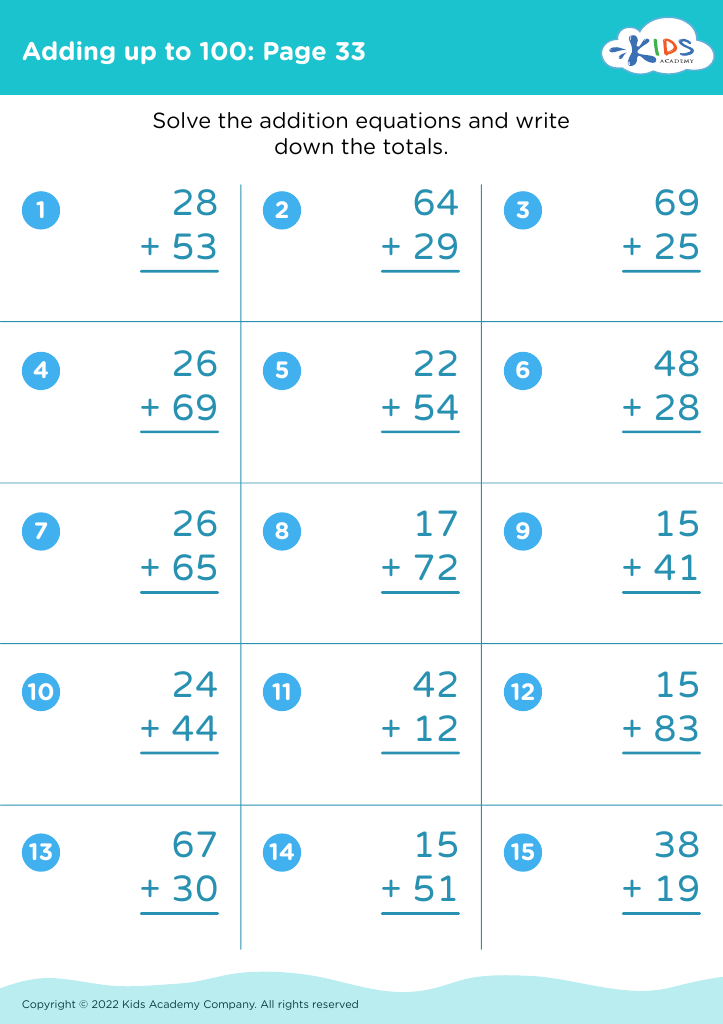
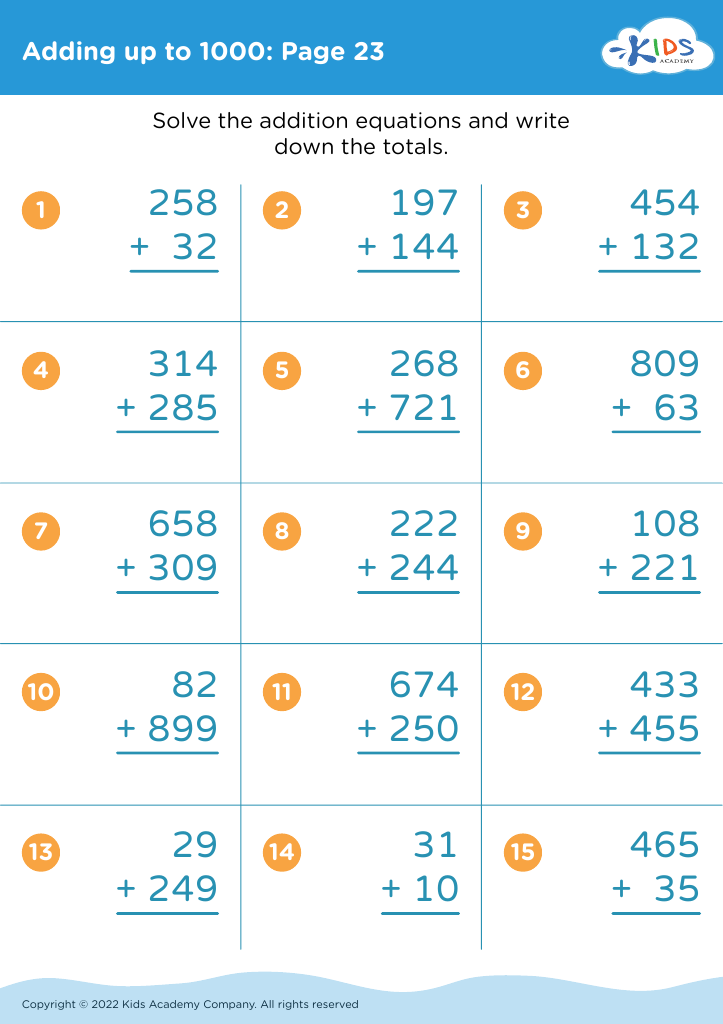
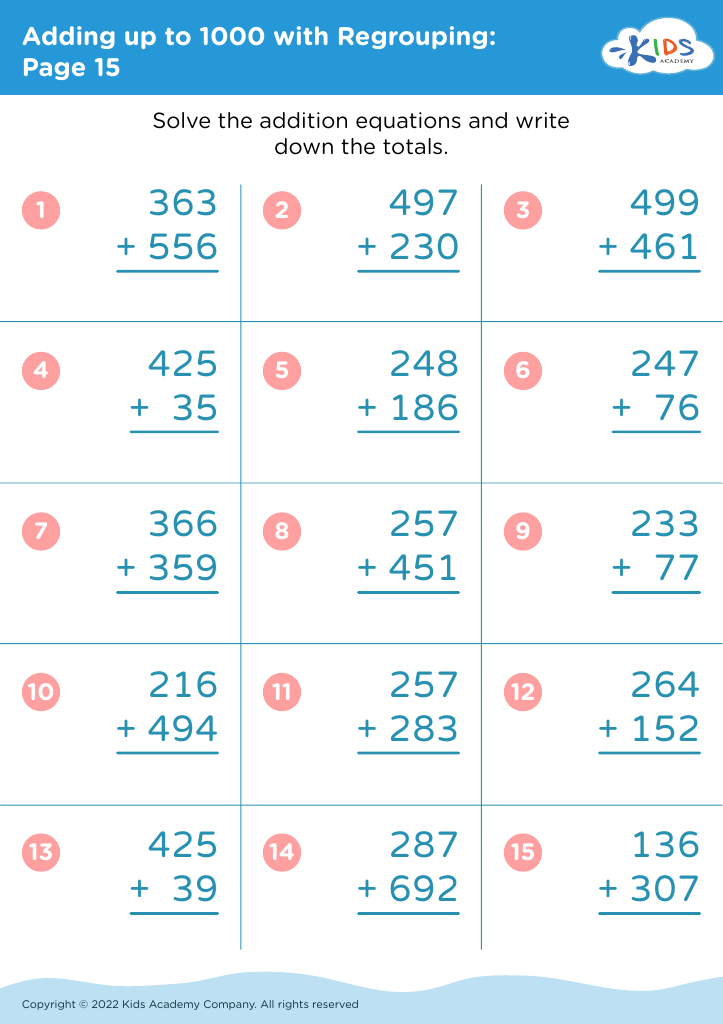
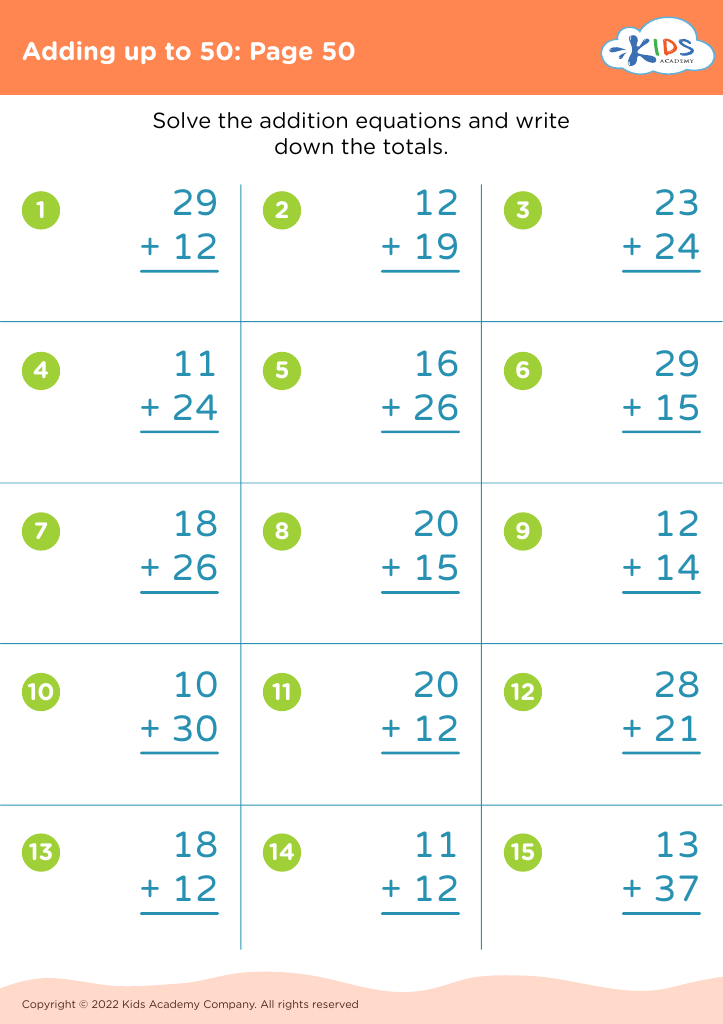
Welcome to our "Understanding Time Addition Worksheets" tailored for children ages 3-9! These engaging resources help young learners grasp the concept of addition while exploring the world of time. From identifying hours and minutes to solving time-related addition problems, our worksheets make learning fun and interactive. Perfect for home or classroom use, they include colorful visuals and age-appropriate exercises that capture children's interest. Unlock your child's mathematical abilities and enhance their understanding of time with our thoughtfully designed worksheets. Start their journey towards math mastery today, and watch them develop vital skills that will last a lifetime!








Understanding time and addition is essential for children aged 3-9, as these foundational skills greatly influence their academic and daily life success. For parents and teachers, emphasizing the importance of these concepts can help promote a well-rounded education. Time awareness allows children to develop routines and manage activities effectively, which fosters independence and organization. Learning to tell time and understanding its passage helps them navigate their schedules, whether it's knowing when to play, eat, or study, thus enhancing their self-discipline.
On the other hand, mastering addition promotes critical thinking and problem-solving skills. Early math skills form the building blocks for more complex concepts later on, which can increase children’s confidence in their abilities. Engaging young learners through enjoyable activities such as games, stories, and hands-on experiments makes learning these skills fun and interactive.
Additionally, as children build a strong numerical foundation, they are likely to perform better in school and develop a positive attitude toward math, which is vital in an increasingly technology-driven world. Thus, both time management and mathematical proficiency serve as key components of holistic child development, equipping them with the necessary tools to thrive academically and socially.








