Visualization skills Addition Worksheets for Ages 3-9
3 filtered results
-
From - To
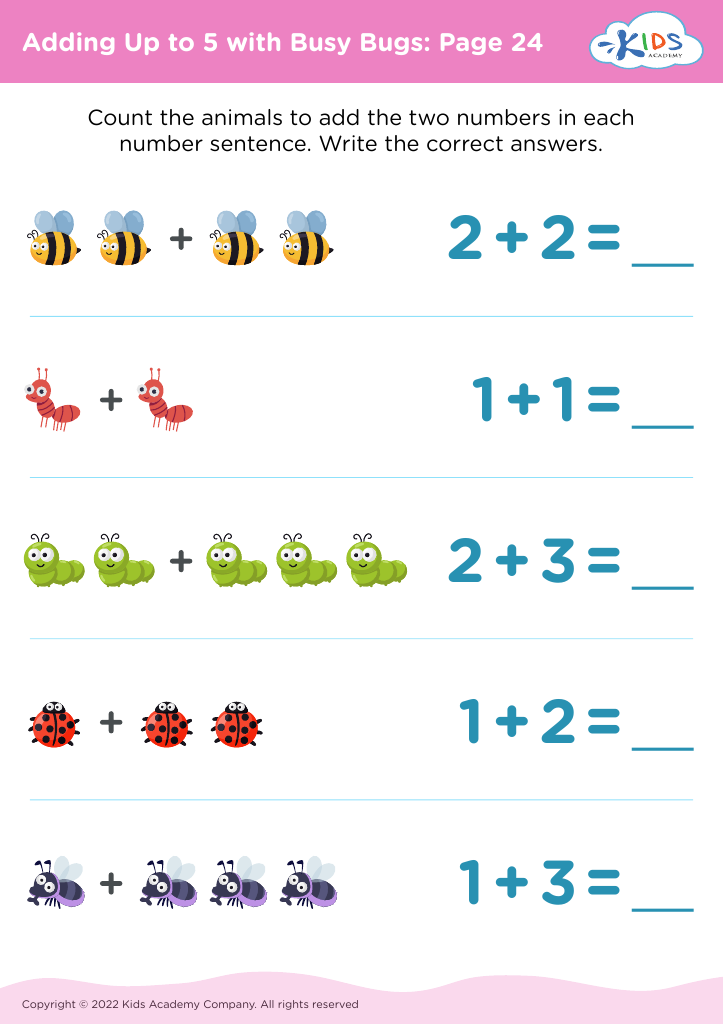
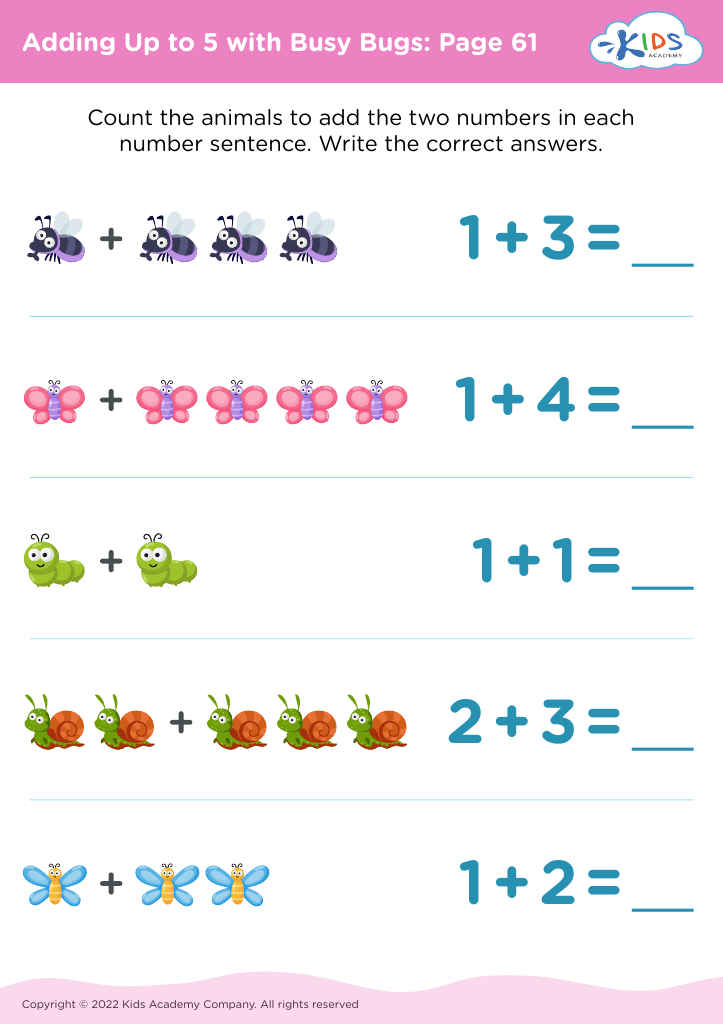
Enhance your child's understanding of addition with our Visualization Skills Addition Worksheets, designed specifically for ages 3-9! These engaging worksheets foster critical thinking and problem-solving abilities by encouraging young learners to visualize mathematical concepts. Our resources incorporate colorful images and fun activities that make learning addition enjoyable and interactive. Easy-to-follow instructions guide children through each step, reinforcing their mathematical foundation. Perfect for both classroom and home use, these worksheets promote confidence and competence in emerging mathematicians. Help your child develop strong visualization skills that will serve as a building block for future learning in mathematics. Start exploring today!
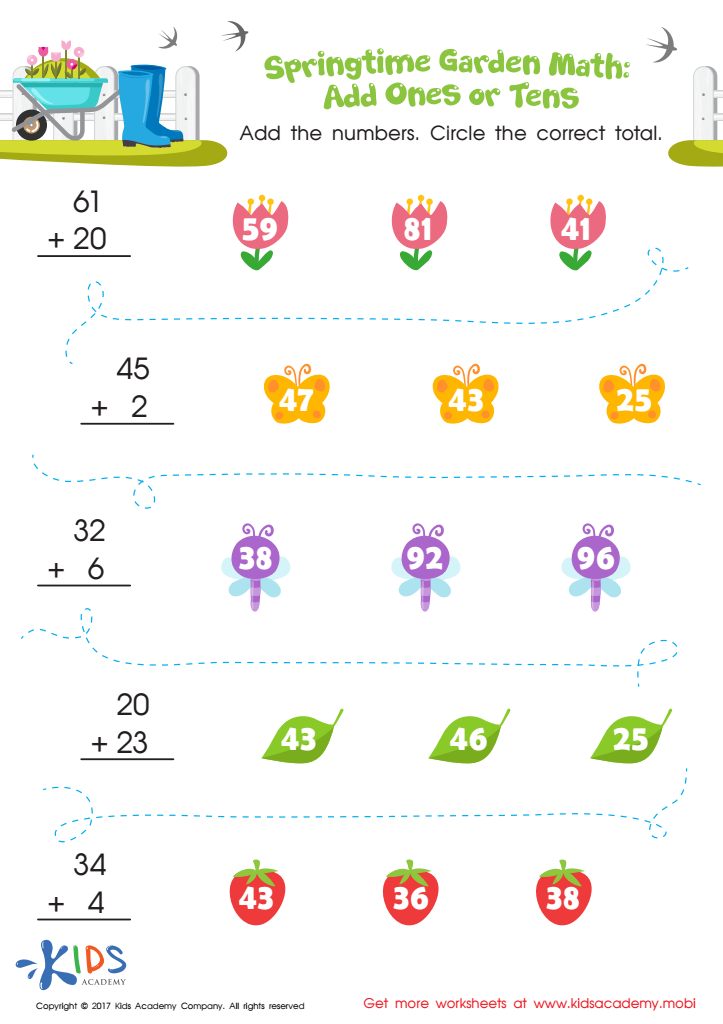
Springtime Garden Math Worksheet
 Assign to My Students






.jpg)

Visualization skills are crucial for children aged 3-9 as they lay the foundation for strong mathematical abilities, particularly in addition. These skills enable children to form mental images of numerical concepts, fostering a deeper understanding of numbers and their relationships. By visualizing addition problems, children can better grasp abstract concepts, making it easier to perform calculations and solve problems.
Parents and teachers should care about visualization skills because they promote critical thinking and problem-solving abilities. When children can visualize numbers as quantities or objects, they develop a more intuitive grasp of addition, helping them transition from concrete manipulatives to abstract reasoning. This understanding enhances their overall mathematical fluency, setting the stage for success in higher-level math.
Moreover, cultivating visualization skills can build a child's confidence in math. As they learn to manipulate and interact with numbers mentally, children feel empowered and more willing to engage with complex problems. This positive reinforcement is essential for fostering a love for math and learning in general.
Lastly, strong visualization skills not only benefit mathematical performance but are also transferable to other academic subjects and everyday life, making it a vital area of focus for engaging children’s cognitive development during these formative years.








